Pogradec has a completely different vibe. Life is slower and, at least where we are, much quieter. It’s cooler too, topping out at around 30 degrees during the day and dropping into the mid-teens at night.
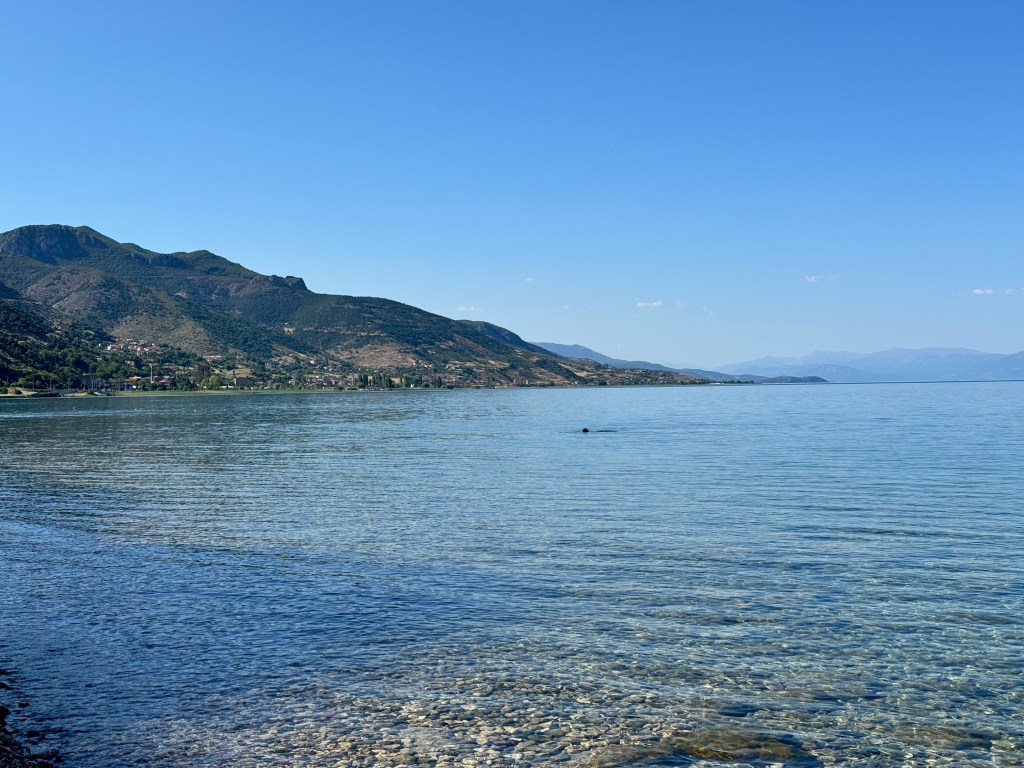
We’ve come for the lake, and it doesn’t disappoint. Lake Ohrid is the deepest lake in the Balkans, the water is crystal clear and, at this time of year, a perfect temperature for swimming.
We surrendered our first weekend to recovering from whatever it was we had brought with us from Vlore, which in hindsight was probably no bad thing.
To reach the lake, we walk through about fifty metres of trees that line the waterfront. Every morning there’s a small army of municipal workers watering them and tending to the colourful flowers along the streets, all of which look incredibly healthy. Just before the water there’s a promenade where local farmers come to sell their produce.
The lake is shallow around the edges before gradually dropping away and, once you’re out there, it’s pretty much just you and the cormorants. It’s incredibly peaceful.
We’re usually out until around midday, then retreat from the heat before emerging again at about eight for an evening stroll.
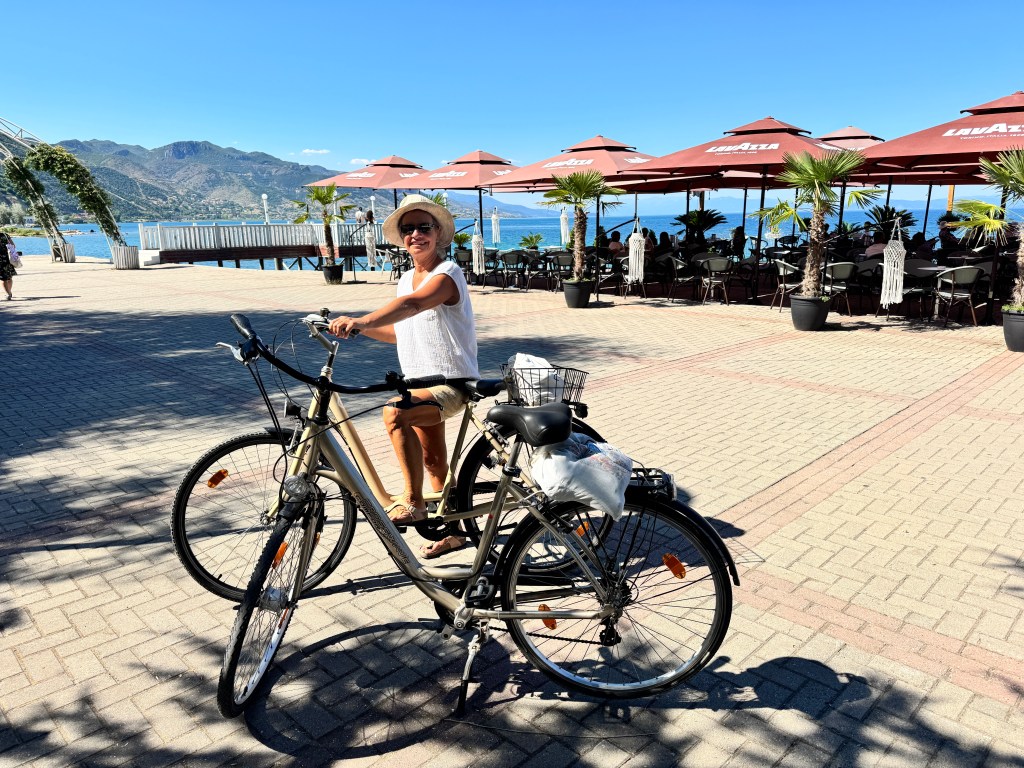
We’ve also taken the bikes out a few times to explore. In one direction we cycled through Tushemisht as far as the border with North Macedonia, and in the other we made it about halfway to Lin, following the cycle paths along the lake.
For a proper trip around Lake Ohrid, though, we had to wait for Ilya to return from a family holiday.
We left early with a full day ahead of us. Our first stop was Tushemisht, where we wandered through the old town, something we had completely missed on the bikes, followed by a walk through the nearby national park. Both were wonderfully peaceful early in the morning.
From there we crossed the border into North Macedonia. The country is landlocked, so Lake Ohrid is understandably a big draw, particularly for people coming down from Skopje and indeed elsewhere in the country. Tourism on this side of the lake feels a little more established and polished, but honestly, we prefer the Albanian side.
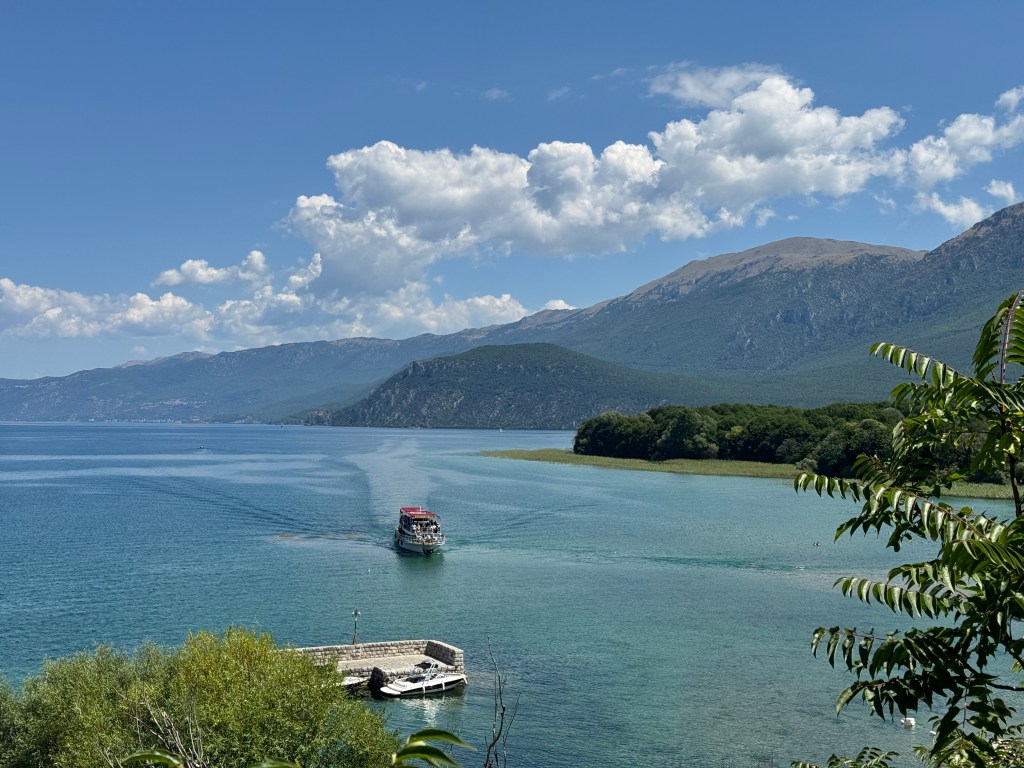
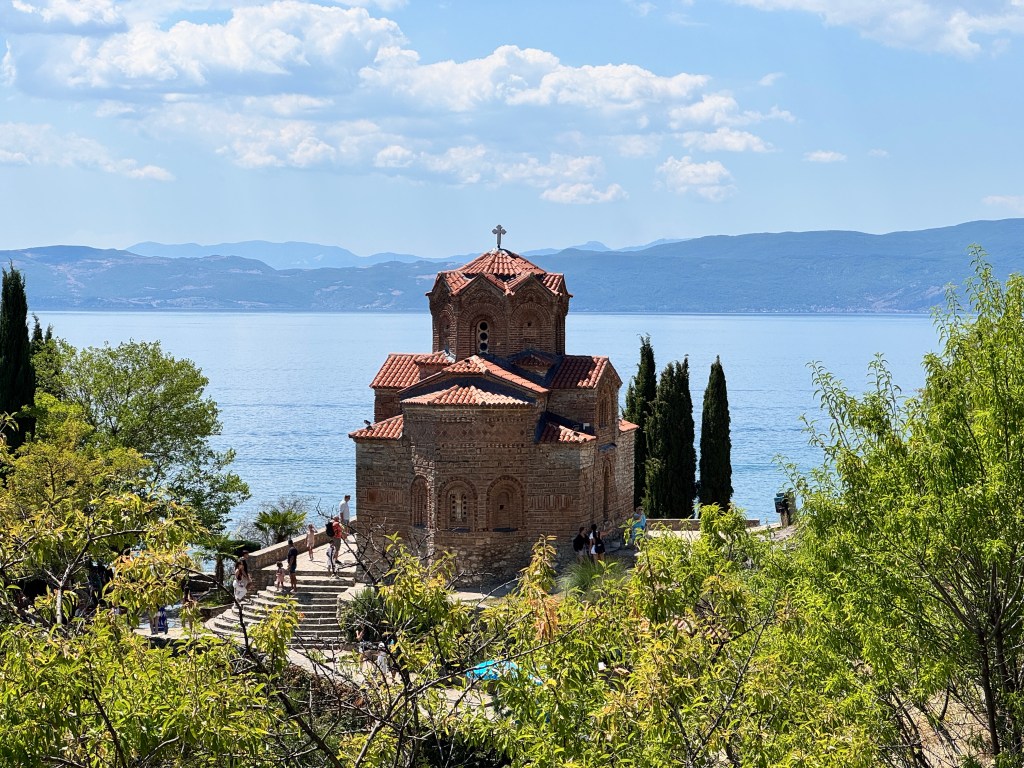
Our next stop was Galicia National Park and the Byzantine Monastery of St Naum, close to one of the crystal-clear springs that feeds the lake. From there we continued around the shoreline towards the city of Ohrid.
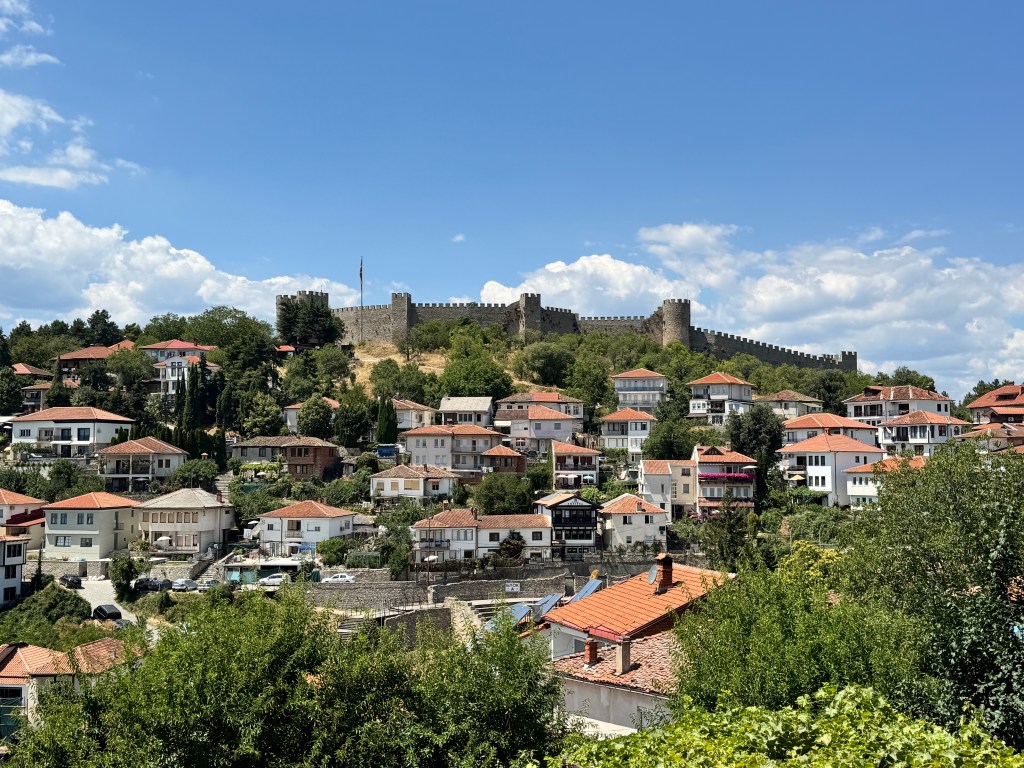
We headed up into the old town, wandering through its narrow streets and taking in the architecture before stopping for a quick bite to eat.
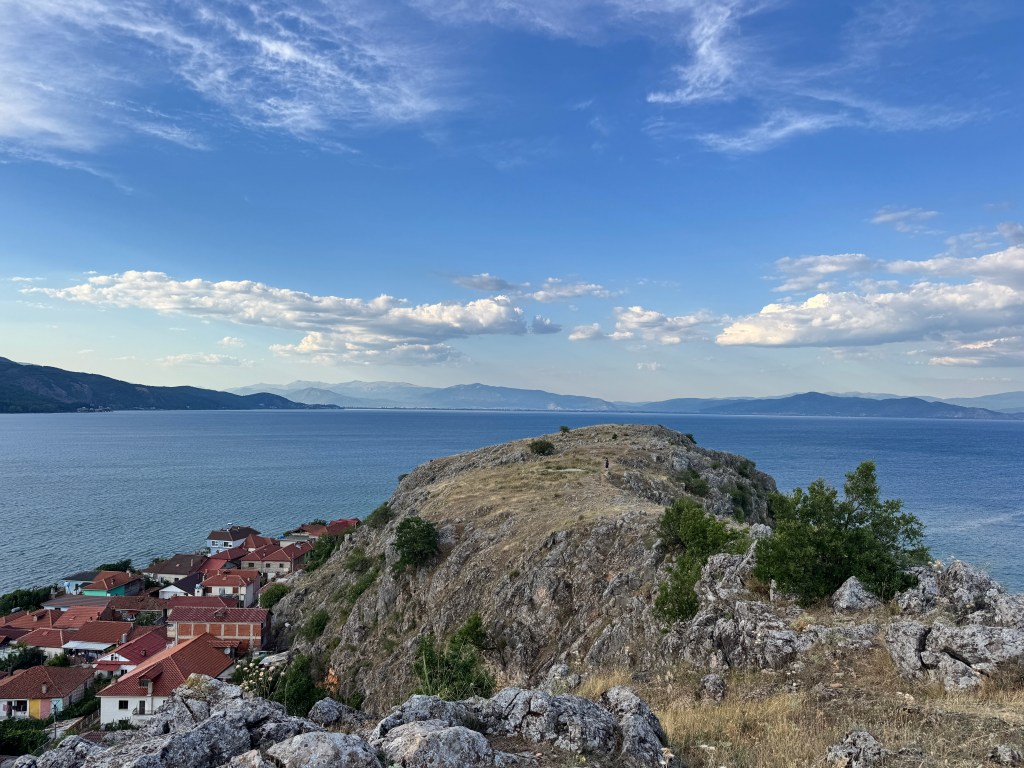
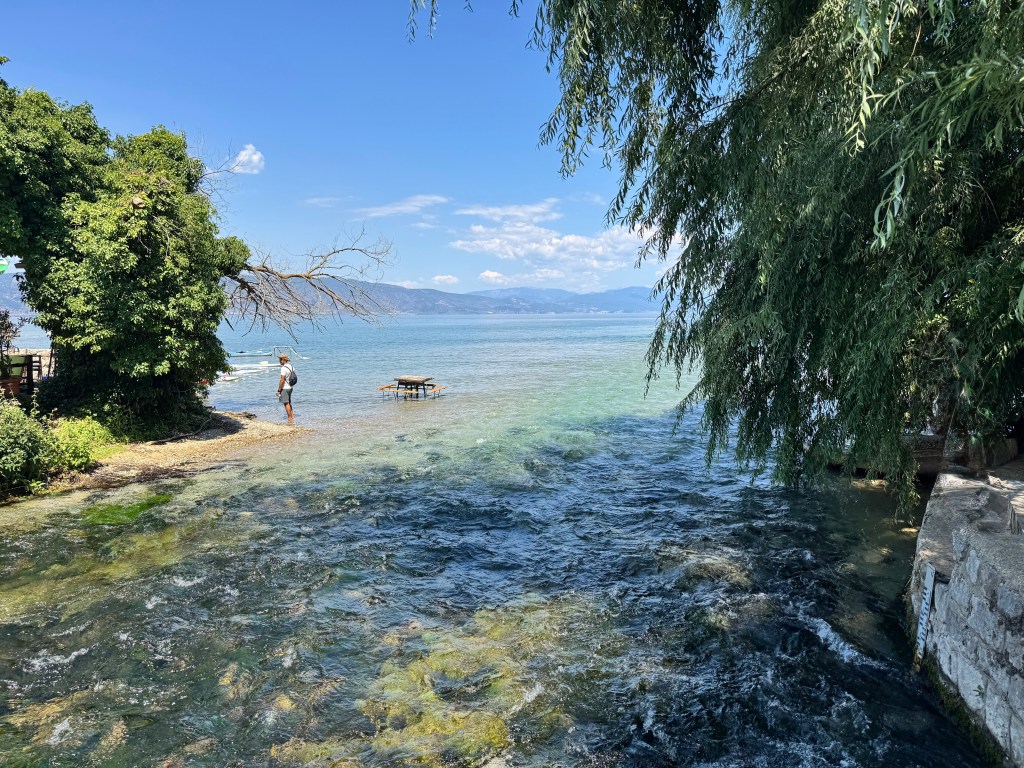
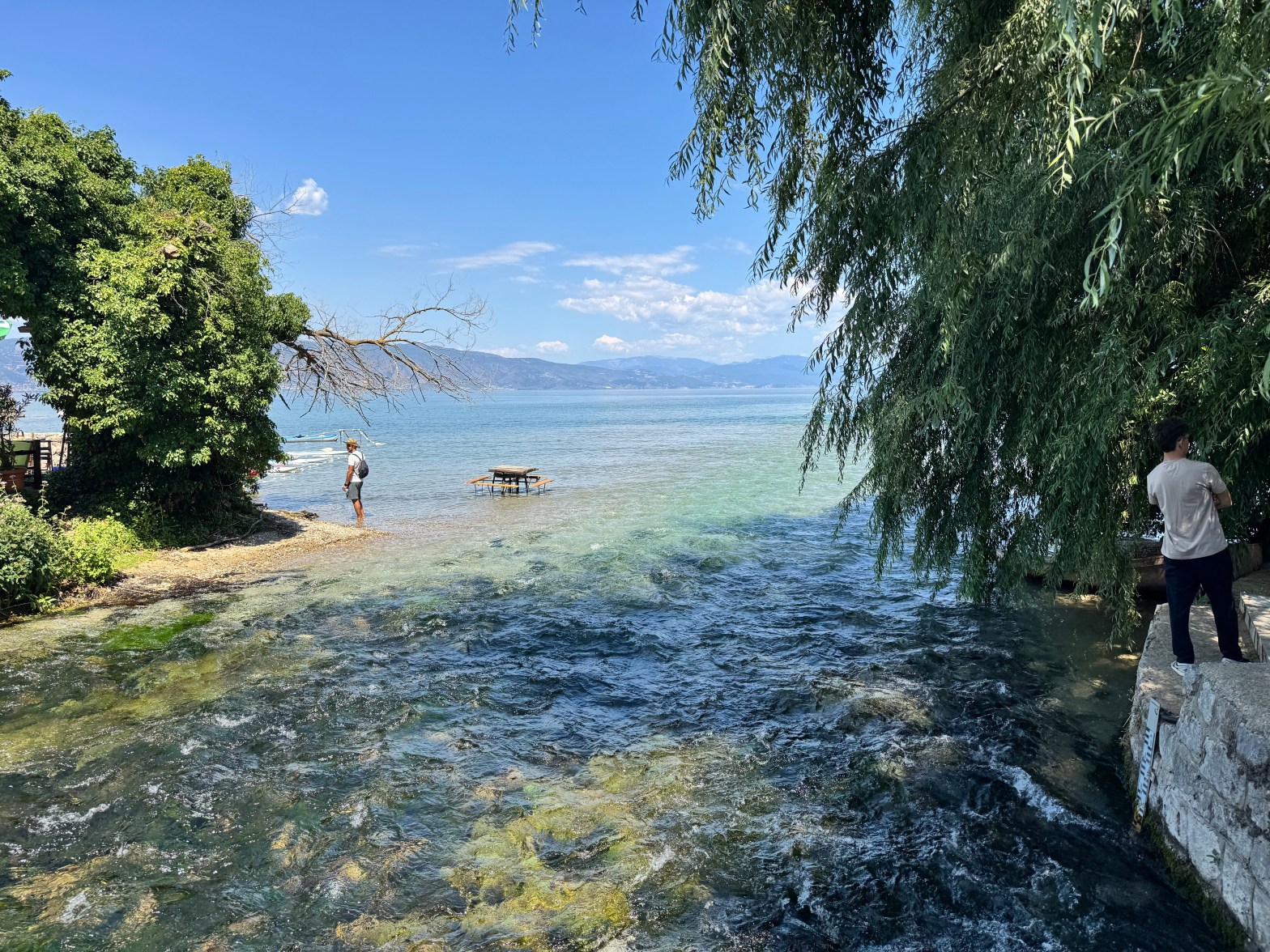
We stopped briefly in Struga to see where the waters of Lake Ohrid flow into the Black Drin River. Interestingly, they still use wooden boards to regulate the lake level, simply adding or removing them to control the amount of water flowing into the river. Then it was back across the border into Albania for our final stop of the day, the small lakeside village of Lin. We took a quiet walk around its windswept peninsula before setting off again, driving into the setting sun as we made our way back towards Pogradec.
After the heat and bustle of the coast, Lake Ohrid has felt like a change of pace altogether.
It’s a pretty special place.