The People Make the Place

People often ask me which has been my favourite place that we’ve visited. I never really know how to answer. I don’t want to sound blasé or ungrateful for the life we’re fortunate enough to be living, because I’m neither. We’ve been lucky enough to see and stay in some truly beautiful places, far too many to mention. But the longer we travel, the more I realise it’s the people we meet who bring those places back into focus.

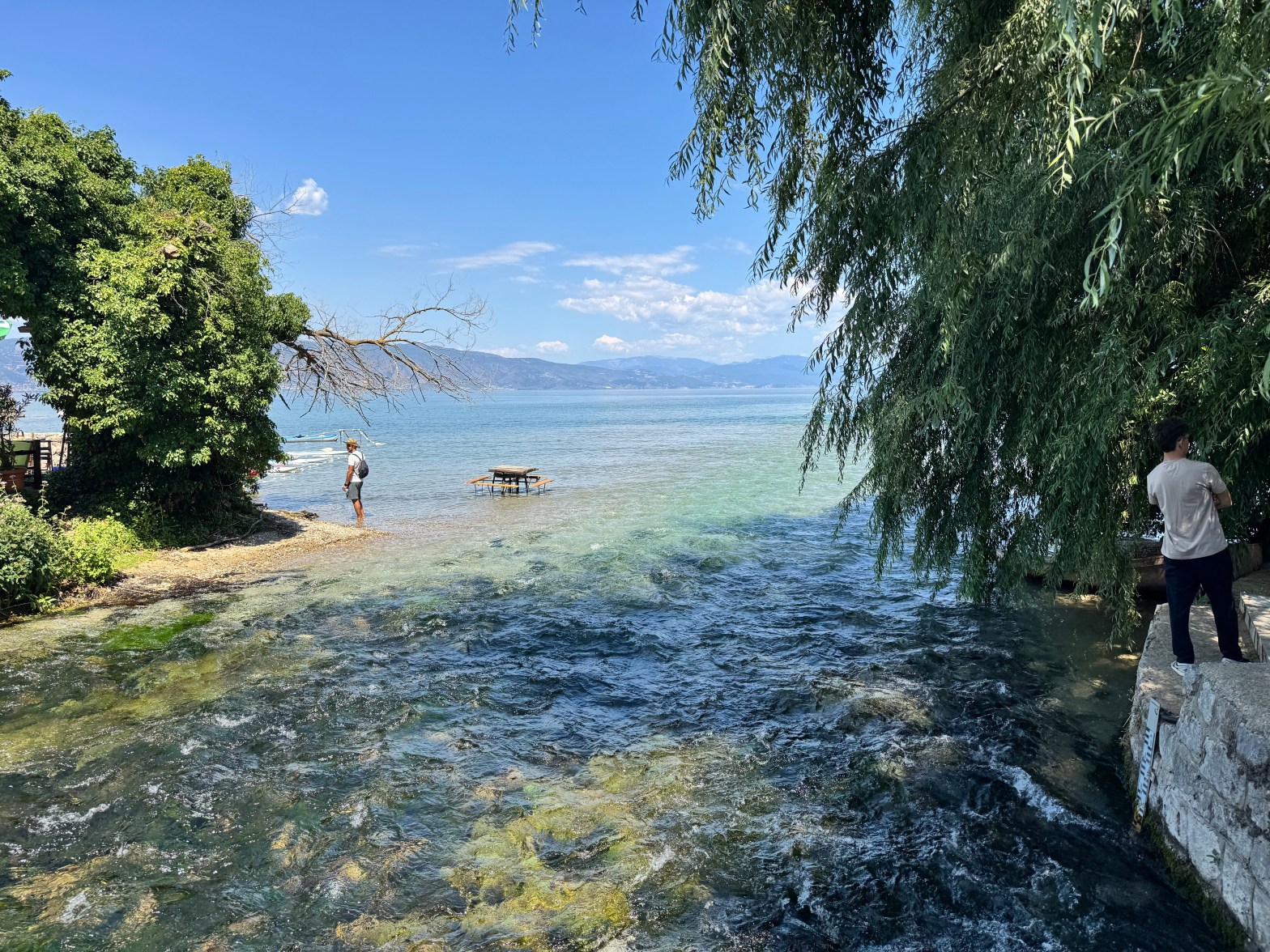
The swimming has been great here. We head down early every morning and, apart from the swimmers, there are always the fishermen. Some stand patiently with rods and reels, while the more interesting ones, at least to me, stand on the sandbar with large nets draped over their shoulders, expertly casting them into the sea. Each is completely absorbed in their own pursuit.

We’ve found Albanians to be a little guarded when you first meet them, but once you get to know them they soon open up.

I first got chatting to Mendu after coming in from a swim. He wanted a few tips on improving his front crawl, which, to be honest, wasn’t bad at all. I simply told him to relax a little more in the water. Before long we had moved on to fishing, a subject he was far more knowledgeable and enthusiastic about than I could ever hope to be.

Mendu and his wife, Barbara, are Albanians who now live in Belgium but return home for a few months each year. It wasn’t long before we were putting the world to rights. Rachel and Barbara got on like a house on fire.

The couple were thinking about making some changes to their holiday apartment, so I mentioned that they were welcome to come and have a look at ours for a few ideas. They said they would pop in for fifteen minutes.

Rachel has always been our social secretary, and I generally do as I’m told. So she sent me off to buy a good bottle of Albanian wine while she went to ask our barista what an Albanian host would typically serve to welcome guests for an evening drink.

Mendu also arrived bearing a gift, an interesting piece of driftwood that he had transformed into a small work of art. It now has a place amongst the few possessions we still keep.

After a quick drink, our guests, both proud Albanians, suggested showing us a little more of the area.

Our first stop was Lekuresi Castle, high above Sarandë, where the views across the Ionian Sea were spectacular. Straight ahead lay Corfu, to the left Lake Butrint, Sarande and Ksamil, and to the right the Corfu Strait stretching into the distance.

The restaurant at the castle, we were told, was nothing special, so instead they suggested driving on to Ksamil. We had passed through it before but never stopped to see the famous stretch of coastline that appears in almost every Albanian holiday brochure.

After parking the car, they led us to one of their favourite restaurants. Fifteen years earlier they had been the restaurant’s very first customers. The food was excellent and the setting was every bit as special.

During the day, Ksamil has a relaxed, upmarket feel, a little like Ibiza. By night it transforms into a lively party town. Given the chance, I think Barbara and Rachel would happily have danced until the early hours, had it not been for their two ageing husbands.

The fifteen minute visit turned into a wonderful evening with new friends, all because of a chance conversation after an early morning swim.

Gjirokaster and the Blue Eye

I don’t typically like using guides, as I prefer to see places through my own eyes rather than someone else’s. But we had used Get Your Guide in South America and found them to be very good, and with getting around here a little tricky without a car, we decided to use them again.

We left the apartment at 9:30am to meet our pickup. There were four of us on the trip, an Australian couple and ourselves, plus our guide, a young lady who turned out to be excellent. It probably took all of ten minutes before everyone clicked. Our Aussie companions were great fun and easy company.

Our first stop was just over an hour from Sarandë. The journey itself was part of the attraction, taking us along a relatively new stretch of road that apparently did not exist last year. There is a big push to improve the infrastructure here and things are changing quickly. Apartment blocks seem to be springing up everywhere too, but I suppose that is progress.

The road took us through open countryside and over mountain ranges before bringing us to the pretty little town of Gjirokaster. From there we climbed up to the impressive castle that sits above the town. Perhaps oddly, as you enter the castle you are greeted by an array of anti-aircraft guns. No one seems to know exactly where Hoxha acquired them, but they were brought here as a show of strength, along with the American training aircraft that sits in the courtyard. Thankfully, I was able to look past all that, as the views from the castle were magnificent.

From there we made our way down into the old town, stopping first to take a look inside one of the underground shelters built during the dark days of Hoxha’s rule. As a result of his paranoia, there are thought to be as many as 750,000 bunkers scattered across the country, much to the detriment of the people. This one was about eighty metres long and could accommodate around 250 people, although like most of them it was never used. To be honest, I couldn’t wait to get out. I kept imagining the whole thing caving in.

Lunch was an authentic Albanian affair, which we enjoyed with our Australian friends. There was plenty of laughter before we headed off to Syri i Kalter, the Blue Eye.

It really is mesmerising. The water is an incredible shade of blue that seems almost to glow. Adding to the mystery, no one knows quite how deep it is. It forms the source of the Bistrice River, which we look out on from our apartment, and pumps out more than 18,000 litres of water every second.

It is a bit of a tourist trap, but it was worth the visit for the colour of the water alone.

A return to the Ionian

We had some very hot weather in the UK and anyone who lives there will tell you that temperatures above 30 degrees are just a tad too warm. The houses simply are not built for it. Most are carpeted throughout and air conditioning still feels a little hard to justify, although I have been thinking about getting a couple of portable units for my mum.
With night-time temperatures stuck in the mid-twenties for a fifth consecutive night, and after yet another sleepless one ourselves, we boarded a morning flight to Corfu. Just over three hours later we were disembarking and heading through immigration. Fortunately, we were able to sidestep the long queues, with me quietly ushering Rachel through the empty Schengen line. It does not always work, but Greece has reverted to manual passport checks, so on this occasion it did.
We had toyed with staying in Corfu, the place where it all started for Rachel and me. More than forty years ago we arrived for a two-week holiday and ended up staying for three months. Instead, I managed to secure the last two seats on a small hydrofoil across to Sarande, at the southern tip of Albania.
About thirty minutes later we were stepping off the boat and into the back of a taxi heading to our new home for a while.
The apartment is not the biggest place we have ever stayed in, but it is comfortable and, being first line to the sea, the views are hypnotic. To our left, a freshwater Bistrice River runs down from an underground source in the mountains and empties into the Ionian Sea, with Corfu forming the backdrop beyond. We have also discovered our new swim spot, which is only a short walk from the apartment.
There is not a huge amount going on here, but there is enough. In truth, we have come to slow down and recharge.
The local bus remains something of a mystery. After watching it pull away and then waiting another hour for it to reappear, we finally jumped on and headed about twenty kilometres south to the World Heritage Site of Butrint National Park. More specifically, we had come to explore the archaeological park. It is also the end of the line, which meant there was no danger of me getting off at the wrong stop, something I have managed to do before.
The park is surrounded by water, namely Lake Butrint and a series of inlets that provide a haven for birdlife. Corfu sits just across the channel. The ruins themselves contain layers of Greek, Roman, Byzantine and Venetian history. The site has not yet been fully excavated, but what has been uncovered is interesting. So too was the walk around the site beneath a canopy of tall trees, which on a hot summer’s day was very welcome indeed.

https://www.airbnb.co.uk/rooms/1389210691539516638?unique_share_id=f8a78a1a-fdfa-421a-8a2e-c215670d6e03&viralityEntryPoint=1&s=76

Back on Familiar Ground

I think the South America trip took more out of us than we first realised. That said, I wouldn’t have changed a single thing, apart from perhaps the flight delay back to the UK.

On our first weekend back, we all met Seb and Ally for lunch in the lovely village of Colston Bassett, as they were keen to share some news. Afterwards, Seb and I took Arlo for a run around the nearby fields.

Rachel really hadn’t been feeling herself and, barely a week after returning, I found myself sitting with her in A&E, where it turned out she had a UTI that had somehow spread to her kidneys. I didn’t even know that was possible. Thankfully, after a week of strong antibiotics, she was more or less back to full speed, which was just as well, as her team were meeting down south and it gave me the opportunity to catch up with Christien, friends and my brother.

As has become somewhat customary when we are in that part of the country, we stayed at Easthampstead Park Hotel. It is peaceful, set within lovely grounds, and nicely central for everyone we wanted to see.

First up was brunch and plenty of “lad talk” with Paul, Steve, and Jeff at the Wellington Farm Shop, something I always try to do when we are back in the area. Then came long walks around the grounds and coffee with Andy and my brother.

Unfortunately, it then became my turn to enter sickbay, and the timing could not have been worse. We had arranged a family weekend away in the Cotswolds, something I always look forward to, but I had to miss this one and stay behind to ride out whatever had got hold of me.

The others had a great time though, and the weather held out for them too.

I’m not entirely sure what it was, but I was under its spell for a good three weeks.

Once I was finally back to full health, we were out exploring old stately houses and the English countryside again, helped by some fabulous weather that seemed to last throughout our stay. Aside from the health setbacks, it turned out to be a really enjoyable stay.

I’ve also really enjoyed spending time with my mum and getting to know her again. It’s interesting that we probably spend the most time with our parents when we are children, yet the relationship you have with them later in life feels entirely different. Well, it does for me.

The book I’ve been trying to write for the last few years is finally beginning to take shape after countless false starts, although it still feels some way from being finished.

São Paulo: A Different Rhythm

There was a bus to São Paulo, but we didn’t fancy it. So after a final coffee in town, and one last visit to the live music beach for me, we had a quick shower, grabbed something to eat, and set off in our transfer.

For the first couple of hours we stayed close to the coastline, under the familiar canopy of the Atlantic forest, making our way towards the fabulously named Ubatuba and its beautiful beaches. It was somewhere we had wanted to visit, but ran out of time.

Not long after, we climbed up into the clouds, crossed a mountain, and turned inland, where the forest began to fall away. Today it covers over 1.2 million square kilometres, which is less than ten percent of its original size, having lost much of its ground to deforestation. It is very sad to see.

In its place are vast open savannahs which might feel empty, were it not for the thousands of termite mounds, many over six feet high, some said to be thousands of years old.

As we moved closer to São Paulo, the volume of traffic increased. The city is known for having some of the worst traffic in the world. We were fortunate, as our side was still moving, unlike the opposite carriageway, which had been at a standstill for what looked like hours. Apparently hundred kilometre traffic jams are not uncommon here.

At around 6:30pm, about five hours after setting off, our driver dropped us close to our hotel just off Avenida Paulista in the Jardins district. It is considered safe area and has that busy city feel.

The following day, after a good night’s sleep, Rachel headed for an early swim and sauna. I love the sea, but pools are not really my thing. After breakfast and some good coffee at a small espresso bar around the corner, we checked into a new hotel and went out to explore.

São Paulo has a very different feel to Rio. Rio is all about beaches and nature, whereas here it feels like a true city, full of high rises and people moving with purpose.

We visited the Museum of Art of São Paulo (MASP). The building itself is striking, a large concrete structure suspended at either end by bright red supports, standing out along the avenue. Inside, it houses a diverse collection of artwork from across South America mainly, which was interesting.

Avenida Paulista runs through the financial and commercial heart of the city. For six days a week it is packed with traffic across six lanes, but on Sundays it is completely pedestrianised. The side streets fill with market stalls and street food vendors, and the whole area takes on a festival atmosphere.

Thousands of people wander up and down the avenue, browsing, eating, and listening to music. Street performers are everywhere. We must have walked for about five hours before finally stopping for something to eat. The food here has been very good.

Back at the hotel, we learned that our flight back to London had been delayed by twelve hours. Instead of leaving at 3pm the next day, we were now departing at 3am the following morning.

Oh well, first world problems.

Slowing Down in Paraty

There wasn’t much point in hiring a car for where we had decided our next move would be, other than getting there. So we opted for the Costa Verde bus line.

After a final visit to the Australian coffee shop and closing the door on our very comfortable apartment, we set off. With luggage in hand, we jumped into an Uber for the thirty minute ride across town, through the city’s back door into the less salubrious areas, past Maracanã and into the bus station, where we boarded the midday service to Paraty.

Buses and trains are often the best way to see a country, but this was our first road trip since arriving in South America.

We were a couple of hours into the journey before leaving the urban sprawl behind and re-entering the forested landscape, which eventually gave way to more intimate coastal roads. Along the way, the bus made several unplanned stops, extending the journey more than expected. By the time we stepped off, it was after 6pm.

The apartment we had booked was set within beautiful grounds and was correctly described as a wellness retreat. It had great energy. We later discovered that the project had originally been conceived as a small Italian-style village. Although it was not completed entirely in that vision, it works very well. It is peaceful, with enchanting birdsong from dawn to dusk.

As we have discovered, Brazil receives most of its rainfall during the summer months, and for the first couple of days we found ourselves dodging heavy downpours. It dampened our spirits a little, but they soon passed and we began to explore.

The walk into the historic centre takes about ten minutes, following an estuary set against an incredible mountain backdrop. Palm trees provide intermittent shade along the way. Crossing one of the small bridges brings you to a central square, and from there out into narrow, heavily cobbled streets. After the recent rain, the stones stood proud, making the walk a little more precarious, but in my mind it only added to the experience.

Paraty is an old fishing village and is not particularly known for its beaches. However, about a twenty minute walk along a quiet road through tall trees brings you to a small stretch of beach with a few bars playing live music. It is not somewhere I would necessarily recommend for swimming, but if, like me, you are happy to sit on a lounger under the palm trees and listen to the music, it is perfect.

We took a trip to nearby Trindade, which offers a series of striking golden beaches that feel as though they have been carved out of the forest. Some of the more remote beaches can only be reached by walking across hilly forest paths.

The final beach we visited was more a collection of large boulders forming a natural pool. Rachel found it quite magical. It was on the walk back to the restaurant for lunch that I first noticed the red welts. There are some hungry mosquitoes here, and up until that point I had managed to avoid them entirely since arriving in South America, but they are a different breed here.

Rachel has been busy with work and has aggravated an old knee injury, so we had to rethink some of the hikes and excursions we had planned. Given more of the same was probably waiting for me in the jungle, I was not too disappointed. In truth, it has been a busy trip, and we were both quite happy to slow things down and enjoy wandering around this beautiful little place.

https://www.airbnb.co.uk/rooms/1384007099635607477?unique_share_id=13c5e91b-3157-42e0-a869-e79c6931b605&viralityEntryPoint=1&s=76

When the rain clears Rio appears

We decided to use the same transfer company to take us to the airport, as we were leaving Argentina and entering Brazil, flying out of Foz do Iguaçu. We had seen firsthand the lengthy queues at both borders, and as I mentioned before, the tour companies are expert at navigating this process, swiftly depositing us at the airport with time to spare.

The flight landed in Rio de Janeiro around two hours later. Uber has worked well in each of the South American countries we have visited, and Brazil was no exception. Apparently the traffic was light in the early afternoon, so we pulled up outside our apartment building and were welcomed, I think, by our concierge, who, after taking our passport details, handed us the keys.

We are staying in Ipanema, in a very comfortable, bohemian apartment, positioned about five minutes either way between Ipanema and Copacabana beaches, both of which we were looking forward to seeing.

We arrived on a Monday to rain, and it didn’t stop until Friday. Not wanting to ruin our first glimpse of the places we had come to see, and with Rachel busy with work, we decided to wait it out. Instead, we explored the inner, slightly soggy urban areas, found a very good Aussie coffee shop, and shared stories with other travellers.

When the skies eventually cleared, we made our way onto Ipanema Beach and set off along the white sands. Brazil has a tropical climate, so even when it was raining it was still hot, but under the midday sun it was roasting. This did not seem to deter anyone. Some sheltered under umbrellas, but everywhere you looked people were playing Altinha, a game where you use everything except your hands to keep the ball in the air. It’s great to watch.

The place is full of energy, and by the time we had walked from one end to the other, the beach was in full swing.

The following day we found ourselves in the bohemian neighbourhood of Santa Teresa, with its yellow trams, before making our way to the famed Escadaria Selarón, the colourful mosaic staircase that leads down towards the lively district of Lapa. There, we caught a live samba show in one of the many parks, where hundreds of people moved as one, completely under the spell of the music.

Later that day we had tickets for the busy little train that climbs Corcovado Mountain to the statue of Christ the Redeemer. It was another humbling experience. The statue is an astonishing sight, around one hundred feet across, standing high above the city below.

Copacabana feels like the more polished of the two beaches. It is set up for both day and night, with snack bars lining the busy promenade. It also felt a little narrower than Ipanema, but just as lively, with people of all shapes and sizes enjoying the beach. The sounds of samba and bossa nova drift through the air, unmistakably Brazilian.

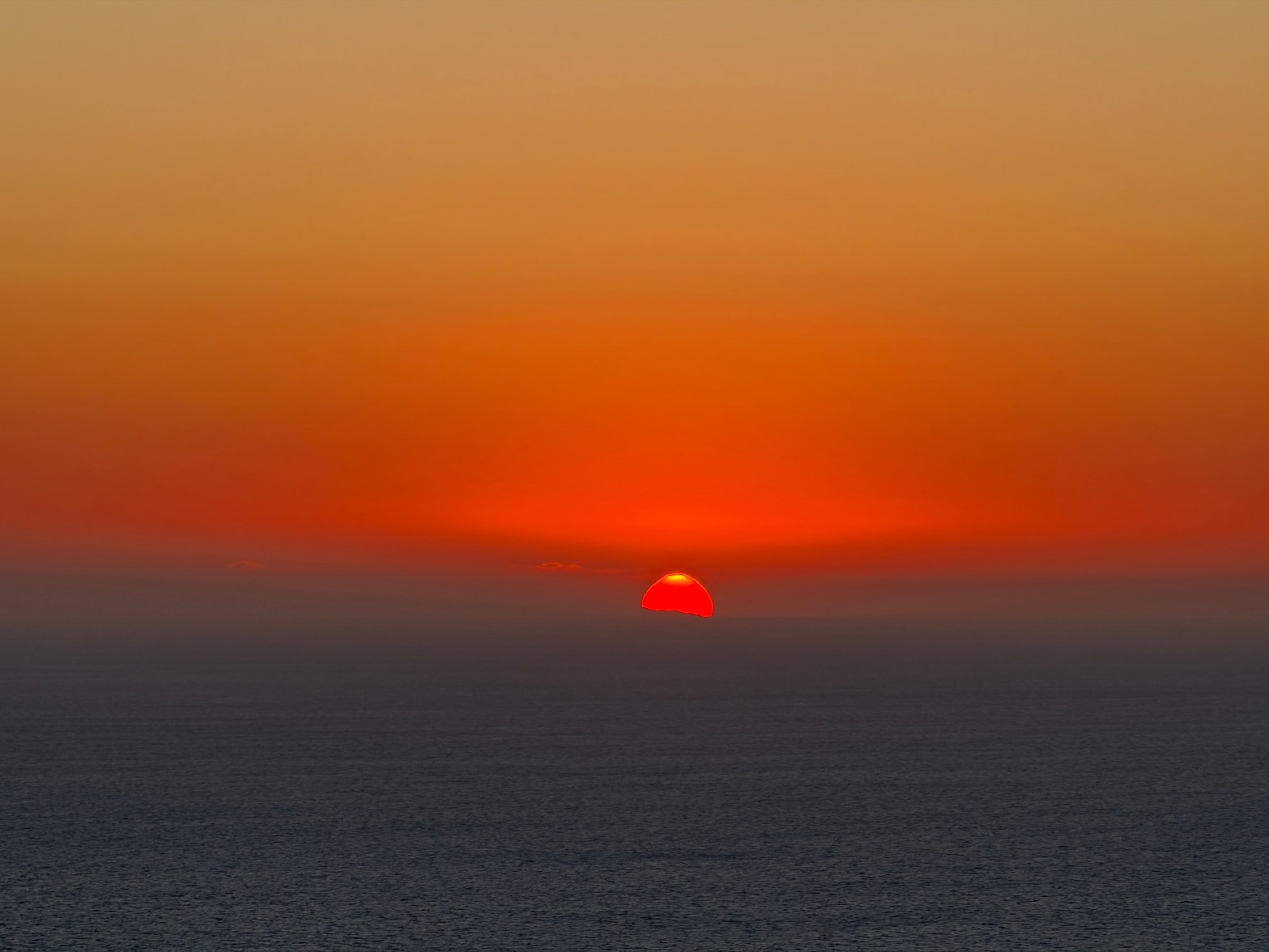
I had also booked the cable car up Sugarloaf Mountain for views across the city and to catch the sunset. Unfortunately, by the time we reached the summit, the clouds had rolled in. There were brief moments when they parted, revealing glimpses of the city and the many islands surrounding Rio, including a view across to Christ the Redeemer, which at times appeared to be suspended in the clouds.

It is a city where, despite man’s efforts to shape it, nature still feels very much in control. Green space is everywhere, and the Atlantic Forest continues to weave its way through the urban landscape.

I’ll be honest, I had my reservations when we first arrived under grey skies and rain. But Rio is a city that does not take itself too seriously. It is a multicultural place where anyone could be Brazilian, but those who are seem to move with a rhythm and confidence that feels entirely its own.

https://www.airbnb.co.uk/rooms/4548364?unique_share_id=76d4ef3f-ff23-4063-add0-c8cb8ed59c5c&viralityEntryPoint=1&s=76

Where the river falls away – Iguazú

There were no direct flights to Iguazú from Mendoza, so after another early morning pickup we headed to the small airport in Mendoza and boarded the first of two flights. We flew back to Buenos Aires before a short wait for our onward flight to Iguazú, still on the Argentinian side. It was the most direct option available, but it still took just over four and a half hours. That said, the local airports are very easy to navigate and so far everything has worked like clockwork for us.

Our luggage was first through, which is always a relief when bags have been transferred between aircraft. We were then met by our driver and set off for the hotel.

The first thing you notice here is the humidity. The temperature was about the same as it had been in Mendoza, but the humidity made it feel at least five degrees warmer. We were in the Atlantic Rainforest after all.

We were staying for the next four days at Jungle Lodge. When we opened the door to our small suite we were greeted with a wonderful view of the Iguazú River. Looking to the left was Paraguay and to the right was Brazil, although all we could see was jungle.

We didn’t do much on the day we arrived. We had an early dinner and turned in early as the following day would be a full one with an early start.

After a good breakfast our guide arrived and off we went. Based on advice from several people we had met along the way, we decided to book all our tours in advance. The guides have preferential entry through the borders and into the parks, along with access to certain routes inside them. The parks also limit visitor numbers.

Even so, it still took about an hour and a half before we found ourselves boarding the small eco train for a slow thirty minute ride to our first stop, followed by a two kilometre walk filled with anticipation and excitement.

The walkways snake across the Iguazú River, which translates simply as Big River. It is a slow build up. As you look out on either side you see tufts of greenery and large geometric rocks scattered across the surprisingly clear water.

Then the sound begins to grow louder. A mist appears as you turn the final corner and arrive at the Garganta del Diablo, the Devil’s Throat, where all the water suddenly falls away.

This is where most of the water in the river converges and then disappears, with around 6.5 million litres flowing every second. It is incredible. The falls are wider than Victoria Falls and taller than Niagara.

The Devil’s Throat forms a giant horseshoe and a walkway brings you as close as possible to the edge and a view into the abyss. As you would expect, you get completely soaked, which only adds further to the experience.

A friend had told me beforehand that he found the place deeply moving. I can confirm that it is both emotional and humbling.

We then boarded the eco train again and travelled to the mid station. From there we followed the paths through the jungle and gradually made our way downwards. Walking under the leafy canopy offered welcome relief from the intense sun. Along the way we took in the flora and fauna and glimpsed wildlife, with one remarkable view after another.

There are more than 275 waterfalls here. The Argentinian side accounts for about eighty percent of the area and allows you to get very close to many of them as they cascade gracefully into the river below.

We stopped for lunch and spent some time sharing travel stories with Franco and Anna from Rome, who like us were soaking in the experience.

After lunch we continued on for another three to four kilometres, which again offered some truly extraordinary views.

The following day we visited the Brazilian side of the falls, crossing both the Argentinian and Brazilian borders.

The day before we had worked to see the many intricate sections of the falls. On the Brazilian side you gain a broader perspective. These are the sweeping postcard views.

It is just under a two kilometre walk along a designated pathway that overlooks the Argentinian side. In a way it felt like cheating. All the views are laid out in front of you without having to make much effort. But I have to admit the scenes are breathtaking.

From this side you see the entire sweep of the Iguazú. You lose some of the angles that you experience in Argentina, but by stepping back you can take it all in at once. It ties together everything we had seen the day before.

The walk ends with a viewpoint at the open end of the horseshoe. From this vantage point we were looking up into the Devil’s Throat, with waterfalls to the left and right and water droplets creating rainbows. It was one of the most incredible things I have ever seen.

We were back at the lodge by early afternoon and spent some time resting by the pool before the inevitable jungle downpour arrived later in the day.

We had managed to avoid the rain on both sides of the falls. It certainly lived up to its billing as one of the world’s seven natural wonders, and it was a wonderful way to spend Rachel’s birthday.

Vineyards and a Ride off into the sunset – Mendoza

It was an easy flight from the smaller and much more relaxed local airport in Buenos Aires. We were picked up from the apartment at 6:45am and by just after 11am we were letting ourselves into our new apartment in Mendoza.

We decided to stay just outside the city, but close enough to walk or take an Uber in. The apartment sits directly opposite the Mendoza tennis courts and is a stone’s throw from the wonderful San Martín Park. It is also a five minute walk from a street dedicated to restaurants and coffee shops, all shaded from the heat by a canopy of well established trees.

The climate here is very dry and one of the first things we noticed were the fast running water channels on either side of many streets. We discovered they are part of an intricate irrigation system that sustains the many large trees across the city. They are beautiful to look at and add a sense of calm.

Just before leaving Buenos Aires we arranged a last minute excursion. At about 5:30pm a minibus arrived to take us on what turned out to be a forty five minute drive to the foothills of the Andes, followed by another twenty minutes through what initially looked like a rocky impasse before we reached a gaucho estate. From there, along with a small group, we would head out on a two hour trek.

Neither of us are horse riders, so we were both a little nervous as we climbed onto these big animals and listened carefully to Diego’s instructions on how to handle our particular mounts. Once we set off and began to get acquainted with these beautiful and well trained horses, which were clearly well cared for, we relaxed and started to enjoy the solitude and openness around us. Our route followed small undulating trails through thorny bushes and cacti, crossing long empty riverbeds along the way.

I didn’t take many pictures. Not just because I didn’t want to drop my phone, but also because it felt strangely disrespectful to interrupt the experience I had been given.

When we returned to the camp, the gauchos helped us dismount before tending to the horses, making sure they were fed and watered. The riders then gathered around a long wooden table where a feast had been prepared during our ride. Various cuts of meat had been expertly cooked over an open fire and we all enjoyed the meal together.

We finished the evening sitting beside the fire under the stars while Diego played his guitar and sang Argentinian folk songs. It was a wonderful experience.

We soon settled on Paloma as our regular morning coffee stop. Argentina is not particularly known for its coffee, but this place was very good and the food was excellent.

Rachel has been fairly busy with work during this trip, so her walks have mostly been short ones around town. I ventured further into San Martín Park. It is vast and I didn’t manage to see all of it, but I enjoyed what I did explore. There is plenty of birdlife and the park is clearly well cared for by both those who maintain it and those who use it. The entrance gates on the city side are particularly impressive.

We decided it would be far more enjoyable to cycle through the vineyards rather than be driven through them. After a short Uber ride from the city and picking up bikes from Mr Hugo’s bike rental, a small family run business and agreeing a route, we set off.

It was a very hot day with little shade, as we cycled through the rows and rows of vineyards, so we decided to visit the highly acclaimed Trapiche vineyard first. Unfortunately we had missed the only English speaking tour of the day. By good fortune, however, we met a young chap who was only too happy to practise his English, which was excellent. He talked us through the entire grape to glass process, explained the different wines they produce and even offered Rachel the chance to taste several of them, which she happily accepted.

Malbec is what Mendoza is best known for. The dry conditions here are perfect for the grape, unlike the more humid French wine regions where it originated. Apparently the French did not favour it much at all. Malbec in French loosely translates to bad taste or bad mouth.

The history of the vineyard dates back to the late 1800s and the old railway line once used to transport wine to Buenos Aires can still be seen. We even wandered briefly through the wine vats where we caught the end of a tour. At first I thought the singing was piped in, but it turned out to be the sommeliers themselves finishing their presentation. They were that good.

We had planned lunch at a boutique winery, which we eventually reached after the tourist police kindly put us back on the right road when I had led us somewhere we should not have been.

Our host generously poured more wine for Rachel and served some very good food, which after about three hours on the bikes was very welcome.

Eclectic Architecture and a Tango – Buenos Aires

Chile was great fun, and after our final week in Viña del Mar we both felt rested and ready to head back into a city again.

The flight from Santiago to Buenos Aires was only a couple of hours. Tim, our new host, had arranged a car to collect us and take us to our new abode, which, given that we arrived during a four day holiday, was a stroke of luck.

The apartment is about half an hour from the international airport in the Villa Crespo area of Palermo. It sits on the top floor and has an incredible 180 degree double terrace overlooking the city. It even has a jacuzzi on the bedroom terrace.

The urban landscape is intertwined with swathes of green space, often described as the lung of the city, which ensures that the air quality is surprisingly good. The city itself operates on a grid system, which Rachel assures me makes finding your way around straightforward. Having no real sense of direction, I can’t comment.

We like to walk, so exploring the back streets, discovering new coffee bars and watching life unfold has been great. The people feel more laid back here than in Santiago and just as friendly, perhaps even more open.

Rachel is a big fan of dance, so we arranged a tango lesson in the La Boca area, which is famous for it. Anahi, our hard working teacher, explained the dance and its variations in detail, stressing the importance of balance and keeping the upper body almost motionless. She then taught us the basics.

The three of us later headed to a Milonga, one of the pop up tango clubs where people of all ages gather to dance. It is all about the tango, with everyone dancing with one another and moving slowly around the floor in an anticlockwise direction. They were very good. We even got to watch our teacher dance with another dancer visiting from New York. It was less a dance and more a glide across the floor.

Needless to say, we sat that part out, but we are practising.

We decided that the best way to see the city was by taking one of the open top hop on hop off buses. Armed with forty eight hour tickets, off we went. As I mentioned, it is a very green city, with a mix of European architectural styles. Large boulevards run through the heart of the city alongside expansive parks. It comes as no surprise to learn that this was once the main South American outpost, reflected in the scale and opulence of its buildings.

Our first stop was the National Art Museum. I had come to see a fine collection of French Renaissance artwork and was not disappointed.

From there we wandered through the parks and up to the Recoleta Cemetery, established in the early nineteenth century. It was originally intended for the aristocracy and contains the most incredible collection of family mausoleums I have ever seen. Anybody who is anybody seems to have a piece of real estate here. Even Eva and Juan Perón rest here.

One of our favourite spots was an area where several of the beautiful boulevards seem to converge, giving the city a grand, almost European feel.

We had also been recommended a steak restaurant. I don’t eat much meat, but I couldn’t come to Argentina without trying their famed beef. Needless to say, it did not disappoint. In truth, one portion would probably have been enough for both of us, especially as we had both ordered starters.

https://www.airbnb.co.uk/rooms/1020264929749217367?unique_share_id=11c1f06c-90fc-4bf0-8c51-4555834dc8ad&viralityEntryPoint=1&s=76