The minibus, complete with air conditioning thankfully, arrived just after 8:15am to take us off for another day of exploring.
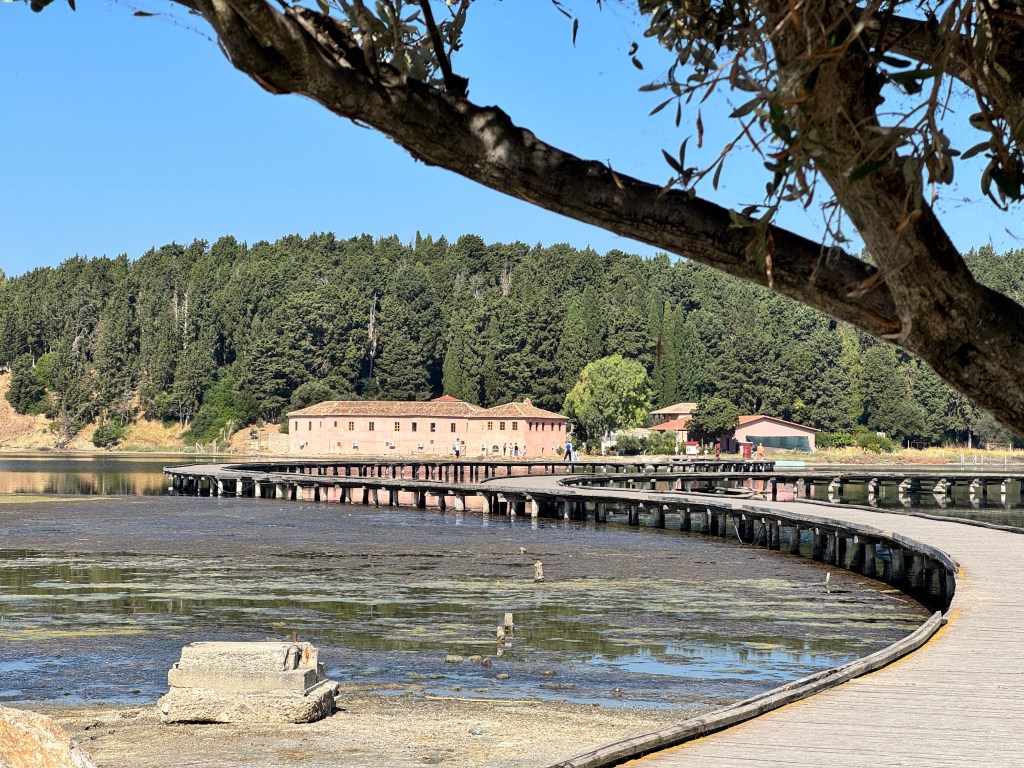
Our first stop was St Mary’s Monastery, which sits on Zvërnec Island, surrounded by the Narta Lagoon. Apparently, it is stunning in spring when the lagoon is home to all sorts of waterbirds and flamingos. In the middle of summer, though, it looks more like a swamp, teeming with crabs.
You reach the monastery via a 270 metre wooden walkway that snakes its way across the lagoon to the small island. The Byzantine church behind the monastery is still in use, although the monastery itself is not. During the summer months, however, it is used as a camp for underprivileged children, which was great to see.
There are not as many archaeological sites to visit in Albania as you might expect. The belief is that there are still plenty waiting to be discovered, but after decades of isolation and with limited funding available for excavation, much remains hidden.
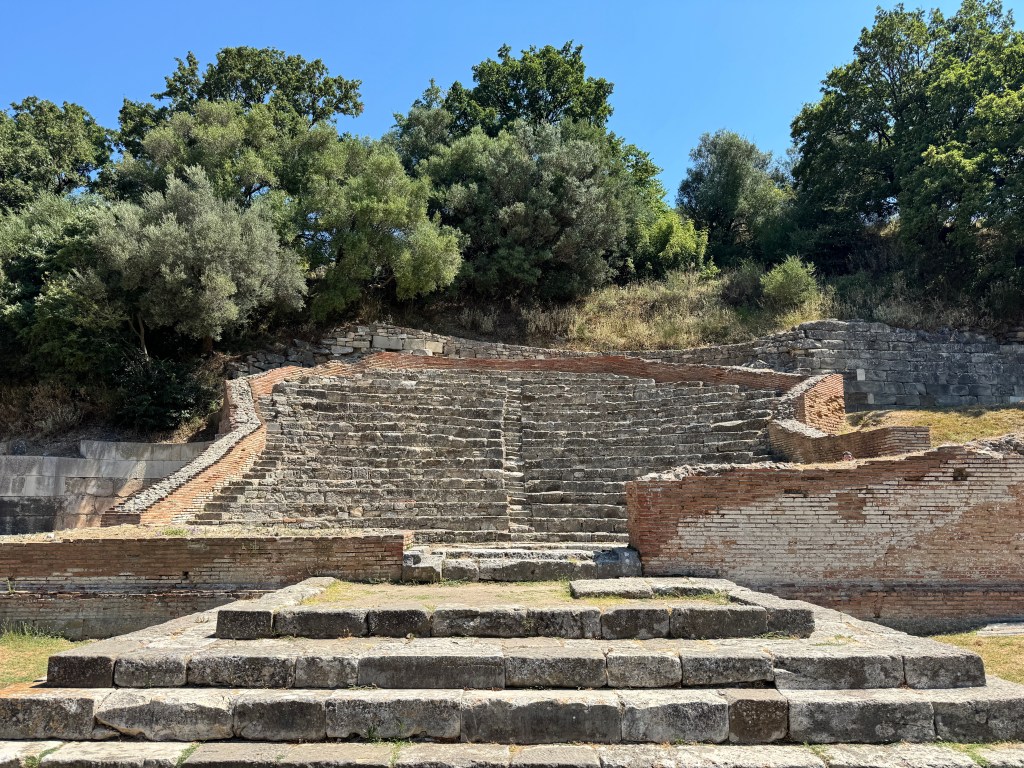
Apollonia is a good example. It is considered one of the most important archaeological sites in the Balkans, yet only around ten percent has been uncovered, with little prospect of further excavation unless outside funding becomes available.
As with so many ancient sites, its location is spectacular, with almost uninterrupted views in every direction. The only problem was the lack of trees to protect us from temperatures approaching 40 degrees. We did not spend as much time there as I would have liked, but it is one of those places where what remains hidden leaves plenty to the imagination, which I always find thought provoking.
Our final stop was quite a bit further away in Berat, somewhere Rachel had particularly wanted to see.
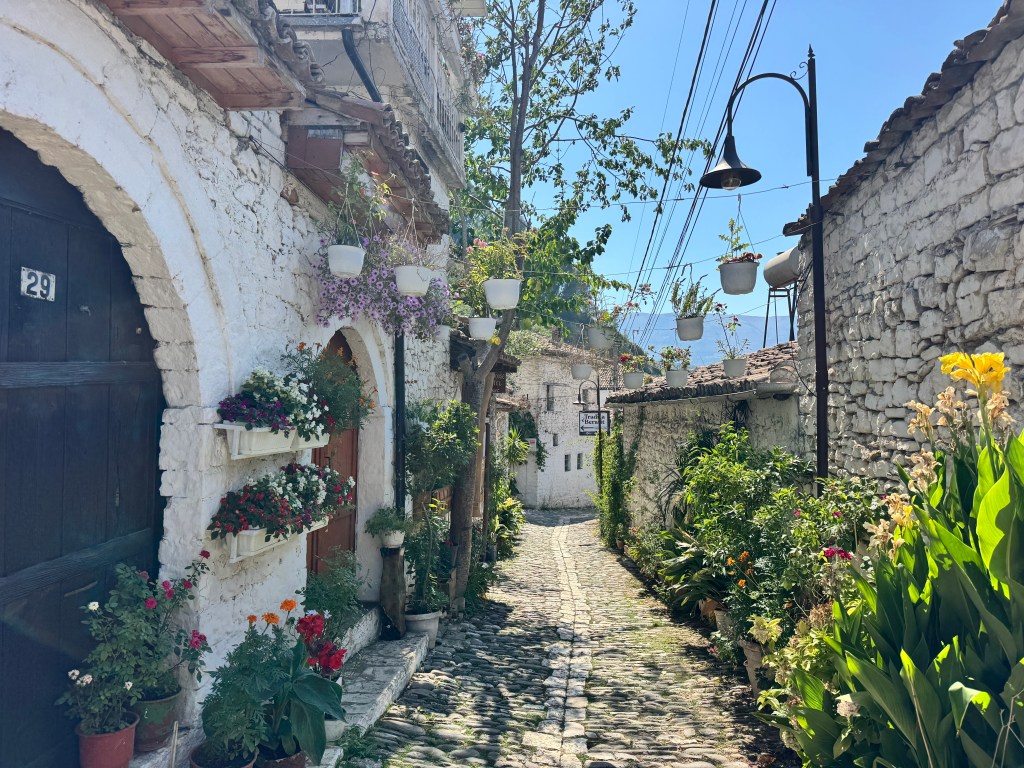
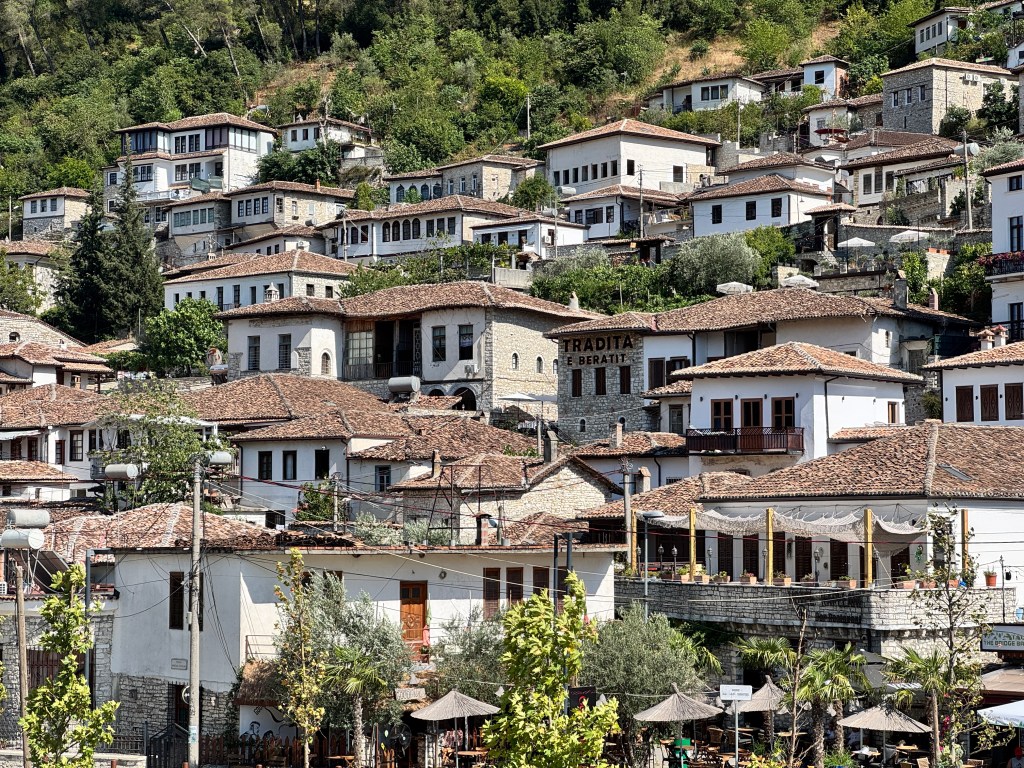
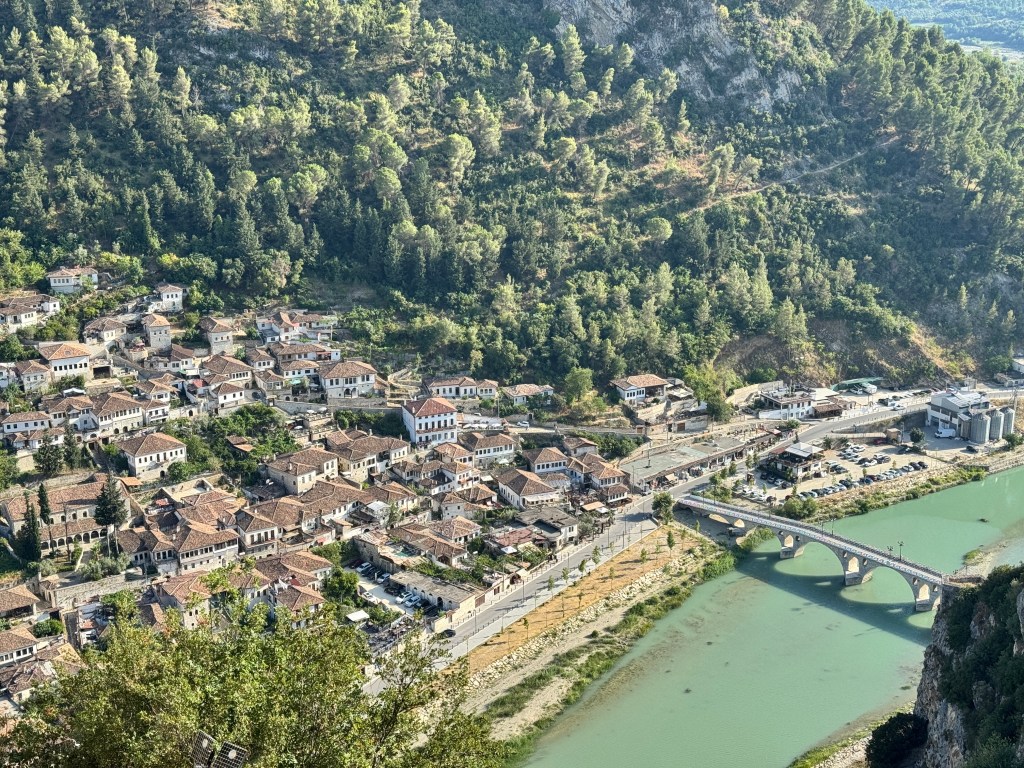
It is known as the City of a Thousand Windows, although in truth there are considerably more than that. It is not really about the number of windows anyway. What makes Berat so striking are the traditional Ottoman houses seemingly stacked on top of one another on either side of the river. As we have learned, the Ottomans certainly liked a window.
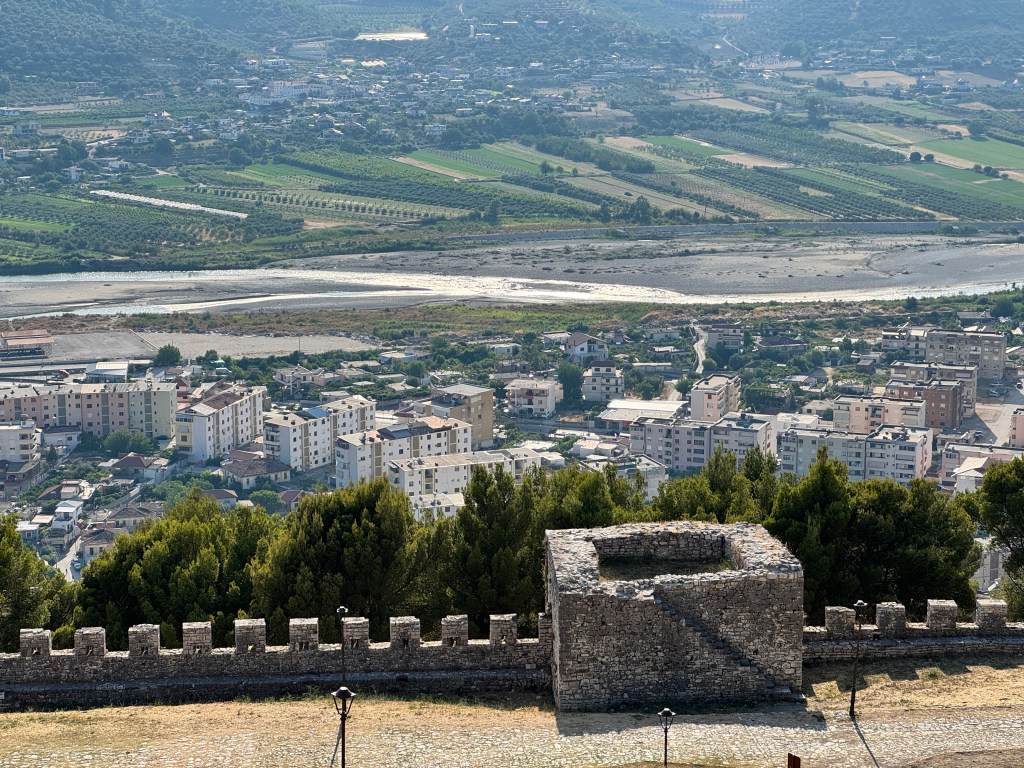
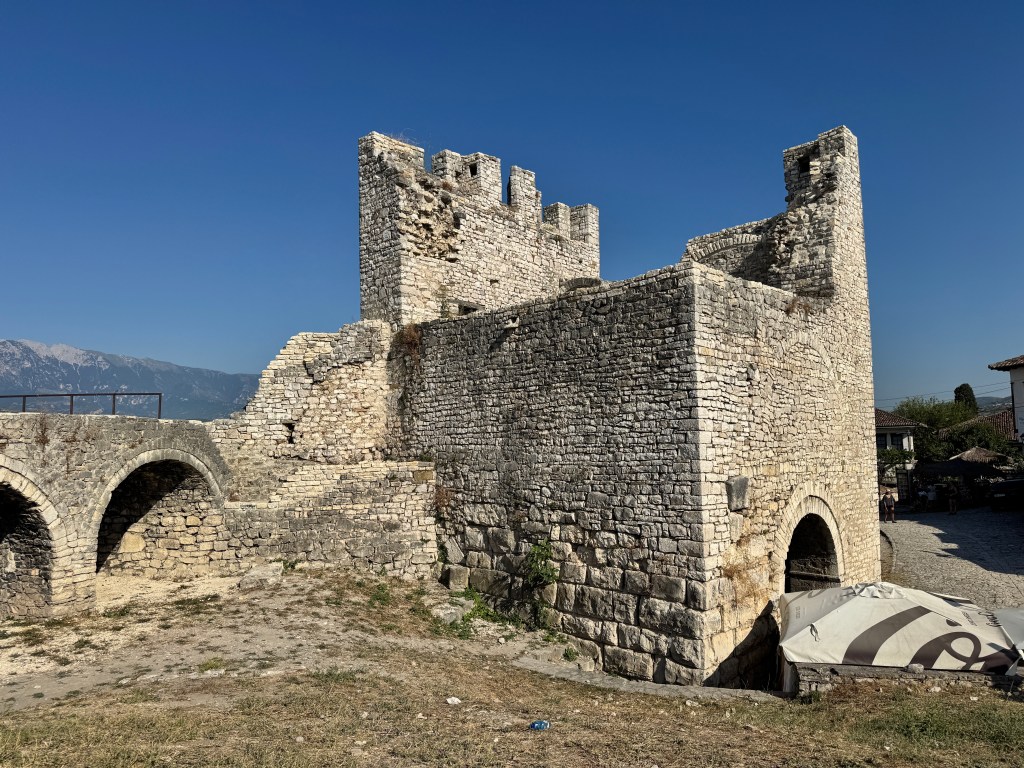
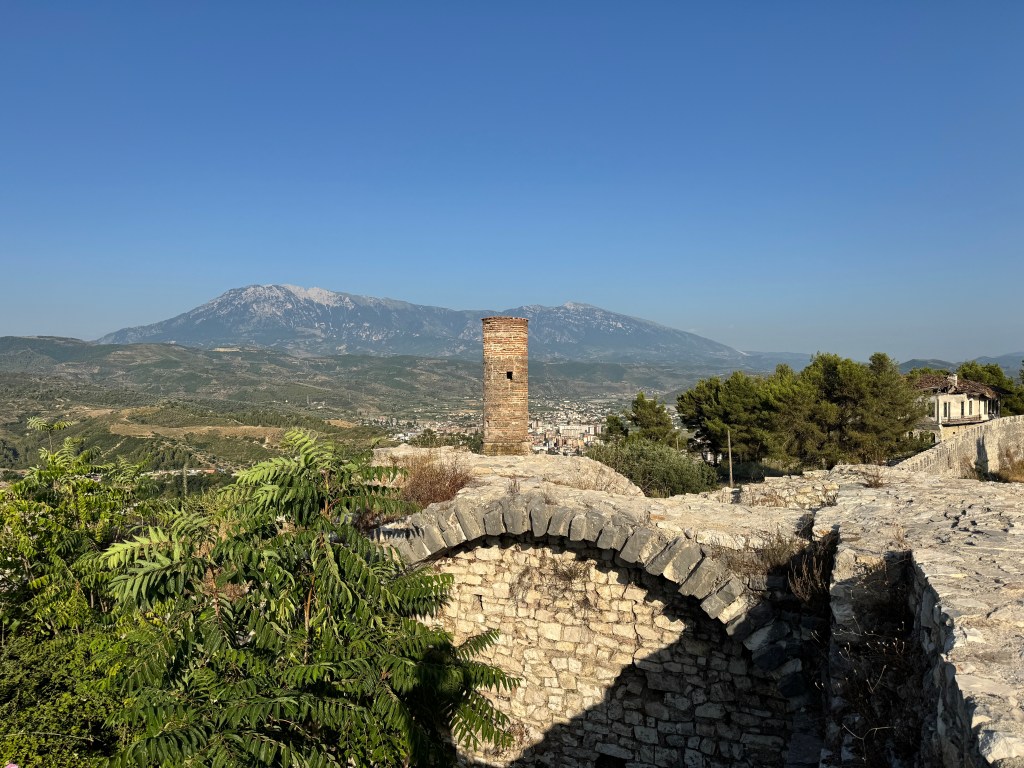
Historically, one side of the river was predominantly Muslim and the other Christian, while high above them both sits Berat Castle. Much of it is now in ruins, although people still live within its walls today, looking out across both sides of the city below.
Sadly, the heat made it difficult to spend as much time there as we would have liked, but it was no less impressive for it.
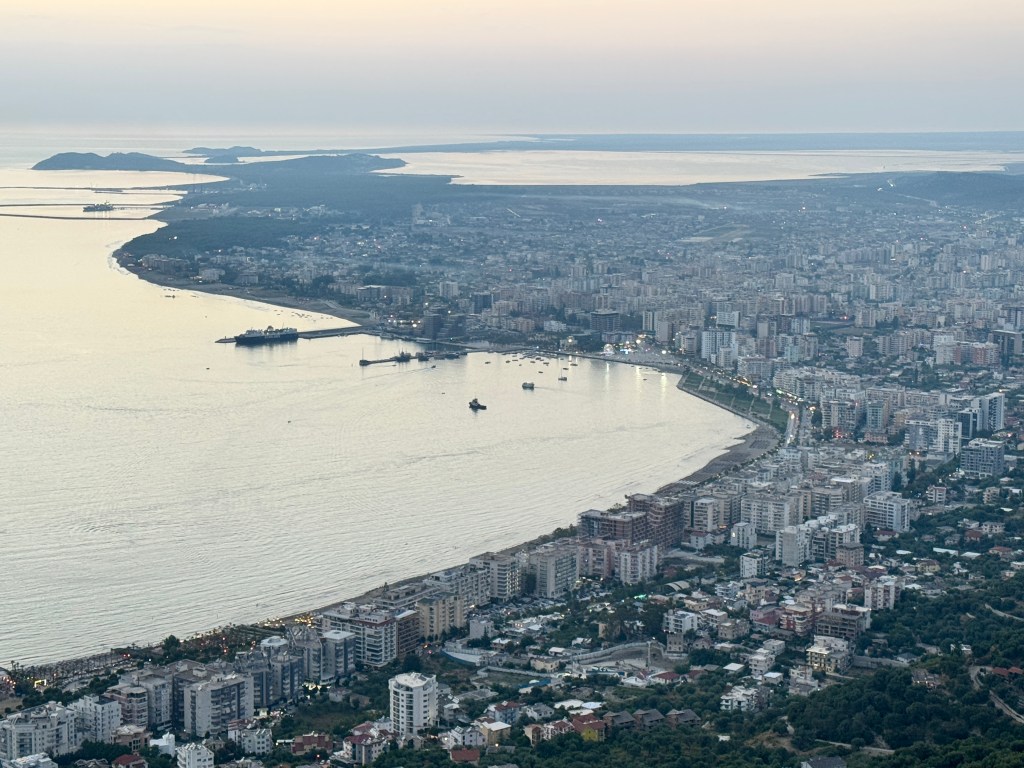
After a late lunch, we began the journey back to Vlore. Our guide was determined to get us there in time to catch the sunset over the city, but we missed it by a matter of minutes.
Still, Vlore had already spoilt us with some incredible sunsets, so we could hardly complain.