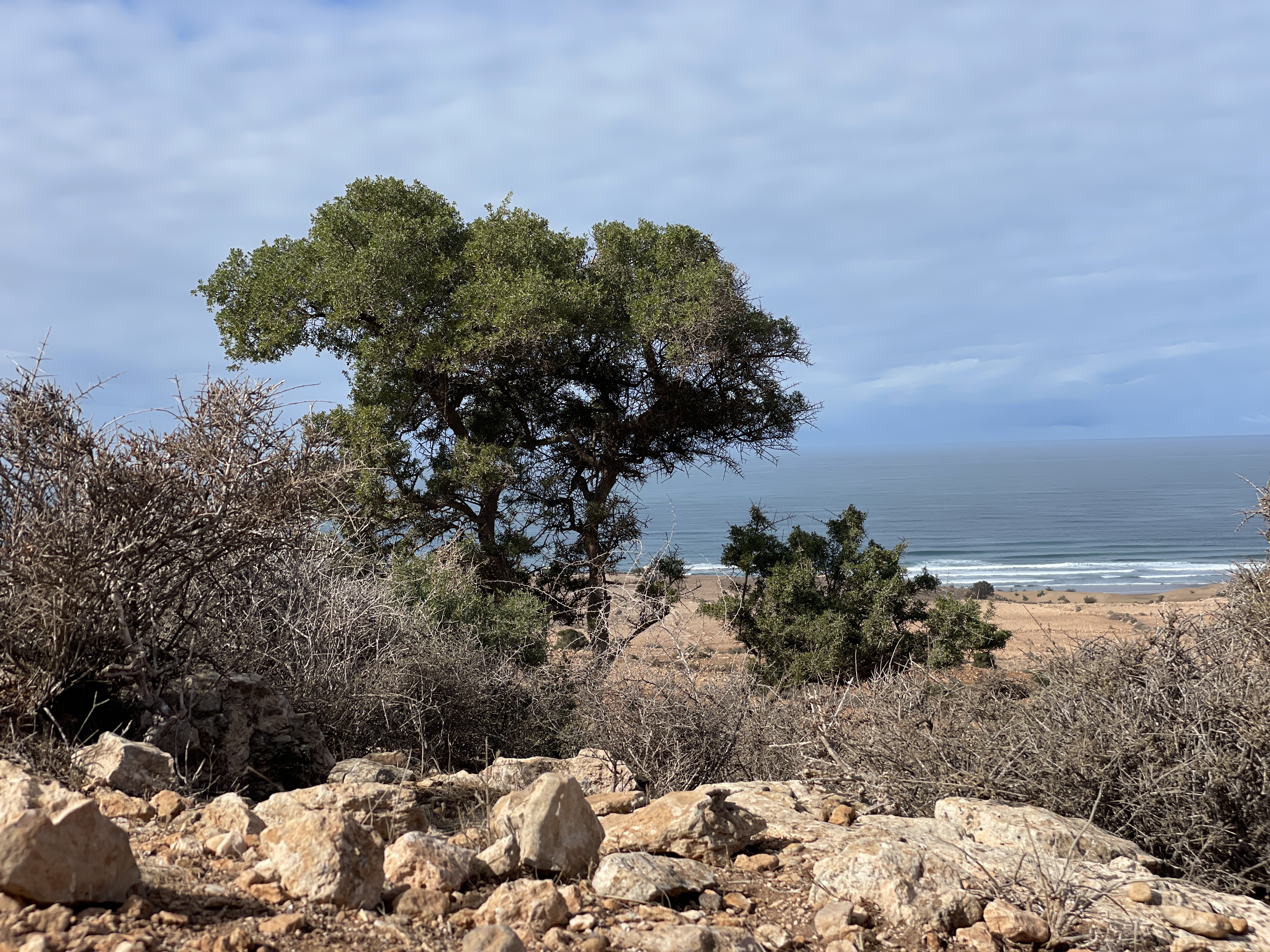
The cactus garden and wine region

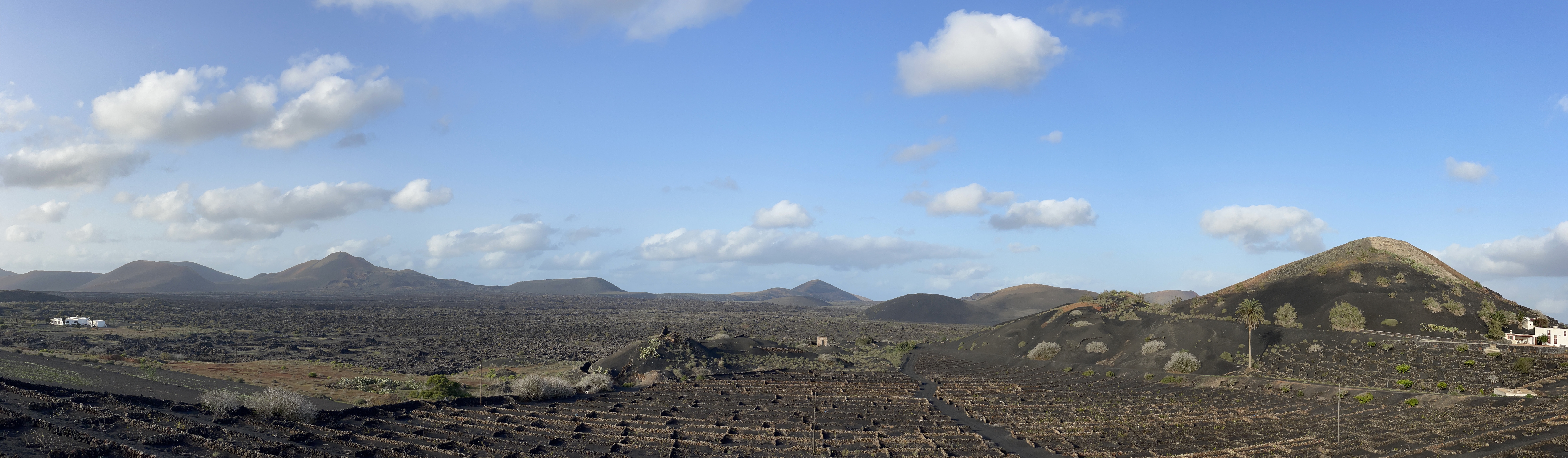
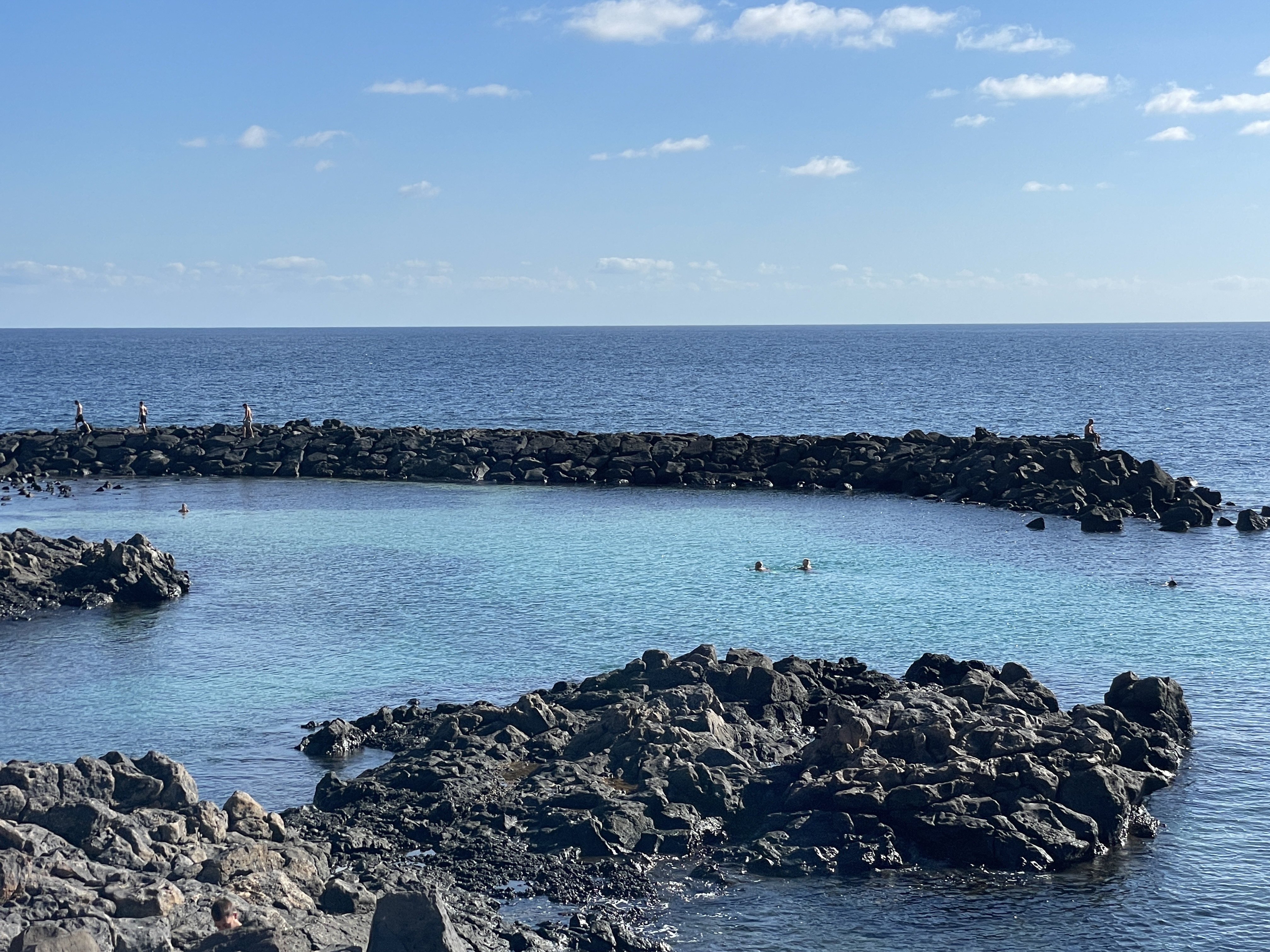
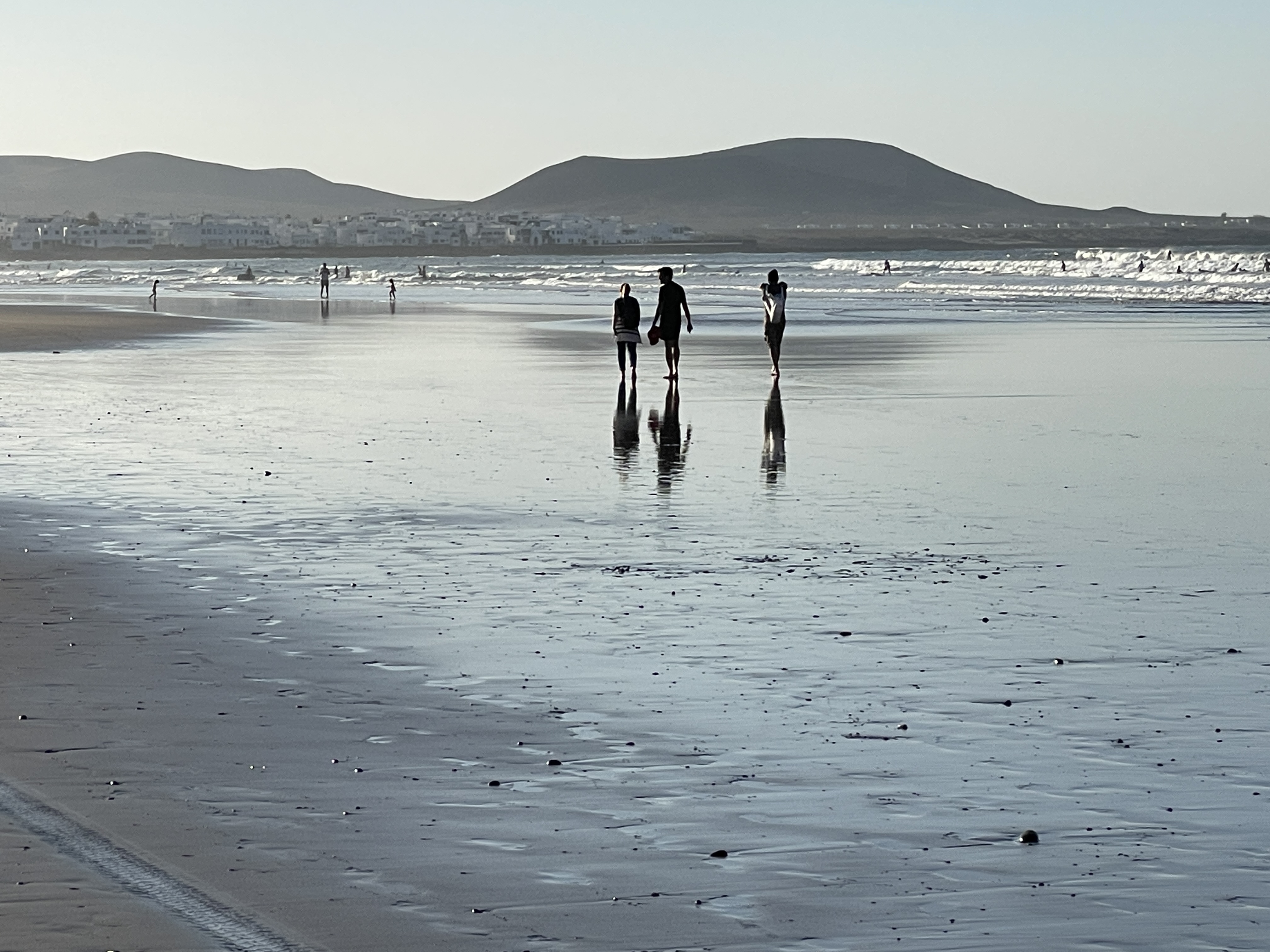
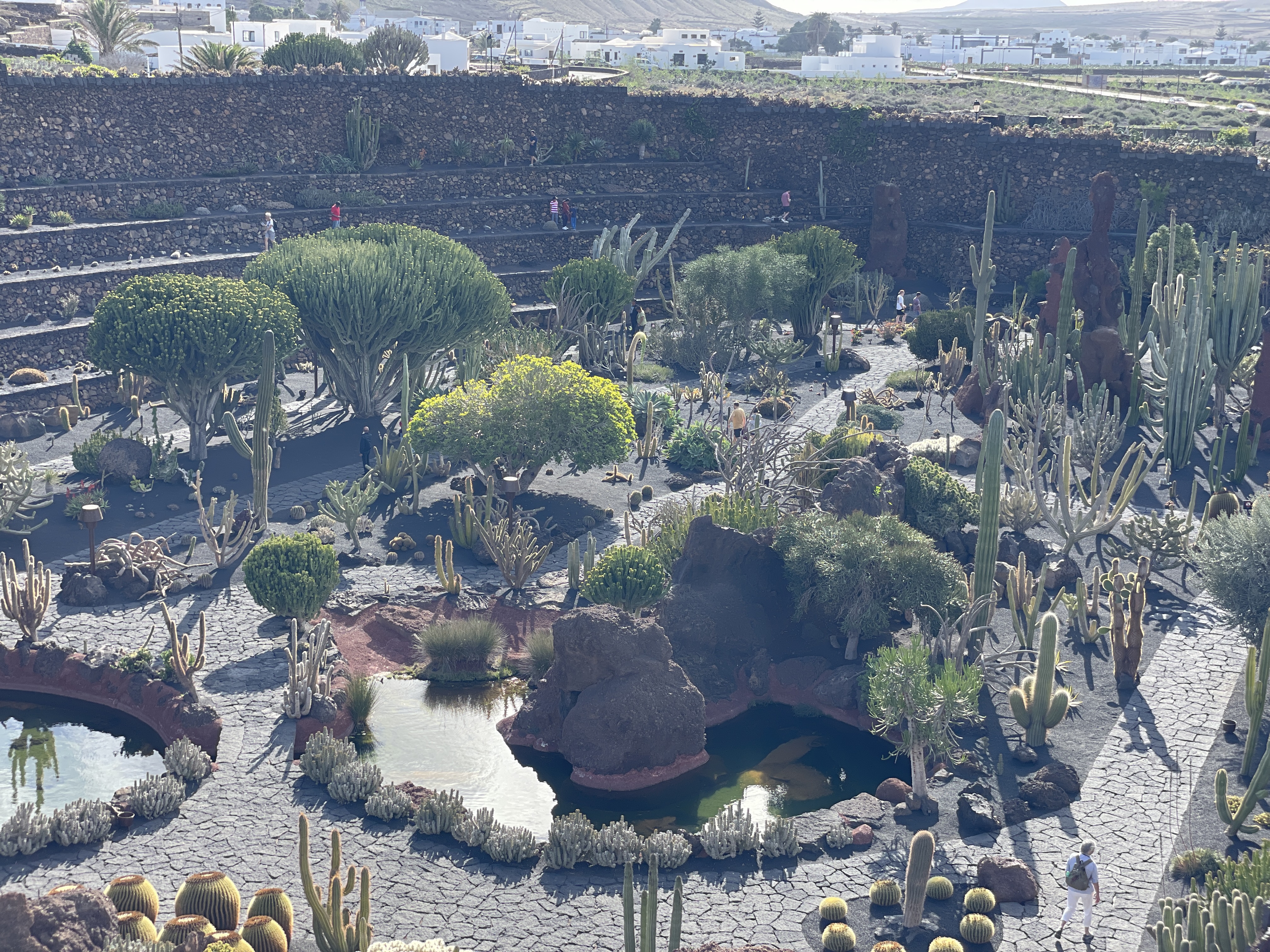
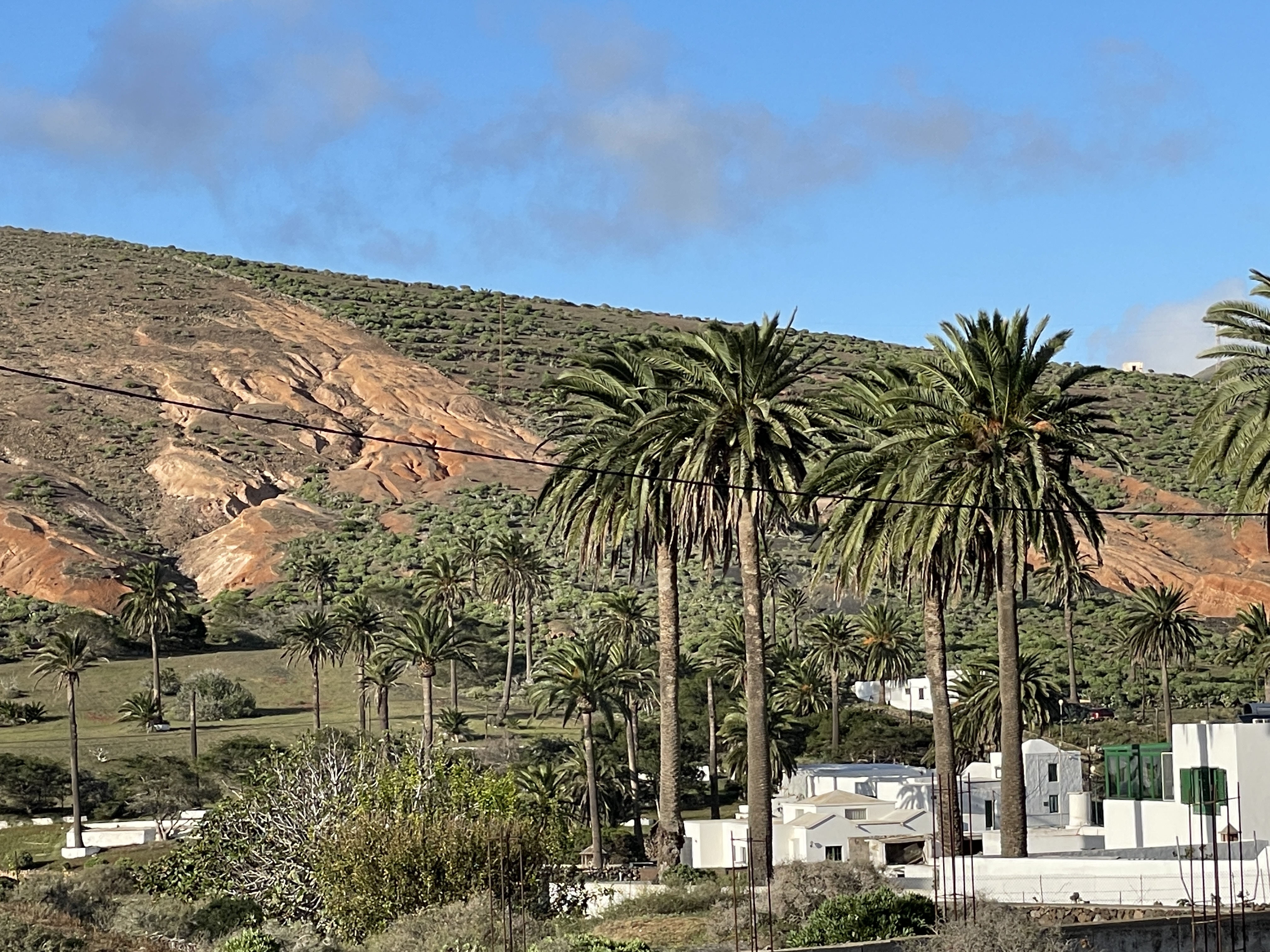
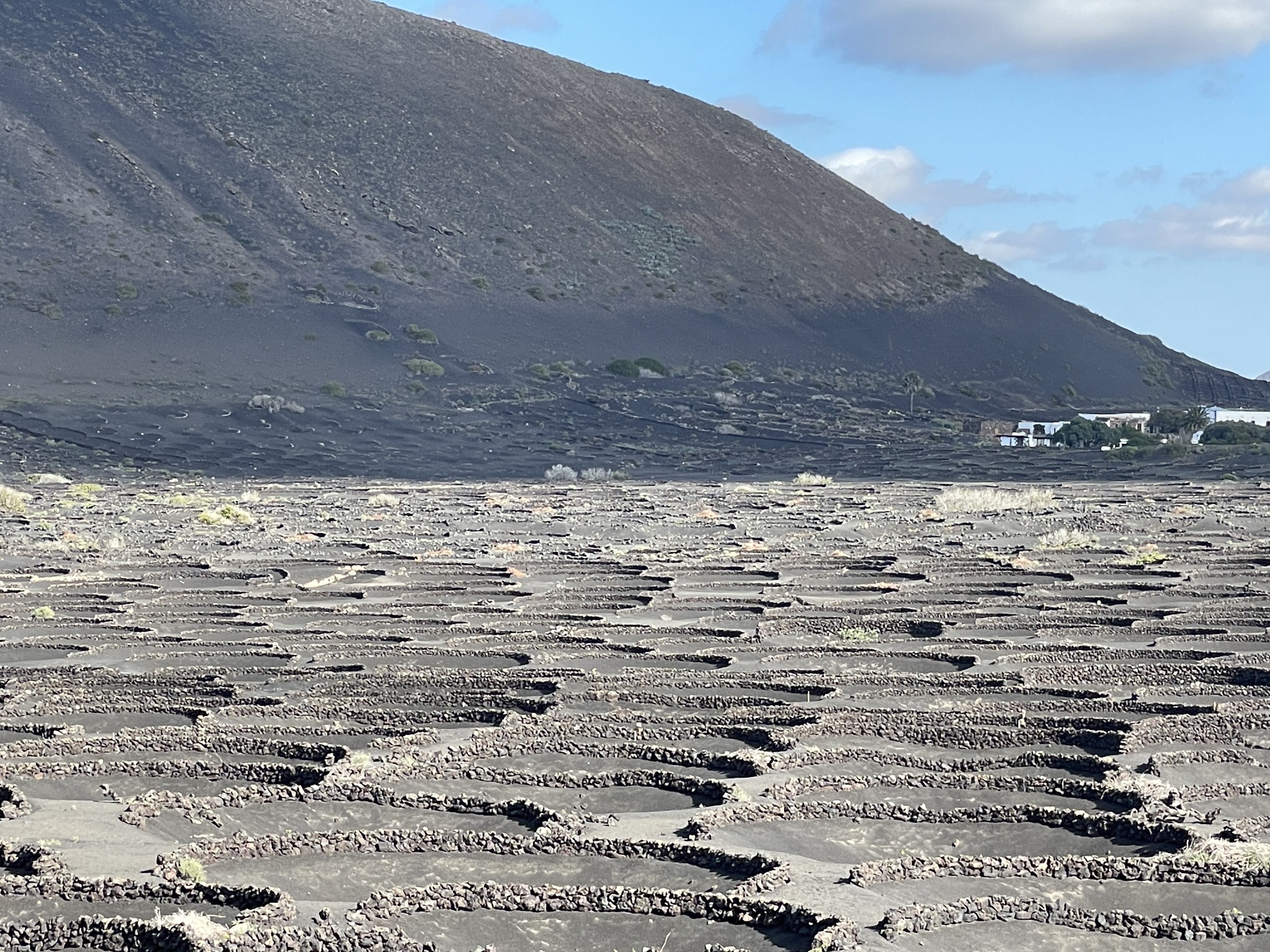
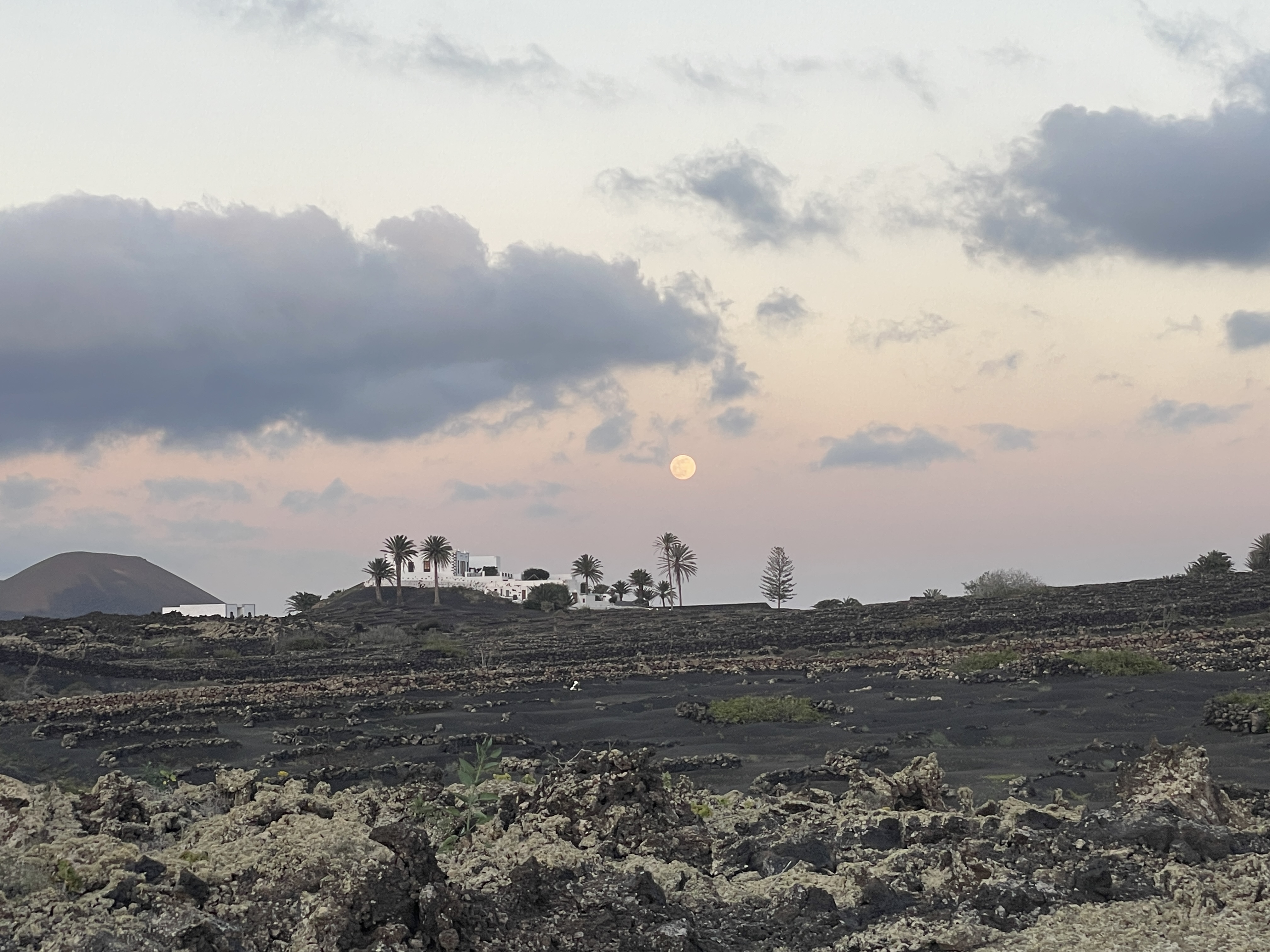
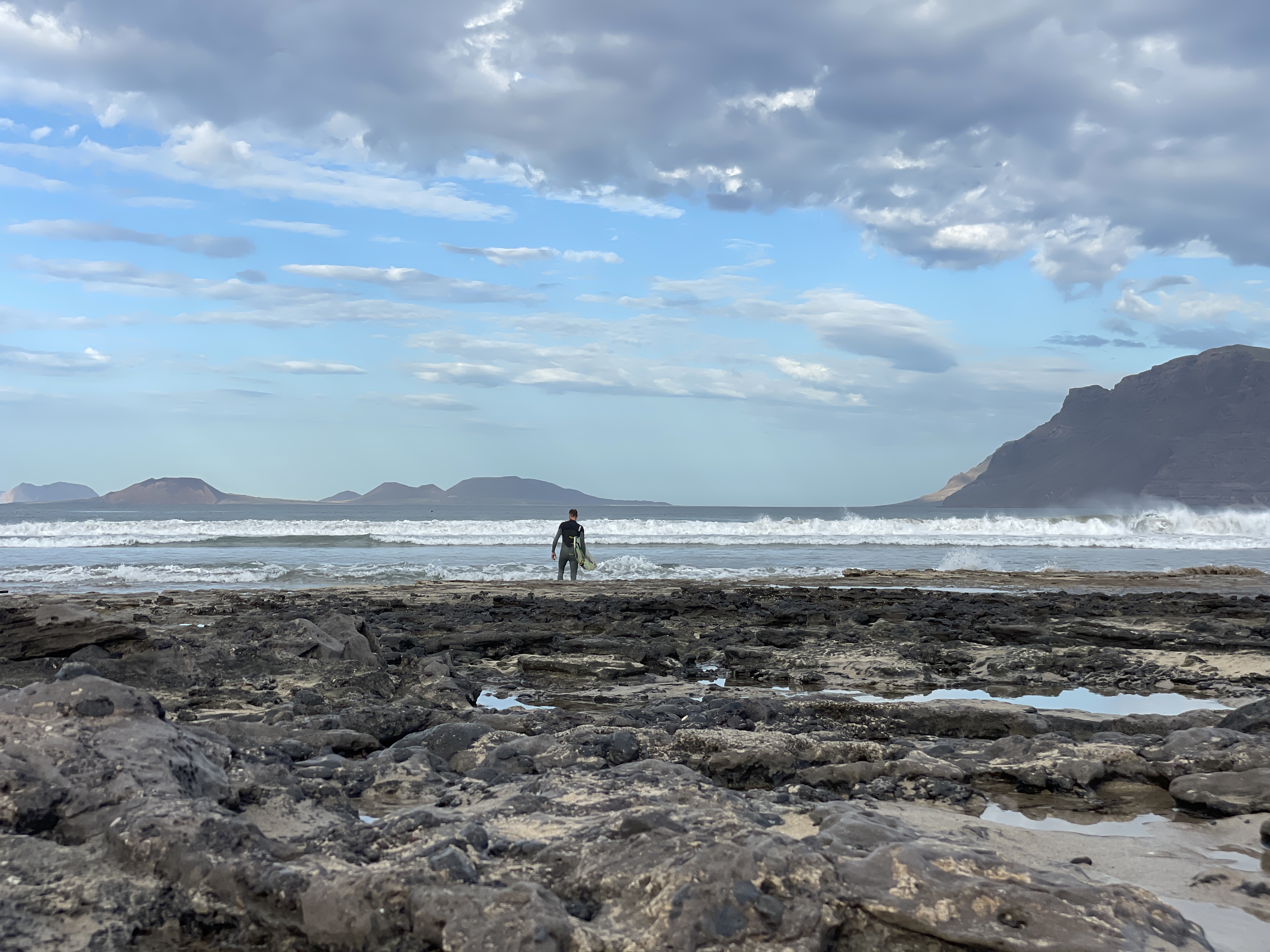
The weathers been a bit hit and miss this last week, but we’ve made the most of it. Swimming at our sheltered spot in Costa Teguise. Walking the interesting Famara beach, with its dark mountain backdrop. Continuing on the Manrique theme, we took a trip to see his final (he died in 1992) project; “El Jardin de Cactus” it has 1000+ cacti with over 450 different species. The garden itself was created inside an abandoned landfill and thoughtfully created to add a tourist attraction to an otherwise failing agricultural area. It’s a peculiar place, set against the backdrop of black volcanic stone, with sculptures and water features, which only aids to accentuate these interesting plants. Although none of them seem to be native, many of them are now thriving freely across the island. The cacti are woven around the inside of the bowl on ascending levels, with the whole project blending seamlessly and worth a look. We headed up to Haría, which sits at the most northern tip of the island and is a charming little village nestled in the valley of 1000 palms. On the way back we made our way to “Valle de La Geria” the now highly acclaimed wine region. A dark volcanic area that sits in the valley between the mountains and volcanoes. Again incredibly this baron looking area is dedicated solely to wine growers, who use a growing technique where they create individual funnels (a geria) dug 2 to 3 meters below the volcanic ash, allowing the plant to reach the fertile soil and retain the moisture and dew, capped off by building dry stone walls around them as protection from the constant trade winds….very resourceful indeed! We discovered a wonderful restaurant there, where together with the great food, guests were able to drink the varying vintages all of which rachel assured me were excellent!

The Timanfaya national park and Cesar Manrique

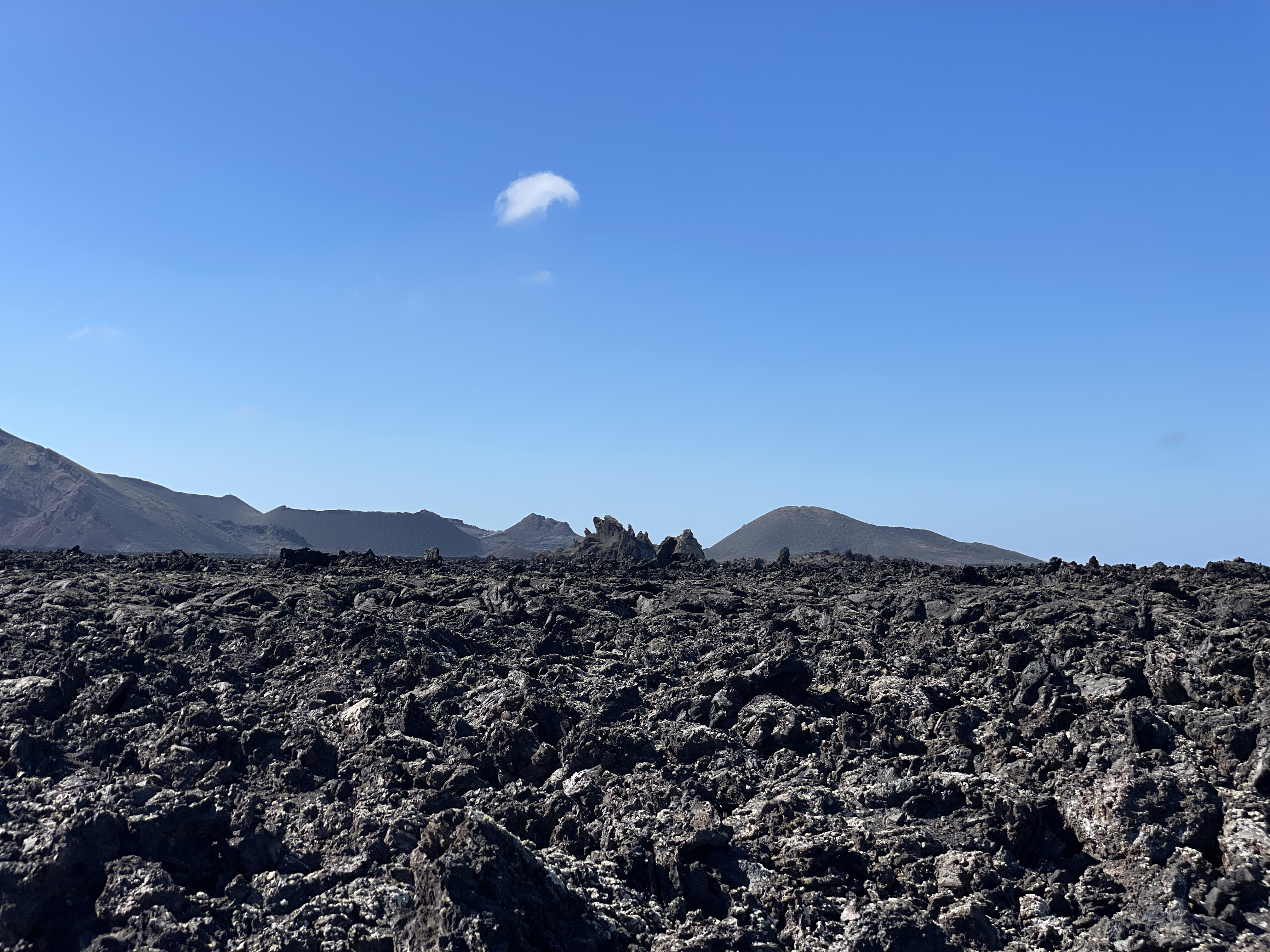
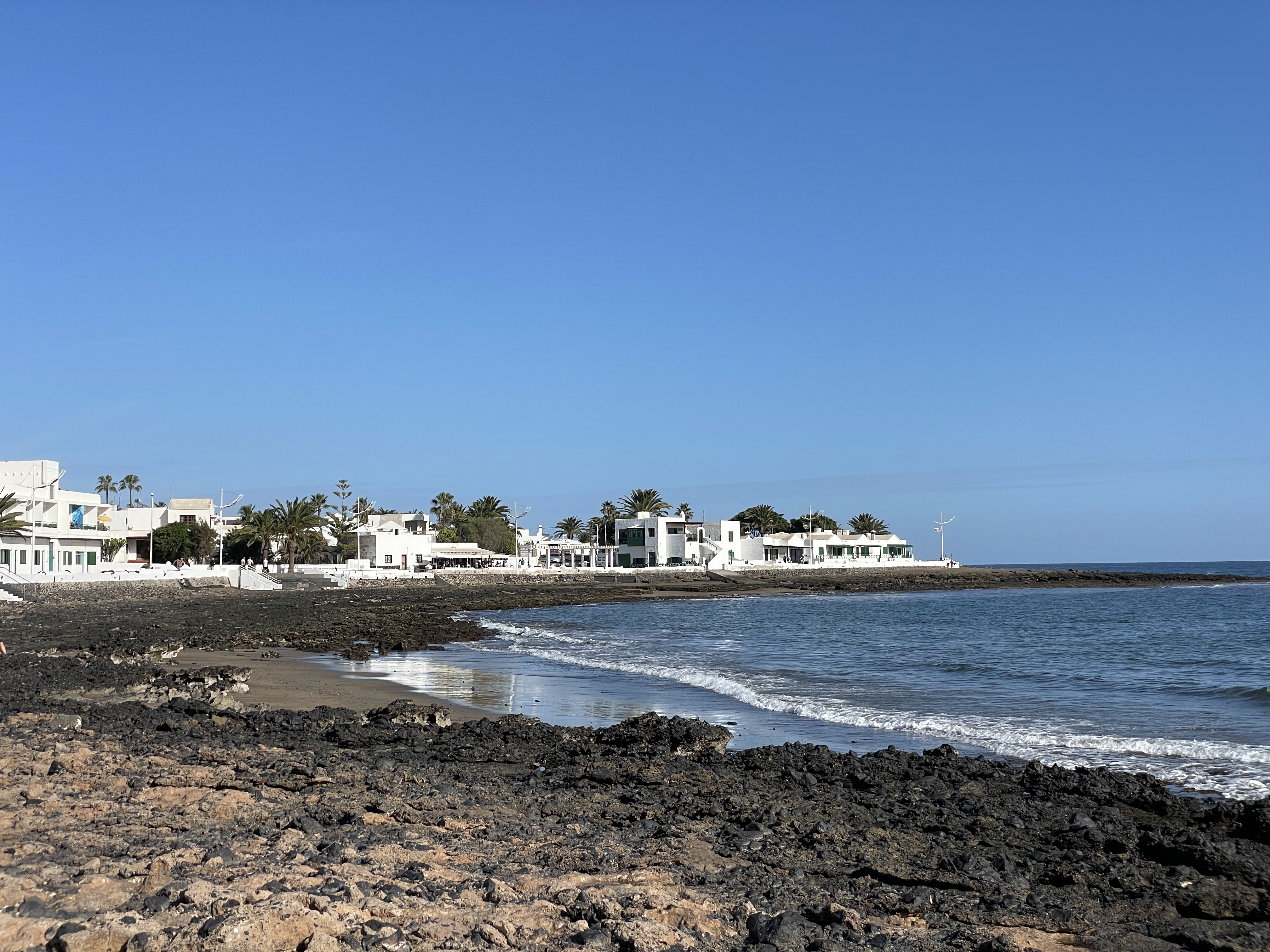
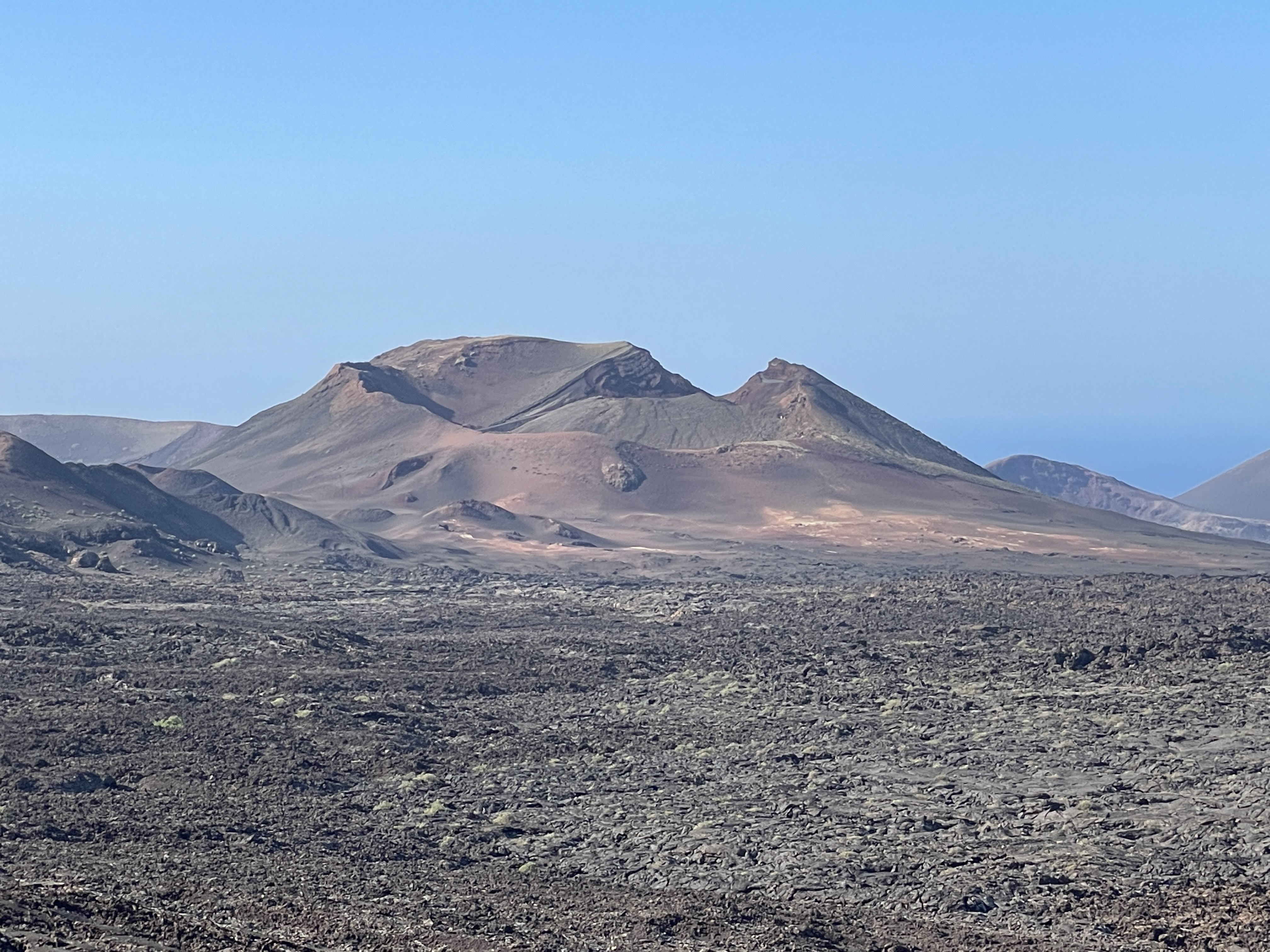
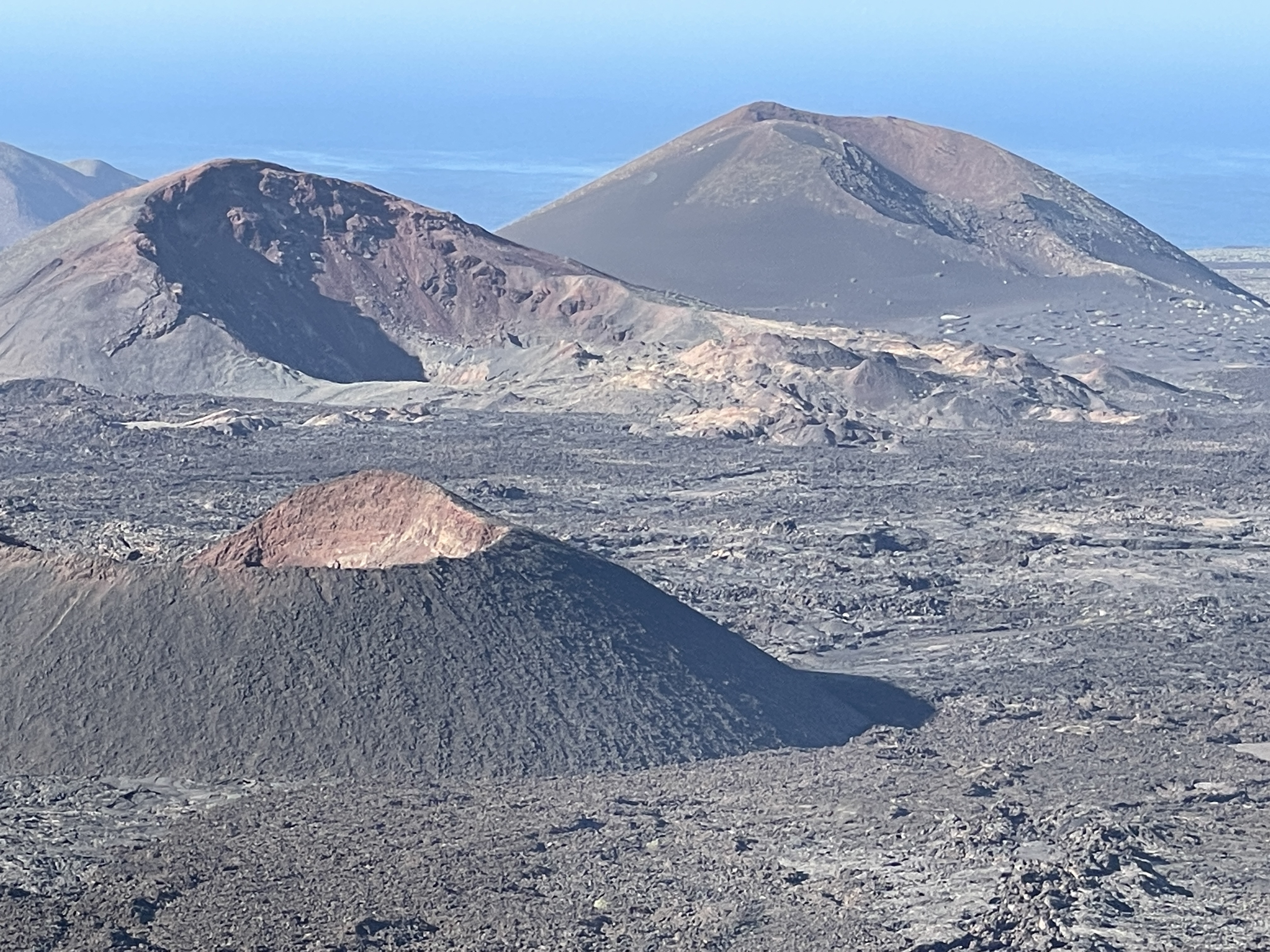
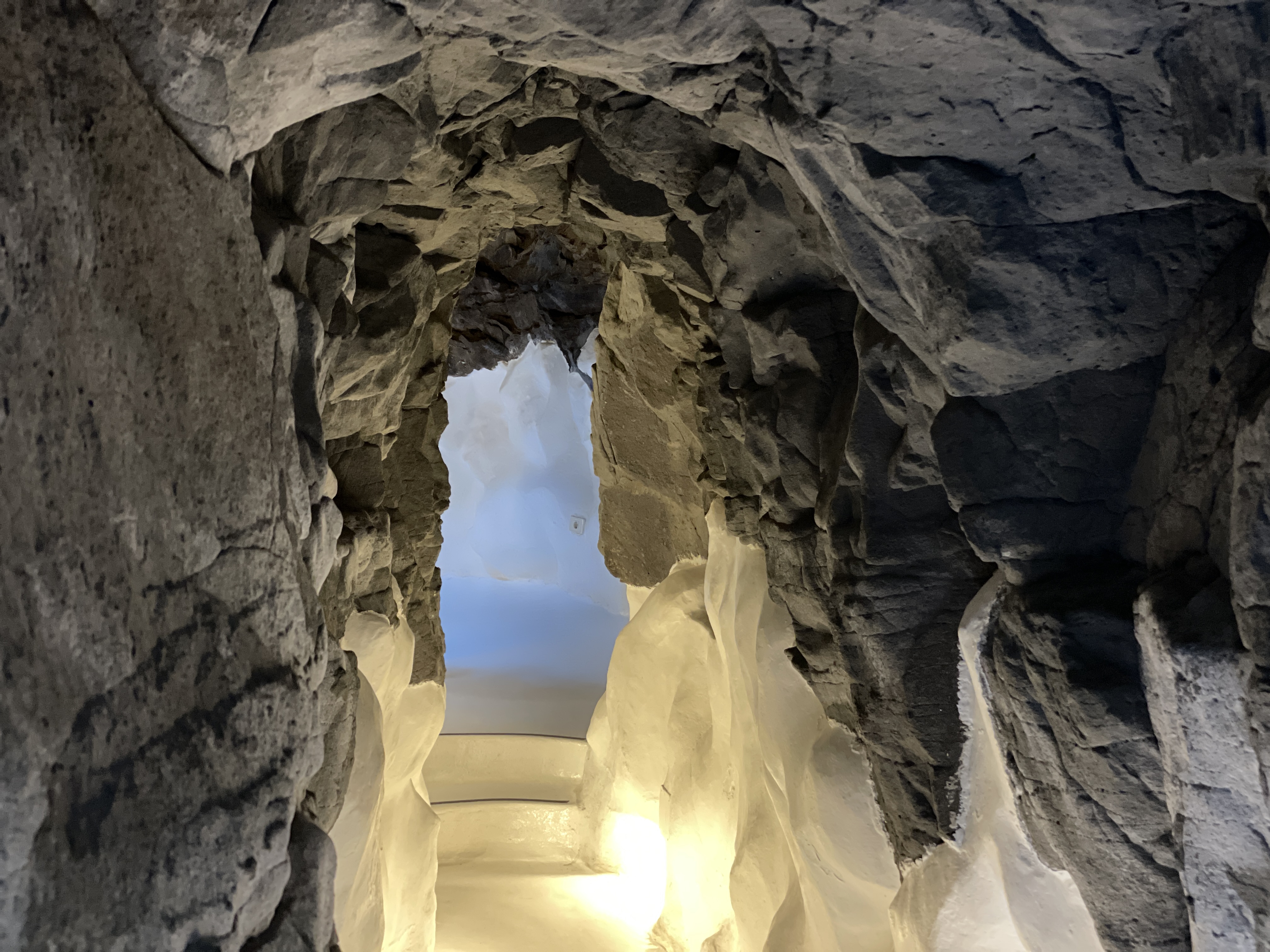
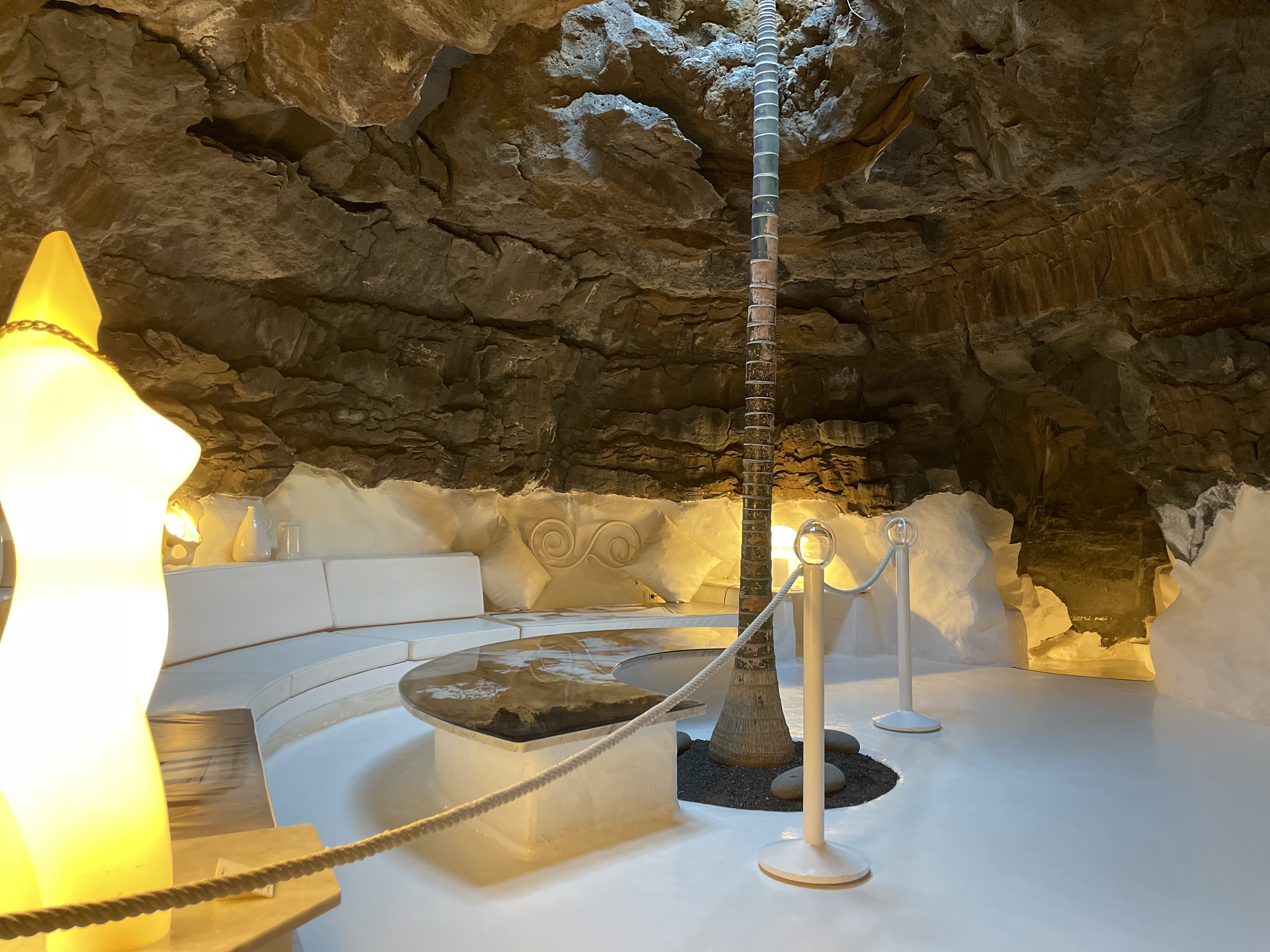
Driving around Lanzarote it’s easy to imagine how the island nearly fell into the hands of greedy property developers, hell bent on throwing up as many concrete apartment buildings as they could, all of which would have obscured the landscape and dreamy panoramas out across the Atlantic. There are still some sizeable apartment buildings at some of the coastal locations, but they’re not all sharp lines and concrete and seem to blend in. The houses, as I mentioned before are all white and look individually crafted, as a posed to manufactured. And against the black backdrop of the volcanic landscape, with date palms and cacti scattered around, look very dramatic. With Rachel feeling better and not working we’ve been out exploring this week. We’ve taken some long walks up and down our local beach “Caleta de Famara”, we’ve also taken a look at Playa Honda & Playa Blanca both of which have wide long sandy beaches and we’ve even found a nice place to swim in Teguise. We took a trip to the volcanic park and a private tour through the volcanic terrain, with around 25 volcanoes in the park. After the tour we had lunch in “El Diablo” a restaurant designed by Cesar Manrique, that sits at one of the high points in the park. The restaurant uses the heat from the volcano below (600 degrees Celsius a few metres below) to cook the food, which was tasty indeed and the views across the landscape only accentuated the experience. I’ve become a little obsessed with Manrique & not just for his wonderful creations, but also for his contribution to the Island. With that said we went to see the home that he had carved into the volcano, well more specifically the lava tunnels. Not only is it incredible to see how he’s blended the 3000 metre home perfectly with the beautiful plants and trees that run through the 30,000 metre plot, with its entertaining areas inside and out, it’s a hedonists paradise.

Fire Mountains

A moon landing…Lanzarote

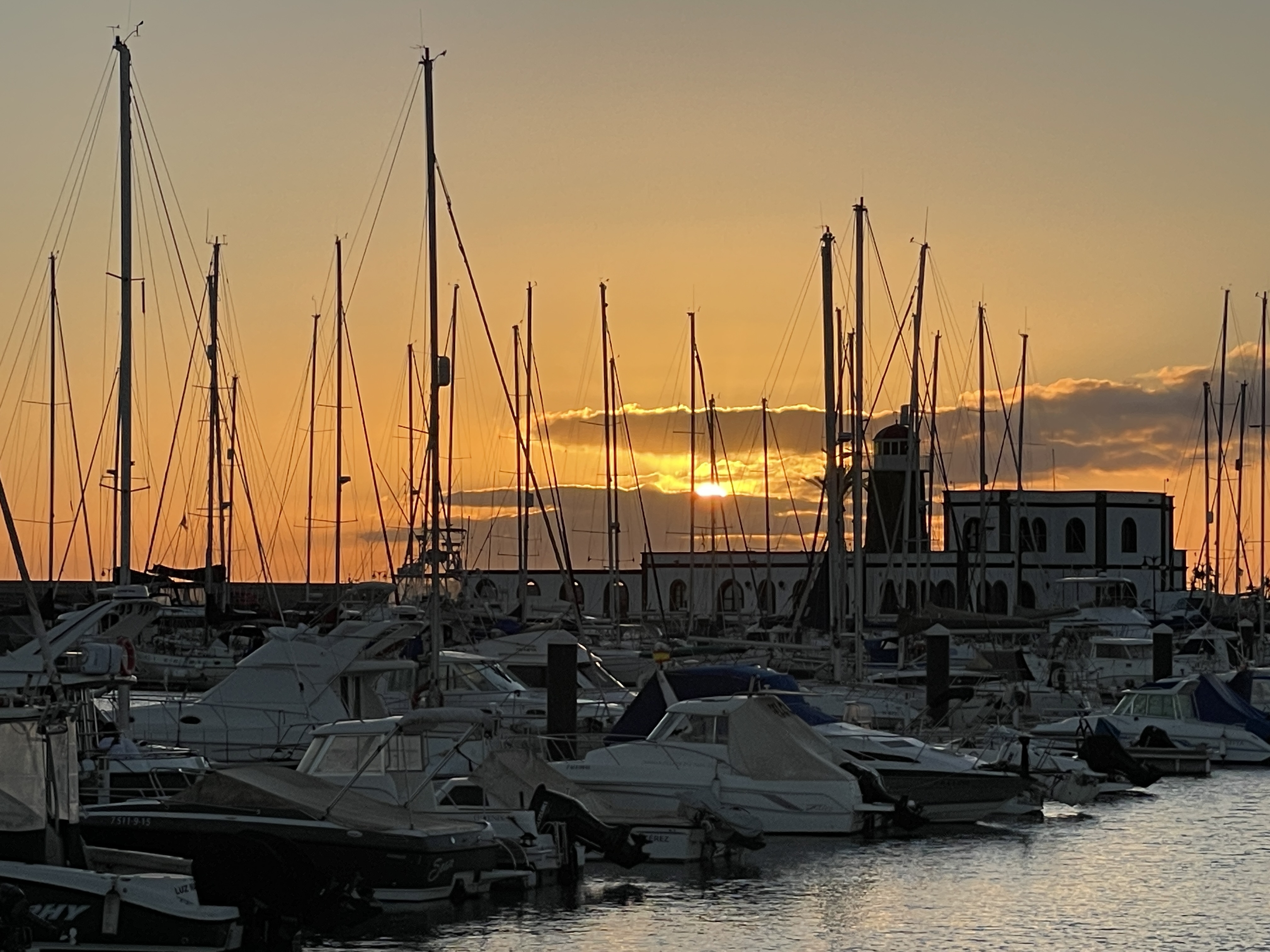
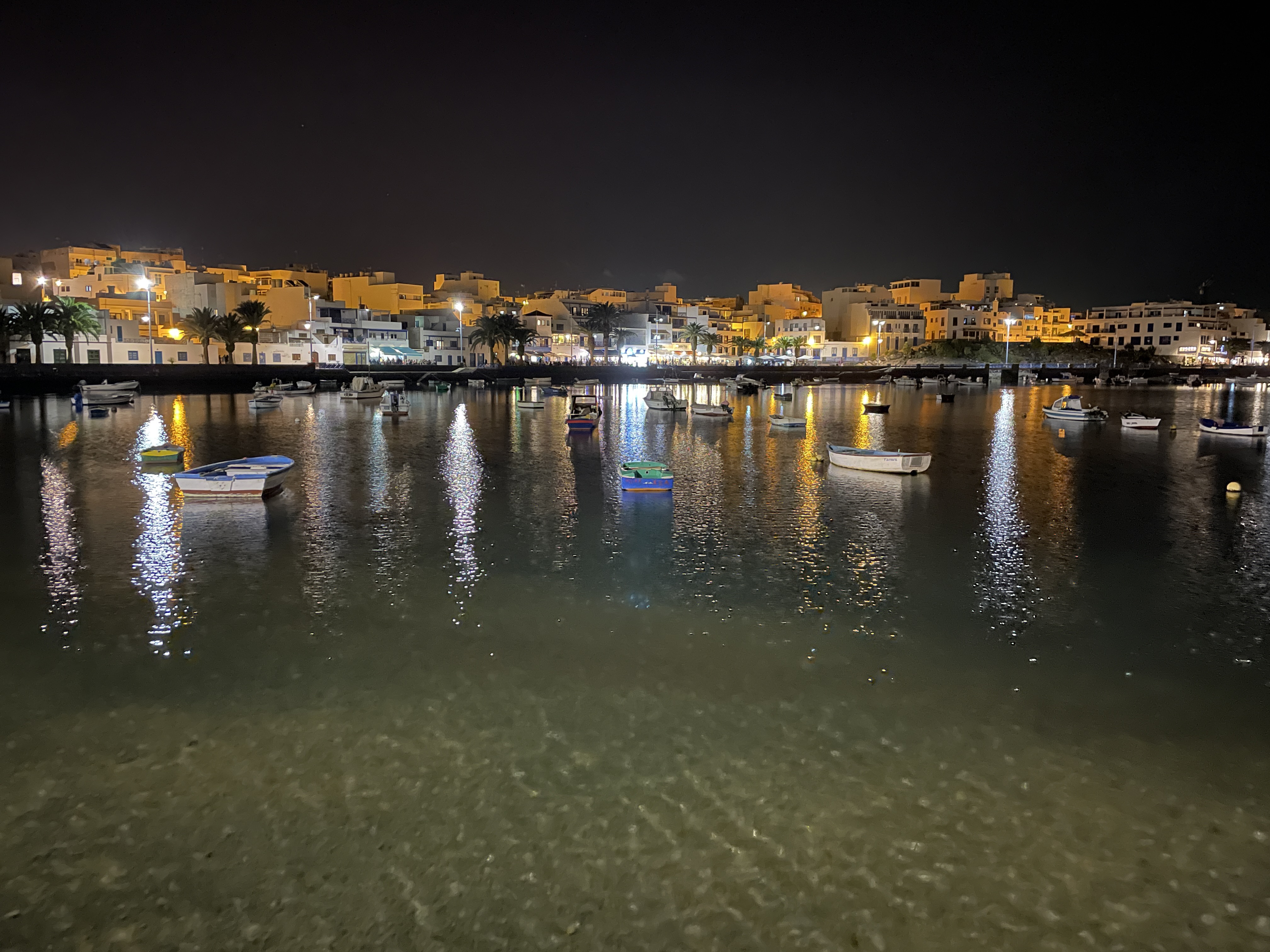
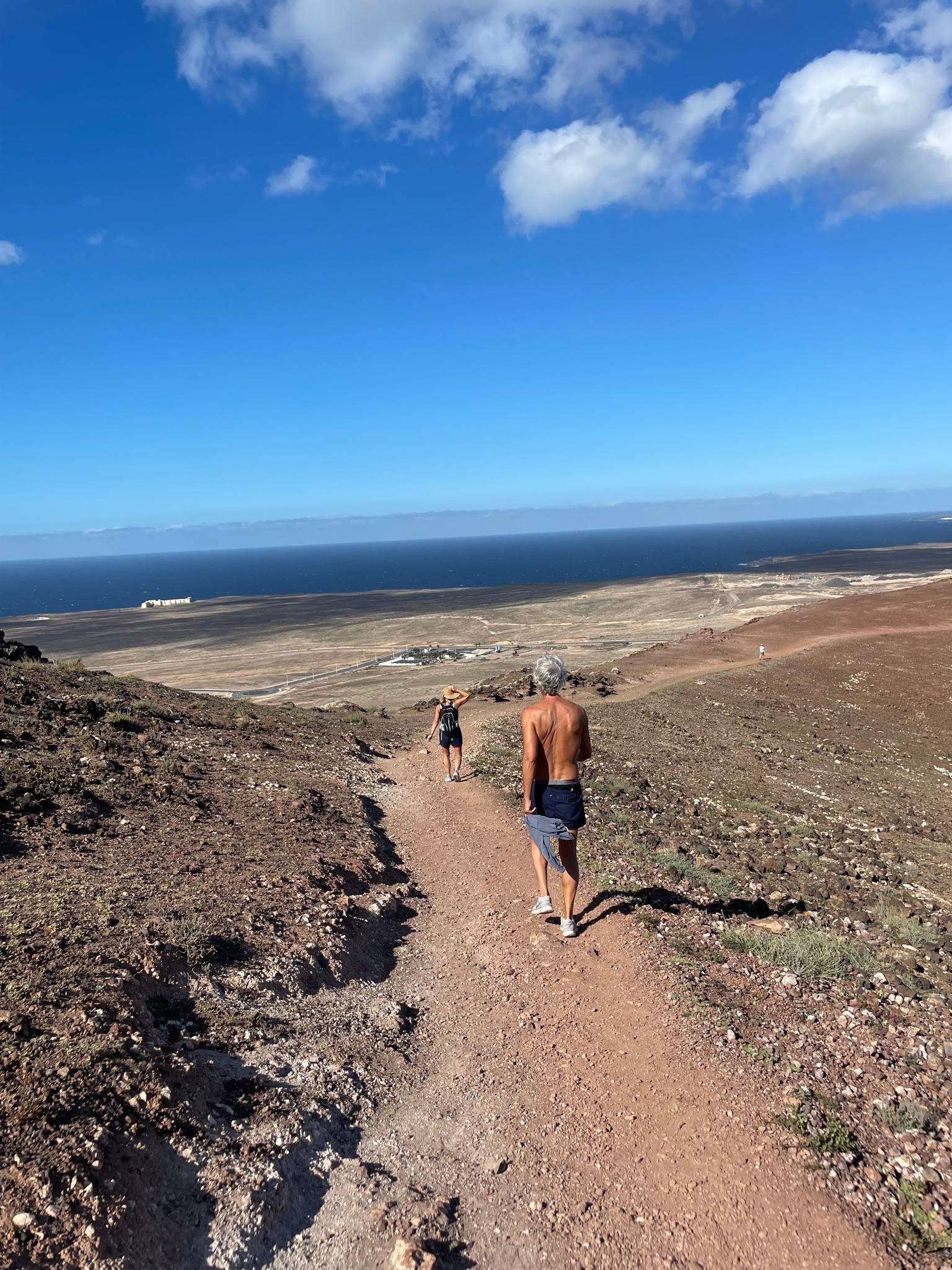
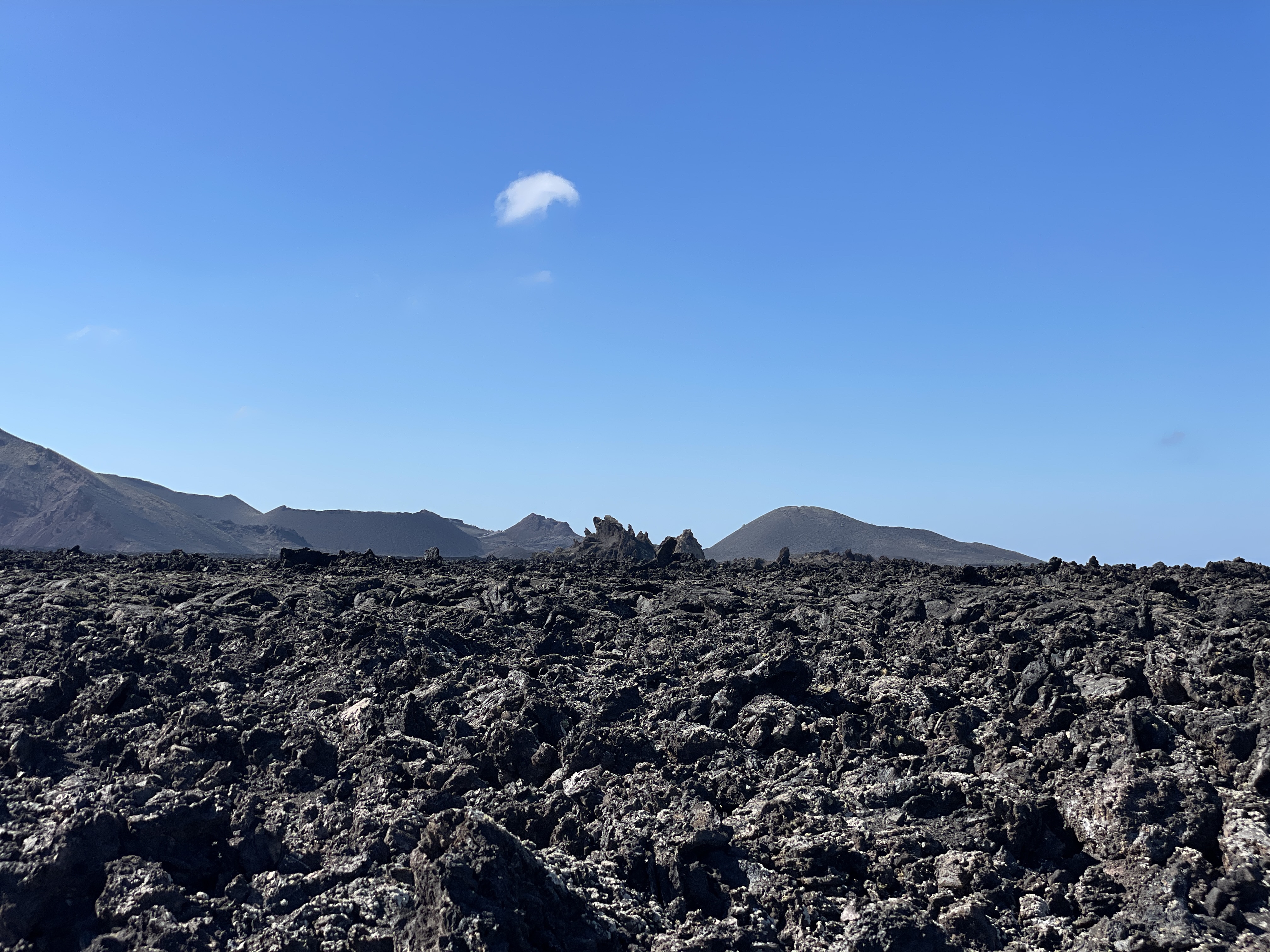
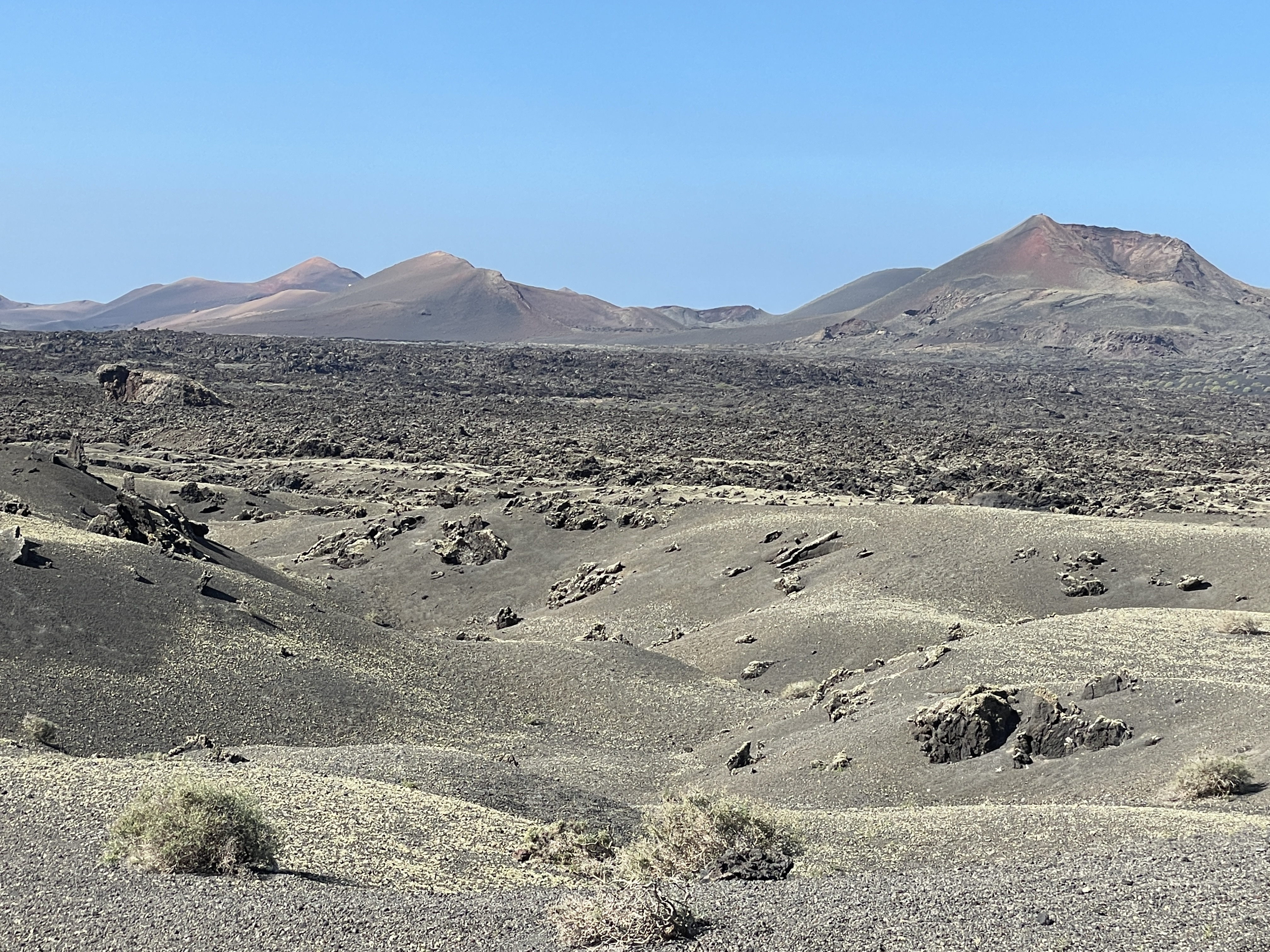
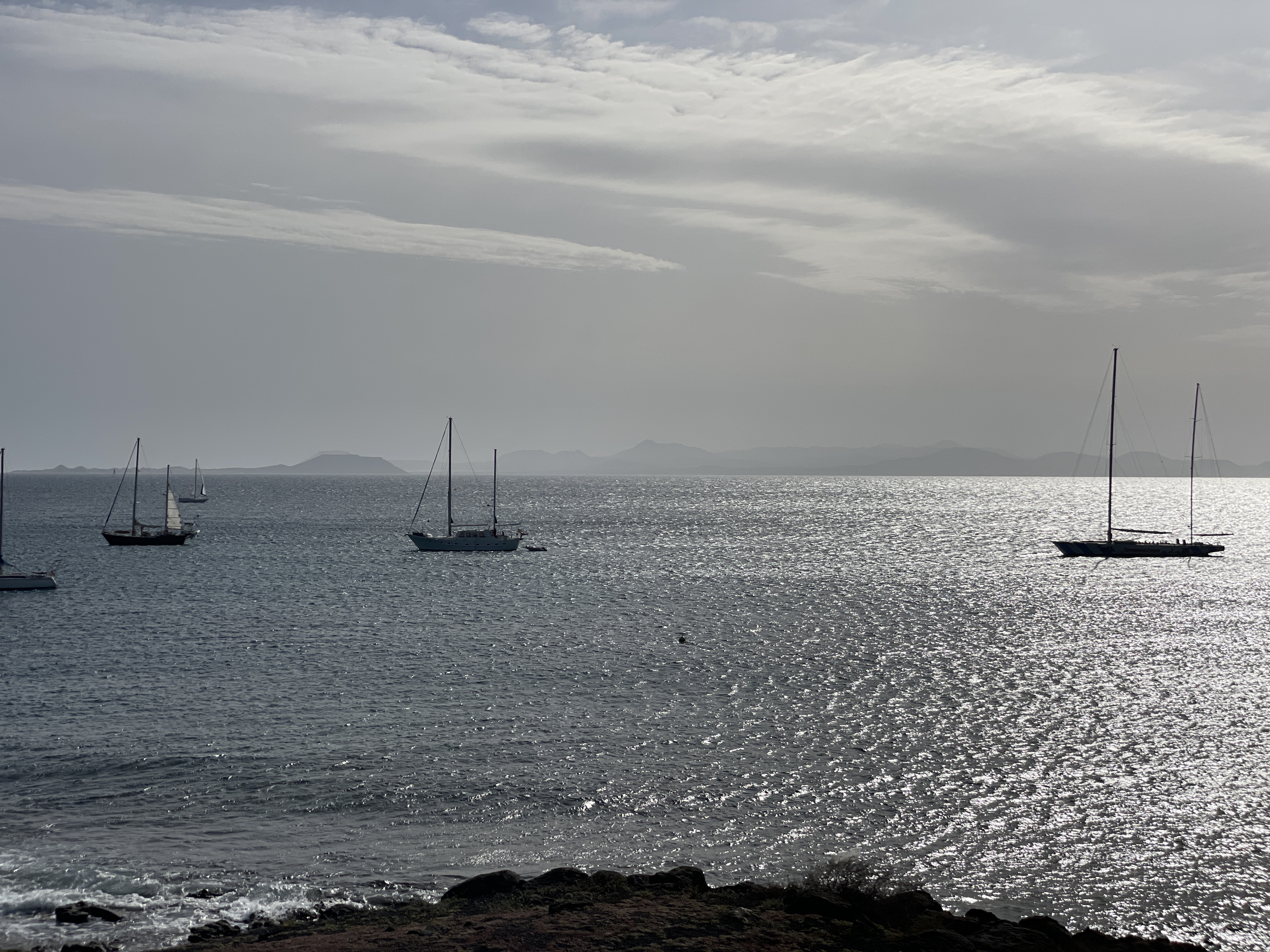
I’ve not been to the moon before, but the landscape here in Lanzarote is how I’d imagine it to look like. We landed in the capital “Arrecife “at about 7pm, but by the time we’d got on the road it was closer to 8pm. I haven’t driven for a while and the unfamiliar roads with no streetlights had left me feeling a little daunted, but on the plus side, as there’s little light pollution, you get a amazing views of the night sky…according to my co-pilot! Fortunately for me, it was only about a 25 minute drive west to La Vegueta, where we’re staying, it’s also right on the outskirts of the Timanfaya national parc, which is home to the most incredible volcanic landscape. The villa’s brand new and is well equipped, with everything we need. Rachel hasn’t been very well this week, so we’ve had a quiet week, but have had a little look around. Lanzarote is the most northerly of the Canary Islands, but because of it’s close proximity to the Sahara, it’s also the sunniest. The islands unwanted reputation, of the 70’s/80’s was rescued by the wonderful local artist, sculpture and architect Cesar Manrique who with clear direction and government support restored it back to what it is today. All of the buildings are of a certain style and painted white and often with green frames and doors, the surrounding areas too are well presented. Our local beach Caleta de Famara is a surf beach with 2km of beach and surrounding dunes to walk through. We took a walk around part of Timanfaya, which unsurprisingly is a protected UNESCO site. These volcanic eruptions between 1730-1736 helped shape the islands and it’s stunning landscape. We had lunch at the marina in Playa Blanca, which was delicious. It’s a very pretty island!

Where we’re staying for the month

Christmas in Marrakesh

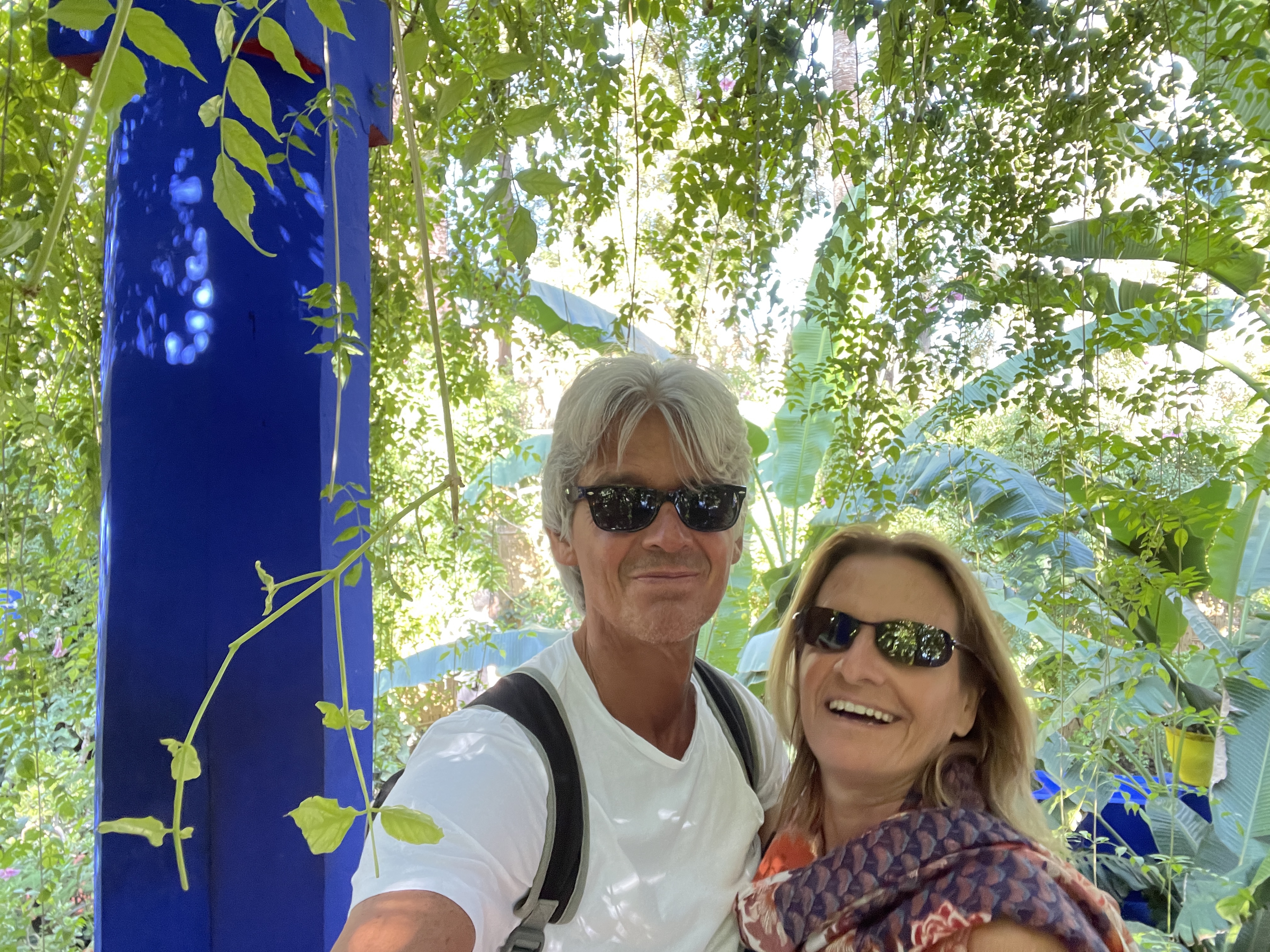
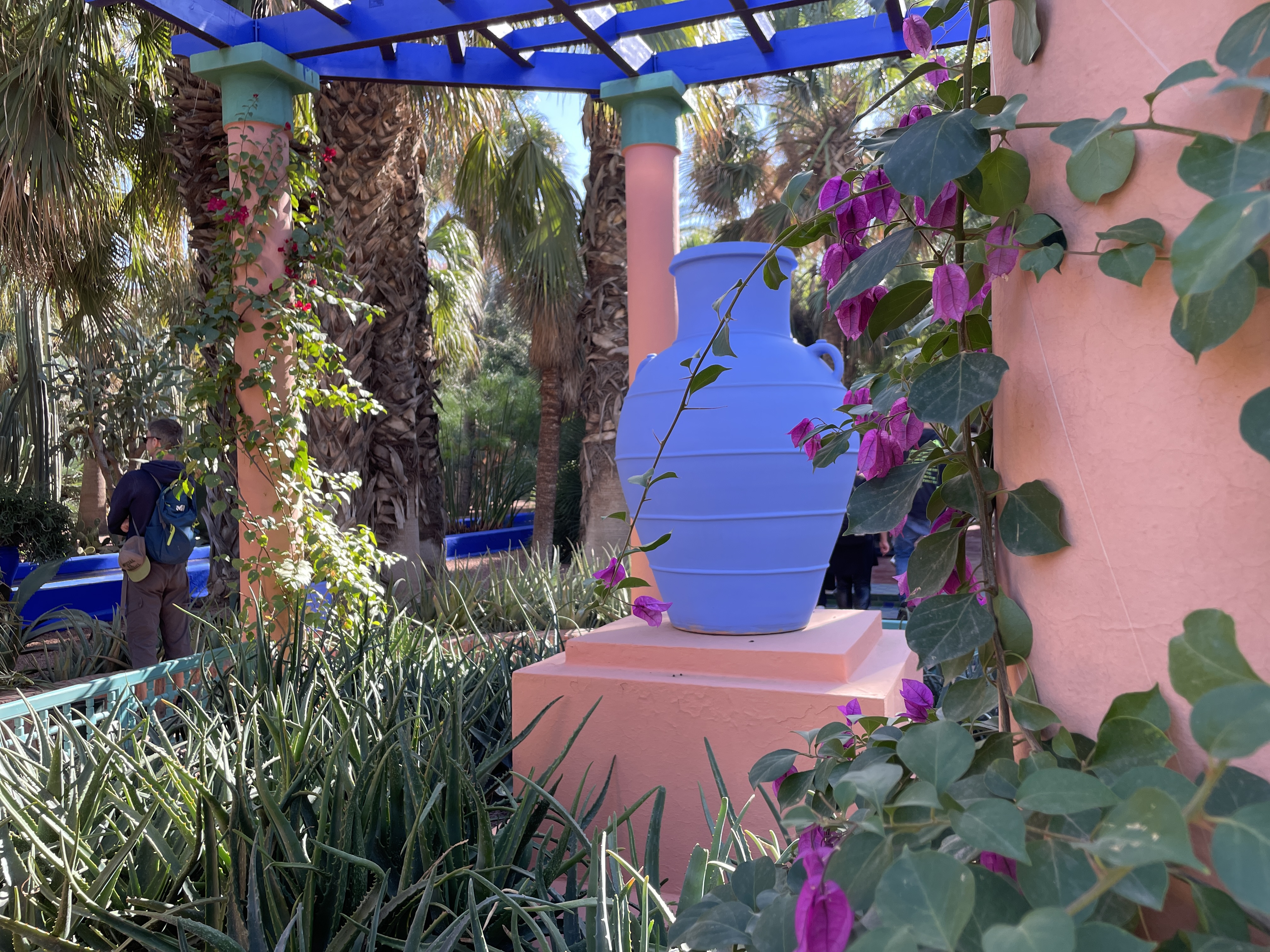
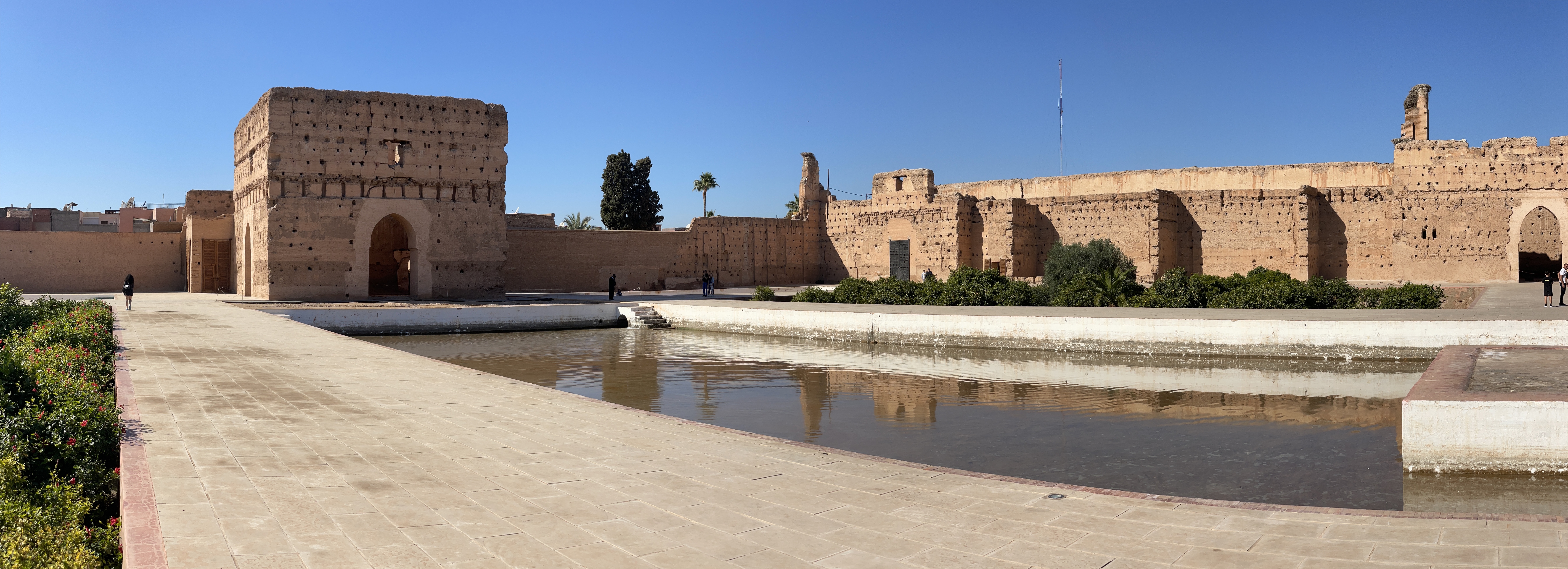
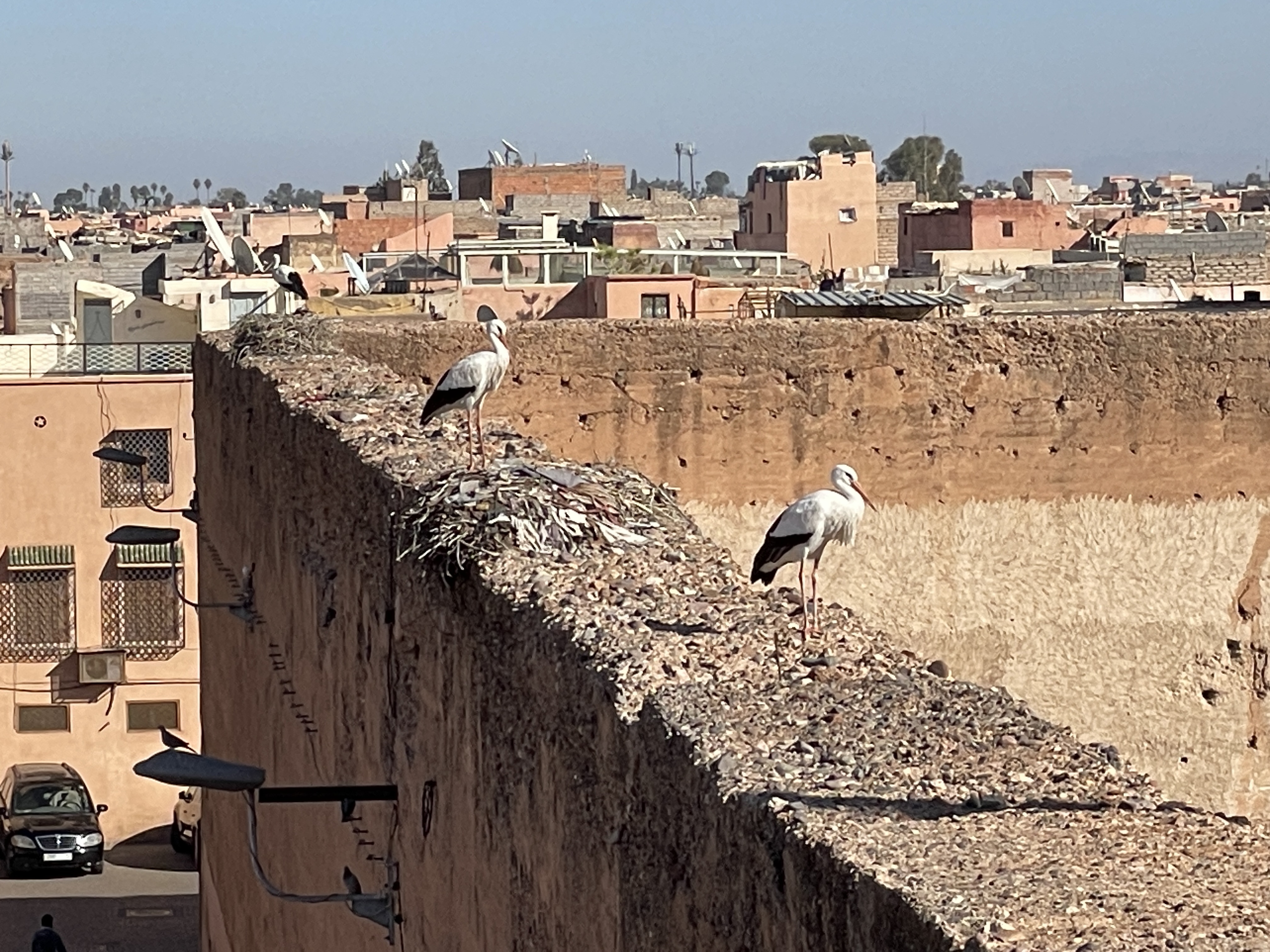
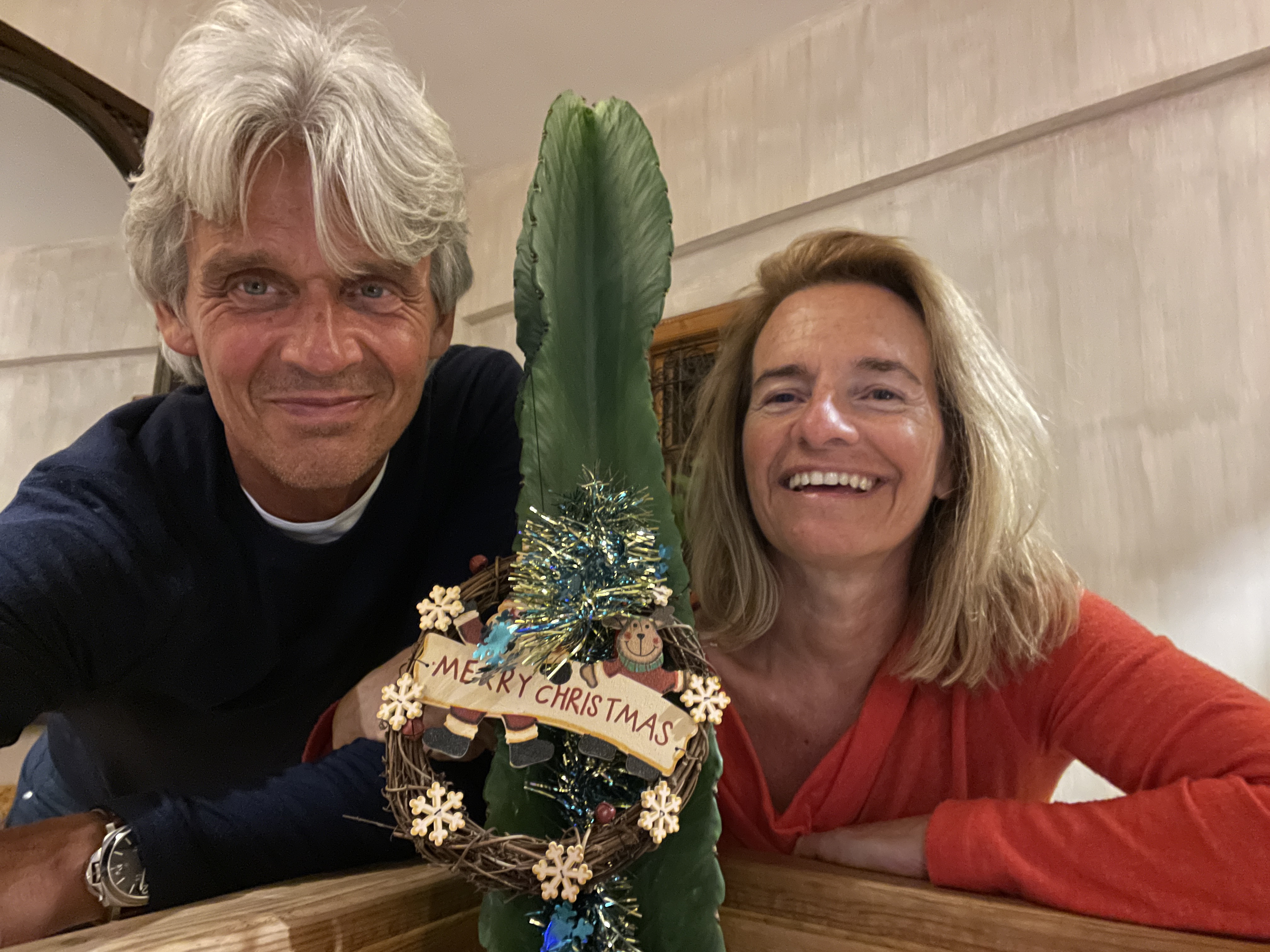
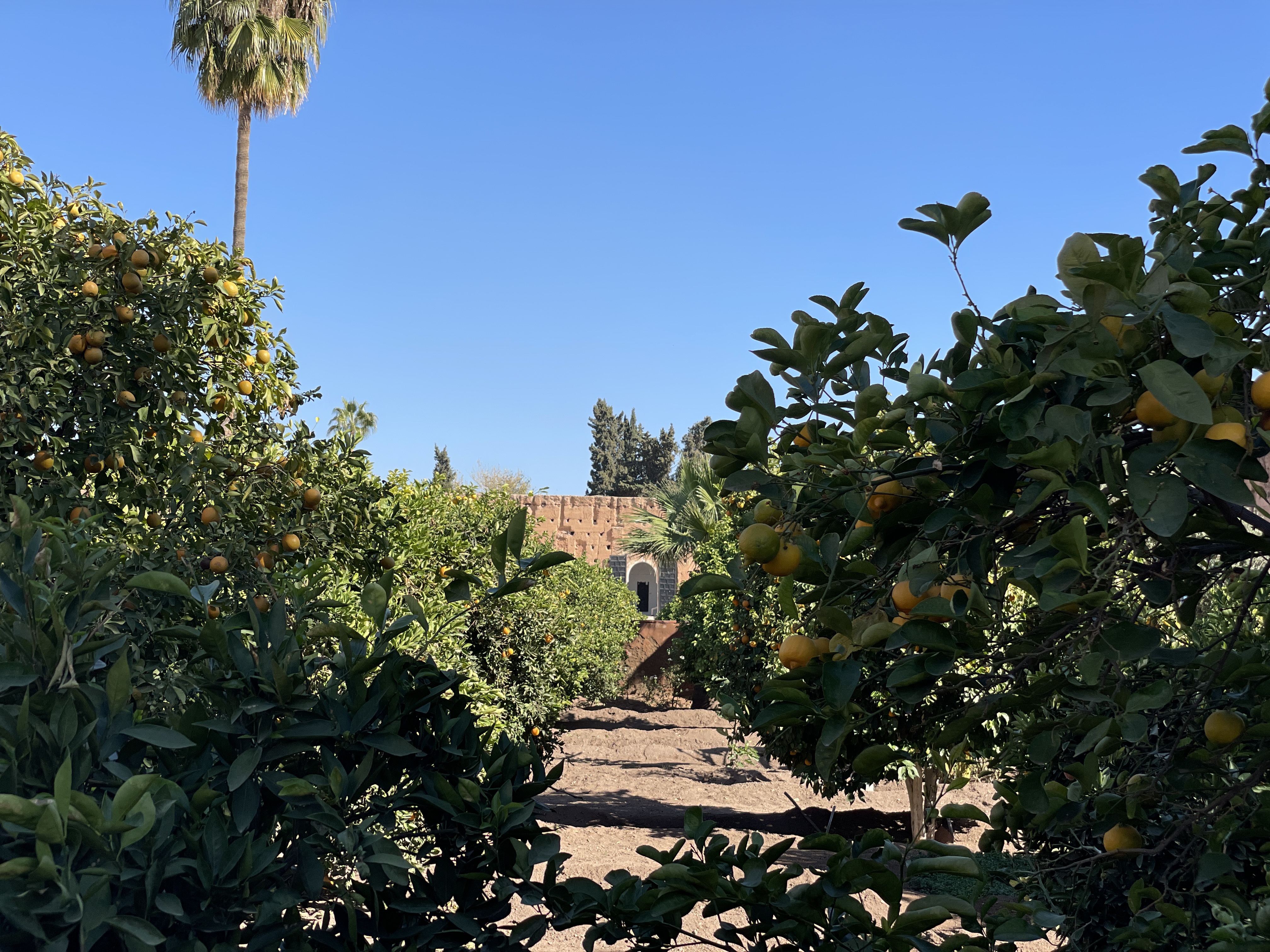
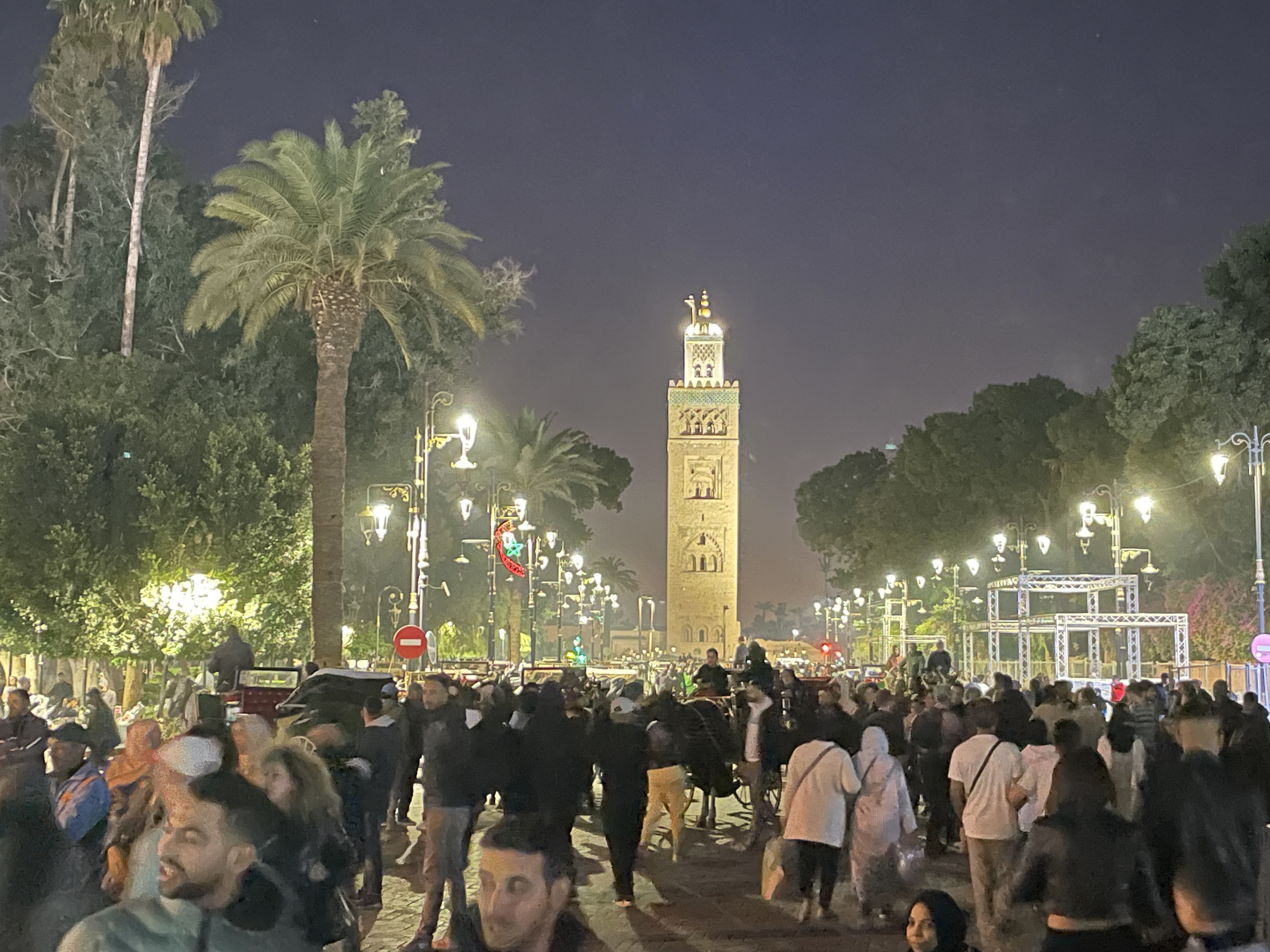
We got out of the taxi and said our goodbyes to Miloud as a weathered chap put our cases into the small cart and we made our way through the winding medina, to the “Medina Sun“ a small Riad, where thankfully I’d had the forethought to order food the day before. It takes a good few hours to cook a chicken tajine properly and I knew we’d be hungry when we arrived. After the delicious tanjine we decided to go off exploring and after weaving our way through the narrow streets that we’ve become accustomed to, only this time having the hazard of dodging the endless mopeds racing through, we ended up at the “Place Jemaa el Fna” the main square at centre of the Medina where all of the entertainers go to showcase their talents. As we walked around everyone seemed to be soaking up the atmosphere and entertainment and having a good time, sadly there’s no more snake charmers though. We’d had a long day, so didn’t stay out too late. The following day after a typically French breakfast we decided to visit the “Jardin Majorelle” a beautiful garden where the French artist Majorelle set up his studio, but perhaps more famed for the restoration and unique touches carried out by Yves Saint Laurent. It’s not a huge garden, but it’s beautiful created and maintained. After the garden we really wanted to see the “Palais el Badi” a stunning, huge walled, 16th Century palace, commissioned by Sultan Ahmed el Mansour, who’s responsible for so many prolific building across Morocco. We perhaps enjoyed this the most, it’s one of those places that you wander around and can really feel a sense of the past. The final stop of the day was the “Palais Bahia” built just before the 20th Century, with some 160 rooms, with some really ornate architecture and incredible painted ceilings. We’d completely missed lunch so an early dinner was called for, at a delicious Lebanese restaurant, before jumping in a cab feeling well exercised, both mentally and physically. It was a lovely way to spend Christmas Eve!

Leaving Essaouira.

We’ve really enjoyed the laid back feel of Essaouira with its colourful markets, good restaurants and it’s very welcoming people. We had some some sad news this week with the sudden passing of Rachel’s father. Rach was very close to her dad. Rach’s parents travelled extensively right up to their late seventies so they’ve enjoyed seeing and hearing about our little adventures and Rach is convinced his spirit is travelling with us. The beach walks every day have been a blessing, they’re calming, interesting and therapeutic, not to mention good exercise and we’ll definitely miss them. Some of the other things we’ve also enjoyed here has been the darkness of the Riad at night and looking straight up through the middle of the Riad to marvel at different constellations. I’ve also liked being able to hear and smell the sea, especially before sunrise, when everything is still. Unfortunately there’s been no more kitesurfing, as my knee is still too swollen, but we’ll try again. On Friday we were packed up and ready to go on our next adventure which was about a 3 hr ride in what was to be a comfortable people carrier. We’d both had our books to hand in preparation for the journey, but in truth never opened them, as the whole journey was pretty interesting, from the small villages and their colourful markets, we drove through, to the swathes of vibrant green arable farmland with busy farm hands darting about, loosely interwoven with the arid rusty landscape. The roadsides were also home to enterprising street sellers and artisans. As we got closer to our destination the Atlas Mountains came in to full view, with visible signs that snow had already made its mark on the higher peaks. At just after 3pm we pulled up on to the outskirts of the Medina in front of a sizeable mosque ready to spend Christmas in Marrakesh.

A trip to a Berber village & kitesurfing

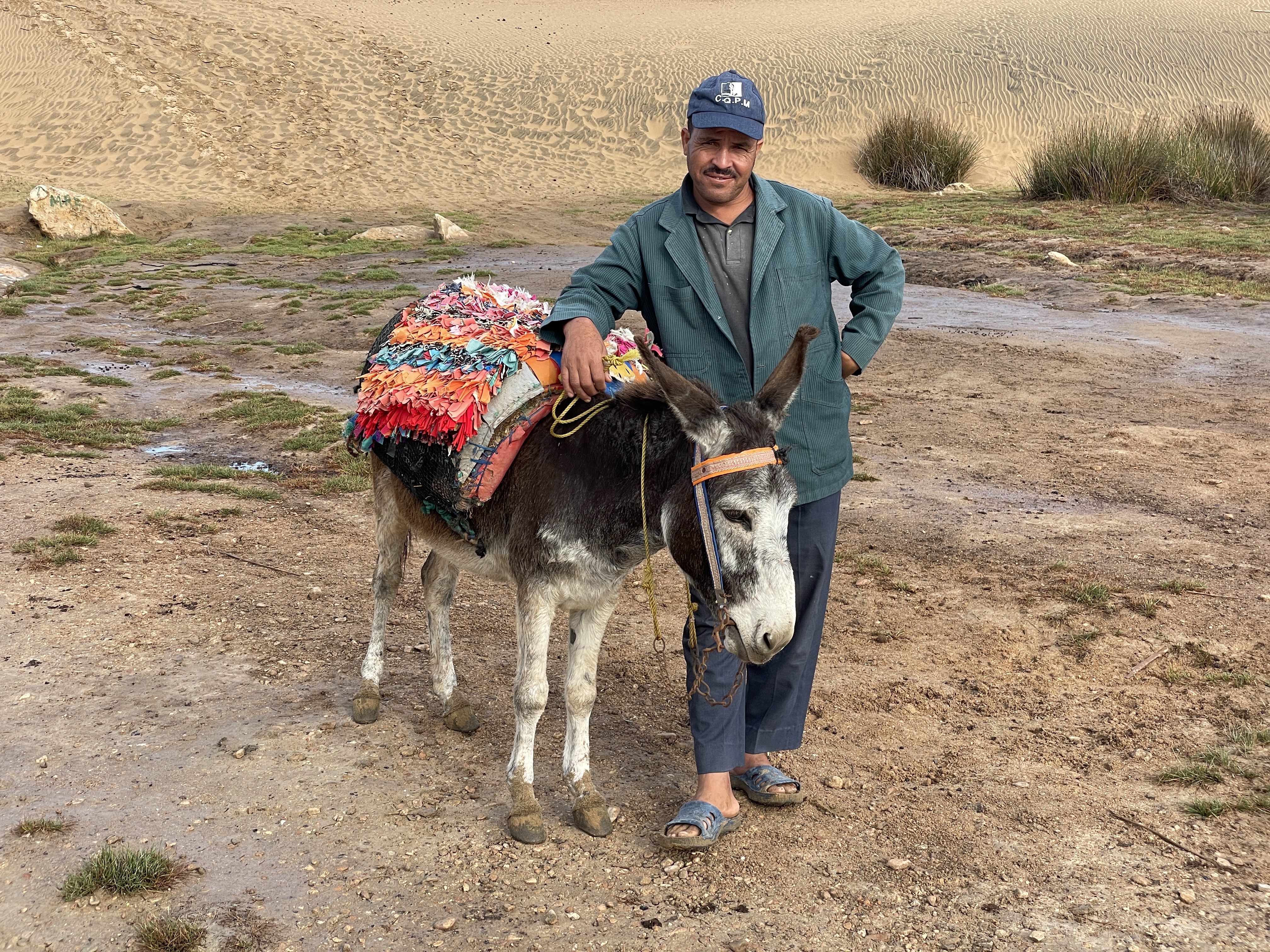
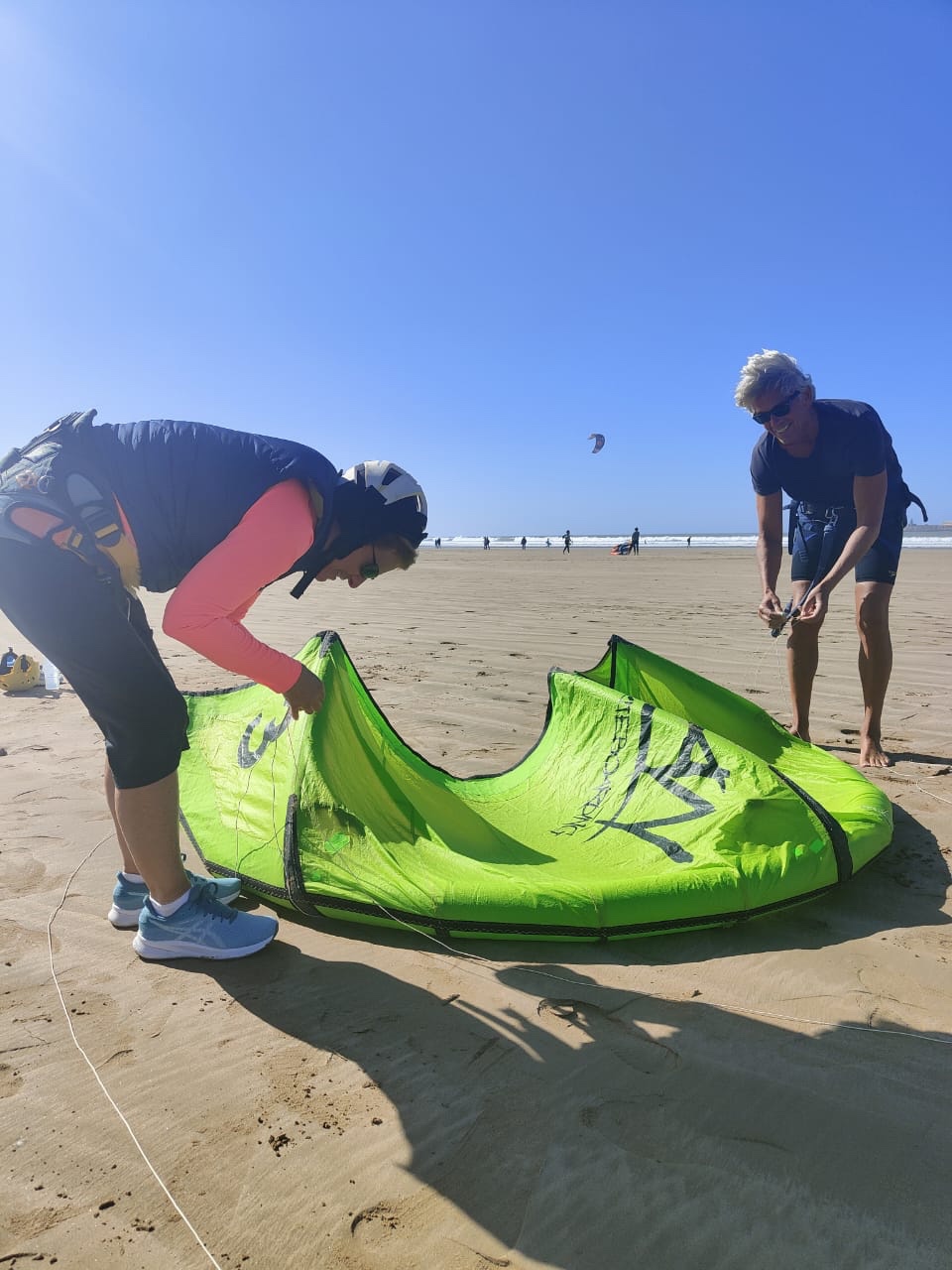
It’s been a strange 3, or 4 days. Morocco doesn’t get a lot of rain, but we’ve been here for a few of those days and it’s been very welcome to the farming community. Watching the rain coming down through the centre of our Riad has made for some interesting viewing, it’s also turned it into a bit of a sanctuary for some of the small local birds to shelter and they’ve entertained us with their enchanting little melodies. We haven’t done too many trips since arriving in Essaouira, so we decided to take a trip about 30km along the coastline to Sidi Mbark where we’d be making our way to a Berber village set back in the hills, by foot. Berbers are the indigenous people of North Africa, while Arabs are native to the Arabian Peninsula in the Middle East, Arabic is most widely spoken in Morocco. Berbers tend to live in rural communities and have their own dialect. We arrived after a 40 minute journey, where we met Hassan and his donkey (Moroccans don’t typically name their animals, so it’s just donkey). We spent the next 3 hours rambling across different terrains, coming across goat herders and farmers, while understanding a little bit more about the area, through Hassan’s French interpreter. Before taking tea and enjoying some of the local delicacies, it was a really enjoyable day. We started kitesurfing with Abdo, which perhaps unsurprisingly isn’t as easy as it looks, our first 2 hour lesson was spent with a smaller kite learning how to handle it on the beach and getting used to the harness. The second lesson was much the same as first, but with a bigger kite and more wind and by the end of the lesson I was feeling pretty confident, Rach less so. By the third lesson I was thinking that I had this sussed, Rachel too, was feeling much more confident. However just as we were heading into the water I got overly confident and was completely taken out by the kite, launching myself head first into the sand, smashing my glasses, cutting my lip and damaging my left knee, fortunately I was wearing a helmet, but it took me some time to find my feet before I reluctantly made it into the water to be dragged around again and feeling a whole lot less enthusiastic…..Rach did famously though.

The beach and the World Cup

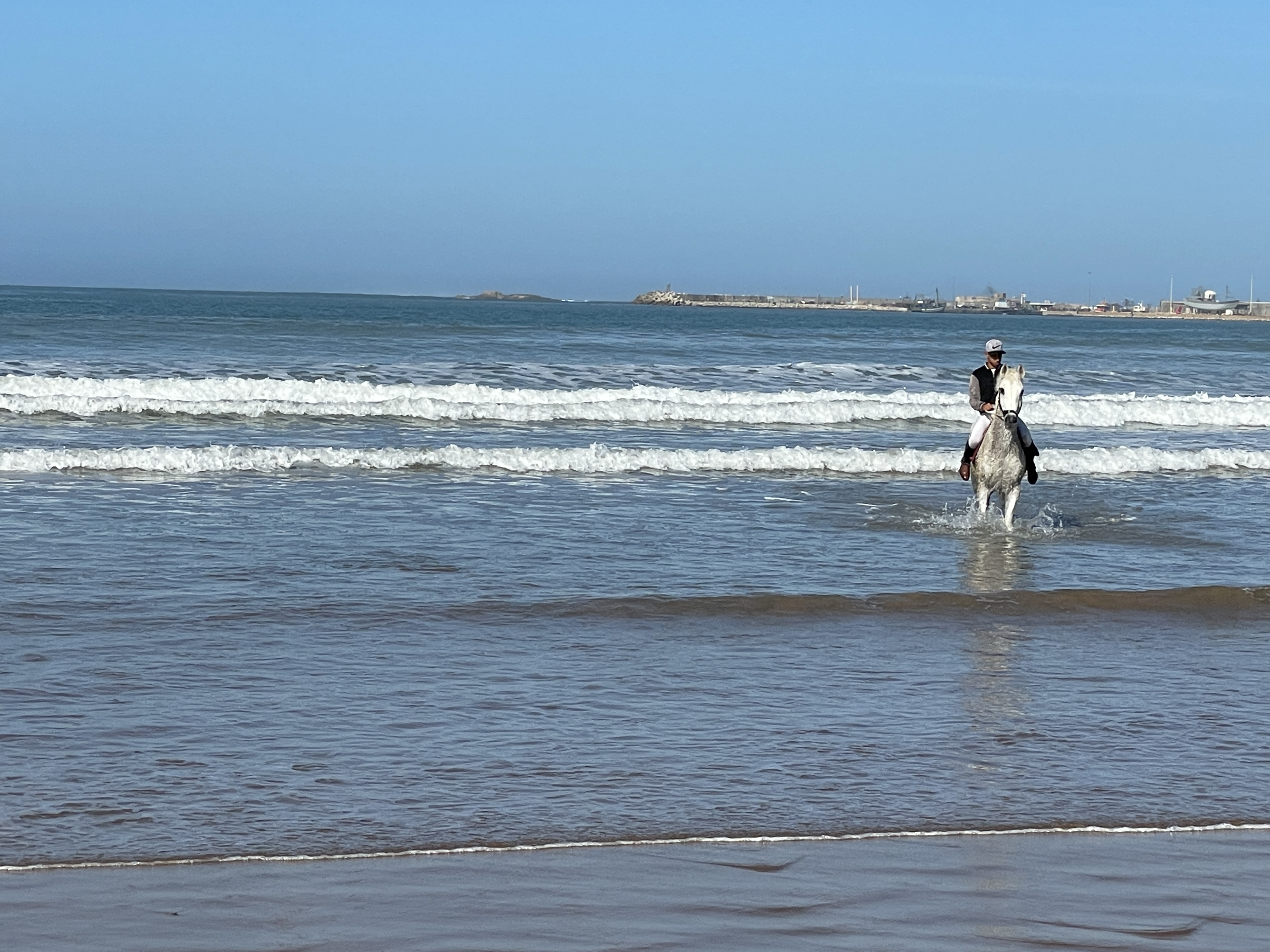
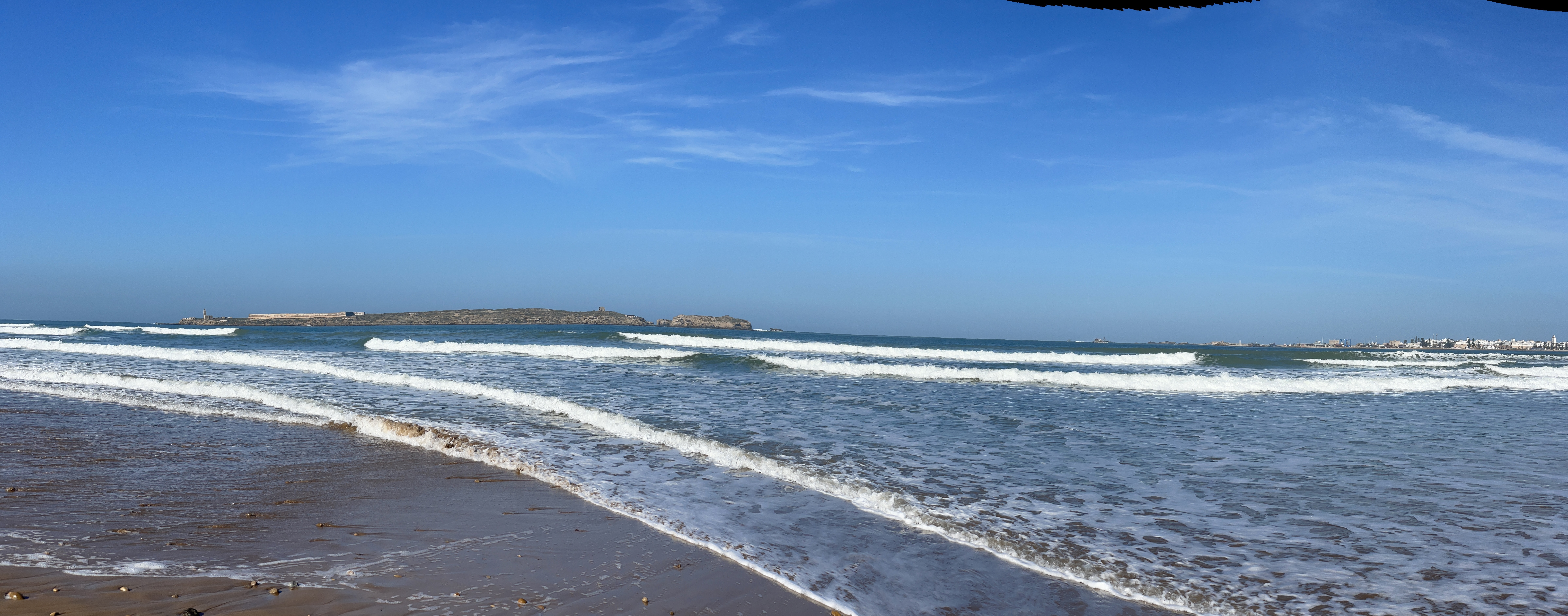
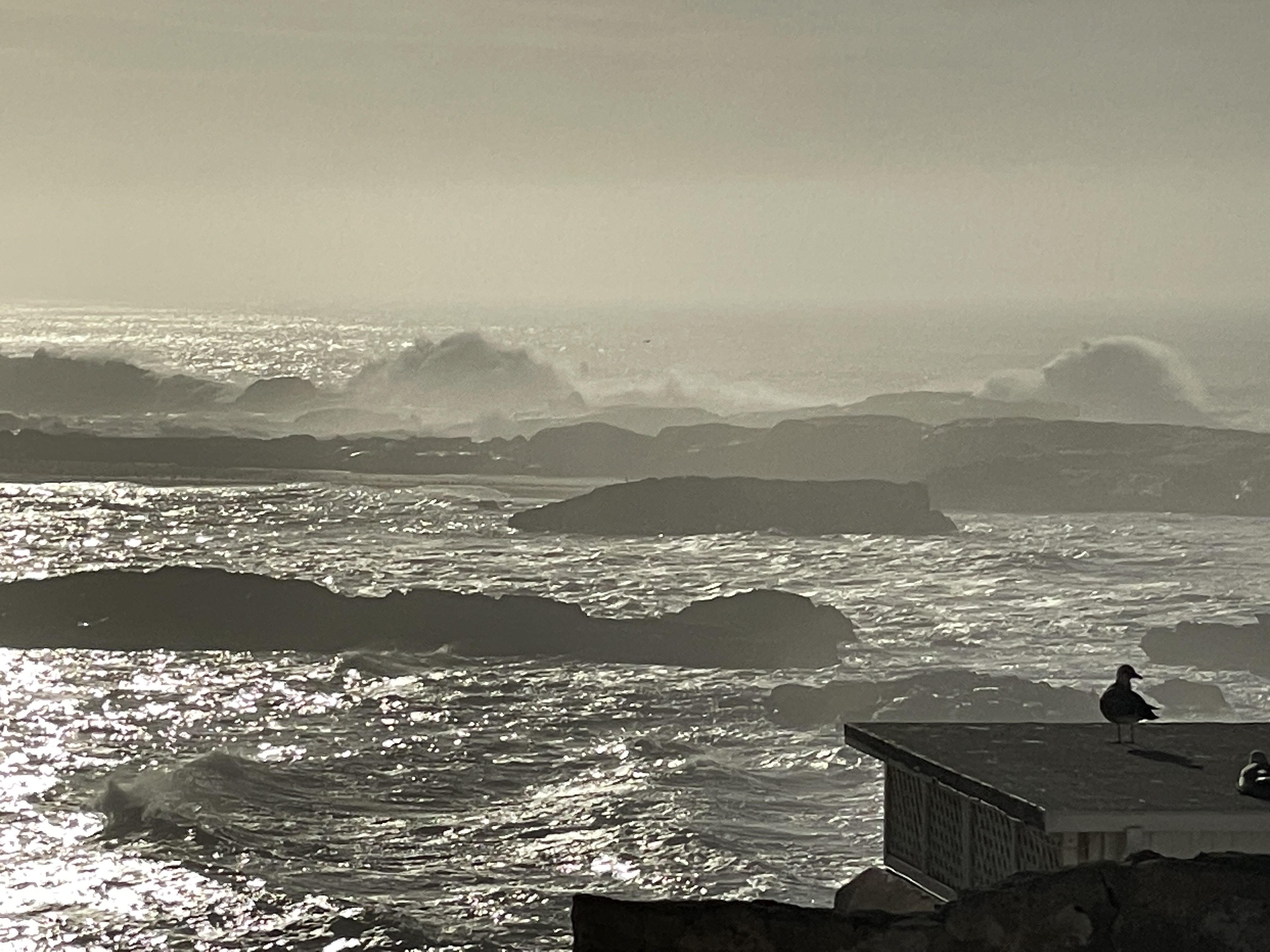
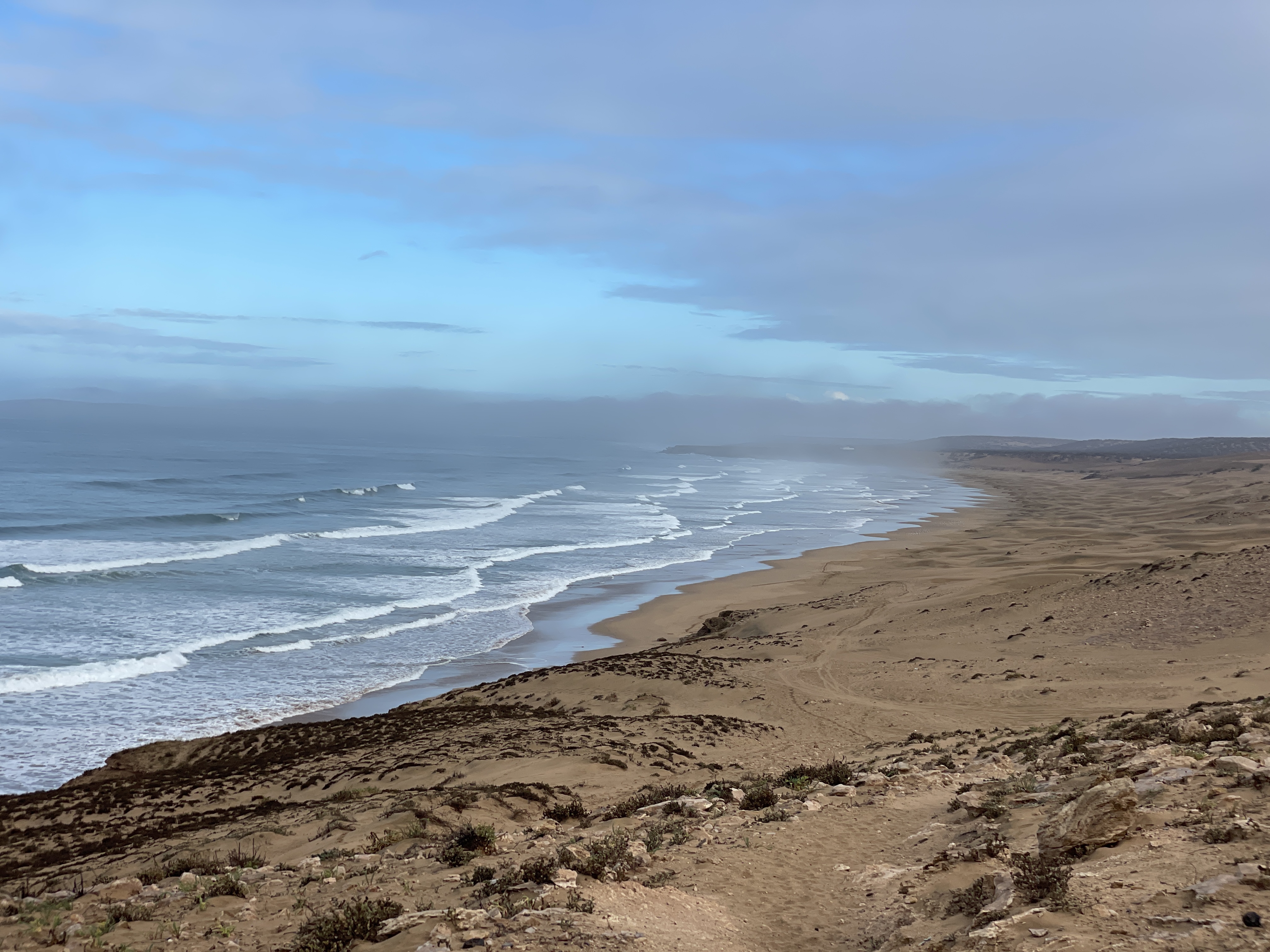
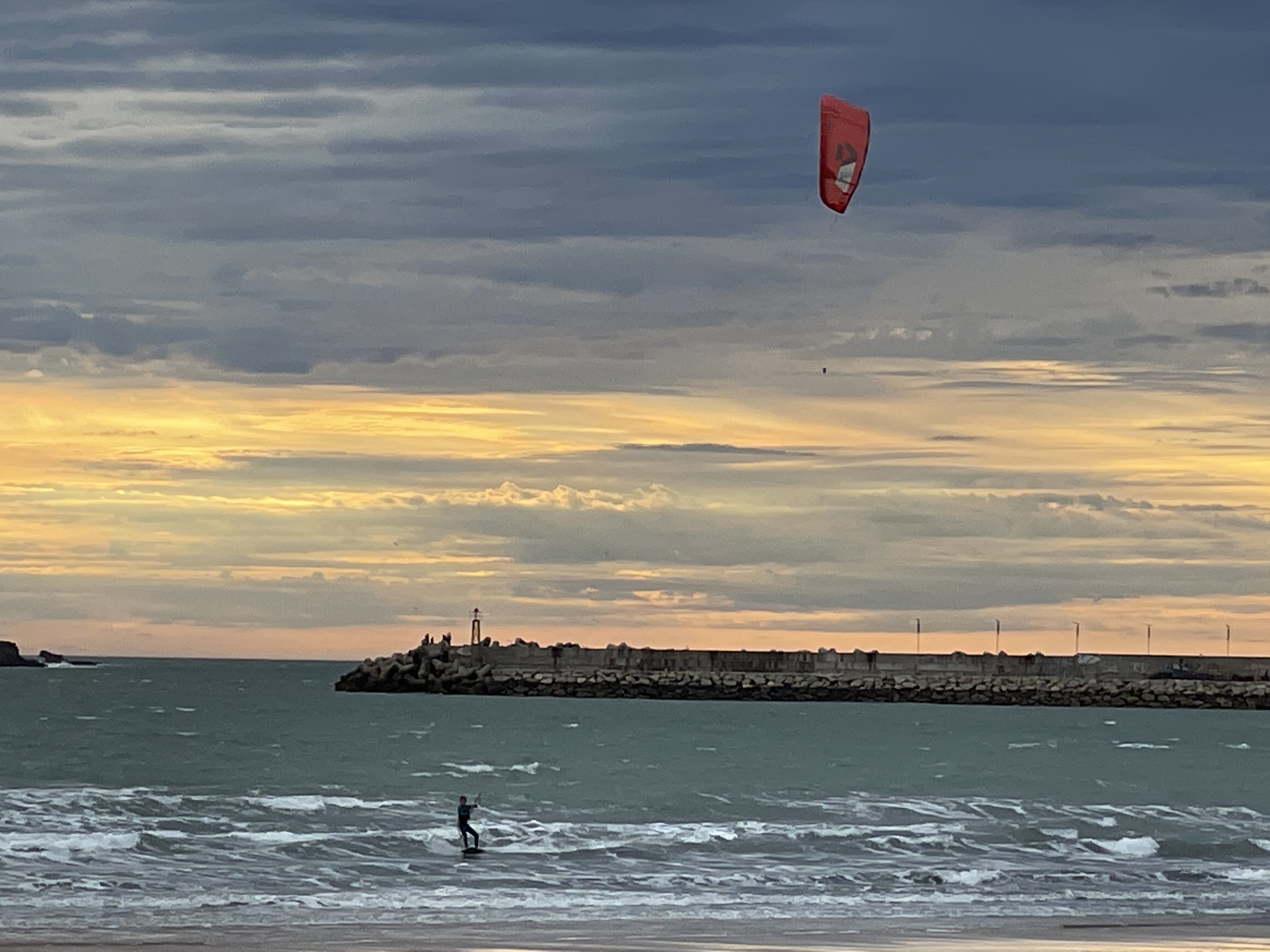
As I mentioned previously life here is a little slower, but then a lot more social. We’ve got our exercise routines before sunrise, with trips into the colourful souk to haggle with the vendors….we’ll it’s become more like friendly banter. Lunchtimes we’ve gotten into our beach walks, which are always interesting and very relaxing. We are also getting familiar with some of the locals who work the beach (human and animal) understanding a little bit more about daily life for them. The dromedaries (no camels in Morocco) and the horses are really well cared for and are treated with the upmost respect, you can see this when the animals interact with their guardians, there’s genuine affection on both sides. The beach is crescent shaped and very flat it’s also somewhat protected by the island of Mogador, which lies directly opposite. It’s long been abandoned, but was more recently home to a prison and a mosque, which you can see remnants of. Essaouira is a popular surfing and kitesurfing spot as the strong winds and shallow waters are perfect! We’ve decided to enrol in kitesurfing school next week, which should be fun. We took a trip to a very nice spa at the weekend, which was very relaxing indeed, it’s not really my thing, but Rach loves it. World Cup fever has taken over here in Morocco and everyone loves their football and their Country, proud times indeed. A big screen has been erected in the square, against the back drop of the Kasbah wall, which is interesting. Of the circa 27 thousand people who live in Essaouira a good percentage have turned out for each game, creating a fabulous and good natured atmosphere all around….Allez Maroc!

Morocco beats Spain!

The rhythm of life & a promo

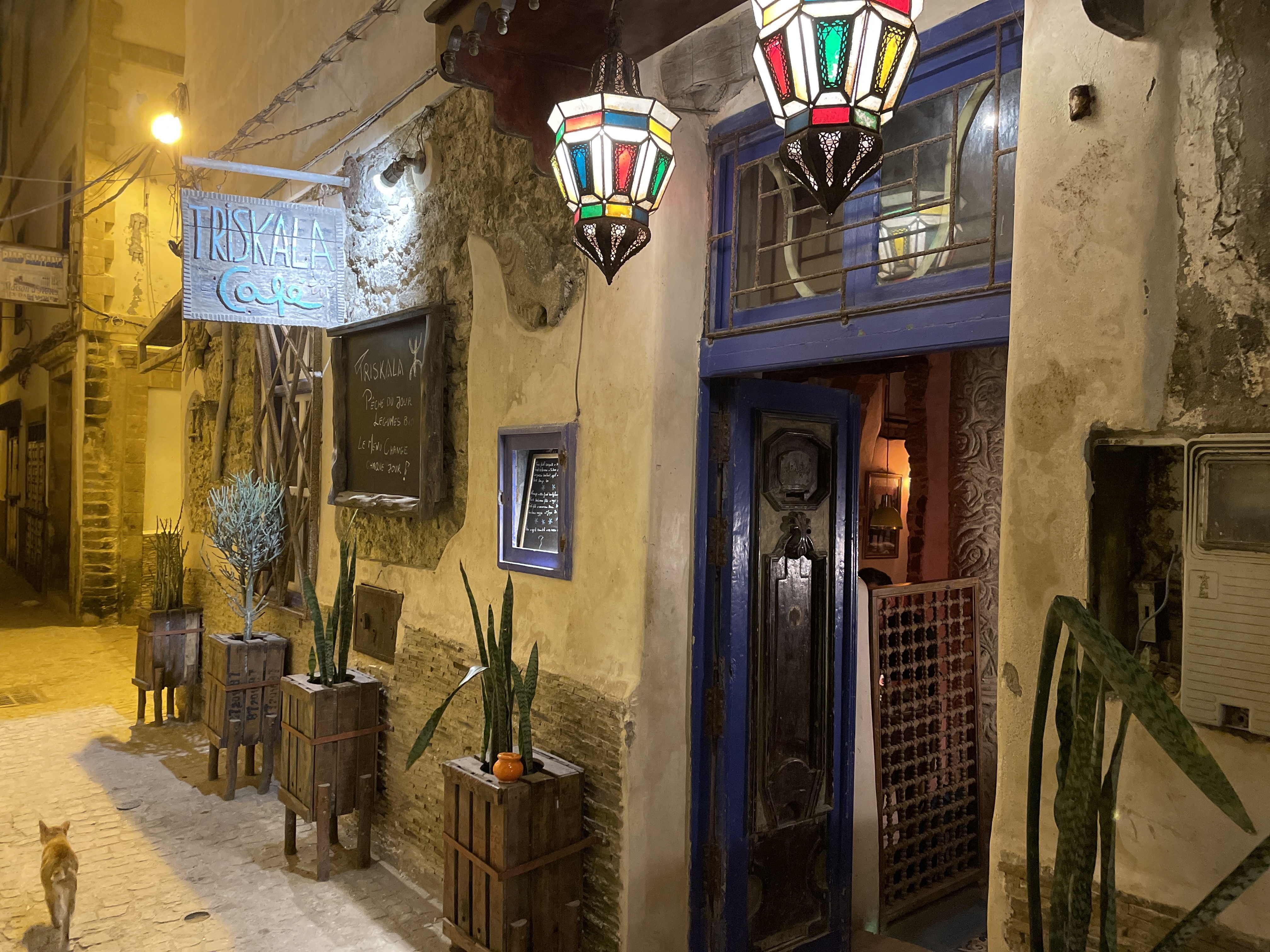
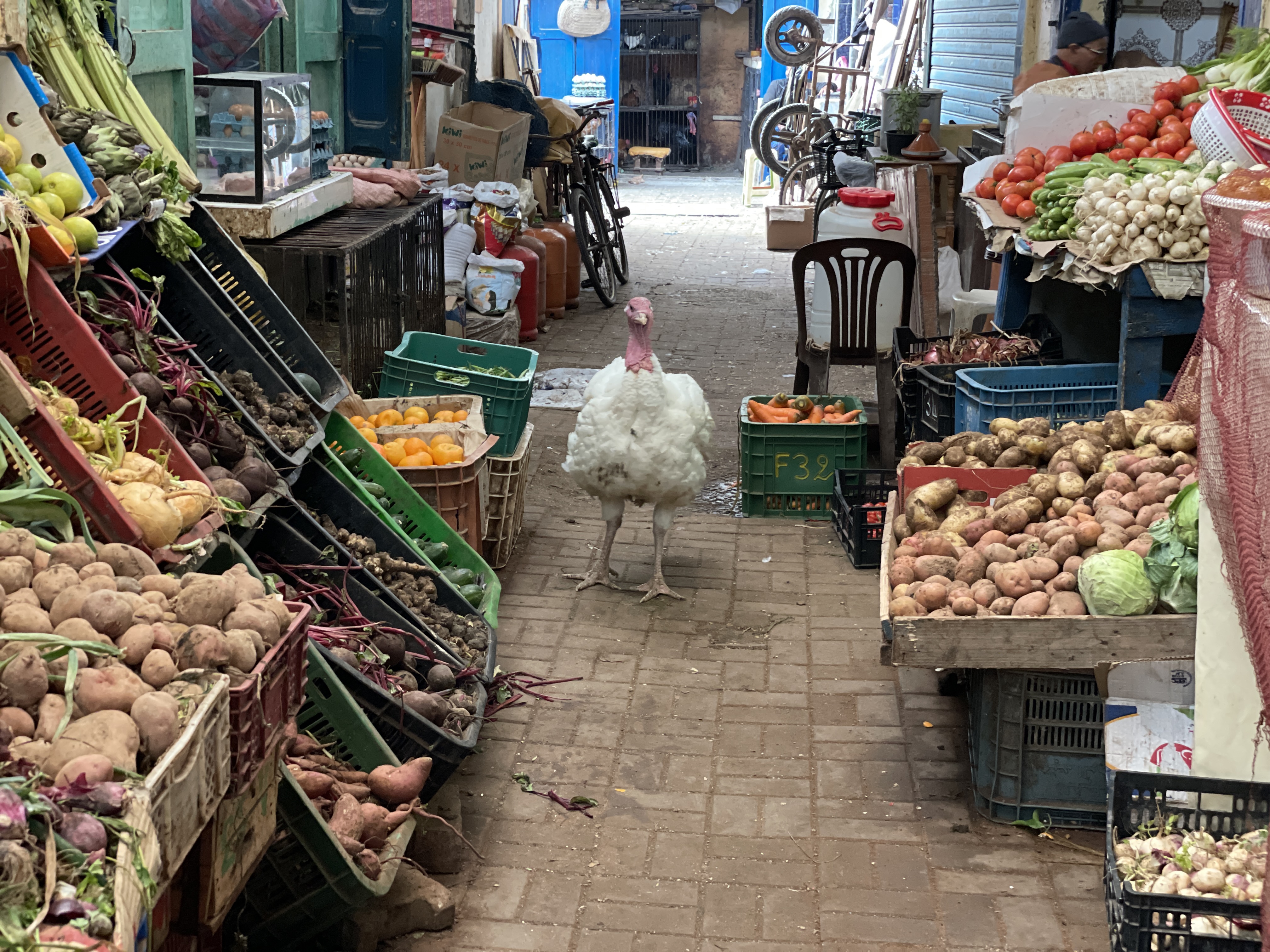
There’s some great restaurants here and a good few of them we’ve had the pleasure of dining at. The ‘tardis’ like restaurants line the small streets, intermingled with the impressive galleries and artisan stores. Essaouira has a hippie vibe running through its DNA, which in turn creates a very relaxed atmosphere everywhere. The medina is pedestrianised and those that aren’t walking, weave their antiquated, sometimes heavily laden bicycles, through the small streets and when a more substantial vehicle is needed, they roll in modified 3 wheelers, or small dumpster trucks, that somehow manage to slide huge loads through the narrow streets. The beach here is pretty flat and wide and when the tide marches out, it’s perfect to enjoy long walks along its 2km shoreline. Aside from the expansive beach, a large supermarket in a small mall, pretty much everything happens within the walls of the Medina, which takes on a different persona depending on the time of day. And with the exception of the souk which is busy from first light (8 ish), each day typically starts slowly at around 10am and builds thereafter, with merchants welcoming tourists steadily throughout the day. The sun sets at around 6:30pm, bringing out early diners and late shoppers (stores close at around 9:30ish), leaving the night owls to carry through to the early hours, supported by the colourful sounds of north African music drifting into the night sky. The partner of one of the guys that looks after us, was launching a cookery school and asked Rach and I if we’d be willing (mature) students for a promotional video and marketing stills. We spent a very sociable evening under the tutor ledge of the great local chef Hanane, learning how to make a lamb tanjine whilst whilst being filmed. We then sat down with the family to enjoy the tasty tanjine and some delicious Moroccan entrées.

From Rabat to Essaouira

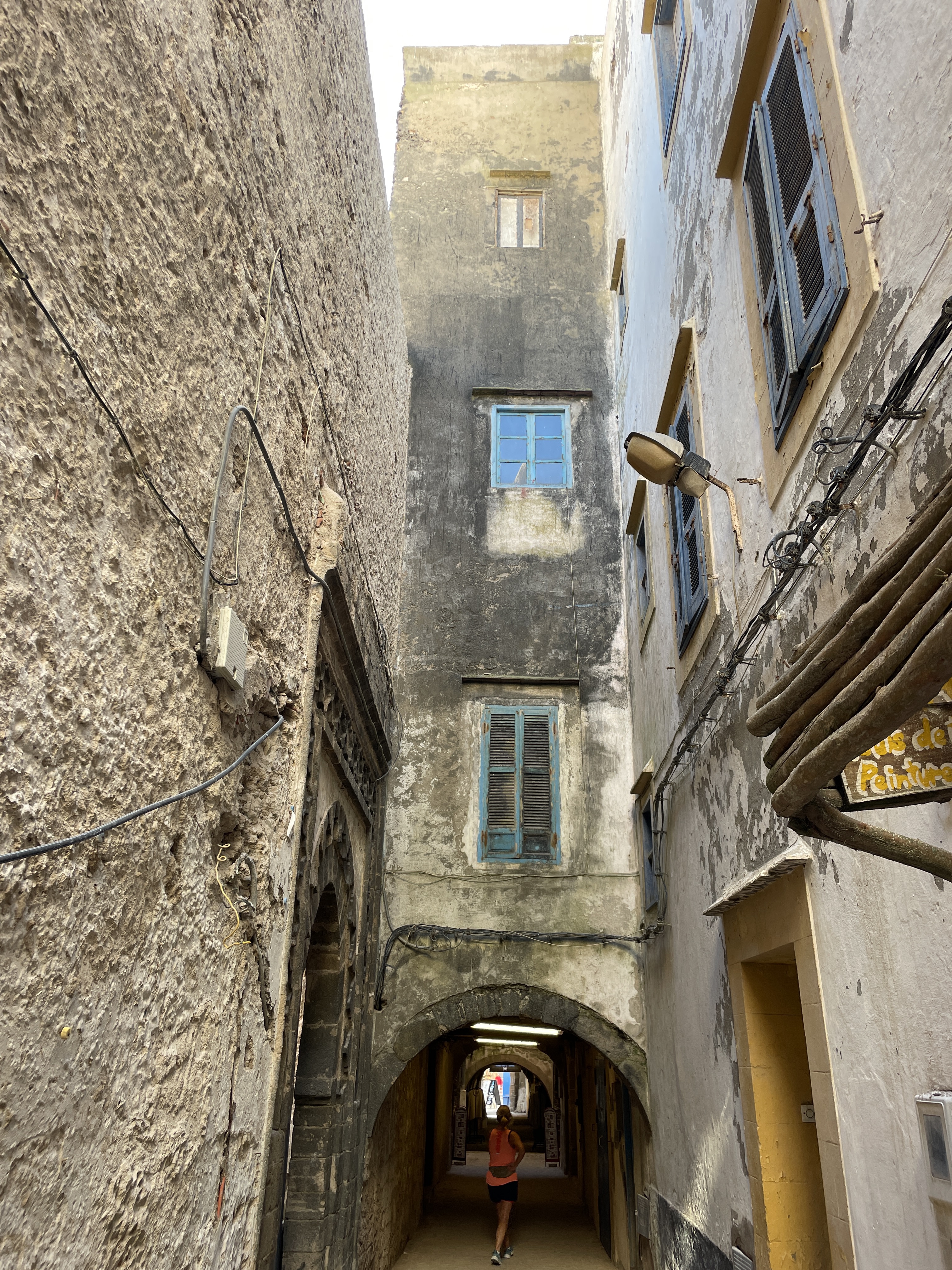
We’ve enjoyed Rabat, but after nearly seven weeks, the time has come to move on. We’ve found it both interesting and very welcoming, in fact we’ve found all the places we’ve visited here in Morocco to be that way. Our car arrived at Salé airport at around 5:30pm, for an internal flight leaving at 7pm and after waiting in line with all of the other naughty people to pay for excess baggage, we sailed through immigration and boarded the flight, which actually left early! We arrived in Agadir just under an hour later and after collecting our luggage we found Miloud our driver. The drive was full of twists and turns and not really that comfortable. We arrived in Essaouira shortly before midnight and after carrying our luggage across the main square and through a passageway into the Medina (the Medina is pedestrianised) we put the key into our huge iron door and entered into ‘Dar Adjan’ and then promptly crashed out. We woke at around 6:20am, which is the Imam’s first call to prayer and lasts for 20 minutes or so and as the minuet is very close by and we don’t have a roof (more on that later), we were both wide awake by 6:30am. We are both getting used to the call to prayer, from our time in Rabat and Turkey and to be honest it’s quite enchanting. We were knackered and it was dark when we arrived, so we were too tired to look around, so it was time to have a wander. It really is an incredible old home, which has been lovingly restored. As you walk through large iron door, you enter into a foyer, with an attractive water feature, which is used to clean one’s hands after entering from the street and is typical in these wonderful old Riad’s. The steep, narrow stairs, wind around the side of the building internally and leads out onto each floor. The double terrace has incredible views out to sea on one side and views across the top of the Medina on the other and if look directly down, you can see right down through the middle to the ground floor (think of a cored Apple), that together with the very thick walls, helps to keep the building cool. As I mentioned, we’re staying right on the edge of the Medina which is very handy for restaurants and the meat, fish and veg markets. Essaouira has a relaxed ‘hippie’ vibe about it and is completely different to the other places we’ve visited in Morocco, no one hassles you as weave your way through the Medina and souks. We like it!
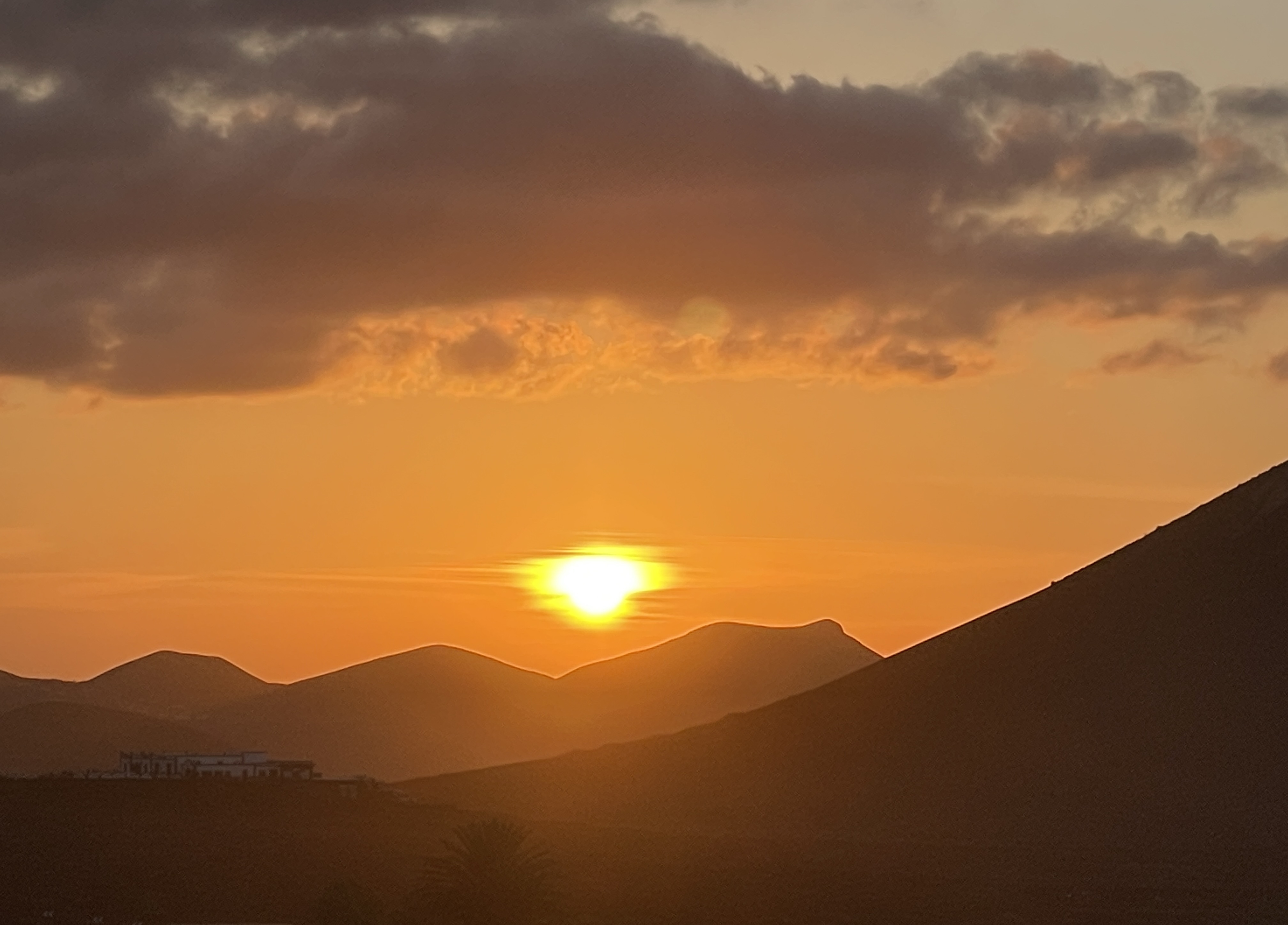
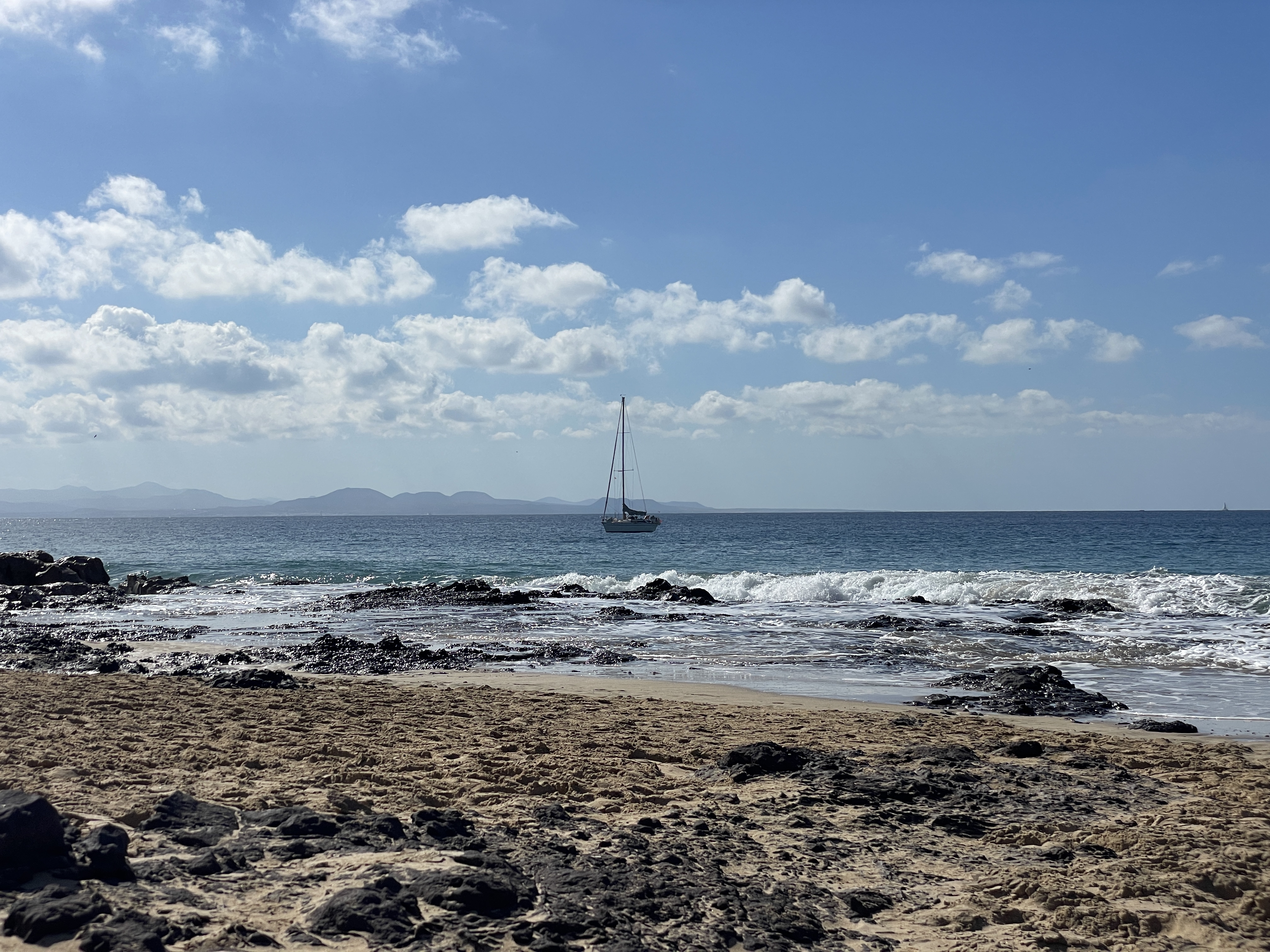
Dar Adjan in Essaouria

In a hurry to get to Tangier

There’s one bullet train (TGV) set up in North Africa and it’s called “Al Boraq” running from Casablanca to Tangier and seeing that Rabat sits in the middle, we were looking forward to checking it out. The initial implementation was completed 4 yrs ago (further expansion across Morocco is planned). The trains have a top speed of over 350kph and are apparently the 6th fastest train type in the world and in local terms cut journey times by two thirds. We boarded our train at the impressive, purpose built Rabat Agdal station and ten minutes into the journey and we were travelling at over 320kph sitting comfortably in our roomy seats, as the train marauded across the eclectic landscape, mostly dusty and arid, but also with swathes of somehow arable green farmland, with livestock littered indiscriminately along the journey. An hour and quarter later we arrived in Tangier after one of the most enjoyable train rides I’ve had. We decided to walk to the old town, along a beach promenade. It’s a wide beach that looks surprisingly serene, with the calm waters of the Med lapping up against the shore line, camels “bobbing” up and down, horses galloping along the waters edge and groups of people gathered here and there. After about hour, we arrived in the old town and at our hotel the “Grand Hôtel Villa De France” which is tucked away down one of the quieter side streets, looking out over the busy square and Medina on one side and across the ocean to the other. After dropping our things off, we made our way to the highly recommended fish restaurant “Le Servette” where after queuing outside for nearly an hour we entered the hazy foray into what was essentially a hole in the wall, with about 8 covers (We went to something similar to this in New Orleans and it was fantastic, so we weren’t put off). The menu was whatever fish the chef felt like cooking on his Smokey open grill. Everything to accompany the fish was grown organically on their farm. After the most delicious meal that we’ve had in Morocco, consisting of Fish soup, mezze’s, fresh olives, followed by some delicious grilled whitefish, rounded off with pomegranate, we headed off to the Kasbah museum, which is both a contemporary gallery, and a museum of ancient local artefacts. The following day we hired a guide for the morning, actually he was our waiter, who offered to take us around. We took in some more of the landmarks, including, an ancient forest, some notable historical houses and “Cap Spartel” a lighthouse that marks both the northwestern tip of Africa and also the line where the Med meets the Atlantic, with what would have been great views across to Cadiz and Gibraltar, on a clear day.