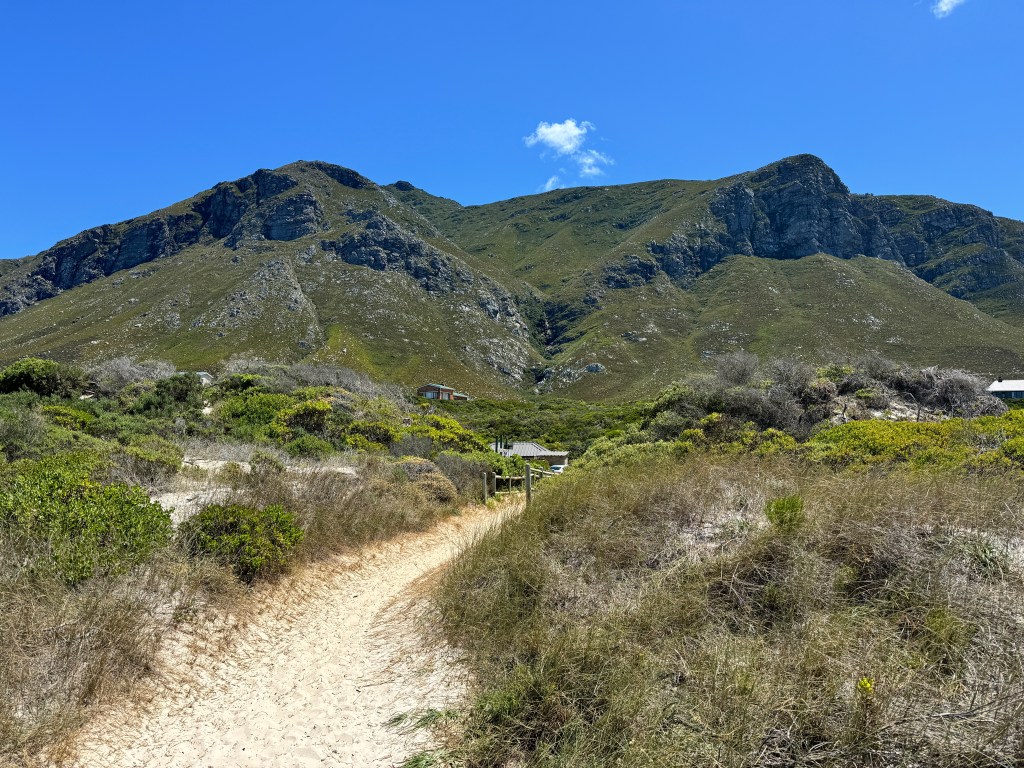
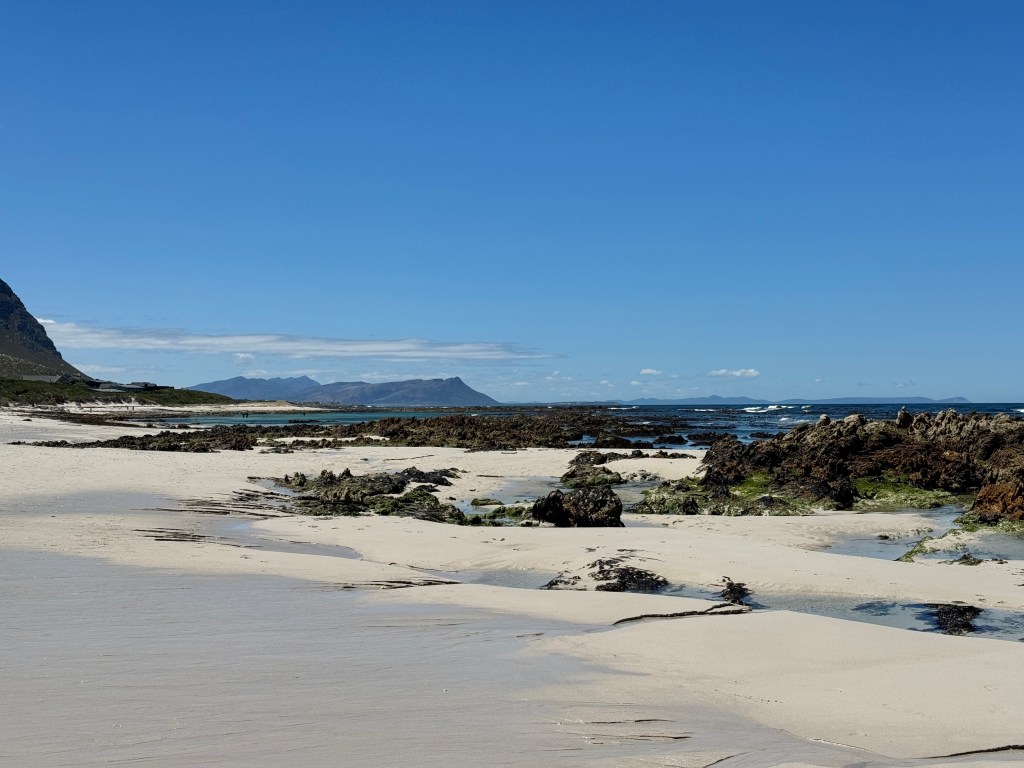
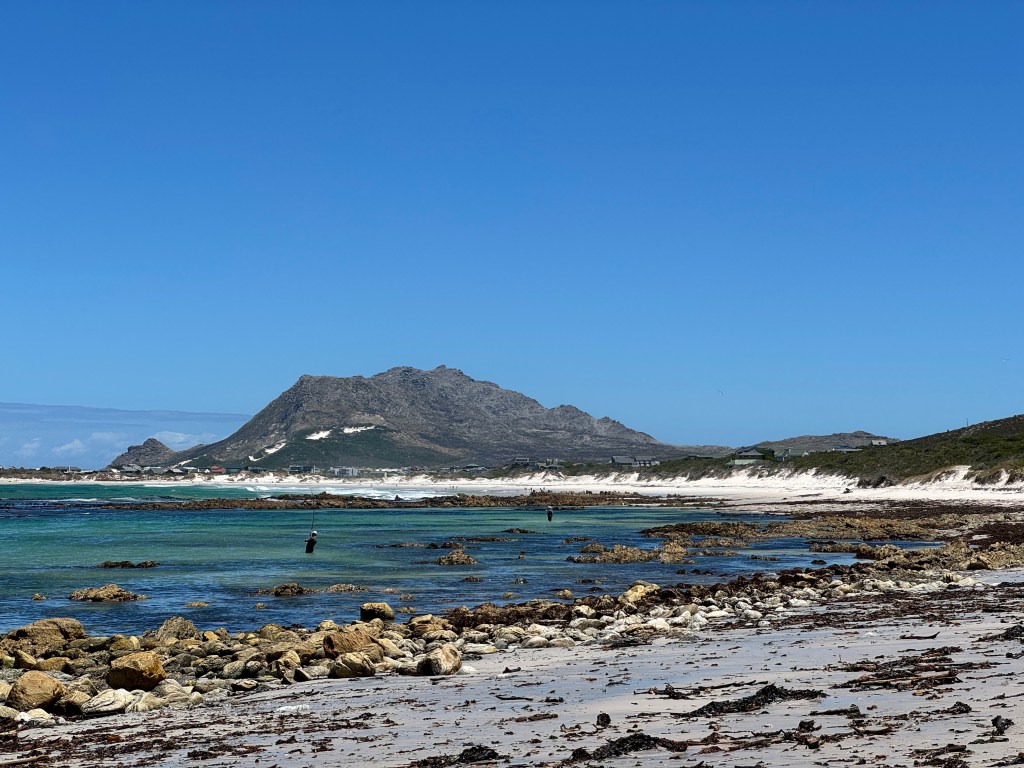
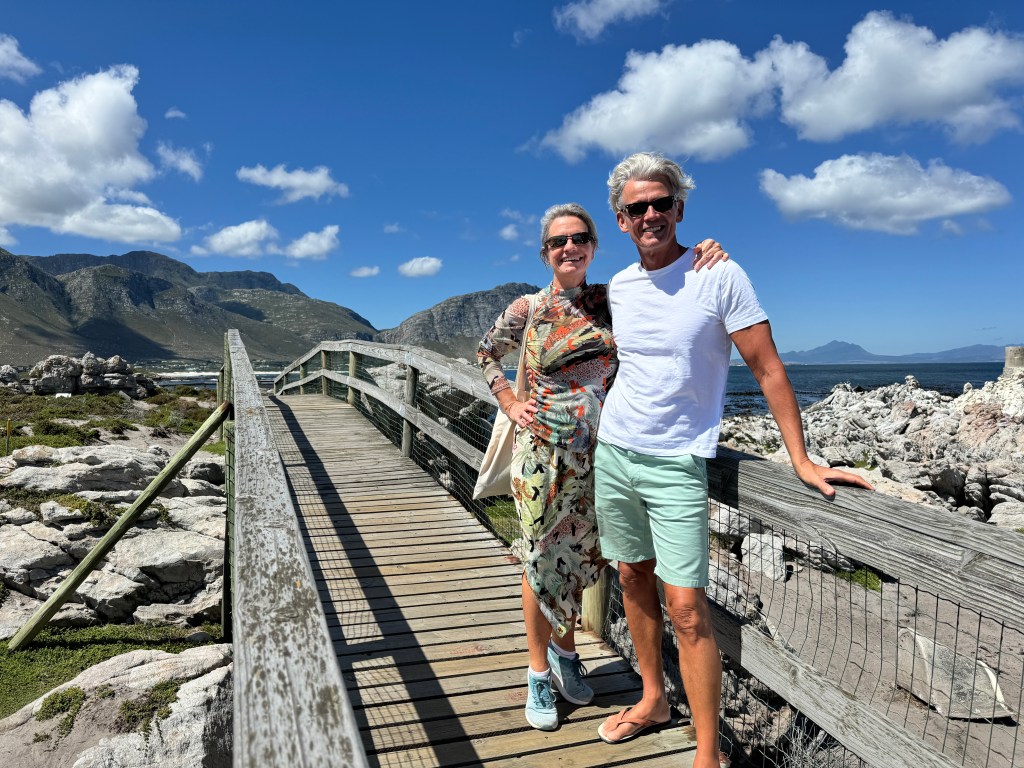
Mossel Bay & Wilderness

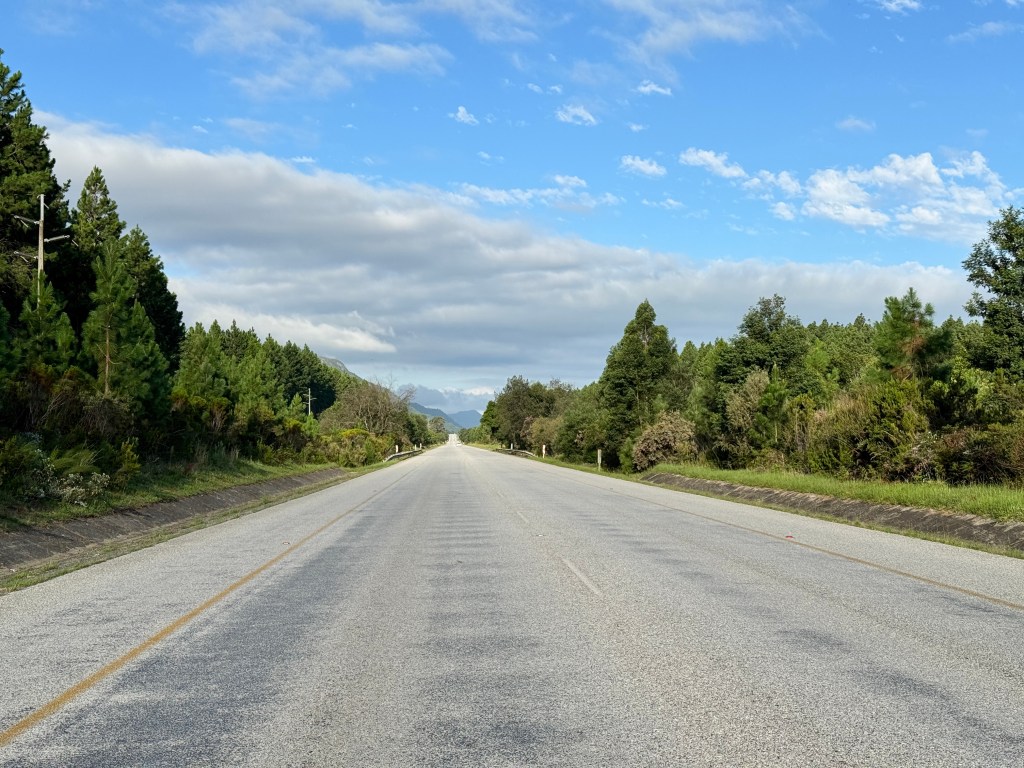
After a leisurely breakfast and farewells to our gracious hosts from the last four days, we “set sail” for Mossel Bay, continuing east along the Garden Route (N2). Our journey took us from the Over Berg back down to the cooler temperatures of the coast. During our travel along the N2, we noticed a fair bit of construction as they work on improving the road, with long stretches of highway reduced to a single lane. Signs warned that we might be stuck for up to 30 minutes or more as cars from the opposite direction passed through. Thankfully, our timing was pretty spot on, though we weren’t in any hurry. The other mystery along the way was the speed traps—I just couldn’t figure out where they were hiding! I suppose I’ll find out when I return the car.

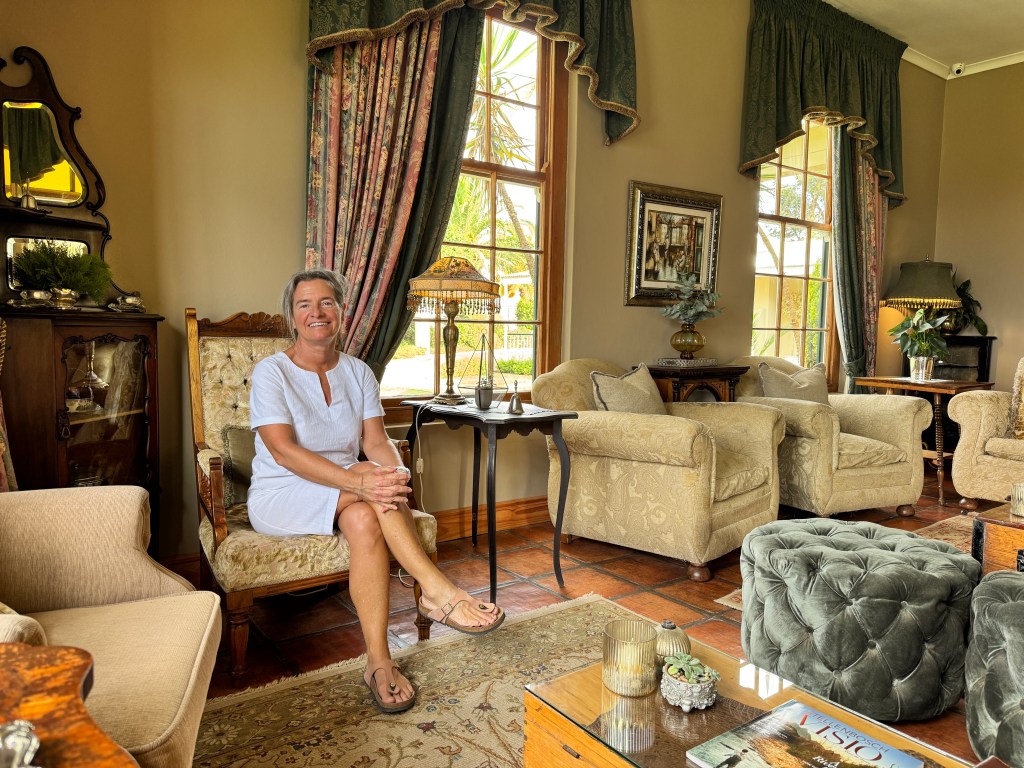
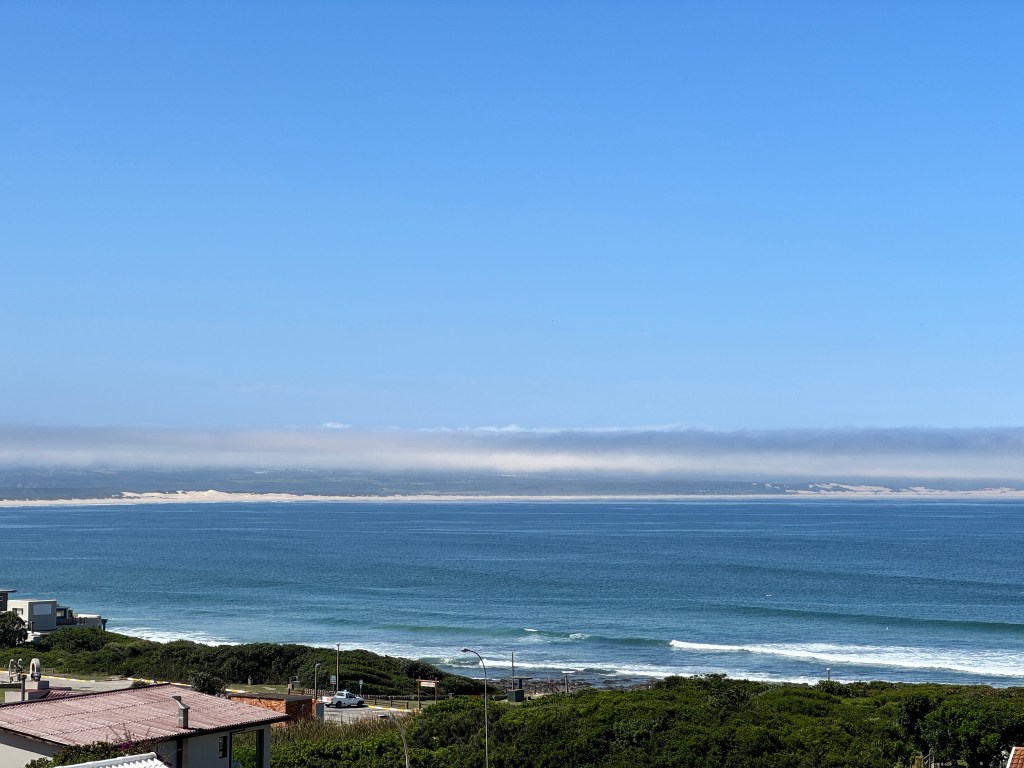
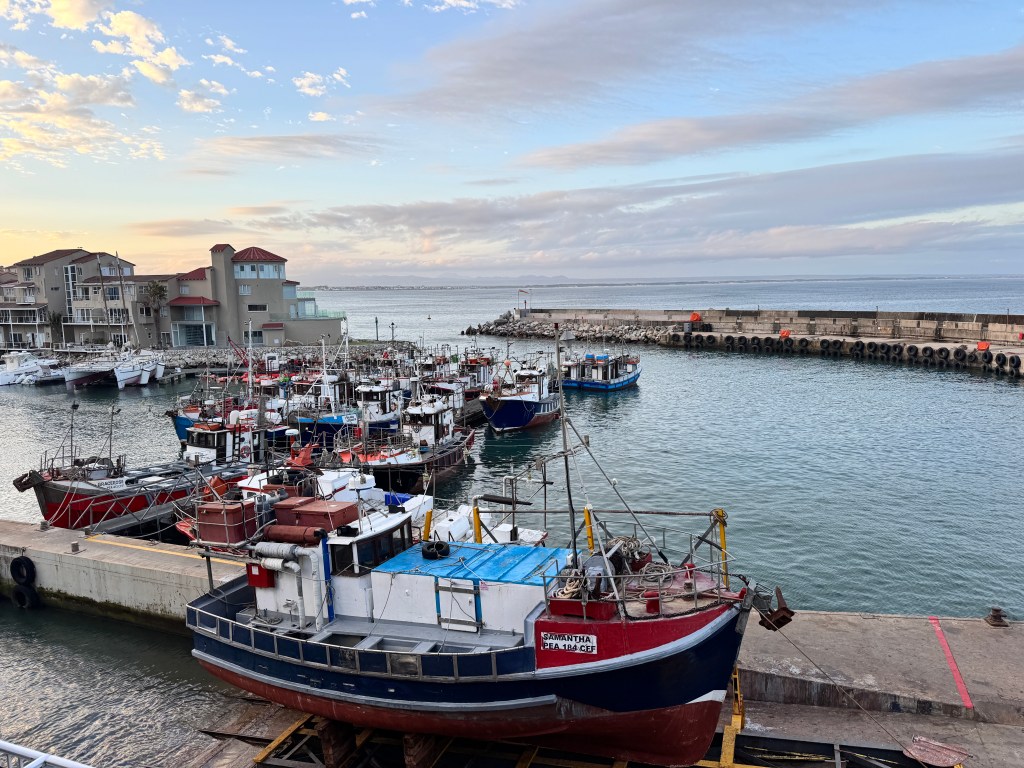
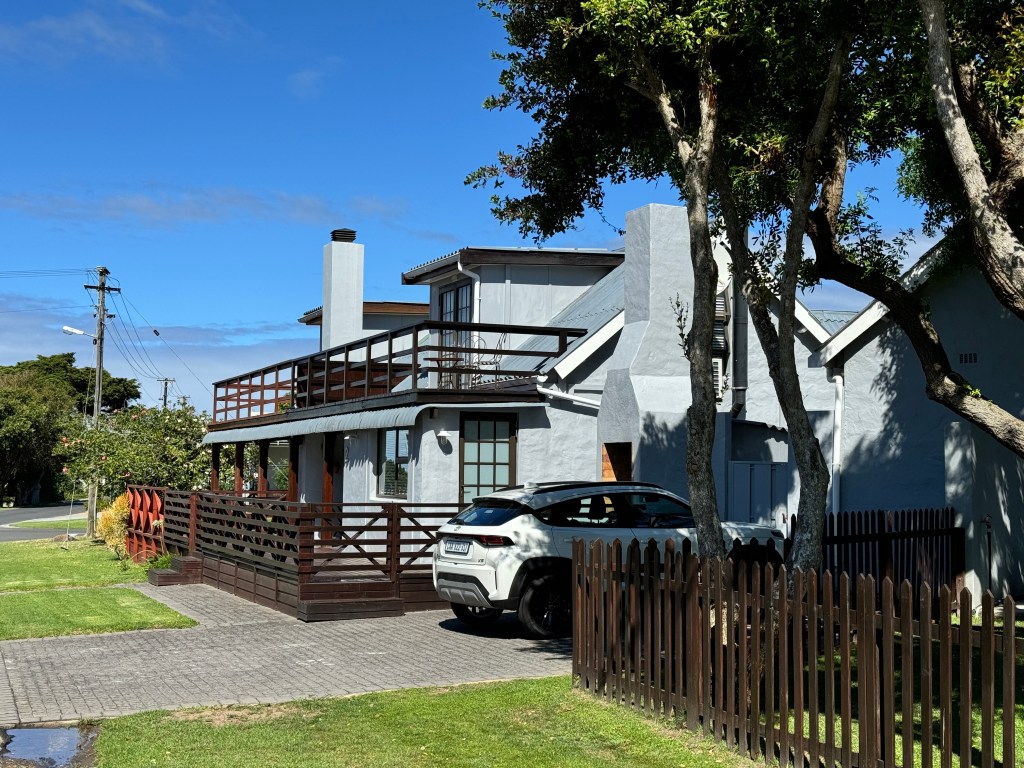
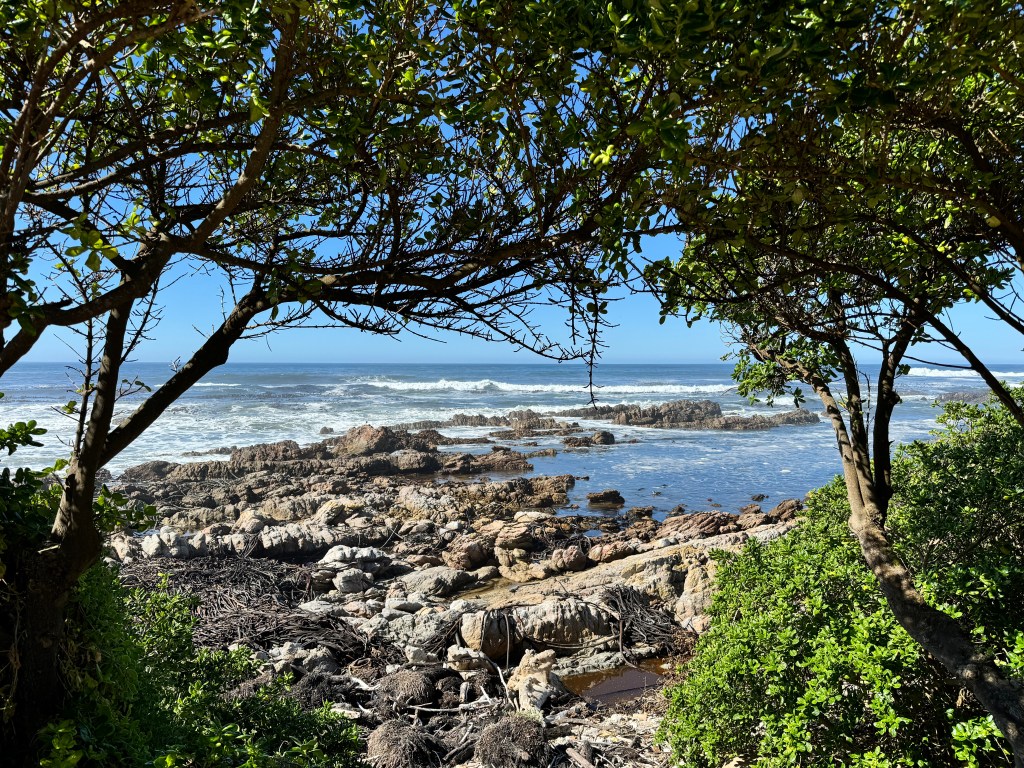
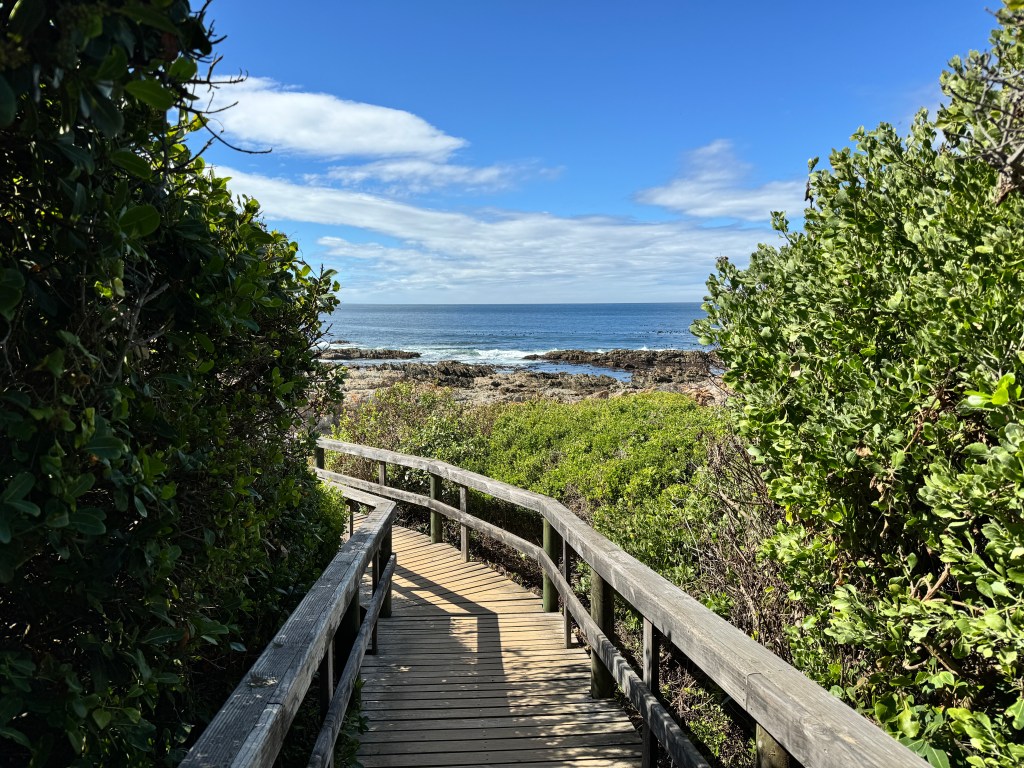
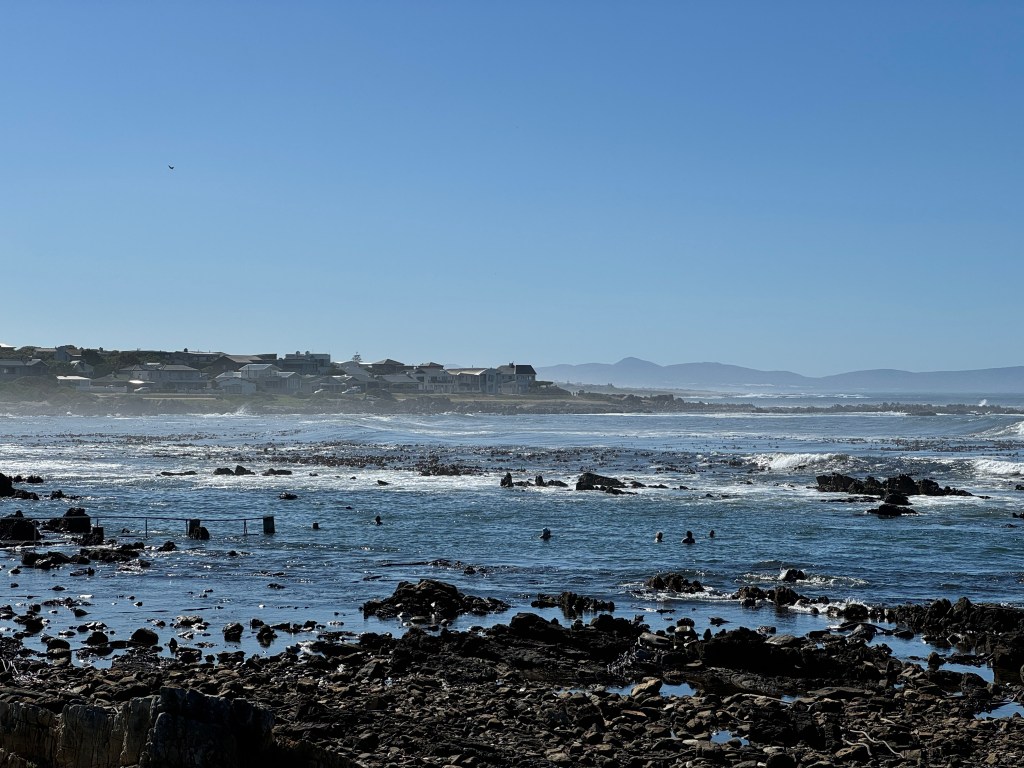
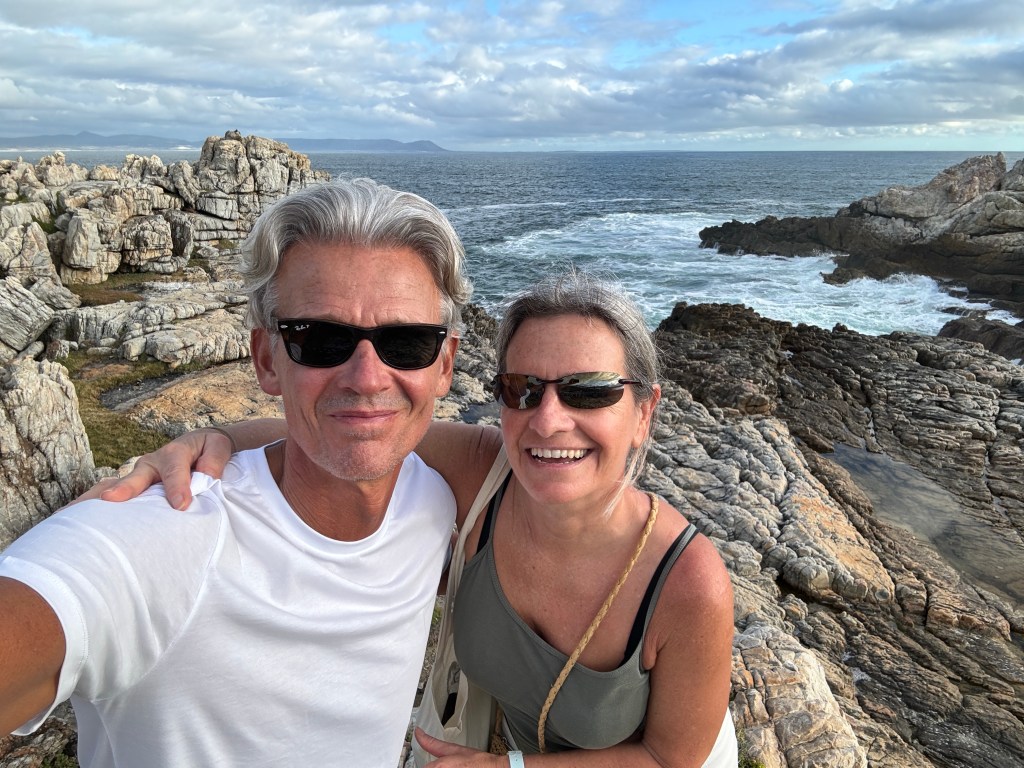
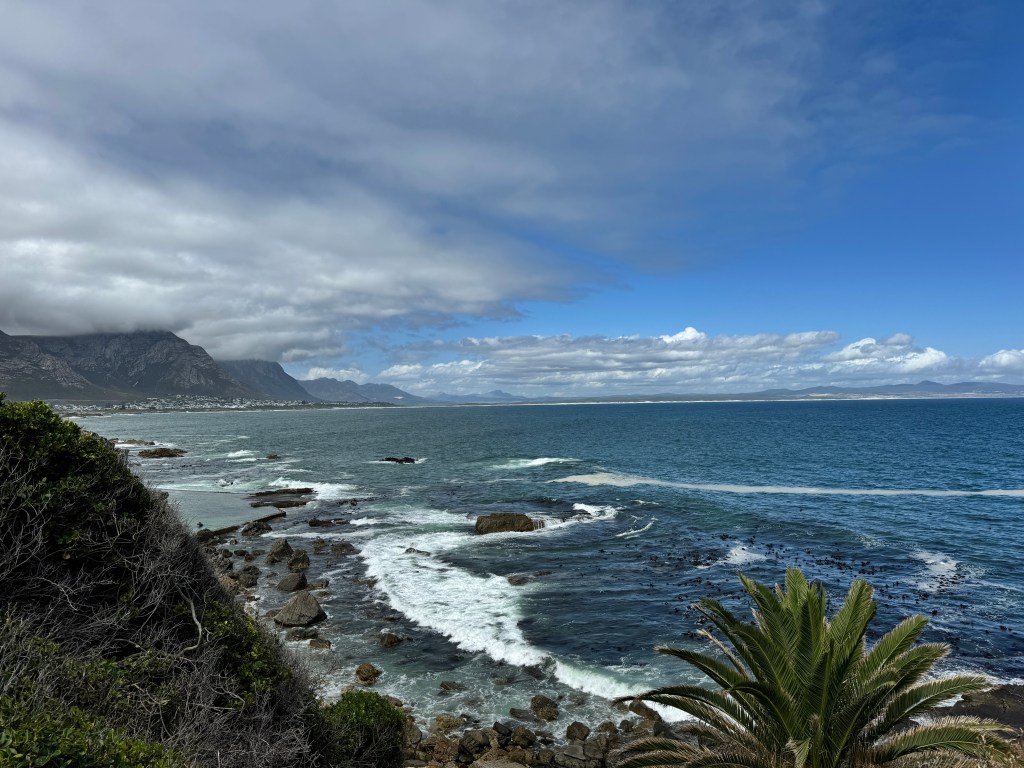
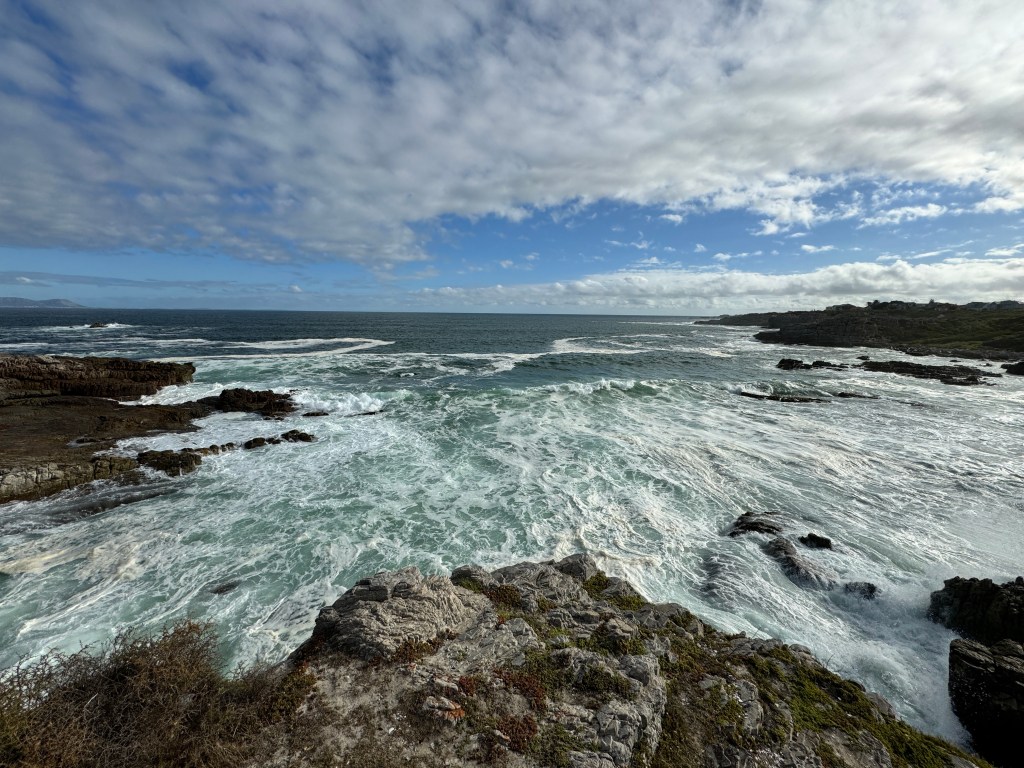
We picked up provisions at the local “Food Lovers Market”—a paradise for fresh fruit and vegetables—and arrived in Mossel Bay about two hours later. After meeting our host, we settled into our home for the next week. Our place is situated on a point above Santos Beach, with a view of the Indian Ocean. We’ve taken things pretty easy since we’ve been here, but we’ve discovered some excellent places to eat and some fantastic coffee spots. Coffee is a big part of the culture here, and there are some quirky places to enjoy a cup.

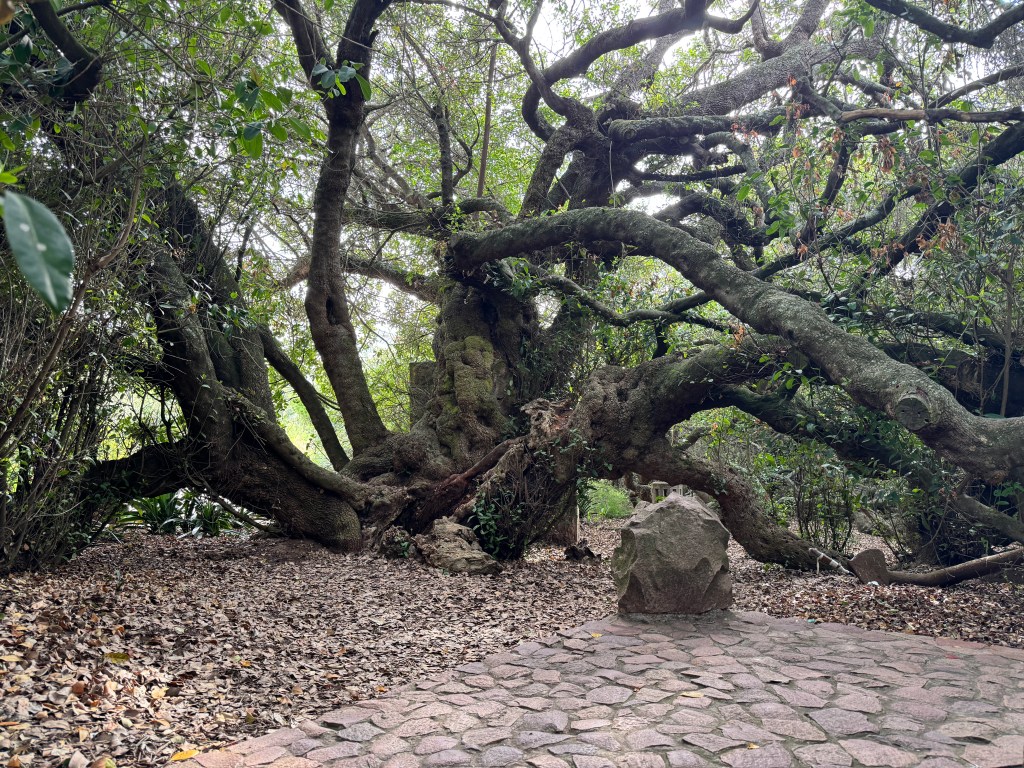
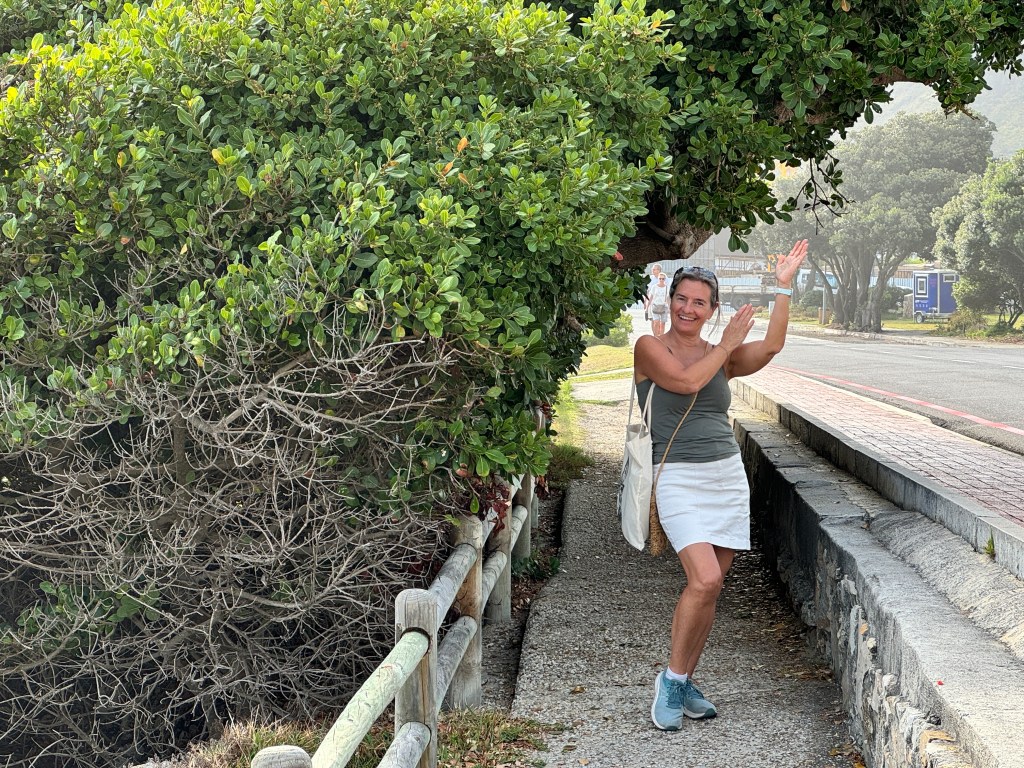
Mossel Bay is steeped in history, and one of the most fascinating things for me is the “Postal Tree.” In 1500, a Portuguese sailor used it as a makeshift postbox, placing a letter in his shoe and tying it to a Milkwood tree to warn subsequent Portuguese fleets of impending danger. From there, sailors began using the tree to deliver and receive messages from around the world. It’s believed to be Africa’s first postal system and was declared a national monument in the late 1960s.

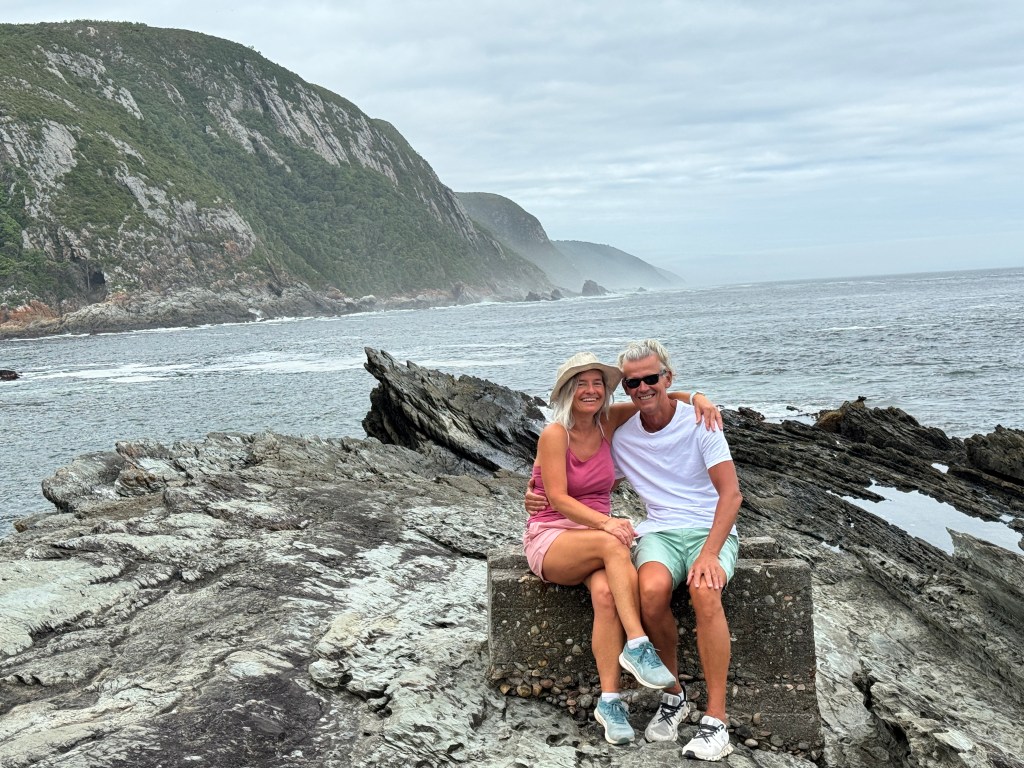
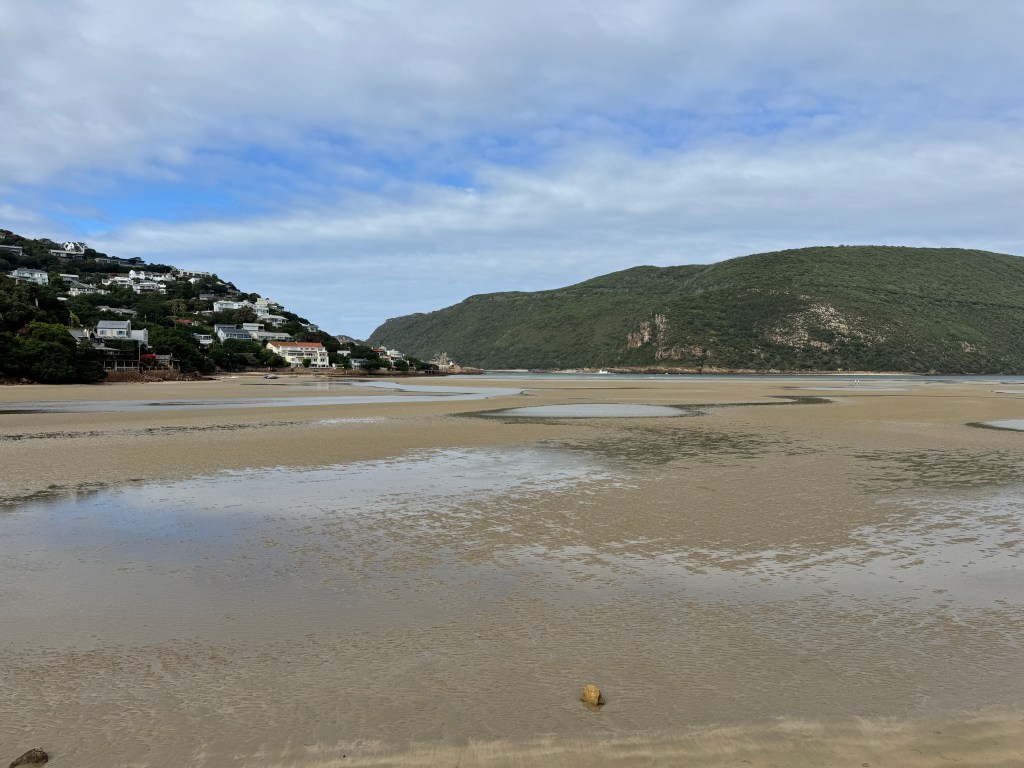
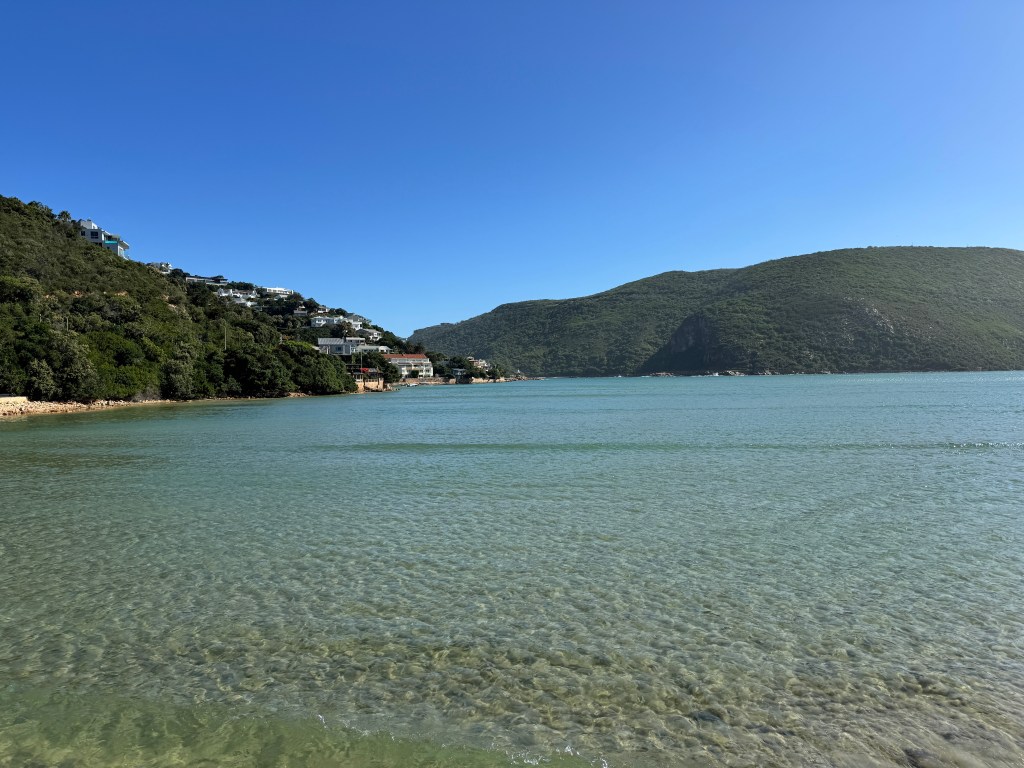
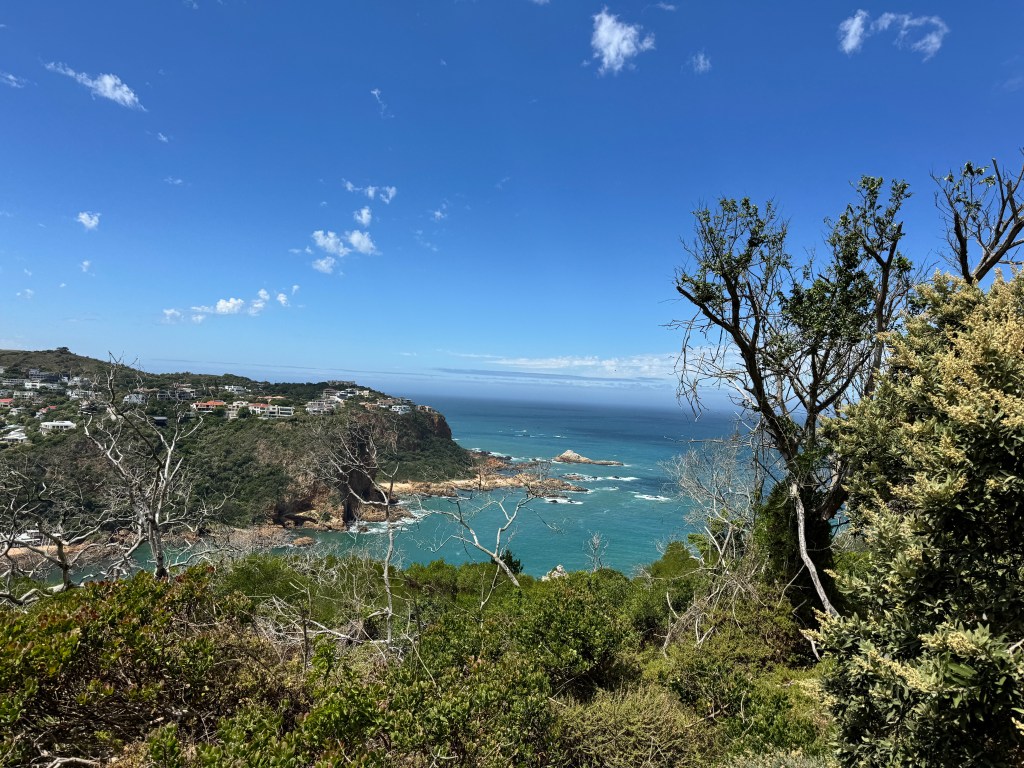
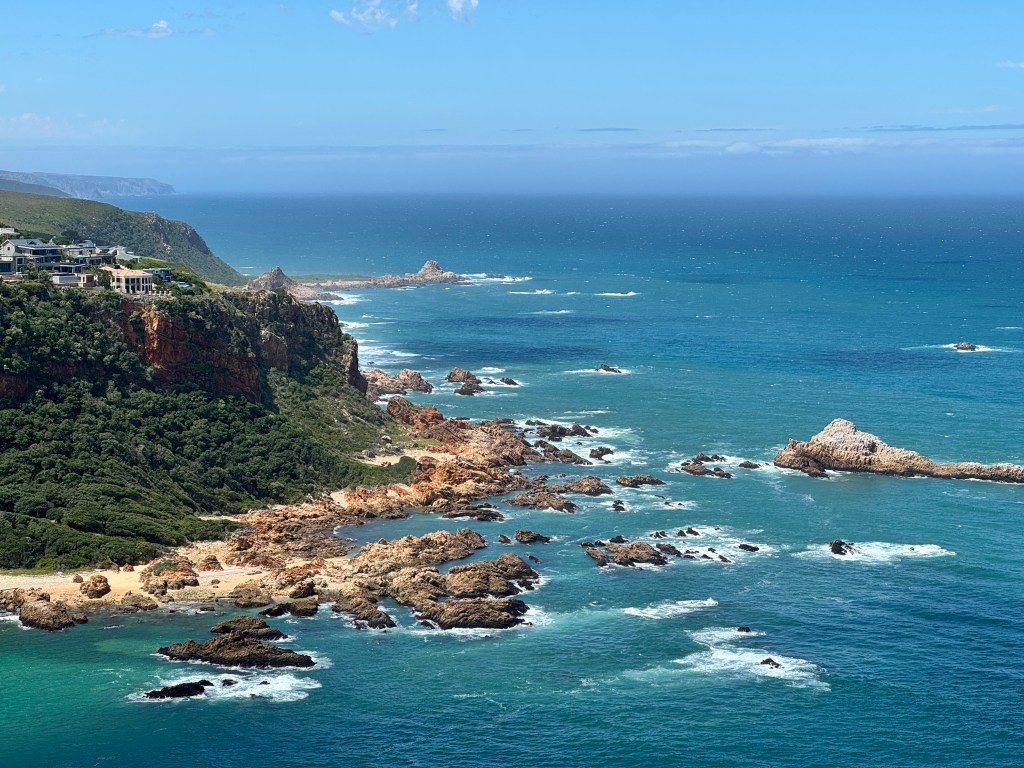
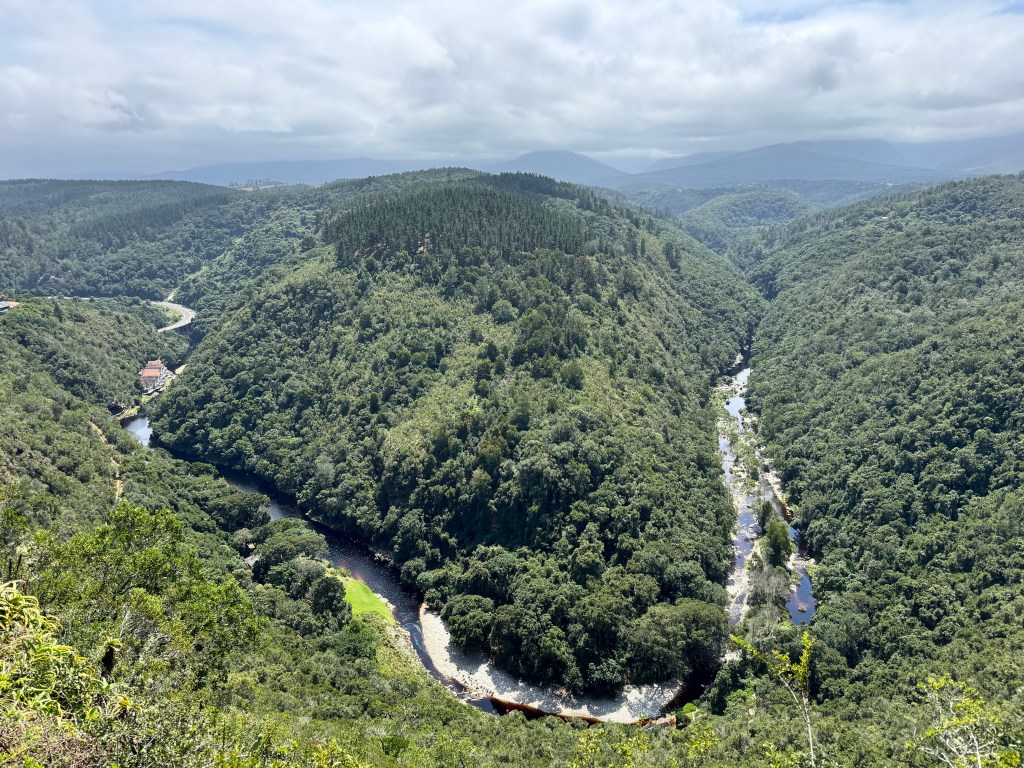
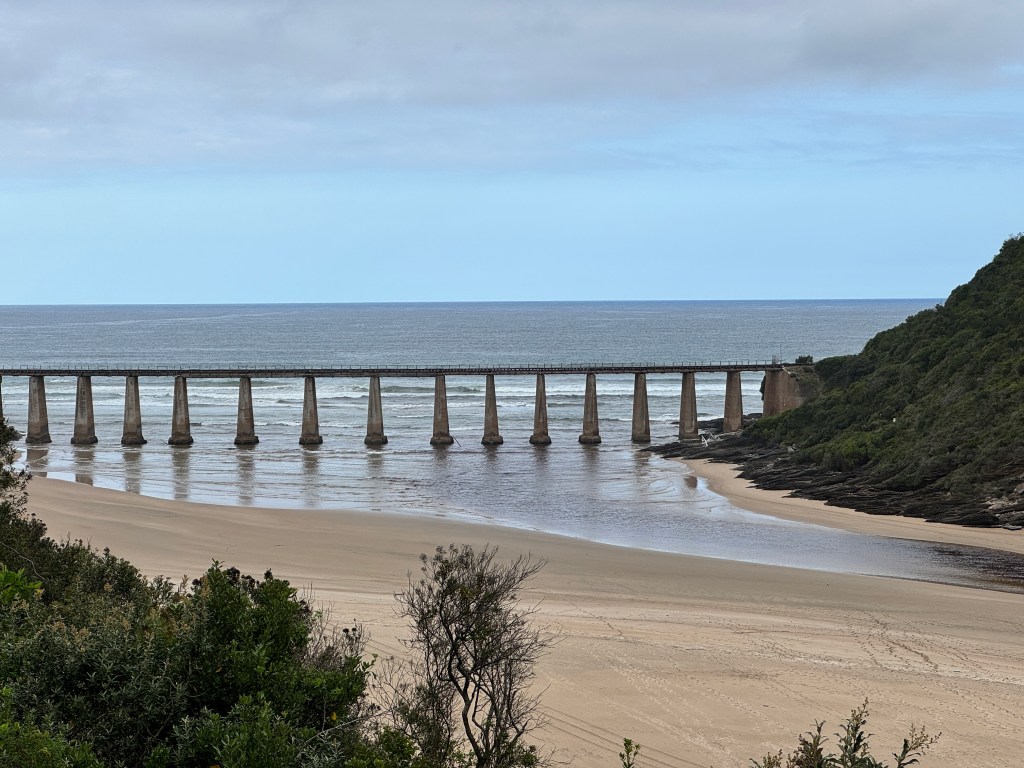
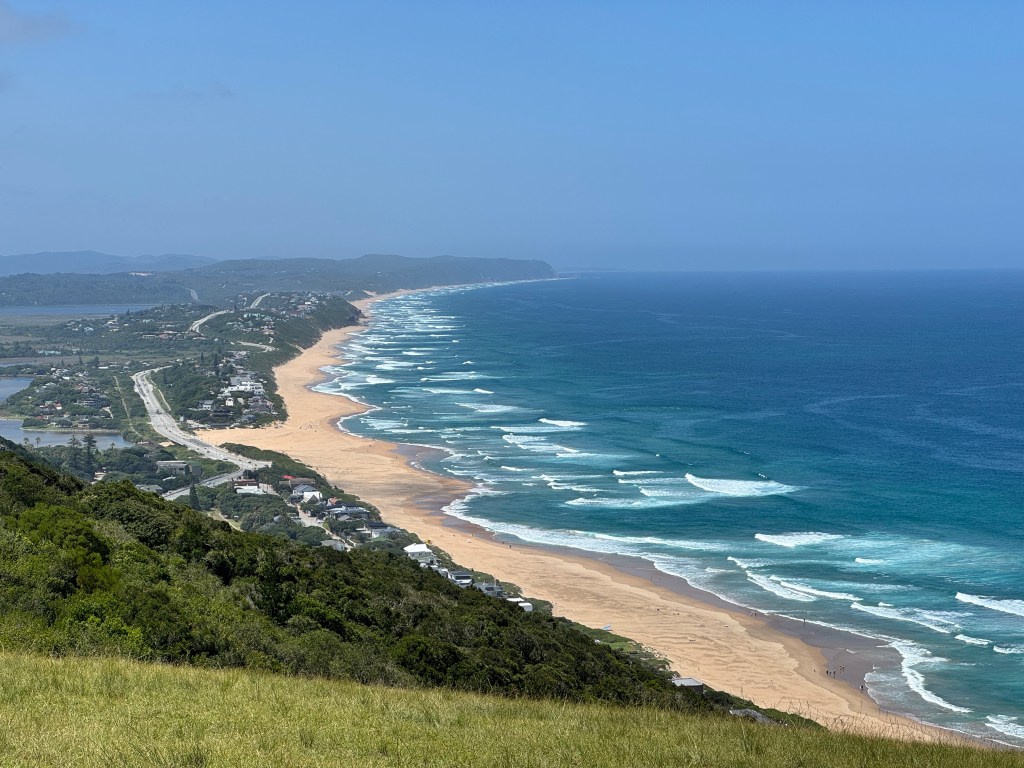
We’ve seen some beautiful locations while here, and one memorable day took us to Wilderness. Just off the N2, Wilderness is a small hamlet with a few restaurants, a couple of coffee shops, an ice cream parlour, a doctor’s office, and a gas station. To truly appreciate how beautiful this place is, you need to get above it. So, after a short drive up a mountain, we were treated to a panoramic view of both sides. On one side, we saw “The Map of Africa,” a land formation mysteriously carved out by the brown waters of the Kaaimans River, which has turned that color due to tannin from tree roots. It bears a remarkable resemblance to the African continent. On the other side, we found people sitting on a grassy mound, seemingly in a hypnotic state, gazing at what we both agreed was the most incredible coastal view we’ve seen since we arrived.

This area is also a popular spot for paragliders, who launch themselves off the side and soar along the light winds, eventually landing on the beach—what an amazing experience that must be!

Where we’re staying this week

Swellendam & De Hoop Nature Reserve

We’ve truly enjoyed our stay in Onrus; everyone we’ve met here has been wonderful. We didn’t even mind too much about getting well and truly beaten by the Kleinmond Tennis Club—they were so welcoming and far more humble than I would have been if the tables were turned! After thanking Ryno, one of our gracious hosts, we set off east along the N2, heading into the foothills of the Langeberg Mountains.

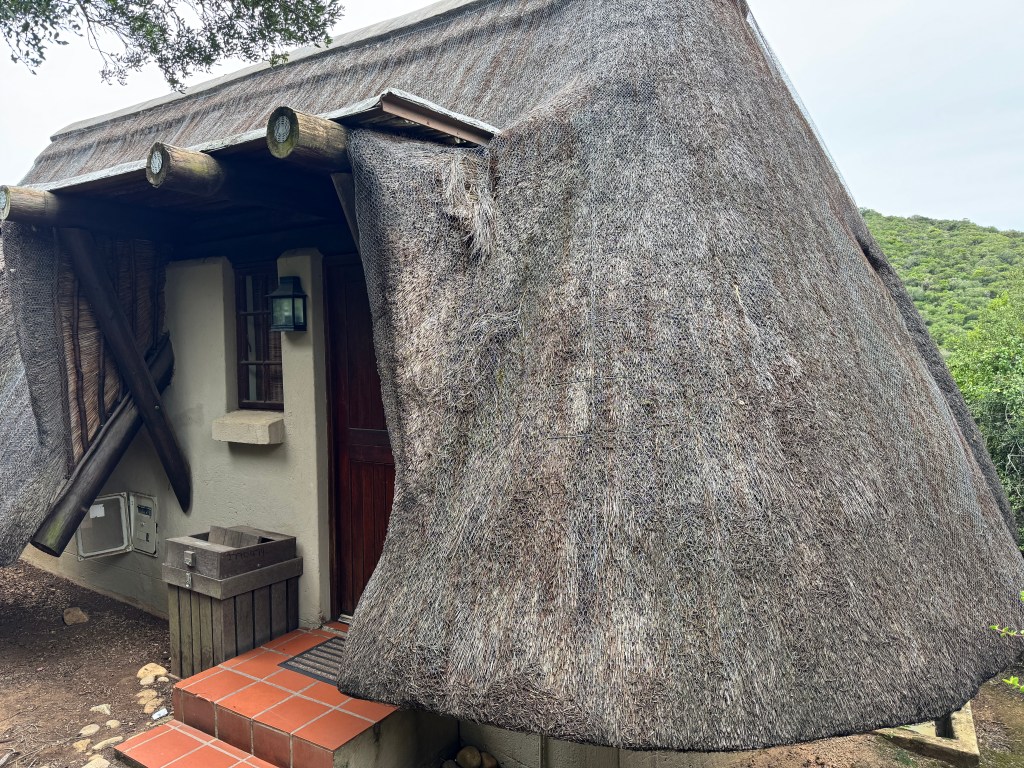
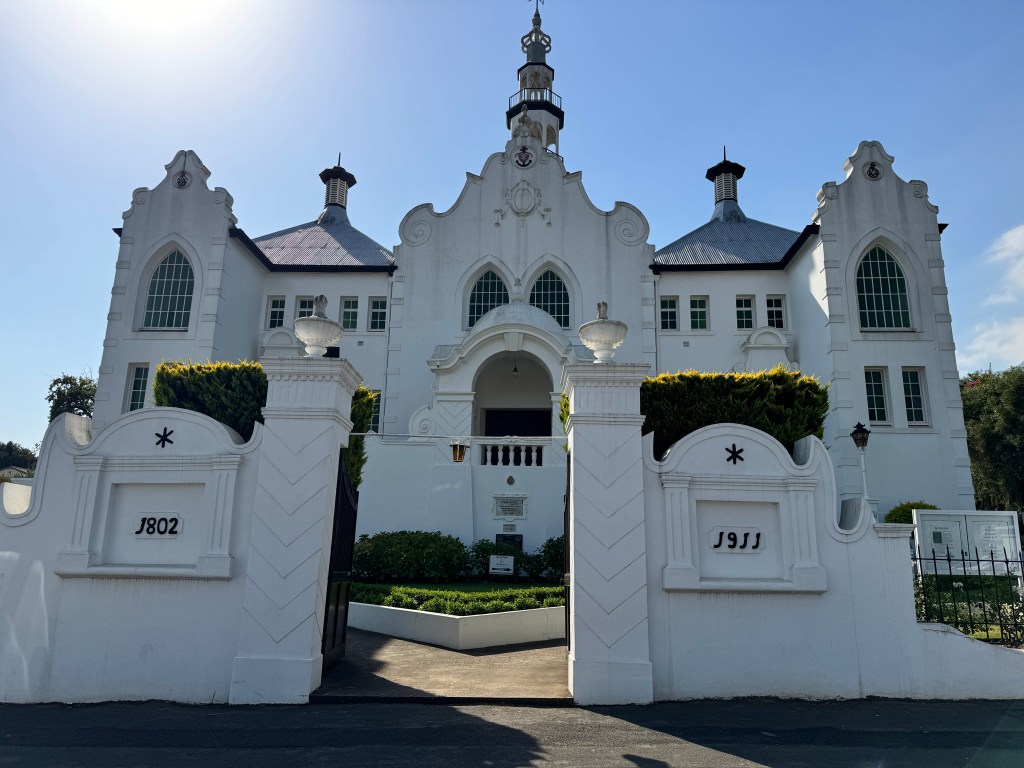
When we left Onrus at midday, the temperature was a comfortable 24 degrees, but by the time we arrived in Swellendam two hours later, the temperature had climbed to a scorching 40 degrees. After unloading the car, we drove into the quaint town of Swellendam, which is centered along a single avenue. Founded in 1745 by Dutch settlers, the town still boasts beautiful whitewashed stone houses with thatched roofs, with a rather imposing Dutch Reform church at its center. It’s the third-oldest town in South Africa and became known for its wagon building and repairs, which is why the road is so wide—wide enough to turn a wagon around!

We also took a hike around the dams, planning to swim, but the brown water (due to root tannin) was a bit off-putting.

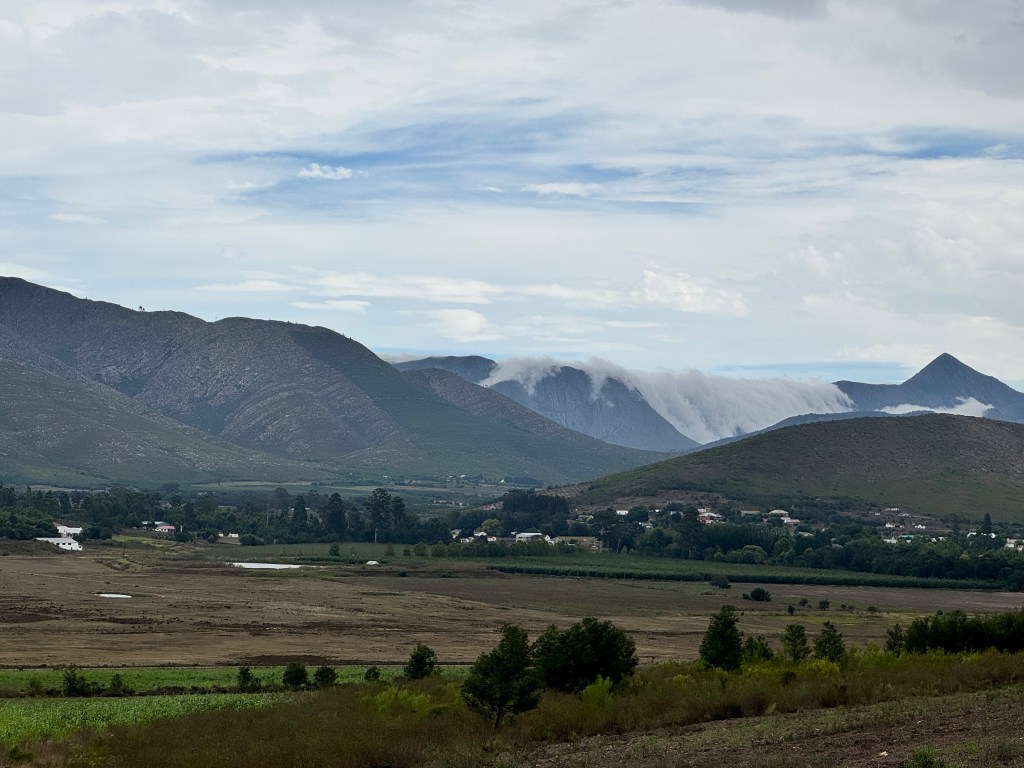
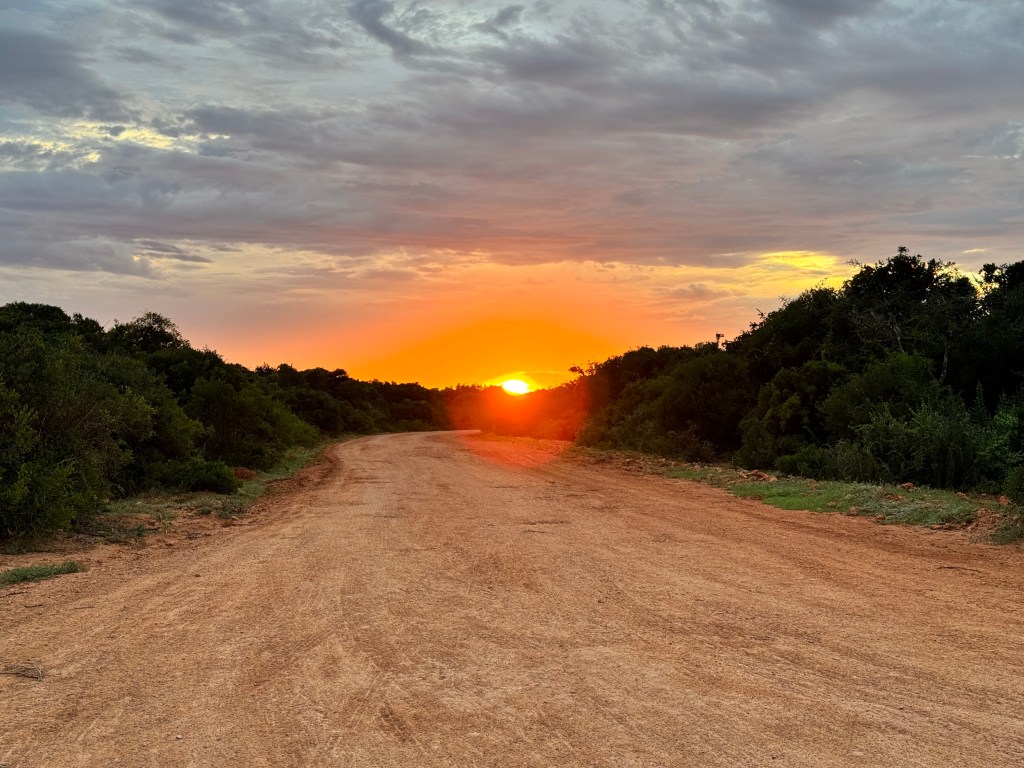
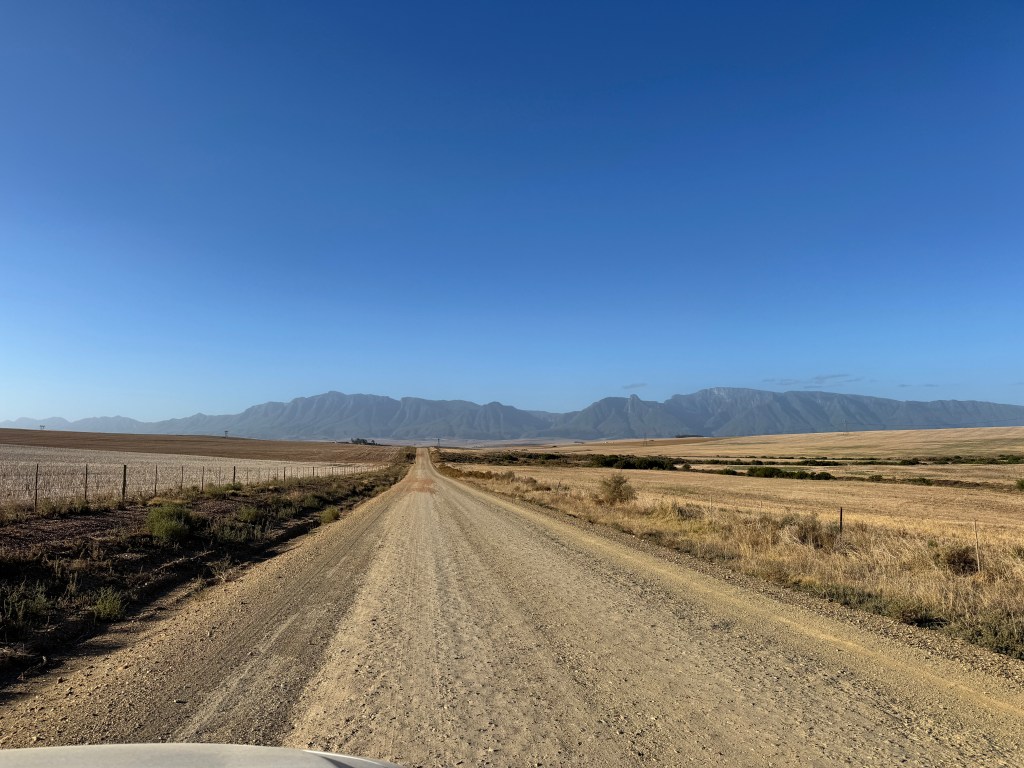
After breakfast the next morning, we set off for De Hoop, National Park, wondering if our small Toyota Cross could handle the 50km gravel track, which is also used by heavy farming equipment. I wasn’t sure what to expect, but as we drove through the vast expanse of farmland, Rachel assured me that the scenery was quite beautiful, though I was too busy concentrating on dodging larger rocks and potholes. But when we arrived, it was well worth the journey.

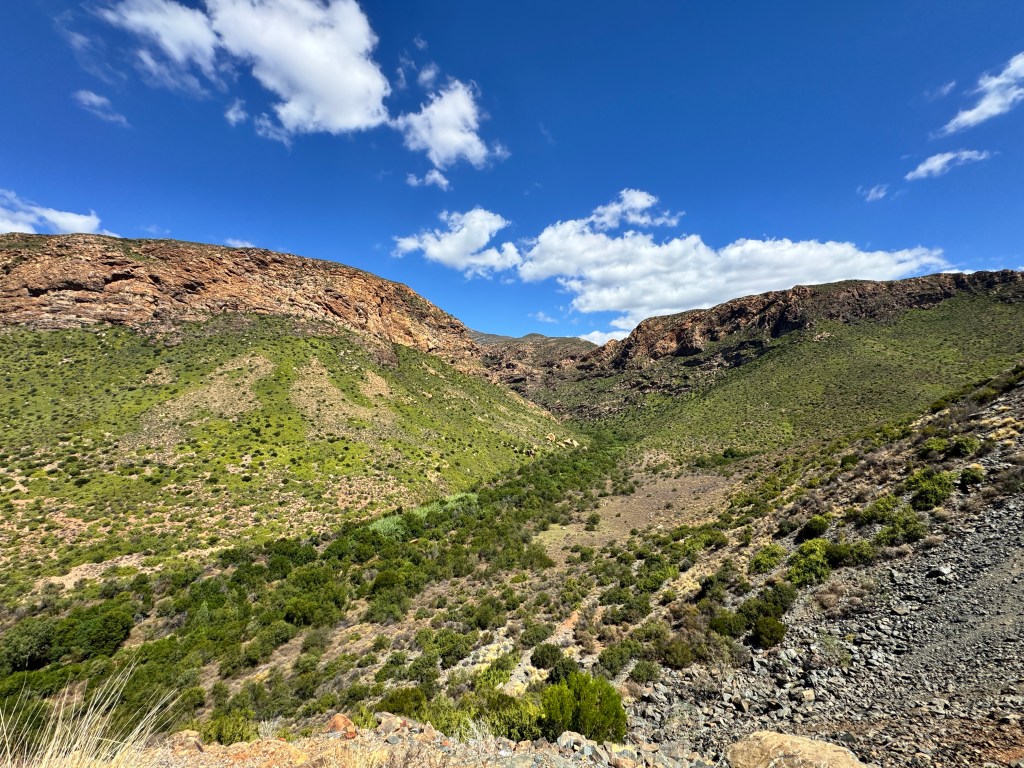
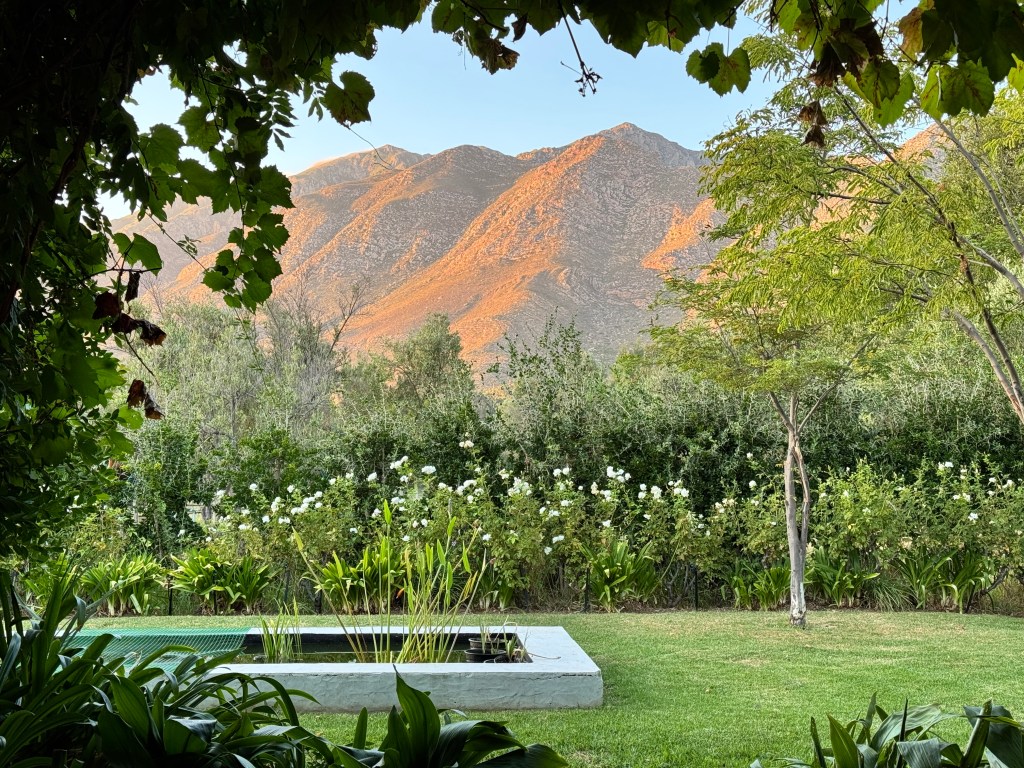
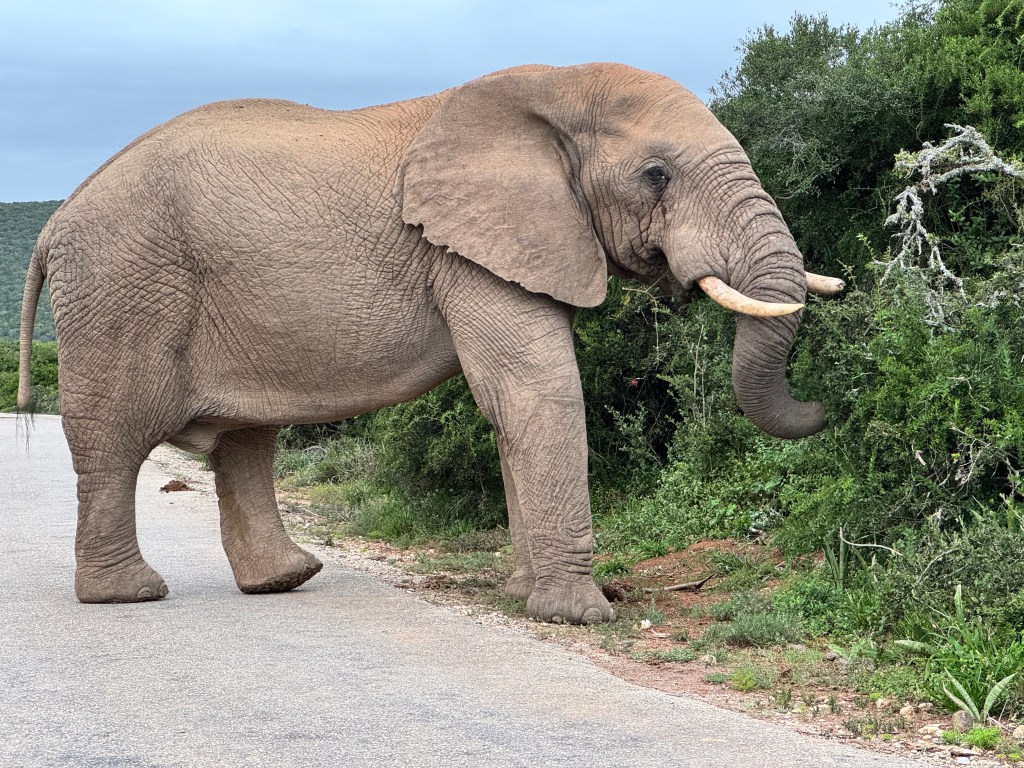
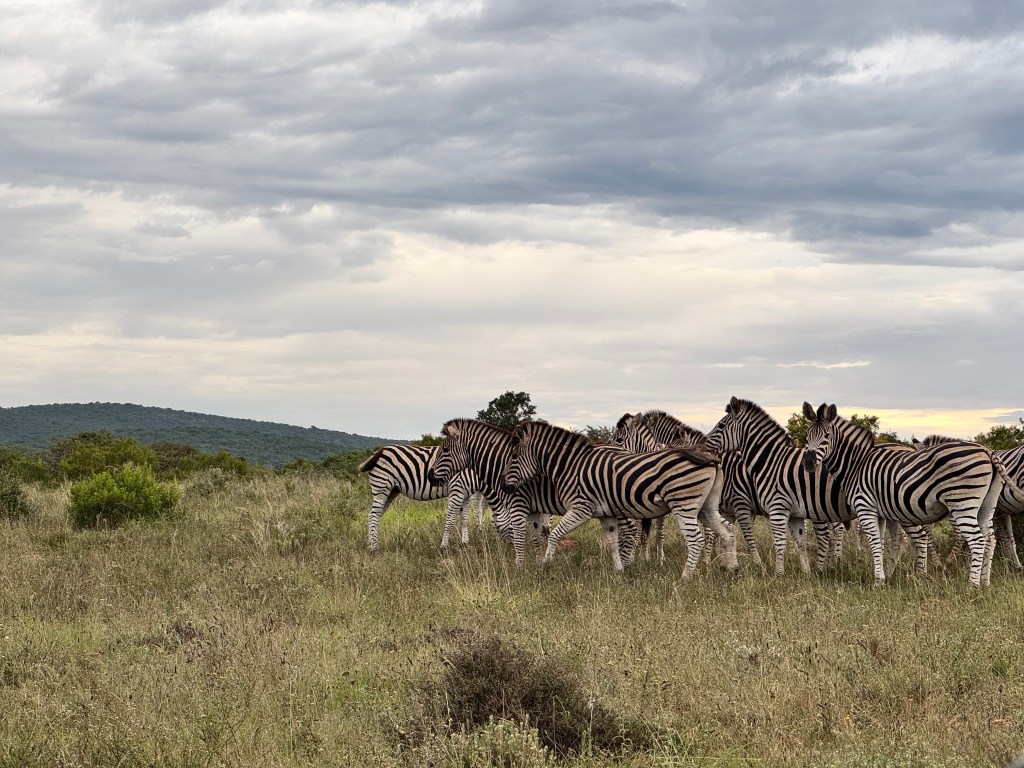
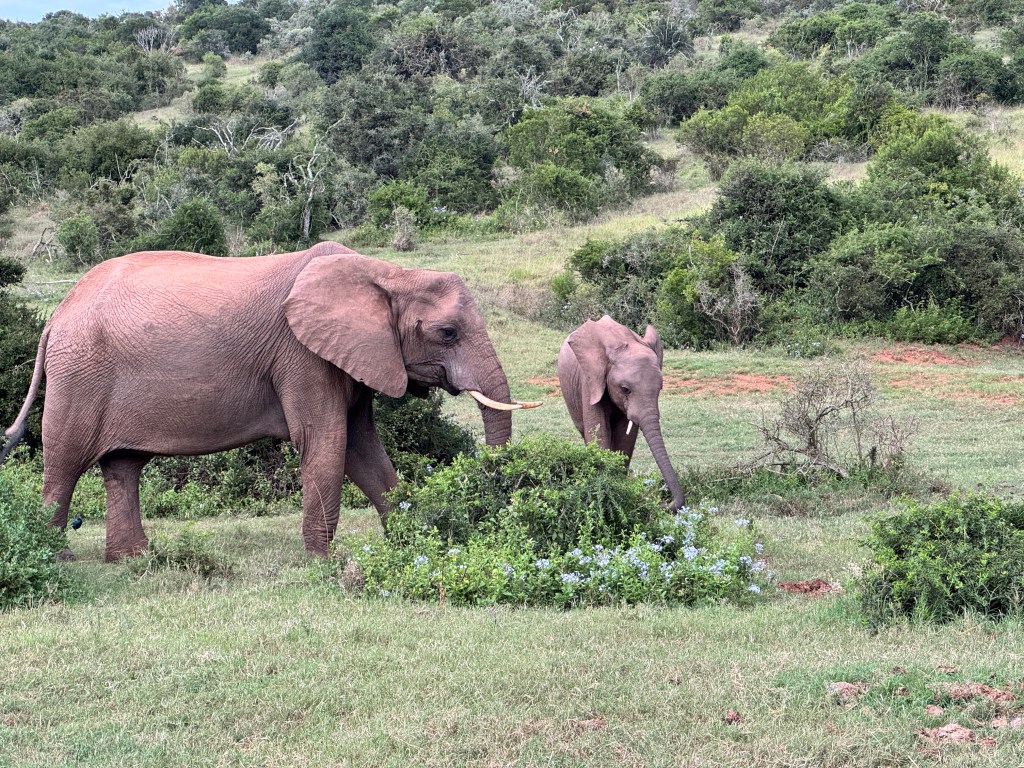
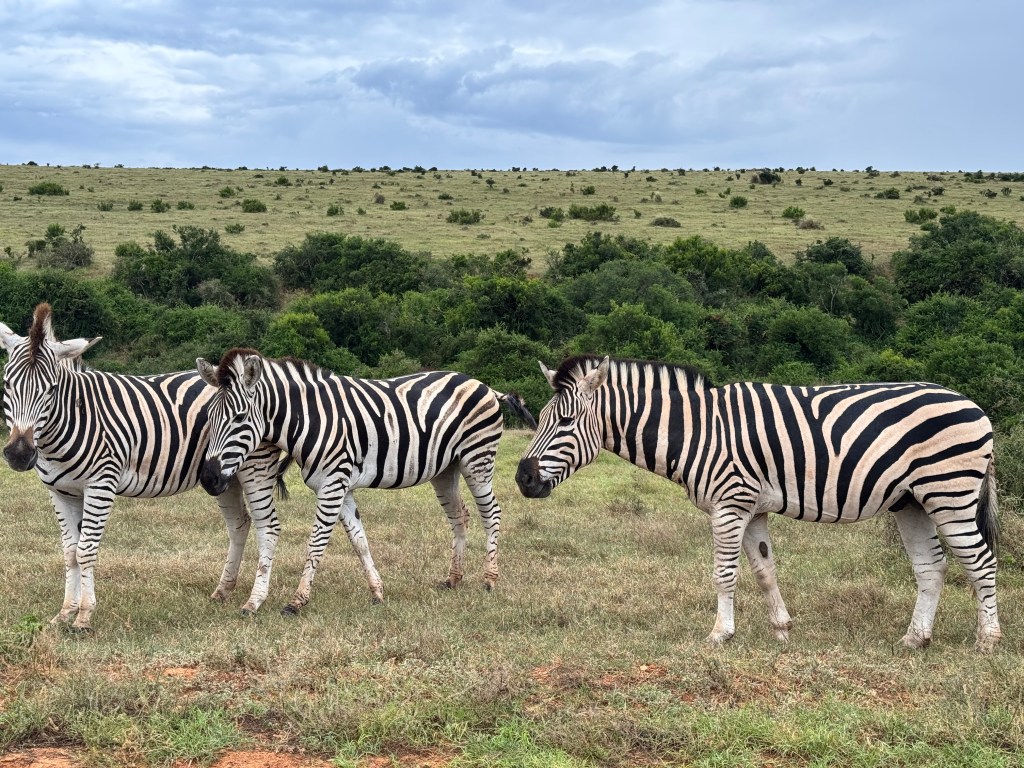
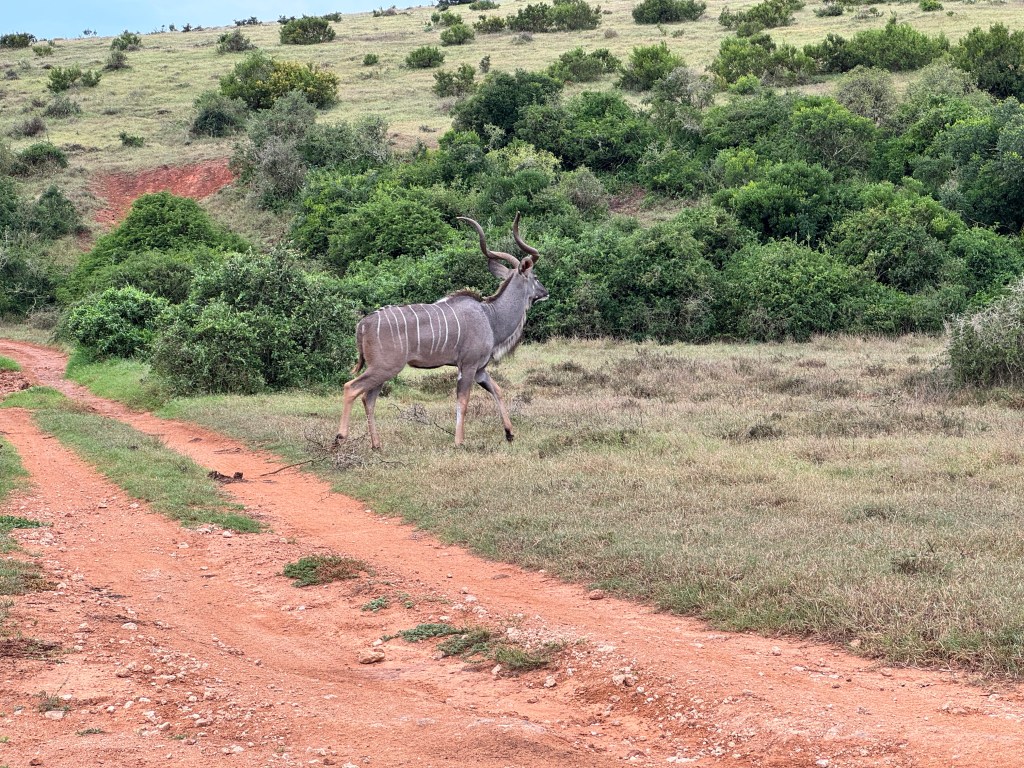
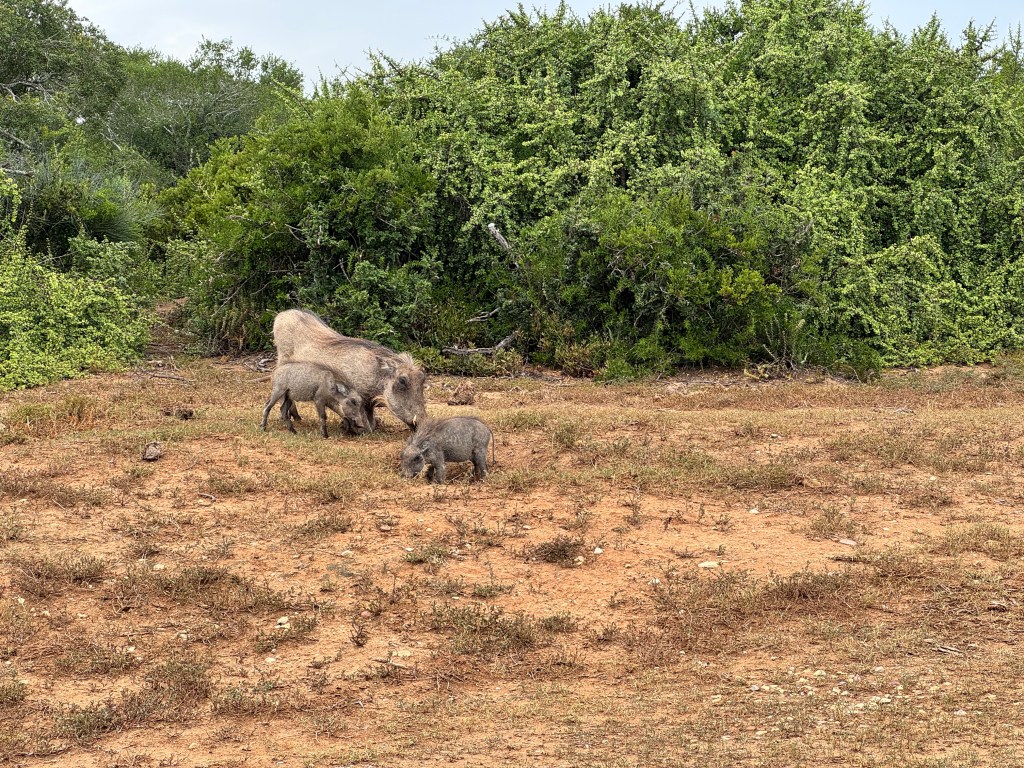
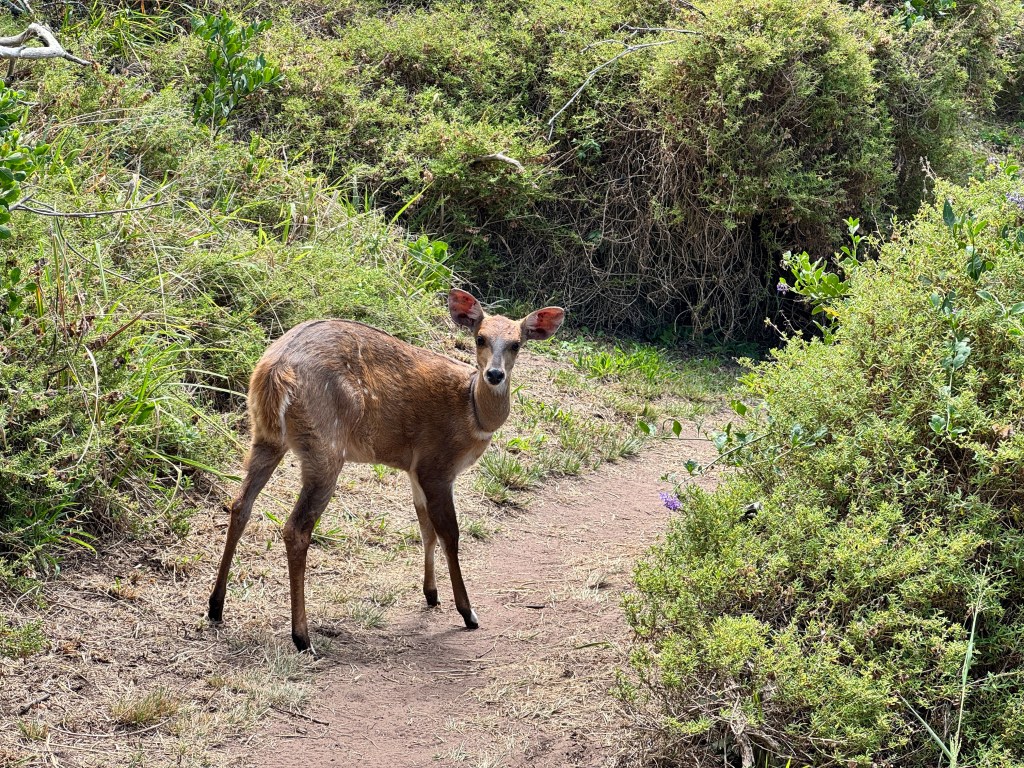
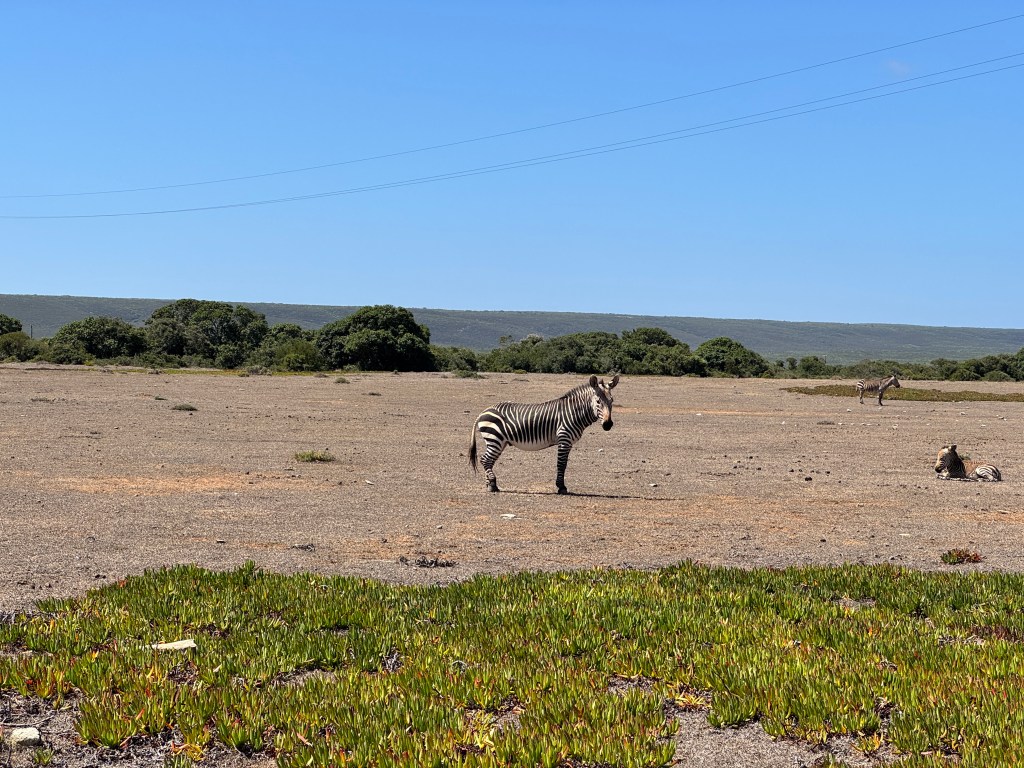
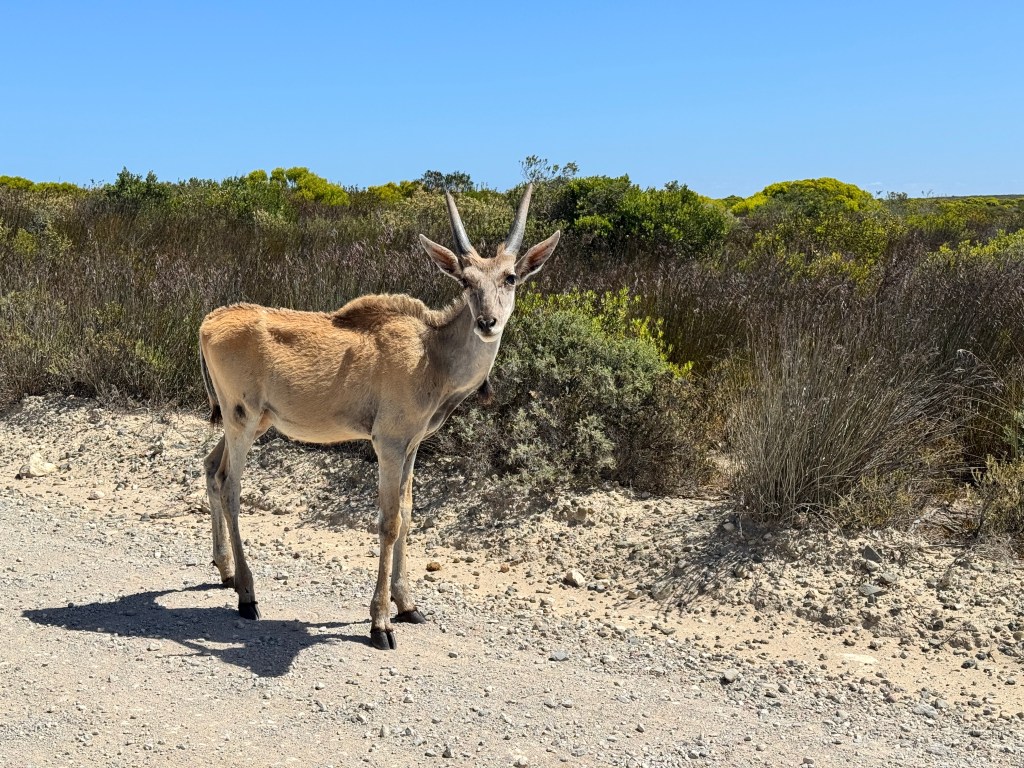
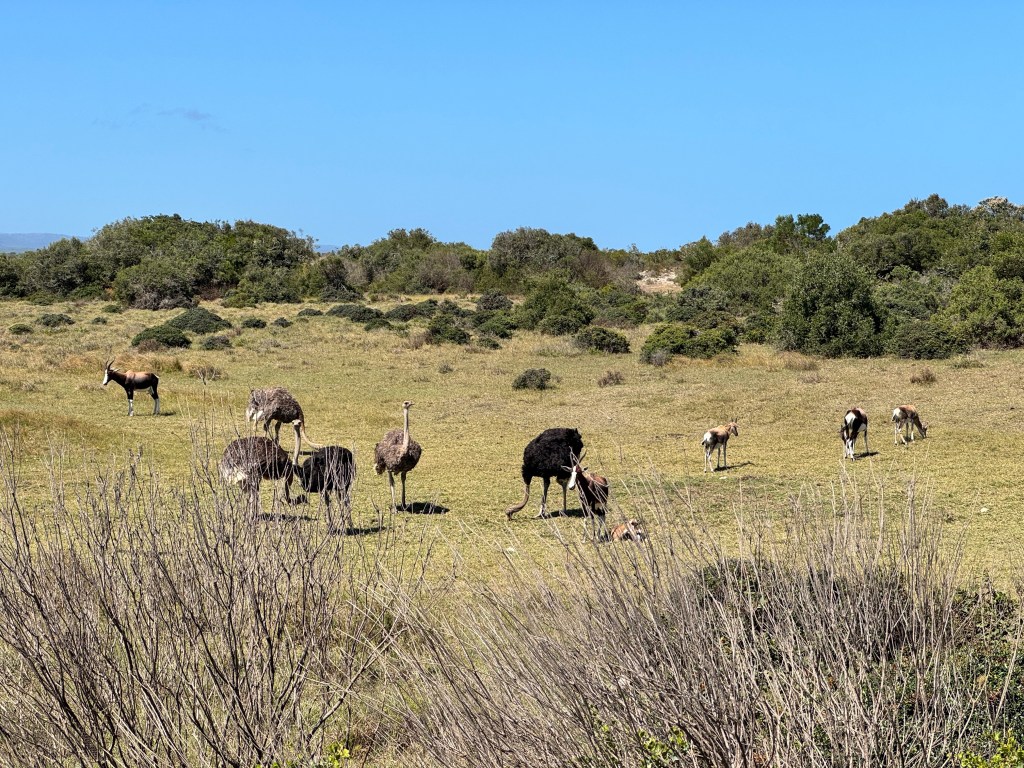
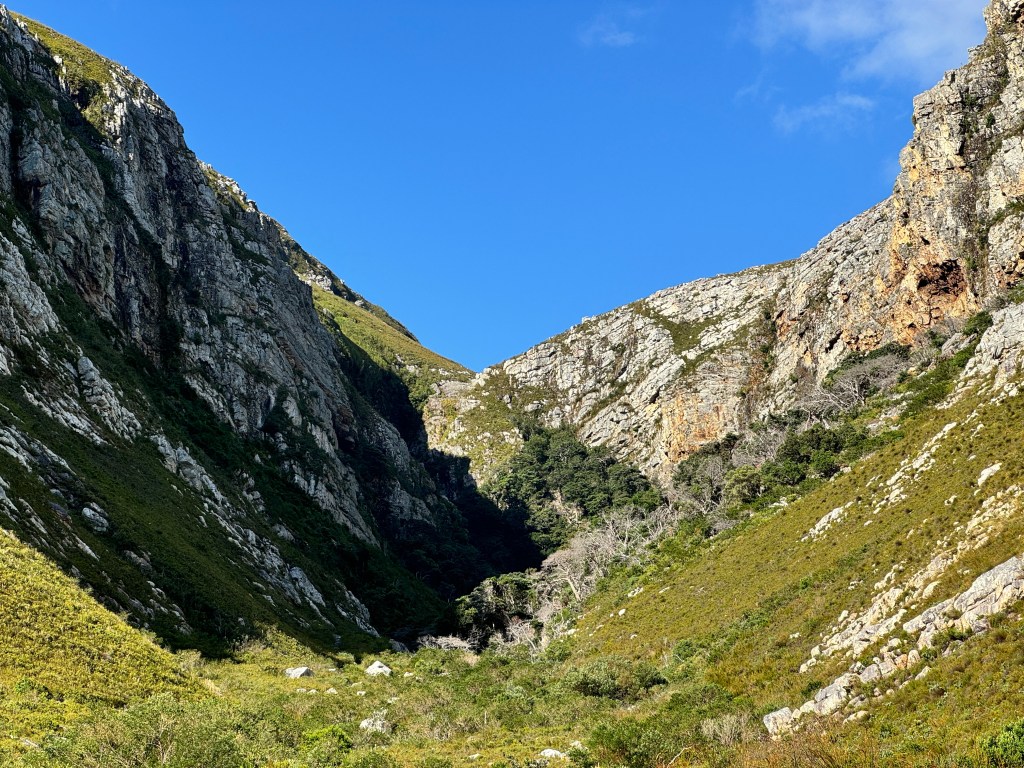
The park spans 340 square kilometers of animal reserve, set amid stunning fynbos (shrubland and heathland). It was incredible to see the animals, many with their young, thriving in this protected space. We walked along one of the many trails that cut through the rocky headland and into the fynbos, taking in the tranquility of the area. There are also some small pensions in the park, and if you book in advance, you can stay here to fully immerse yourself in the beauty of this place.

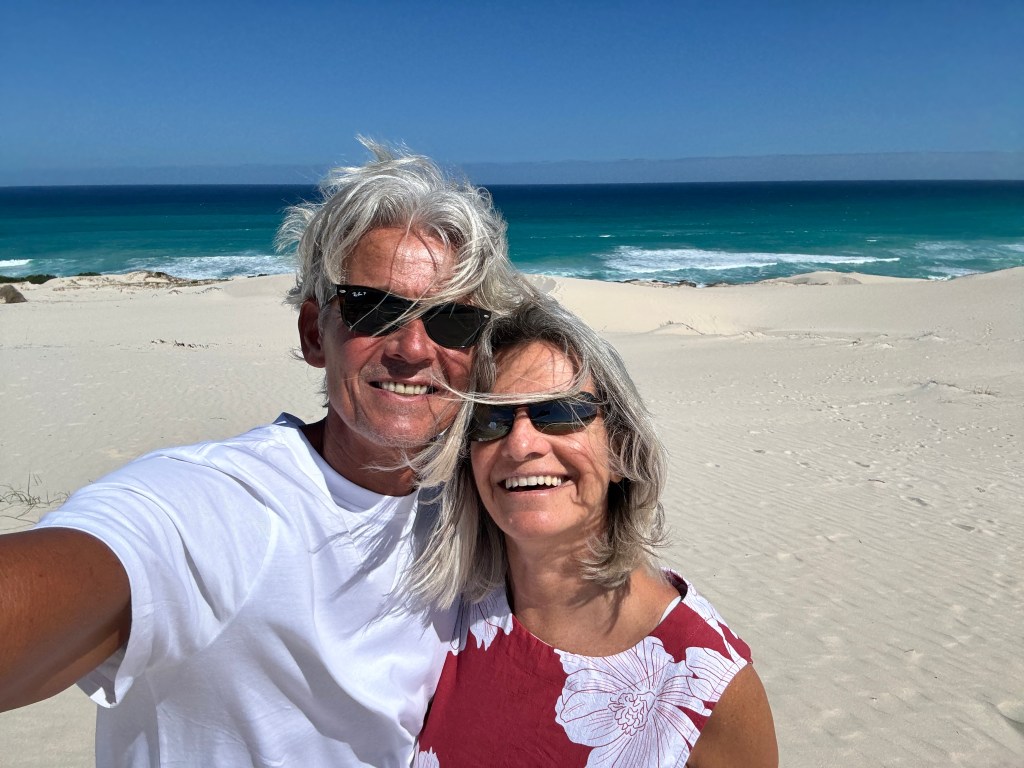
After about 30 minutes of driving to the coastal side of the park, we reached the marine reserve. Pristine sand dunes stretched across the face of the Indian Ocean as far as the eye could see. It’s one of the largest protected stretches of coastline in Africa, and it was truly stunning. In the spring, people come here to witness the thousands of whales migrating up the coast, adding another layer of awe to this already breathtaking place.

We had planned to have a late lunch at the tiny coastal restaurant, but we got talking to an interesting lady who shared her insights about some of the places we were thinking of visiting next. By the time we reached the restaurant, it was closed—but we were both too relaxed to be bothered. Instead, we simply enjoyed the peaceful surroundings, reflecting on how great the day had been.

A peaceful retreat – Swellendam

Betty’s Bay

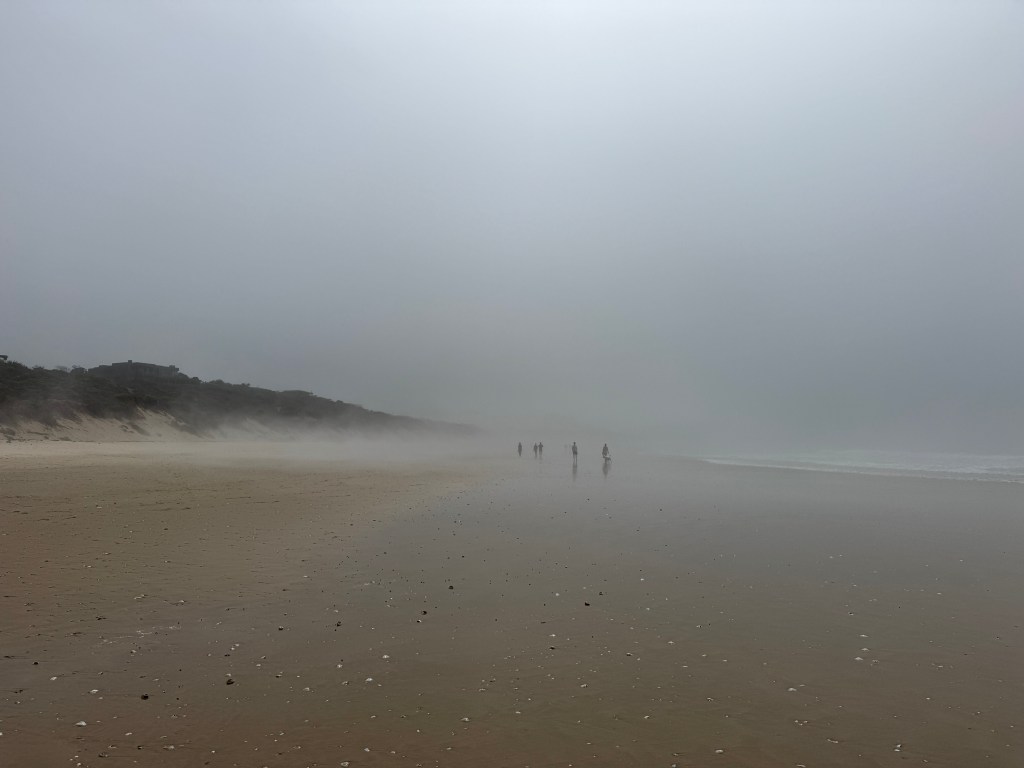
We set off mid-morning from the cottage and headed back towards Cape Town along the R44 coastal road, making our way to Betty’s Bay, which was high on Rachel’s list of places to visit. We arrived just after mid-morning and decided to visit the main beach first to stretch our legs. We parked in a small lot, unsure of what to expect, but after a short stroll over some sand dunes, we were greeted by a vast expanse of white sand in a beautiful bay, which we mostly had to ourselves. We spent just over an hour walking up and down the beach. I could’ve easily stayed there all day, but we had more to explore.

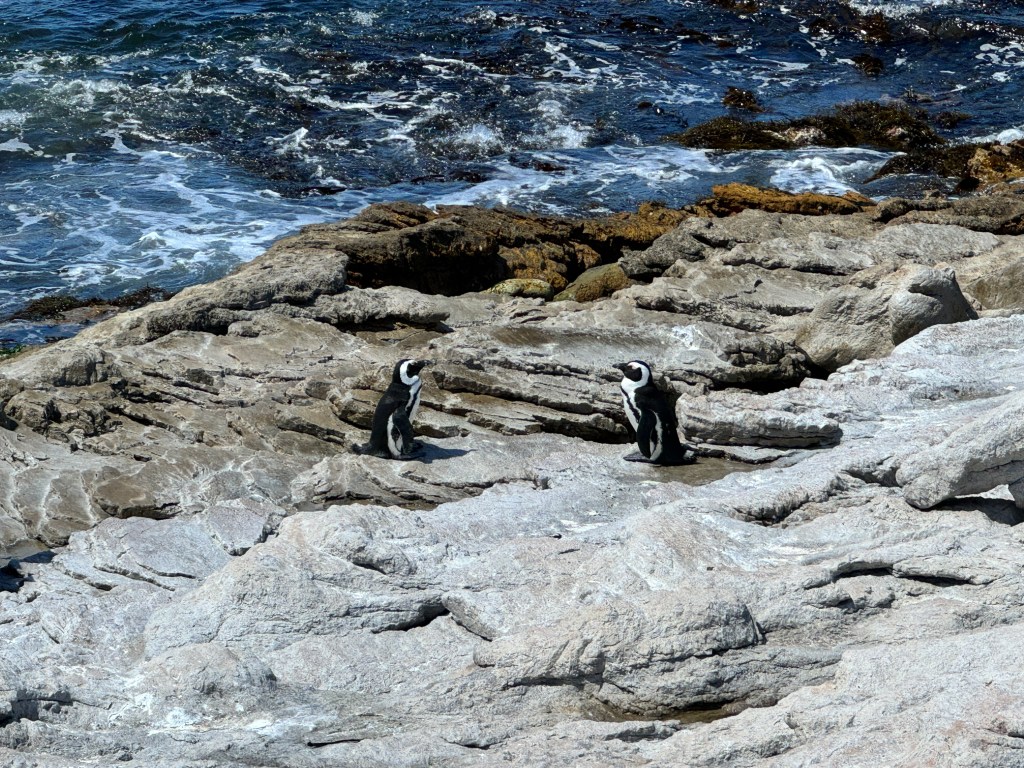
Our next stop was Stony Point, which intrigued us both. A few years ago, it was home to 1,600 pairs of African penguins, which are found only along the southern coast of Africa and Namibia. Today, fewer than 900 pairs remain due to both man-made and environmental impacts. The penguins were smaller than I expected, but they were still absolutely fascinating to watch. Though not very active in the midday heat, they were mostly resting, but it was still delightful to see them. Further along, we found a colony of cormorants who seemed to have claimed the rocky peninsula as their own.

We ended up chatting with a group of travelers, who, after learning we were heading east, recommended a few places to stay and things to do. Interestingly, our trip seems to be increasingly shaped by local recommendations—something I absolutely love! Afterward, we stopped for coffee at a local spot that was another recommendation. The coffee here is amazing, and it’s quickly become our main source of local intel.

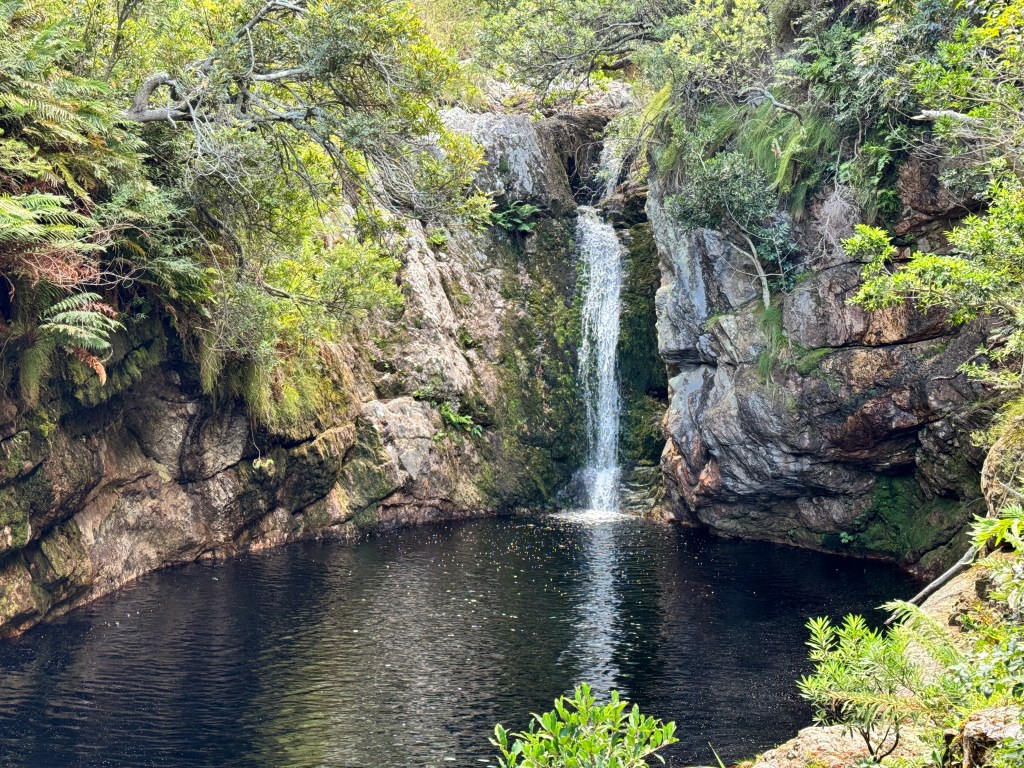
Next, we arrived at the Harold Porter Botanical Garden, nestled at the foot of the mountains. The garden offered beautiful fauna, with trails leading into the foothills. We took a short hike to a lovely waterfall and had an unexpected encounter with a family of baboons feeding on the reeds. It was a little unnerving, especially since they weren’t the friendliest-looking mammals, and they had their young with them. We didn’t get too close, but it was still fascinating to watch them from a distance.

Babylonstoren

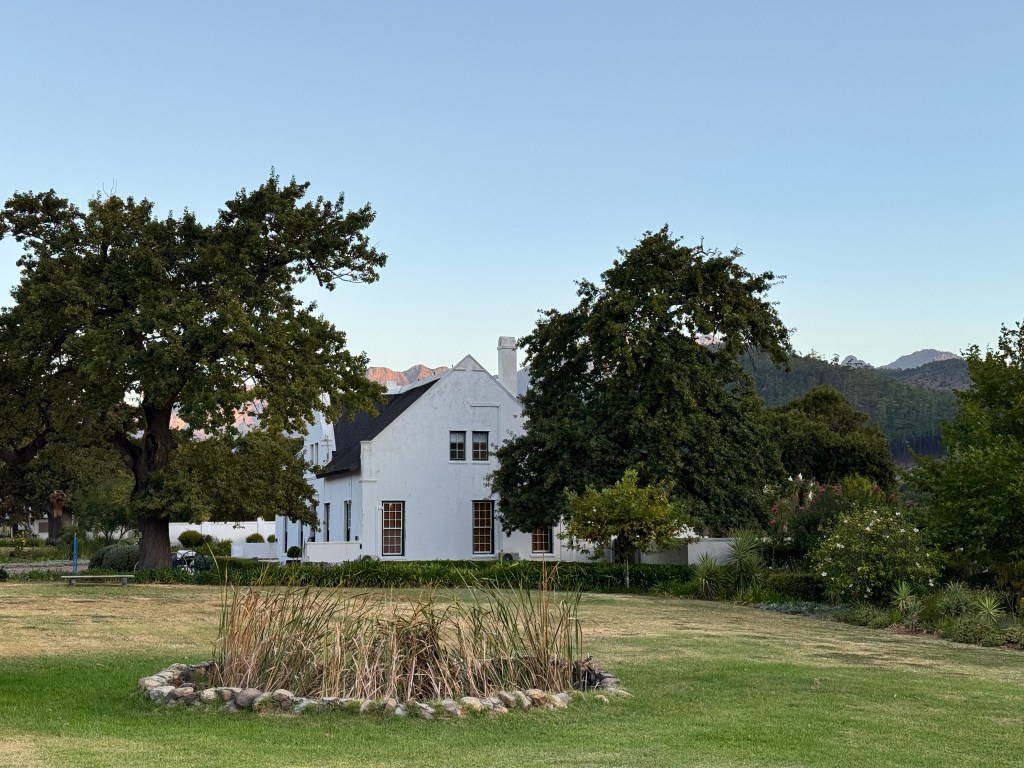
About two hours from Onrus, we arrived at Babylonstoren, one of the oldest Cape Dutch farms dating back to 1692, set at the foot of Simonsberg in the Franschhoek wine valley. The estate has been meticulously restored to reflect how it would have looked back in the day, complete with a beautiful fruit and vegetable garden designed by the French architect famous for his work at the Monastery of Notre Dame. If you’re willing to sell your firstborn, you can stay here, too!

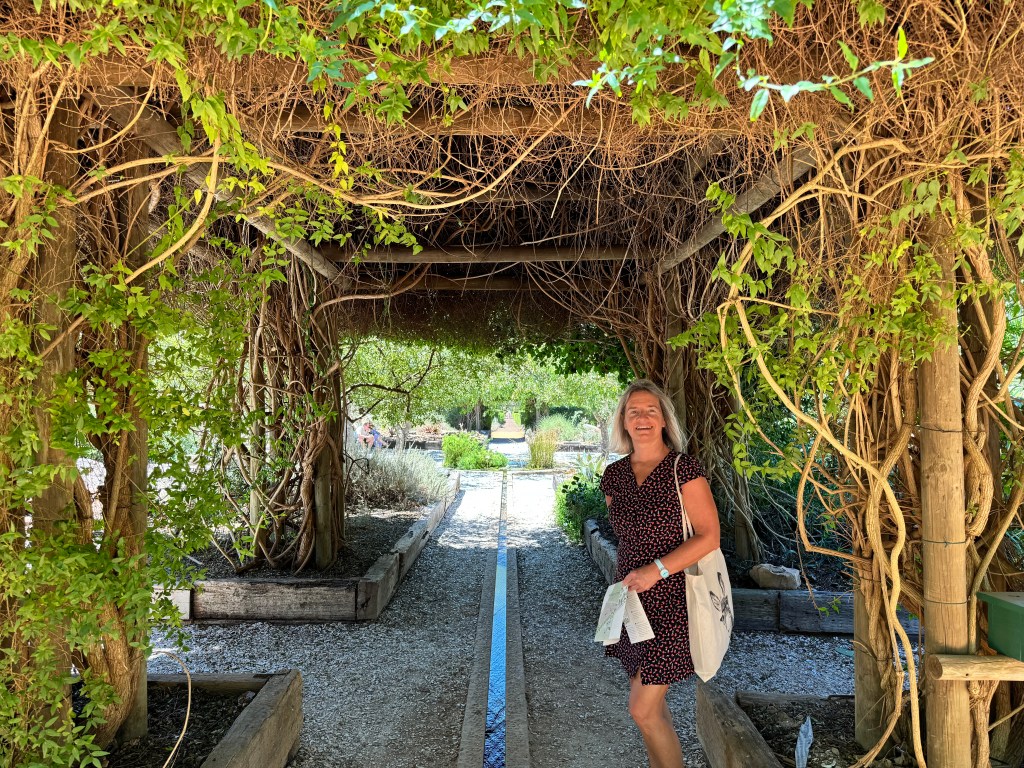
Since we were past the age of needing to sell children, we opted for a walk around the estate and lunch at the garden’s “farm-to-fork” restaurant. I think I can safely say it was the best salad I’ve ever had—and I eat a lot of salad! We spent a very hot afternoon exploring this incredible place, discovering some truly unique highlights along the way. One of the most memorable features was the stunning collection of roses from around the world, housed in a 100-meter-long puff adder-shaped structure. The healing garden was another peaceful spot, offering a moment of tranquility amidst the natural beauty. After soaking in all that Babylonstoren had to offer, we set off for the Franschhoek Pass. Despite the late hour, the drive was filled with breathtaking scenery, and we were even treated to another sighting of baboons along the way. It had truly been another unforgettable day, brimming with beautiful landscapes, fascinating wildlife, and delicious food.

Taking it all in – Babylonstoren

Onrus & Hermanus

We picked up the car from the business district, which was only about a 10-minute walk away. The process was straightforward, and before long, we were on our way, leaving the Hertz car park and heading back to the apartment to load up the car. After a quick coffee, we were finally on the road, heading east out of Cape Town. For the first 10 km, the drive wasn’t particularly exciting, though the ever-present Hottentots-Holland Mountain range provided a stunning backdrop.

Soon after, the traffic lights (called “robots” in South Africa) stopped, and we were able to enjoy the open land that stretched out before us. The scenery quickly transformed into something breathtaking. The N2 motorway, which we would be using for the majority of our Garden Route journey, took us through wide-open landscapes, and after just under two hours, we arrived in Onrus—a former whaling town on the famous Whaling Coast. Every spring, people come here to witness the whales pass through on their journey to Mozambique, Tanzania, and Madagascar to breed, between December and June.

We’re staying in a simple coastal cottage, which perfectly suits our needs and is a relaxed base for the next couple of weeks. We’re lucky to have two perfect coastal walks nearby. If you turn left, it takes you along a rugged coastline for miles. If you turn right, the coastal path leads you to Onrus Beach, a popular surfing spot, with benches positioned at great vantage points to watch the action below. The people of Onrus have been incredibly friendly, and no more so than the folks at a small local coffee shop where we’ve met some of the locals who have helped us plan the next leg of our journey. We’ve even been invited to play tennis at the Kleinmond Tennis Club, though we did warn them not to expect any tennis prodigies, as we haven’t played in a couple of years.

Hermanus is about 10 minutes away, a much larger town compared to Onrus, which has only a few stores and restaurants. Hermanus is a charming town full of boutiques and cute little restaurants. It also offers some fantastic coastal walks. While the Atlantic Ocean isn’t the friendliest for swimming, it’s undeniably stunning to look at. We enjoyed walking from the old harbour to the new harbour, soaking in the sights. On Saturdays, there’s a vibrant market where local artisans showcase their work, and it’s a popular spot for locals to enjoy tasty street food while listening to playlists that seemed like they were created just for us. The vibe was fantastic, and it was great to meet and chat with the people. We absolutely love this place!

Coastal cottage in Onrus – Western Cape, SA

The Long Road to Freedom…Robben Island

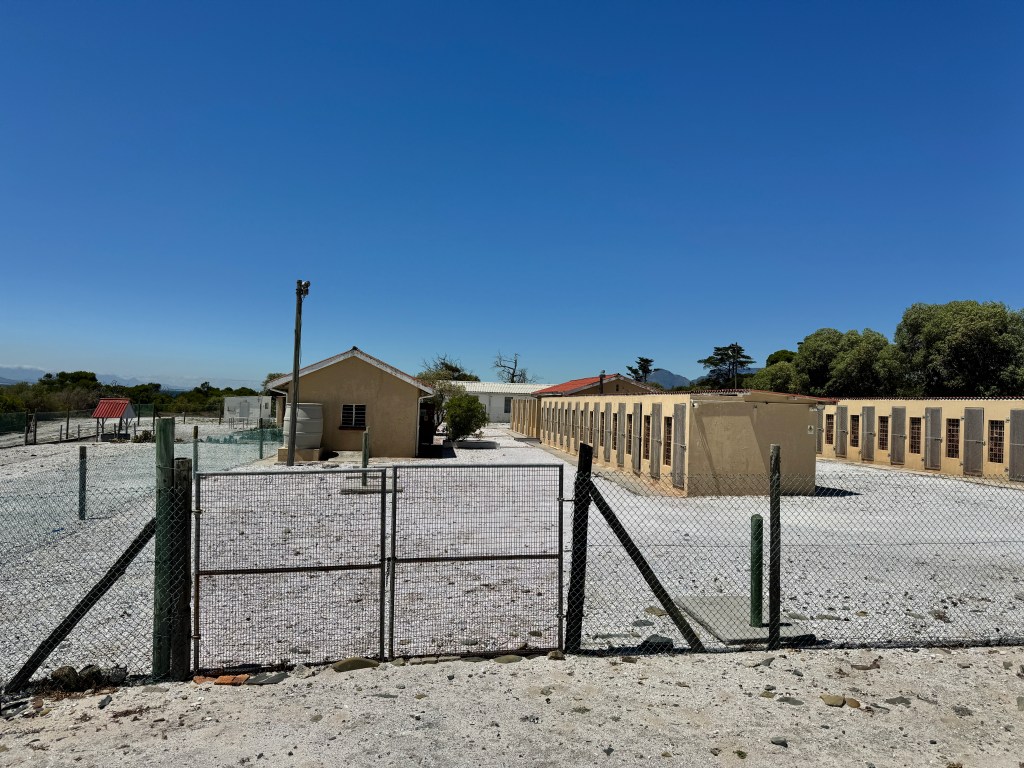
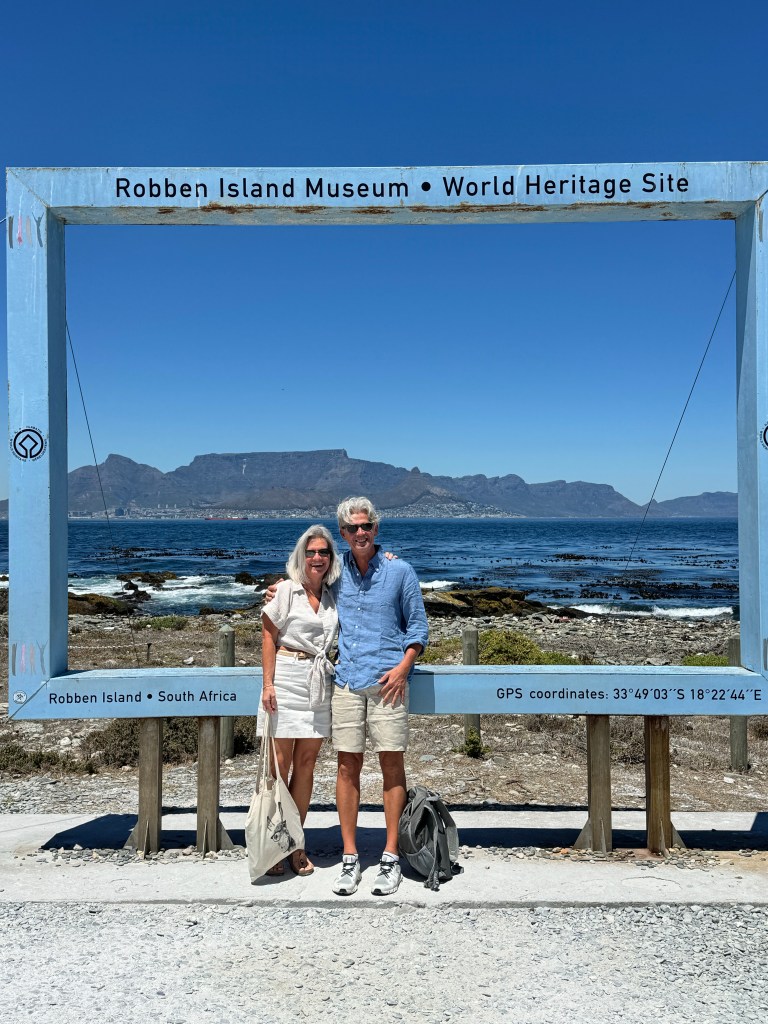
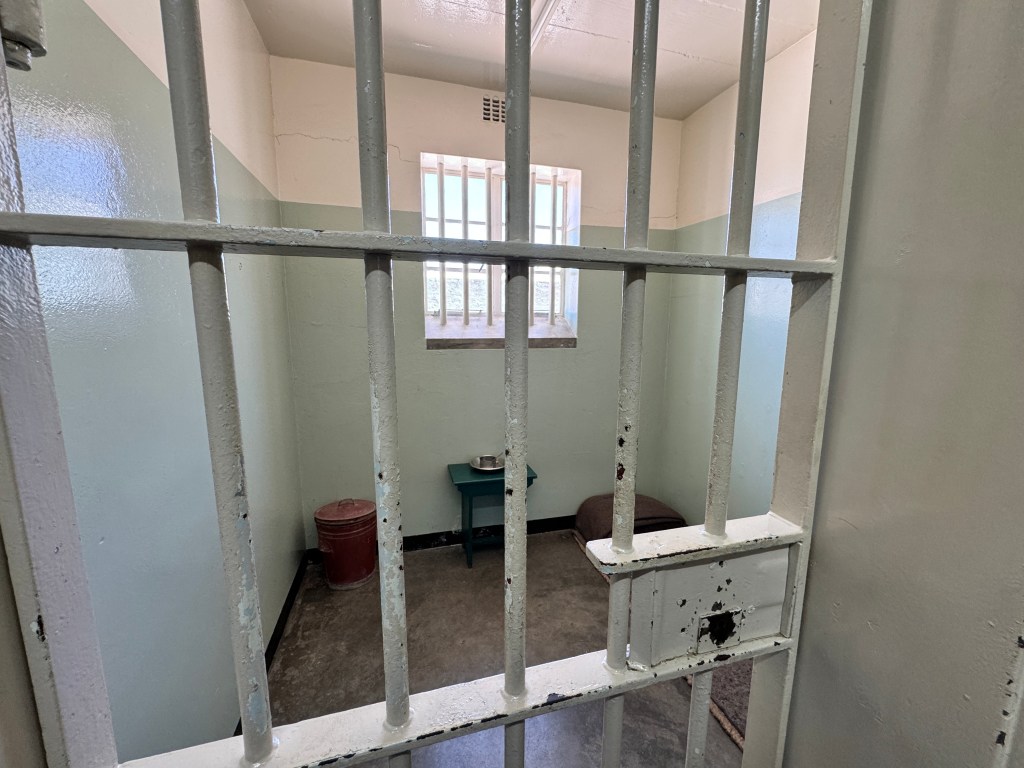
A driver arrived outside our apartment to take us to the dock for the ferry to Robben Island. Although it was an unusual way to spend my birthday, I had been keen to learn more about the island, its history & of course Nelson Mandela. During the ferry ride, we watched a video about Robben Island’s dark past, as it had been a place of torture and political imprisonment since the early 17th century. About 30 minutes later, we arrived at the island and boarded one of three buses that would take us on a tour around the island. Our guide was incredibly knowledgeable about the key political prisoners, and he was a captivating orator, keeping everyone hanging on his every word. He shared stories of the extreme mental and physical torture the prisoners endured, and at times, I struggled to comprehend the depths of their suffering. He also gave us detailed accounts of the political prisoners, all of whom, despite coming from different political factions, played significant roles in the eventual downfall of apartheid.

One story that particularly resonated with me was about Robert Sobukwe, one of the first political prisoners after the Sharpeville Massacre. He was deemed such a threat to the apartheid regime that he was isolated in his own prison building, away from other prisoners with whom he could potentially communicate and influence. Yet, he was still close enough to hear and see them.

The final part of the tour was led by an ex-political prisoner who had been imprisoned toward the end of Nelson Mandela’s time on the island. He emphasized that while Mandela was their leader and an incredible man, the struggle for freedom was always a collective effort. He spoke of the harsh prison life, recounting the brutal regime that was enforced by guards who had been brainwashed into believing they were serving their country’s duty.

The final prisoners left the island in 1991, with the prison formally closing in 1996.

I hadn’t really considered how the visit would affect me emotionally, but it turned out to be a deeply moving experience. I found myself questioning how people could inflict such horrors on their fellow human beings—and for what purpose? The visit to Robben Island was a sobering reminder of the incredible sacrifices made by those who fought for justice and freedom. It left a profound and lasting impression on me.

A hike up Table Mountain

There’s only one AC unit servicing the entire apartment, and since we’re in the height of summer here, we’ve had to keep the bedroom door open to stay cool. This means we’re awake as soon as the sun pokes its head over Table Mountain, around 6:30 AM. We’ve been enjoying exploring different parts of the city, which has been fascinating. It’s always interesting to watch the locals go about their daily routines in each place we visit. The food here is amazing, and the service is great. We’ve found ourselves gravitating to “The Loading Bay,” a trendy coffee shop that not only serves excellent coffee but also delicious food.

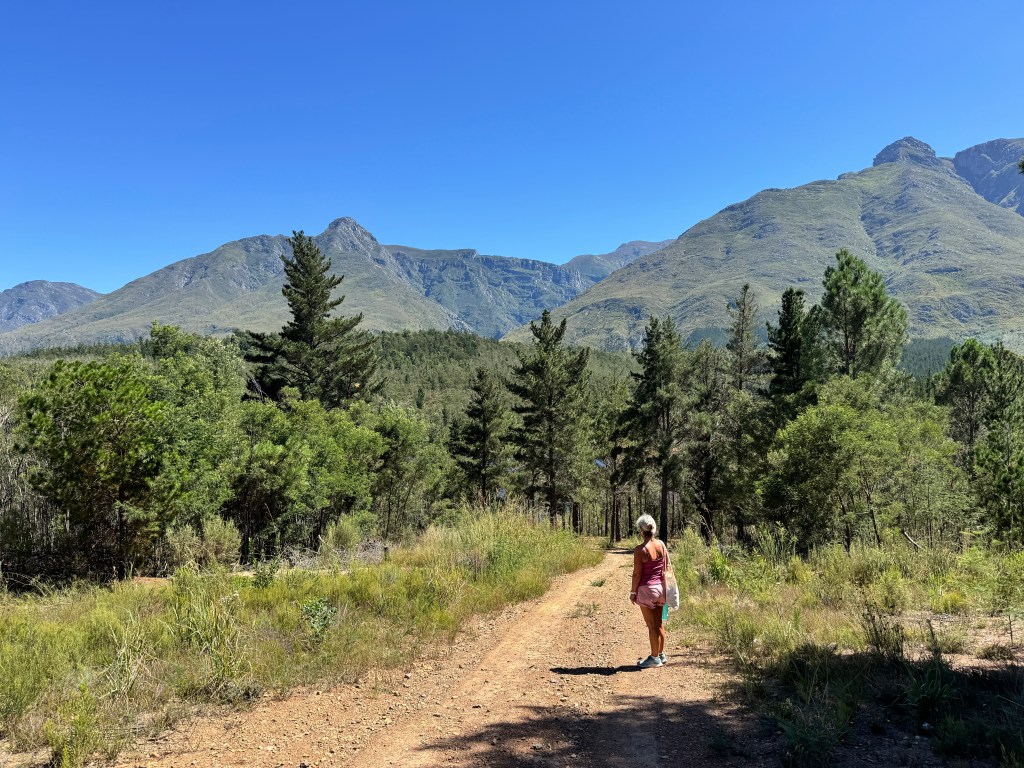
The pull of Table Mountain was irresistible, so we decided to beat the sunrise and be at the base of the mountain by 6:30 AM to meet our guide, who would lead us up the Platteklip Gorge. In hindsight, we probably could have hiked up unassisted, but Rachel insisted on having a guide for safety reasons and to make sure we didn’t get lost. Our group of four set off with the guide on a steep, winding climb up the ravine, navigating misshapen rocks and large boulders. Fortunately, we started early, so we were out of the sun, which had been pretty harsh over the past week.

About a third of the way up, Roman, who was from Canada, started to struggle and needed to rest regularly, which became a bit frustrating for me. Rachel, on the other hand, was far more patient (I guess she has to be, living with me). By the halfway point, I agreed with Rachel and the guide that I had a personal challenge ahead of me, with a big birthday looming. I decided to charge ahead and meet them at the top of the gorge.

As I pushed through the steep final 400 meters, the climb got more intense, but I eventually made it up the last stretch. After about 1 hour 45 minutes, I emerged on the plateau, greeted by yet more breathtaking views. After a quick hydration break and some nuts, I figured the others would take at least another 30 minutes to catch up, so I headed along Smuts Trek, which was covered in beautiful flora and fauna with even more stunning views. The trek led to Maclear’s beacon the highest point of the mountain at just under 1100m and one for another time, as I had to head back to meet the others at the rendezvous point.

When they finally arrived, we all agreed the hike had been fantastic, but we were all quite happy to spot the revolving cable car in the distance, which would take us down. It had been an exhilarating trip!

We made it to Cape Town

We had this trip planned for some time, but with so many things going on, we weren’t entirely sure we were going to go. I did try to change the flight last minute, but when British Airways quoted me five figures just to rebook the outbound flights, I decided it was better to just make it work. A few days before leaving, we booked what we thought was one apartment, but it turned out to be another. It looked like the same place on Booking.com, but was much cheaper on Airbnb, our preferred option. Although it was in the same block, the apartment was smaller, lacked the 360-degree views, and had some questionable reviews. I could almost hear my father’s voice saying, “If it seems too good to be true, it probably is!”

On flight day, I was up early for the 6:30 AM train to St Pancras. It had been a long time since I’d been on a packed commuter train into the city, and I had forgotten how uncomfortable they could be. Thankfully, I didn’t have to endure many rush-hour trains during my working career, so I’d never really gotten used to it. From St Pancras, it was the same “sardine can” experience on the tube to Marylebone. Thankfully, the return journey to Huntingdon was a breeze. After a quick turnaround, we grabbed our luggage and headed to Heathrow T5, courtesy of Gerry. After some great service from BA, we boarded our 12-hour night flight to Cape Town. I managed to get about six hours of sleep, but Rachel always struggles to sleep, whichever cabin she’s in.

We landed on a beautiful morning in Cape Town. From the moment we touched down and left the plane at 8:00 AM, everything went smoothly. We breezed through immigration, picked up our luggage, cleared customs, got local SIM cards (which normally takes 45-60 minutes), and even grabbed cash from the ATM—all in under an hour. It was by far the quickest and smoothest airport experience we’ve ever had, and every person we encountered was genuinely happy to help. It was a great start to our adventure. Our hosts were kind enough to let us check in earlier than planned, which was an added bonus.
We decided not to rent a car for our first week in the city, as everyone uses Uber. After a short five-minute wait, we were on our way in an Uber heading toward “Die Waterkant,” a central area with great views of the city. After a few days of rest in the apartment (which was fine), we began exploring. We started with the bustling Victoria & Alfred Waterfront, full of fantastic restaurants and entertainment. It was fun to stroll around the area, soaking in the sights and enjoying the tourist crowds. Cape Town is a sprawling city, with busy streets and street theatre at nearly every corner.

The following day, we took an Uber out to Camps Bay, a small but beautiful white sandy beach nestled between the 12 Apostles mountain range on one side and Signal Hill on the other. We’ve visited quite a few city beaches on our travels, and this one definitely ranks among the nicest we’ve seen.

A fabulous ski trip in Crans Montana

Christien convinced me that the 3 of us needed to go skiing, and together, we managed to talk Seb into it—though neither of us needed much persuading. On the morning of January 10th, I set off from Hartford, Christien left from Wokingham for an early flight from Gatwick, and Seb departed even earlier from Manchester, all of us heading to Geneva. As luck would have it, we all landed within an hour of each other. Seb had strategically positioned himself at the front of the busy hire car queue, so we were on the road within an hour of landing. The three of us happily caught up, sharing stories since we last saw each other over Christmas, with plenty of the usual lads’ humour that the women in our lives don’t always seem to appreciate.

A couple of hours later, after winding our way through fog and falling snow, we arrived at Les Violettes, the base station at 1500m. We quickly picked up our skis and passes, having learned that it’s always better to get organised the day before so we could hit the slopes as soon as we arrived. After an enjoyable evening with family I hadn’t seen in a while, we crashed early, preparing for the next day.

The weather didn’t look promising at first, with heavy fog, but once we reached 2000m, we were greeted with glorious sunshine that stayed with us for the rest of the day. We skied like kids, stopping only for lunch at the Cabane de Violettes, a favourite spot of ours since the boys were very young. Later that evening, Seb had booked us a table at the swanky Six Senses to celebrate my upcoming birthday. It was so nice to be together, and the food was incredible.

We stayed in my cousin Sandrine’s wonderful apartment in Venthône, who’s also the best host. It’s about a 20-minute drive from the slopes. Thankfully, we’d upgraded the car to a 4×4, as the roads were icy. We arrived around 10 AM to find similar conditions as the day before—low cloud with brilliant sunshine above. There are several ski areas, with the main ones being Les Violettes, Cry d’Er, Bella Lui, and Plaine Morte, which is around 9600ft. Crans Montana is one of the largest resorts in the Valais, and since it was early in the season, we had the slopes mostly to ourselves.

I’ve become more of a careful skier these days, while Christien’s battle cry was always “send it!” This meant that he and Seb would careen down the mountain at breakneck speed, with Christien’s ski app showing he nearly hit 80kph. Every now and then, he’d stop to wait for me, the “snail.” I argued that I preferred to take my time and appreciate the stunning surroundings, either way it was all great fun.

Unfortunately, Seb’s day was cut short due to a flight back that evening. The next day, Christien and I were up early for breakfast with Sansan, as we did each morning, filling her in on the previous day’s adventures. On our last day, the weather was perfect, with not a cloud in the sky. After the avalanche threat had finally been lifted, we headed to the Plaine Morte, which was opening for the first time this season due to the heavy snowfalls. It’s probably my favourite run, although the National run at Cry d’Er comes close. You glide along wide runs and then cut effortlessly through the mountain, with the amazing panoramic view to feast your eyes upon, it’s absolutely stunning.

I had somewhat fallen out of love with skiing, but after this trip, we all agreed to make it an annual event, which I couldn’t be happier about. It was a short trip, but an absolutely fantastic one.

Christmas festivities and a trip to London.

We accompanied Mum to church on Christmas morning, and it’s always a joy to see the excited faces and the close-knit community coming together. Christien arrived around lunchtime to spend Christmas with the three of us, which made Mum very happy. We had ordered our Christmas feast from a local farm, and Rachel cooked it to perfection. As is customary on Christmas, we indulged to the point of bursting. We’re not big TV watchers, so later that evening we pulled out the board games, specifically “Rummikub,” which we’ve been playing throughout the year.

Boxing Day was a relaxed affair. We went for a long walk to Houghton, part of a National Trust trail. I’m a big fan of the day after Christmas because people tend to be more relaxed and happy to be out of the house, making for enjoyable encounters on our walks. Afterward, we took a quiet trip around St. Ives. The following morning, we headed north to spend time with Ally and Seb, but also to visit Ally’s family, who are always fun to be around.

We arrived early evening after a drive in the pouring rain, but Seb’s warm greeting and a very excited Arlo made the journey seem a distant memory. Rachel had prepared lamb before we left Hartford (from our farm haul) for Ally, who wasn’t feeling well, and we popped it in the oven before settling in. Mum enjoyed the comfy guest suite, while Rachel, Christien, and I stayed in the lodge.

The next morning, we met up with Seb and Ally at their chiropractor’s, and while Ally waited to be seen, we took Arlo for a walk around the beautiful North Yorkshire countryside. We then found a lovely spa for a coffee break. Christien had also booked a paddle tennis court for a Mum and Dad vs. Sons match. Despite the freezing weather, we had a fantastic time and ended the match with honours even. Later that evening, we were invited to Chris and Lesley’s, where they were hosting the Lomas and Watson families for dinner. It was thoroughly entertaining.

The following morning, Christien left early for his New Year celebrations in London. After tying up some joint business affairs, we followed suit.

A few days into the New Year, Jon dropped Rachel and Jo off at the airport for their trip to Oslo, where they’d explore the fjords up to Bergen, while I took Oz for a long walk and after rendezvousing back at the house we decided to spend a day in the city. We parked in Stratford, hopped on the tube to Holborn, and walked to the British Museum. Neither of us had been there before, and for me, the highlight was an exhibition of Picasso sketches and a reflective display on some of the unsavoury aspects of the British Empire. Afterward, we made our way down Tottenham Court Road to Covent Garden, then into Soho, where we both started our careers in the casino industry many moons ago. Although the casino itself was gone, the sign remained on the building. We finished the day with dinner in Golden Square before heading back to Essex.