The Valley of the Nobles and Medinet Hubu Temple

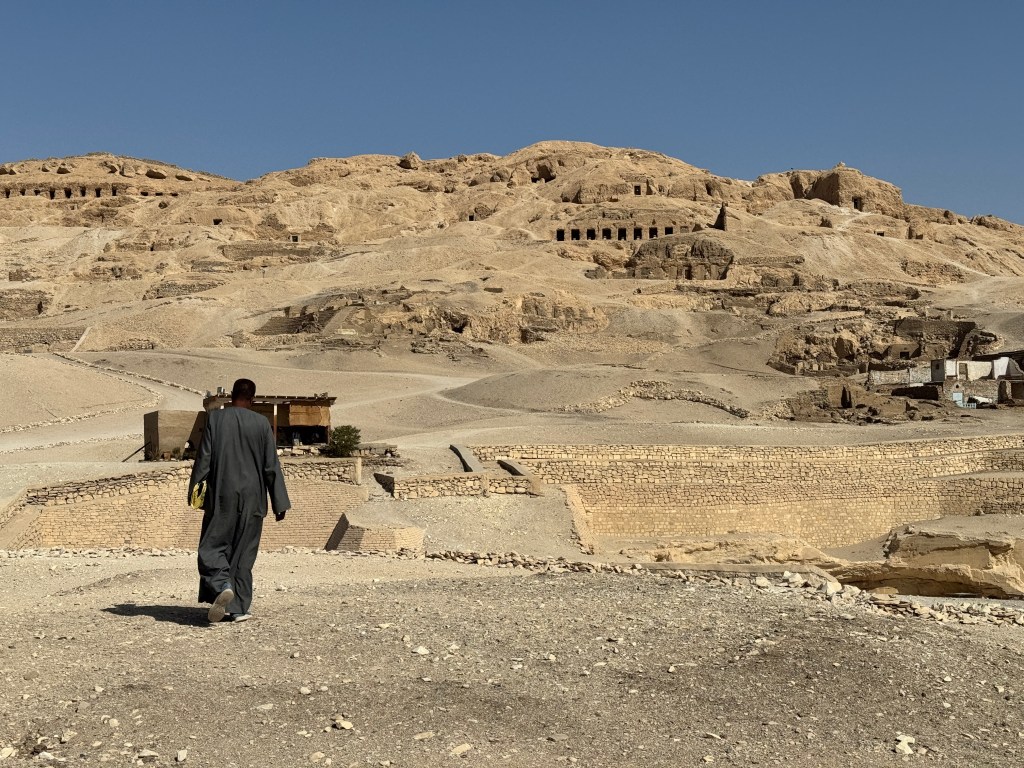
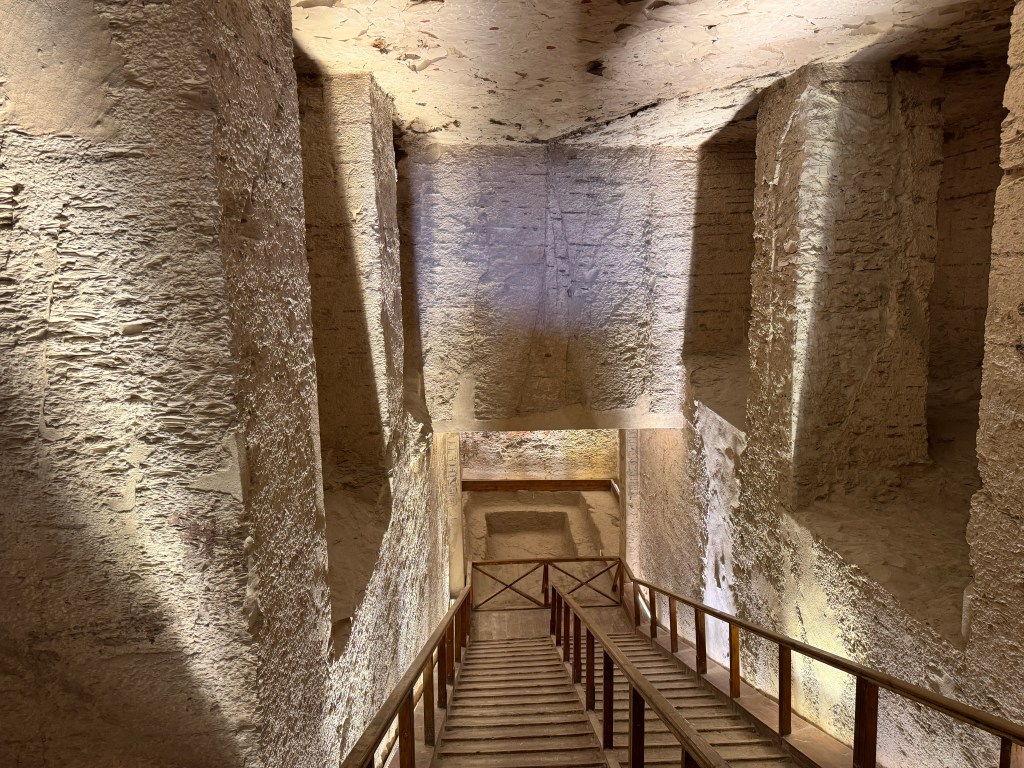
The Valley of the Nobles might not be quite as impressive as the Valley of the Kings, where the detail and finish on each of the mausoleums are truly remarkable, but it offers a unique and fascinating experience of its own. Situated on the other side of the same limestone mountains as the Valley of the Kings, it almost feels like there could be some hidden tunnel connecting the two sites. This particular necropolis is dedicated to the nobles, those key figures who created, ran, and oversaw the administration of ancient Thebes. These individuals were highly respected by the Pharaohs and revered by the masses, making this their final resting place.

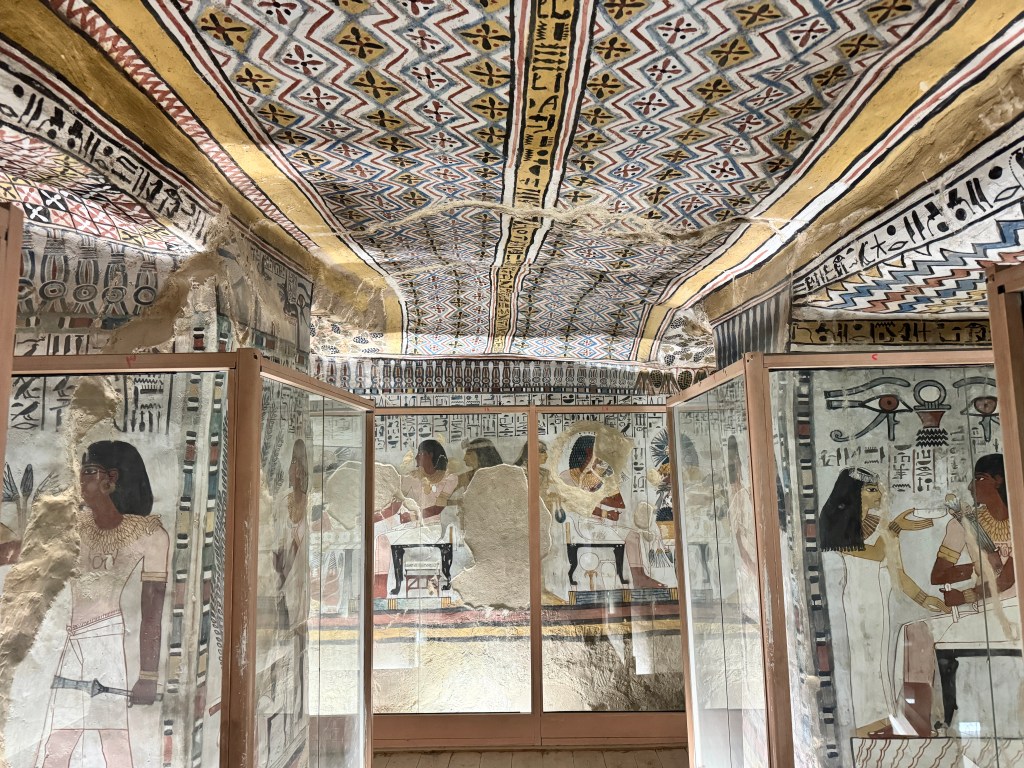
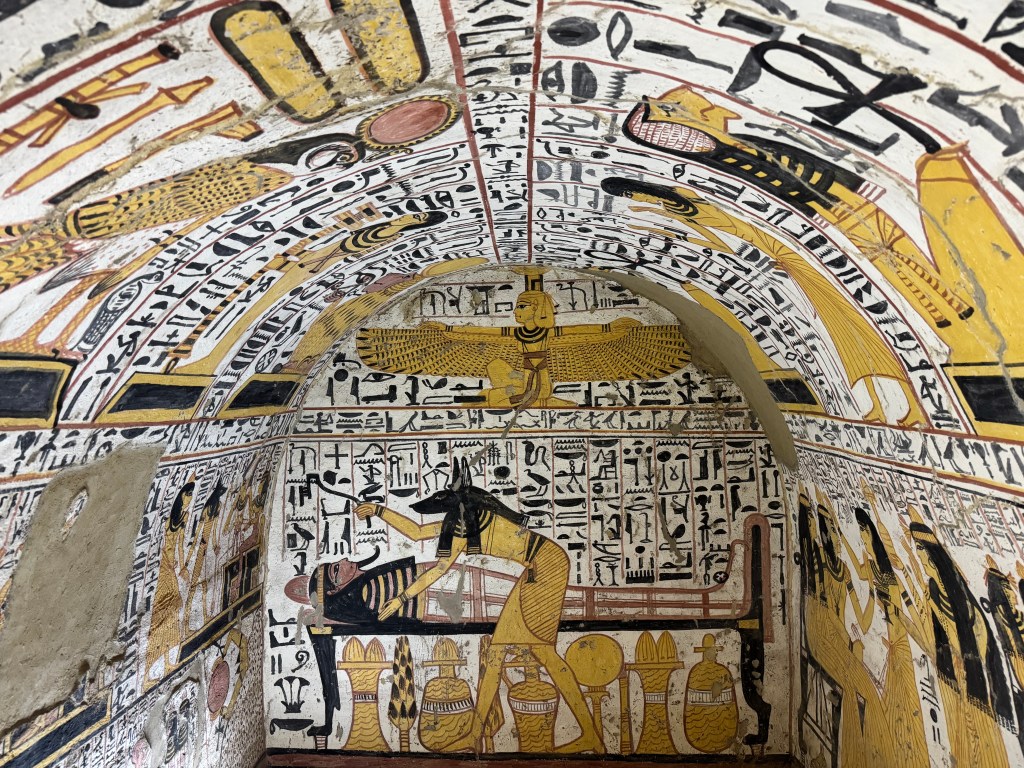
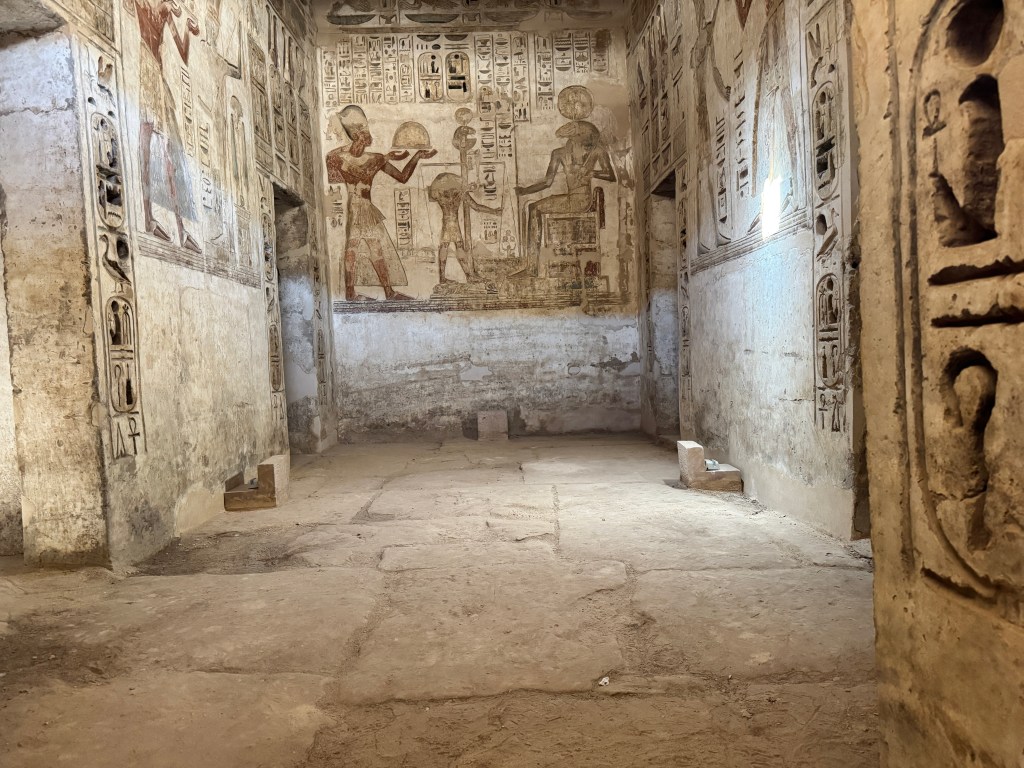
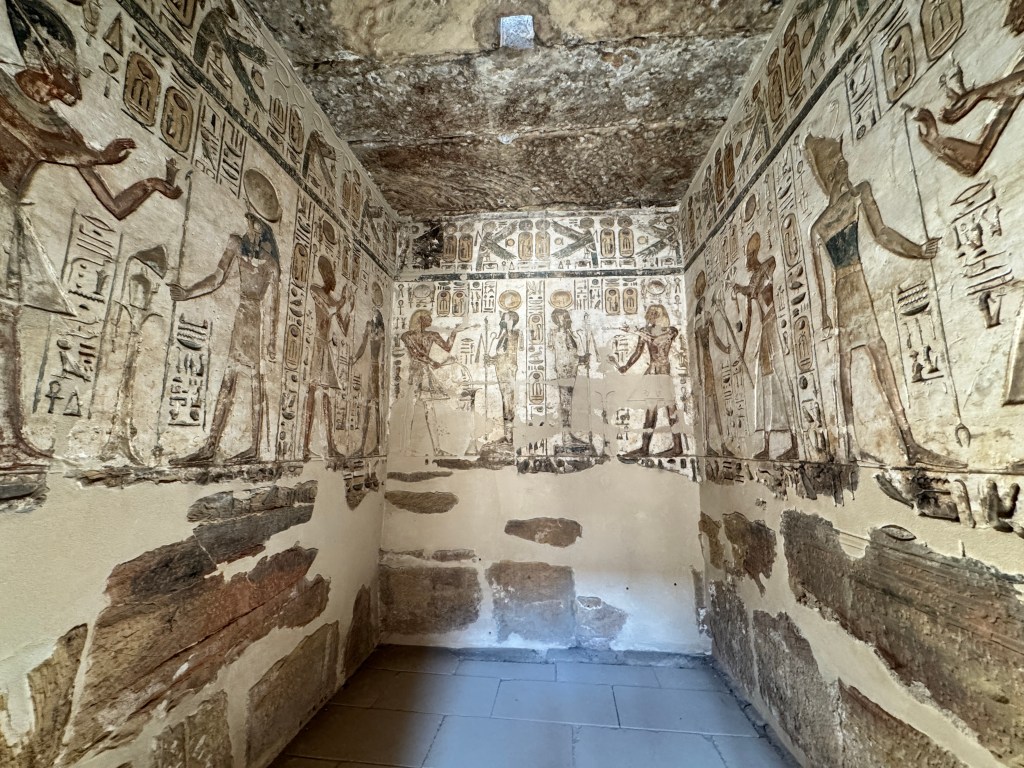
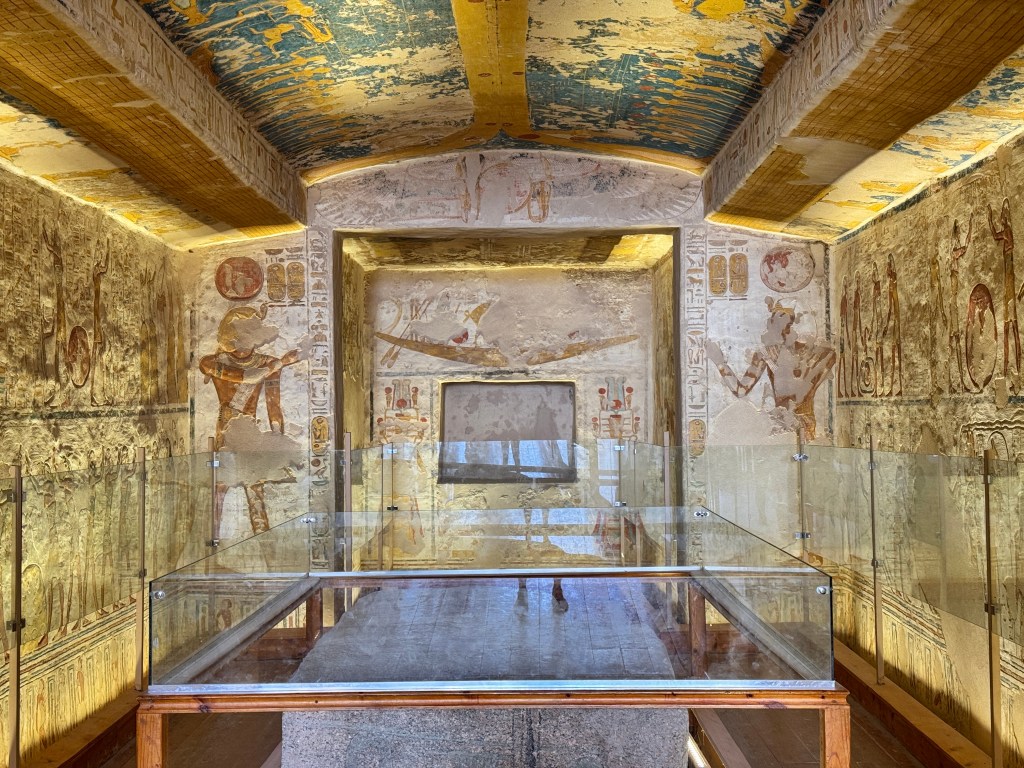
Unlike the more tourist-heavy sites, the Valley of the Nobles isn’t on the main tourist route, so we were able to explore it at our own pace. After some haggling with our guide to visit the specific tombs we were interested in, we set off. The tombs here were smaller and lacked the smooth finishes seen in the Pharaohs’ tombs. The entrances and the stairs descending to the tombs were cramped and heavily chiseled, leading to small, humble rooms. Yet, the rooms were beautifully decorated, as if hand-painted, and the artwork was incredibly well-preserved. In my opinion, the tombs of the Nobles were even more intriguing than those of the Kings.

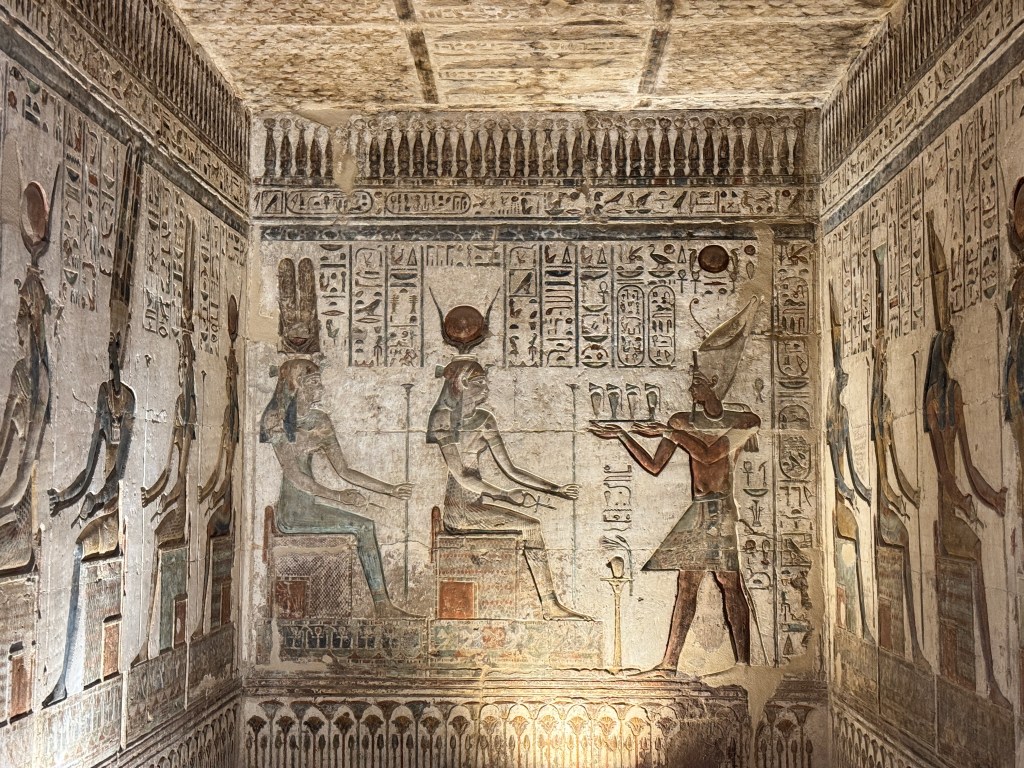
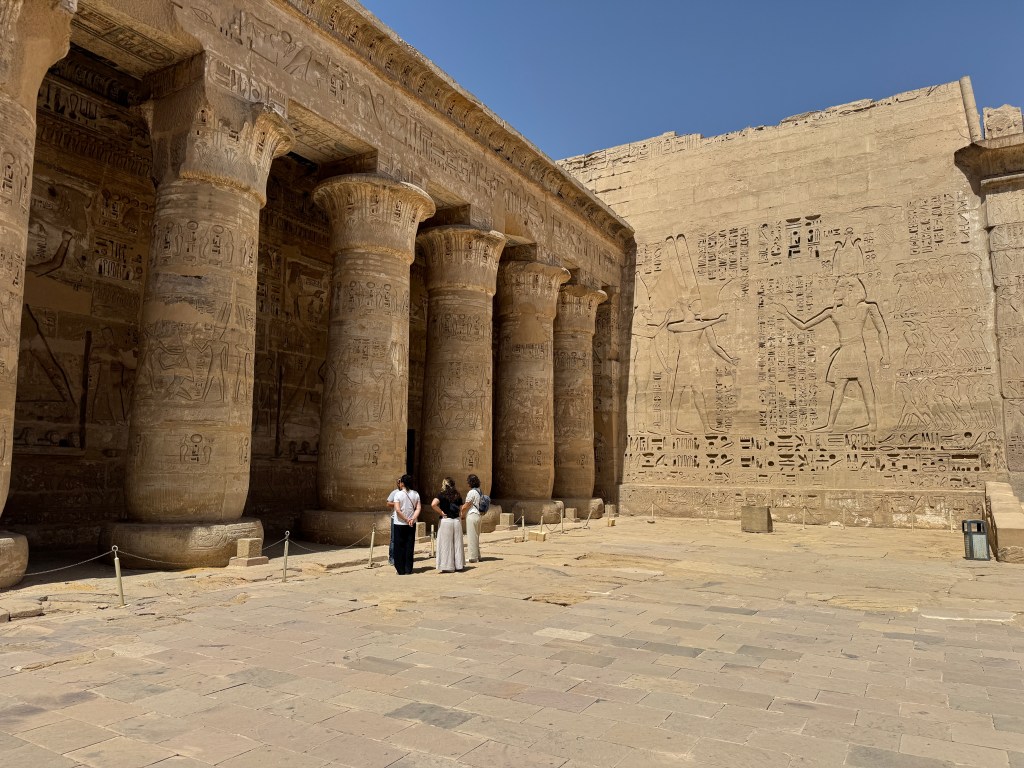
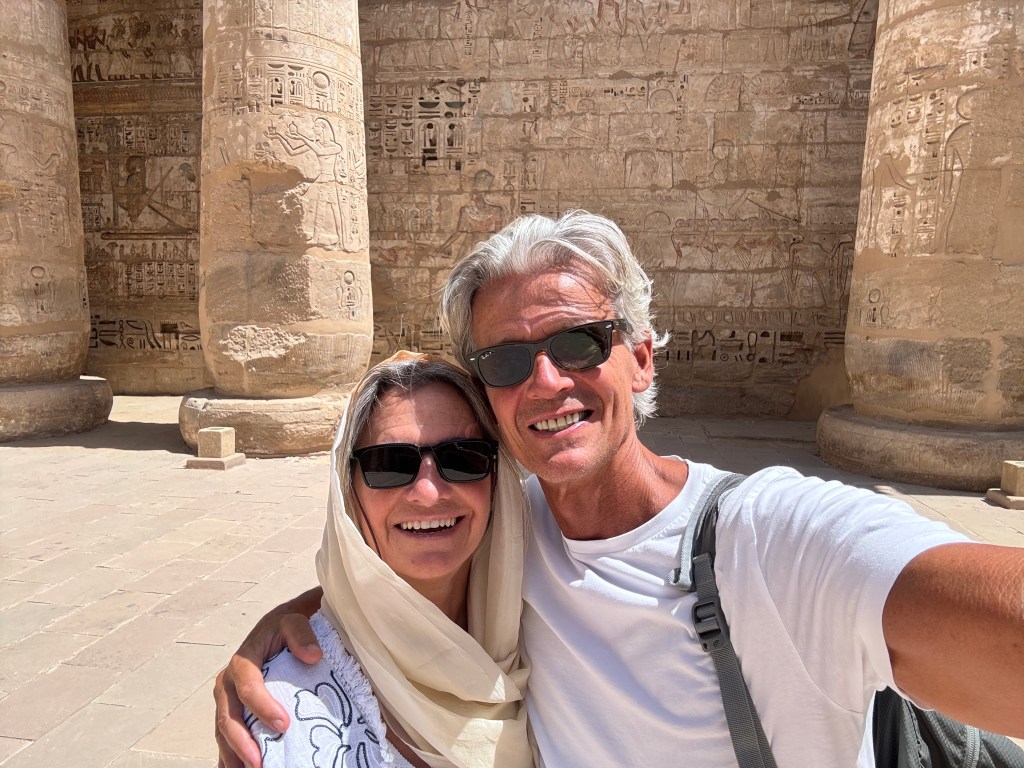
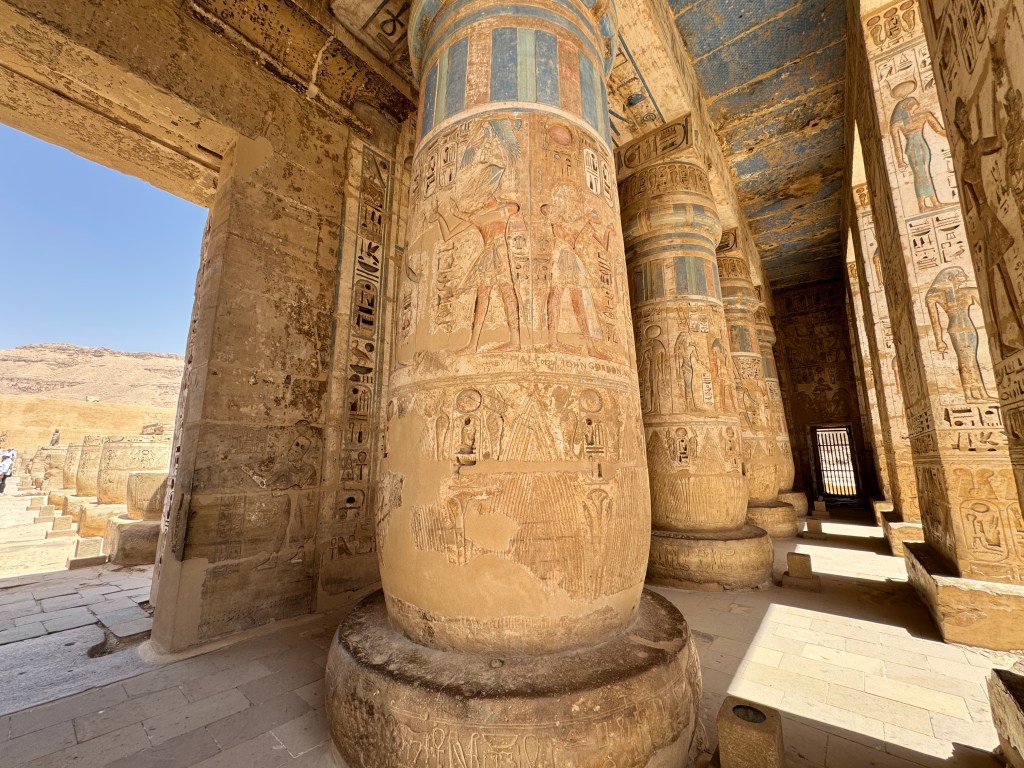
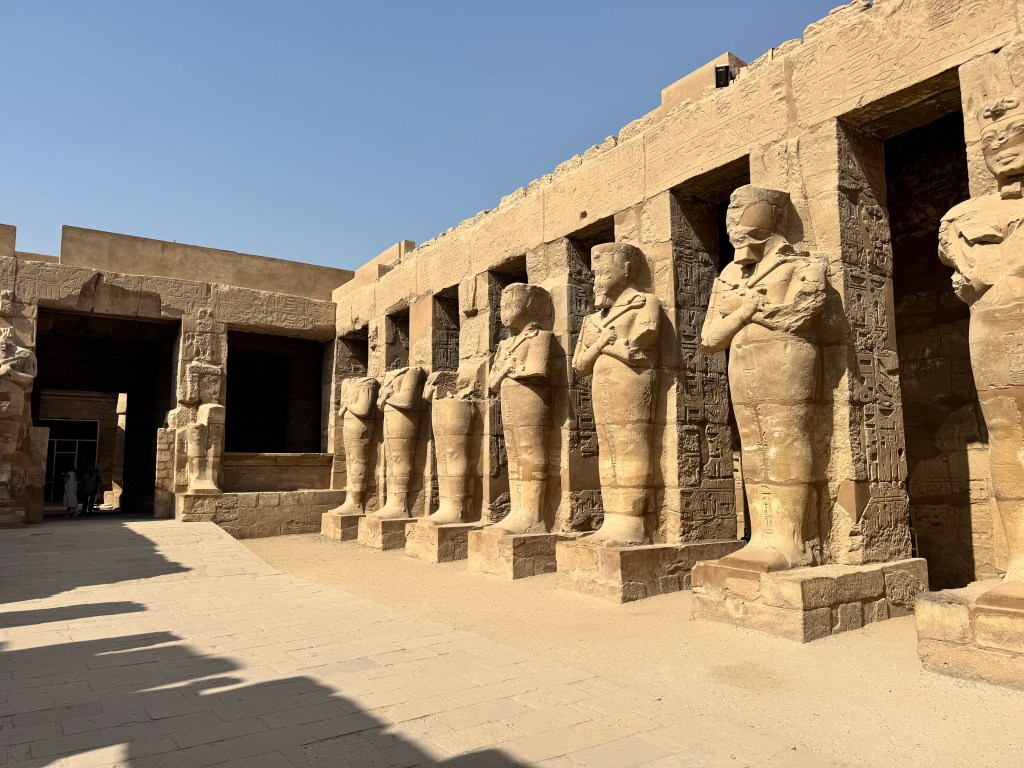
Next, we made our way to the Medinet Habu Temple, another underappreciated ancient site. Built during the New Kingdom period over 3,200 years ago, this temple is exceptionally well-preserved, particularly the vibrant colours that still adorn some of the pillars and ceilings. As I walked through these incredible temples, admiring the architecture, I was once again struck by the complexity of it all. How did they design something so grand and perfectly symmetrical? It’s hard to believe that the incredible precision could have been achieved by ordinary humans, back then, or even today.

Our final adventure was a sunset cruise along the Nile. Well, without much wind, it was more of a tow across to Banana Island, where Mohammed took us through some of the older backstreets. There, we glimpsed the charming simplicity of life, with small businesses tucked into doorways and donkeys munching contentedly on bales of hay. Luxor is one of the oldest continuously inhabited cities in the world, and the cruise offered a perfect view of this bustling, ancient place.

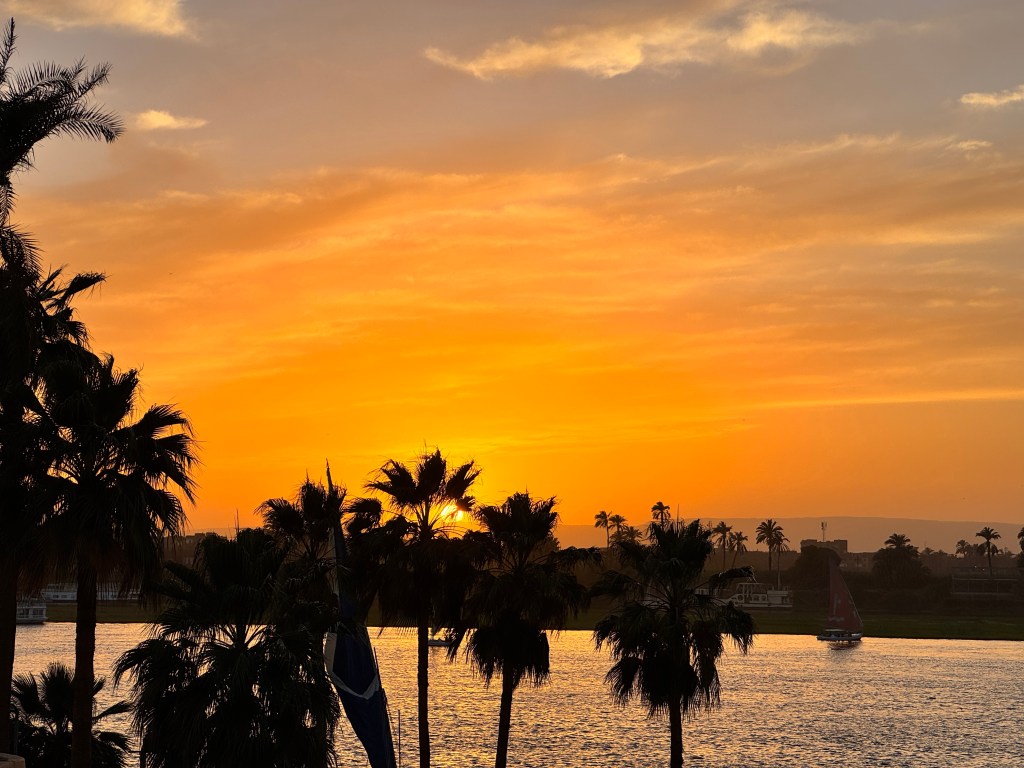
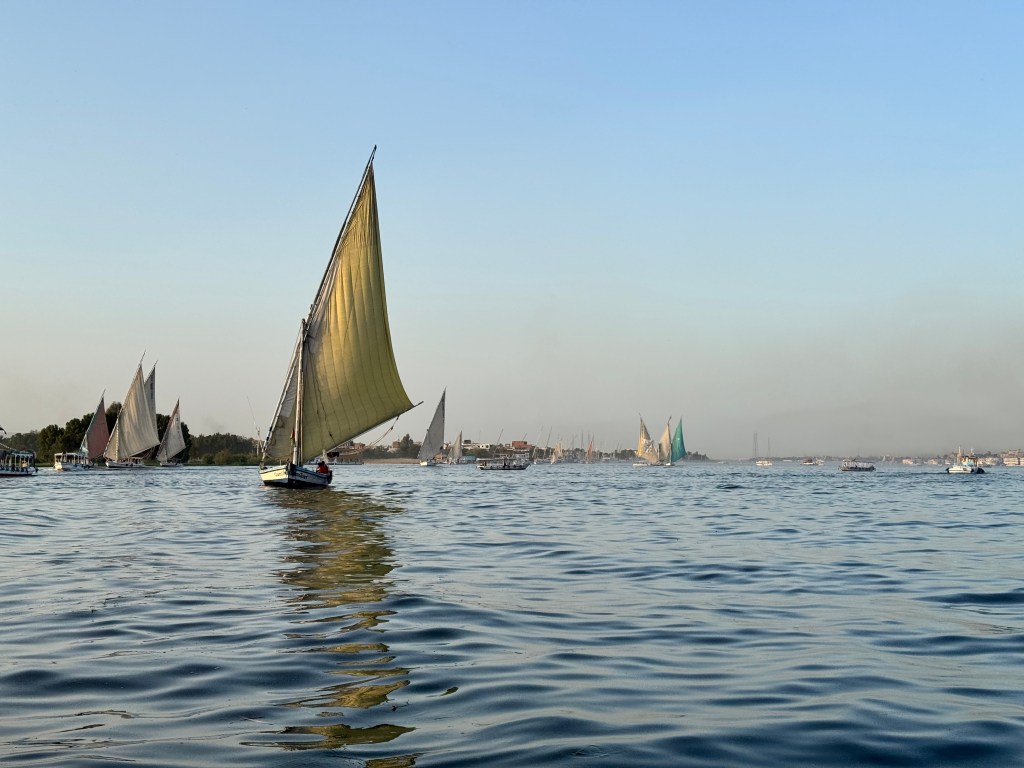
Back in the felucca, the wind had picked up slightly, which made the journey back more interesting. The small wooden boats with their tall, drooping sails moved gently along the Nile as the sun slowly sank toward the horizon, casting a golden hue over the water. It was the perfect end to our time in this magical city.

Night and day at the Temple of Karnak

On our way to dinner at one of Mohammed’s top recommendations, we had the opportunity to buy tickets for the evening’s light show at the Temple of Karnak, which included a narrative of the temple’s history a show that Mohammed highly recommended. So, after a delicious early dinner at a popular restaurant, we made our way through the bustling night streets. What followed turned out to be a rather unique driving experience.

Driving during the day, when traffic wasn’t too bad, I had accepted that the rules of the road much like the Arabic language were beyond my comprehension. But at night, after the heat of the day, the colourful streets really came to life. It became immediately apparent that no cars had their headlights on. Instead, drivers would only use their lights to communicate with oncoming vehicles. At first, this was unnerving, but it seemed to work. Once I accepted it, it became pretty entertaining.

We arrived just after 7:30 PM at the Karnak Temple, which dates back to around 2055 BC and was continuously expanded over a 1,500-year period. It is the second-largest temple in the world, after Angkor Wat, and is visited by millions of tourists every year. After passing through security, we made our way toward the entrance and were delighted to find that there weren’t too many people there with the same idea.

For me, this is one of those places where my mind seems suspended in time. As I look around, I’m not just processing what I immediately see, but also trying to imagine how it must have looked back in the day. The music and lights were perfectly coordinated, illuminating only the parts of the temple relevant to the story. The sound boomed, and the voices remarkably resembling Richard Burton and Elizabeth Taylor brought the history of the place to life. The tour lasted about an hour and provided a fantastic introduction to this awe-inspiring location, all set against the backdrop of a stunning starry night sky.

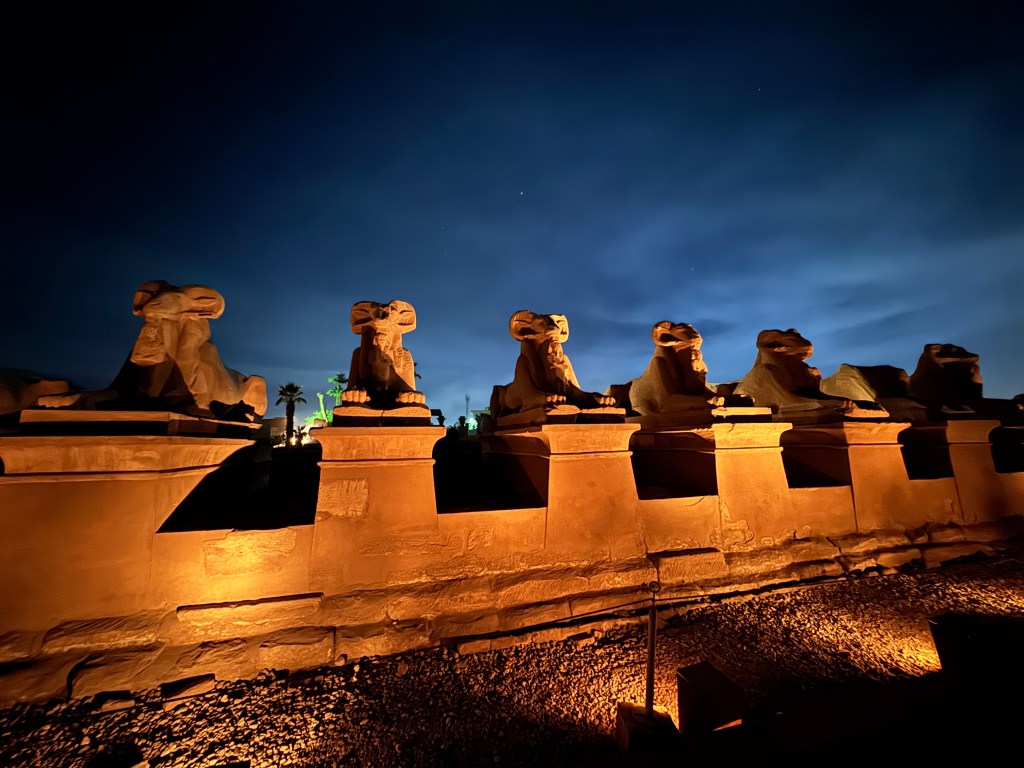
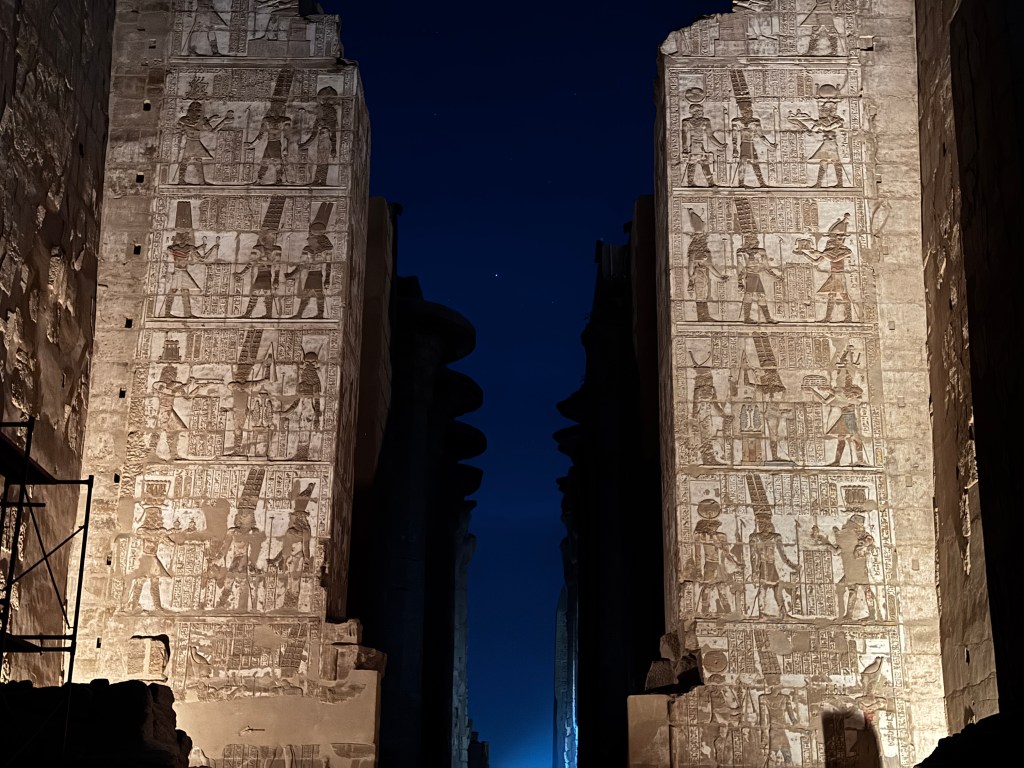
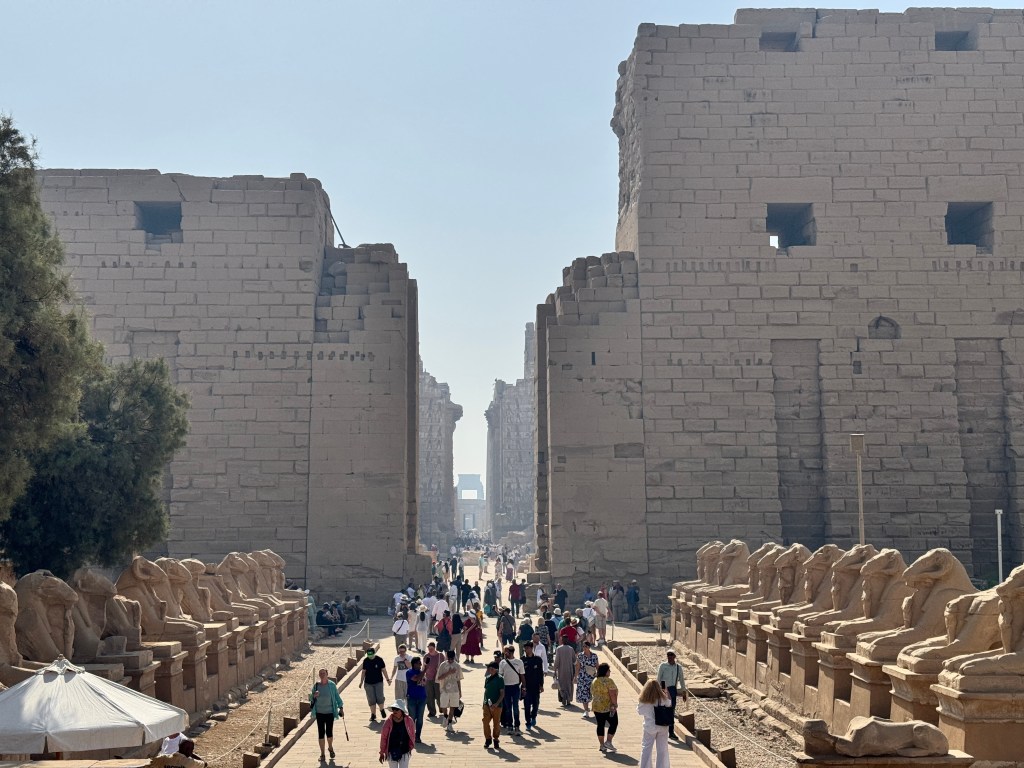
The following morning, we returned around 9:00 AM—slightly later than planned, but it had been a late night. The temperature was already around 30°C, and since it had been hovering around 40°C most days, we usually sought shade by late morning. The daylight gave us a more detailed view of the ram sphinxes that flanked either side of the path leading up to the carved entrance walls, which were adorned with scenes of Ramesses II worshiping the gods.

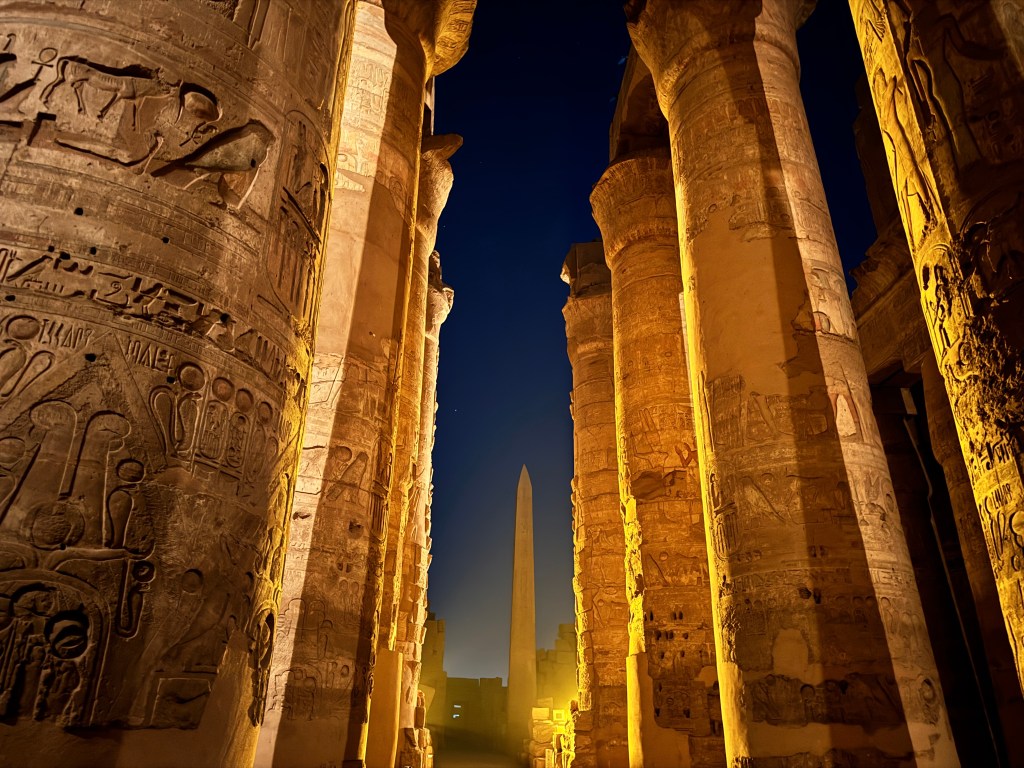
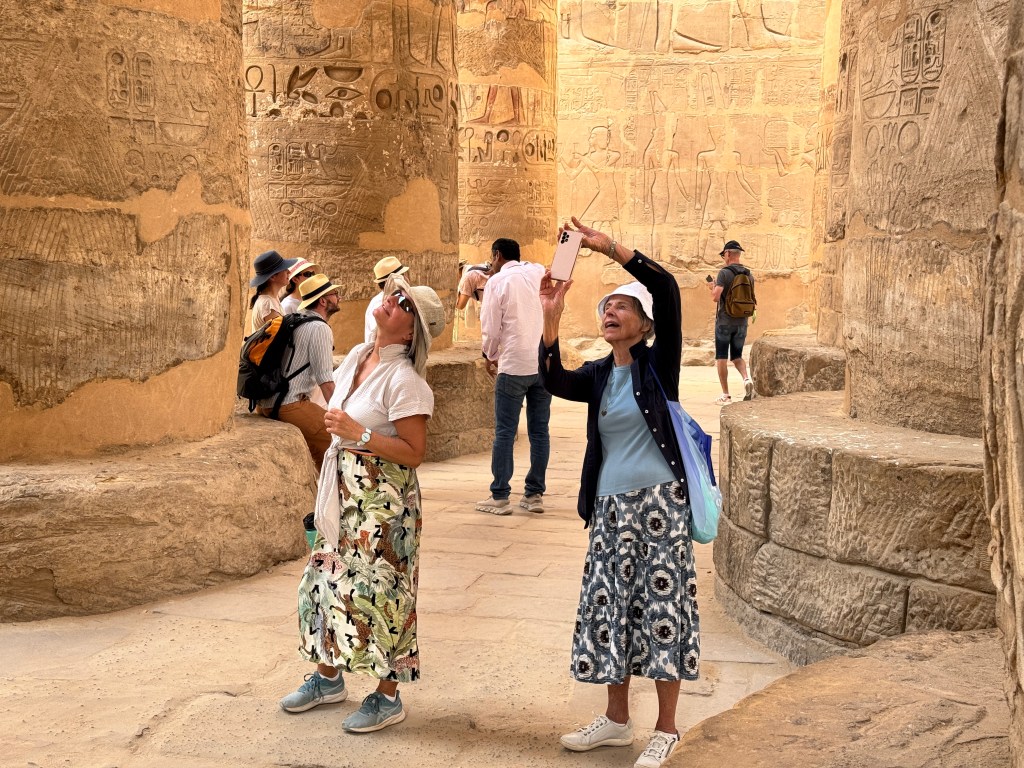
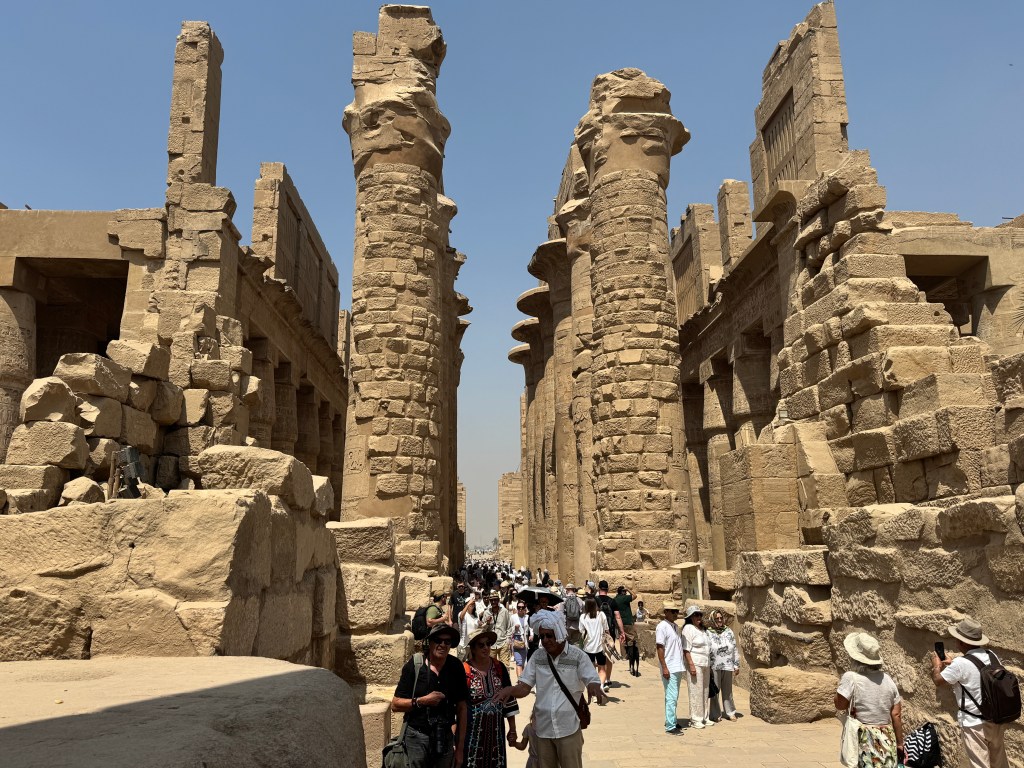
Once through the entrance, we were greeted by the towering rows of pylons in the Hypostyle Hall, stretching up into the sky. Each pylon was covered in intricate drawings and hieroglyphics, depicting past pharaohs’ glorious battles, opulent lifestyles, and their relationships with gods and their subordinates.

There was so much to see over an area covering more than 200 acres, including multiple smaller temples, mausoleums with intricately decorated chambers, each telling its own story, and even a ceremonial lake. We’ve explored many ancient sites during our travels, but this one is by far the oldest and largest. We spent the morning in awe of this incredible place, absorbing every detail, until the heat became too intense to continue.

Sunrise Flight Above Luxor’s Tombs and the Nile

We were up early for a 04:15 AM rendezvous with the “Royal Air” ballooning team at the hotel. From there, we headed downtown to the dock to catch a water taxi, which felt a bit like an assault course. We clambered across and through several boats before finally settling into one with ornate decorations and carpeted seats. Once on board, we waited for several boats ahead of us to head out before it was our turn for the short hop across the river from the East Bank to the West Bank.

At the dock, there must have been at least 70 mini cabs randomly parked, waiting for the armada of small boats to make their way across the water. It was at this point that I understood why we had had to give our passport details. This was a proper military maneuver, with hundreds of people being bundled into their respective taxis. We were shuffled from one taxi to another, eventually making our way to the West Bank port. When the port gates finally opened, it felt like something straight out of a movie—It’s a Mad, Mad, Mad, Mad World instantly came to mind. All the minivans charged through the gates, squeezing through smaller streets toward the balloon launch site. It was chaotic, but brilliant!

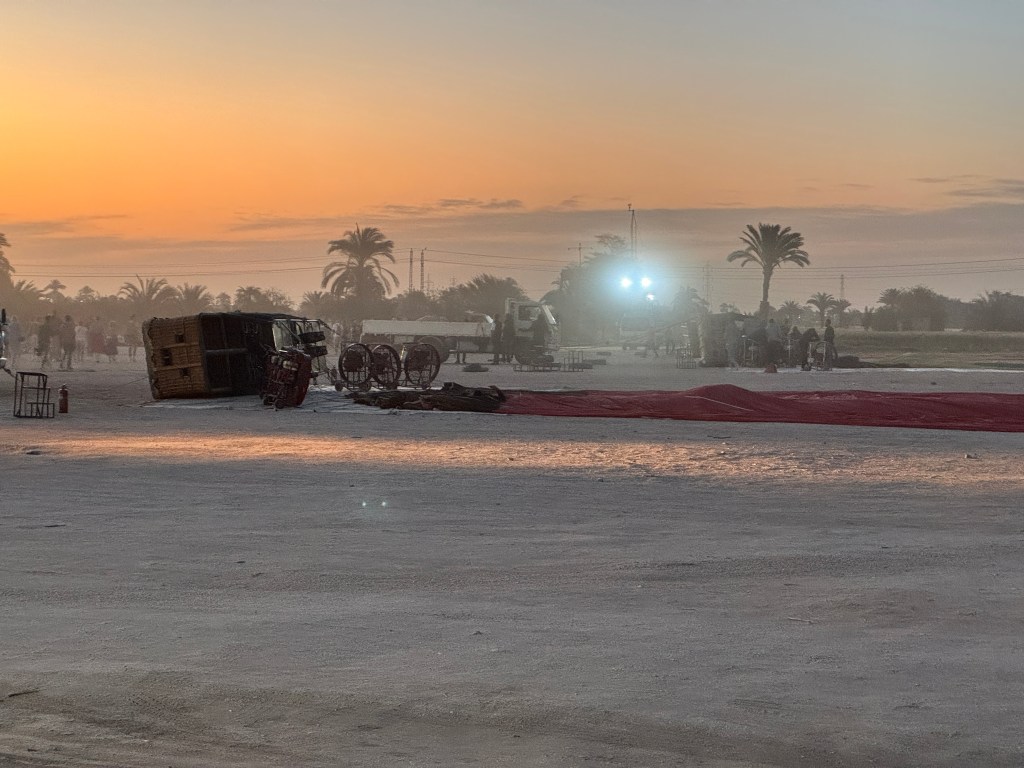
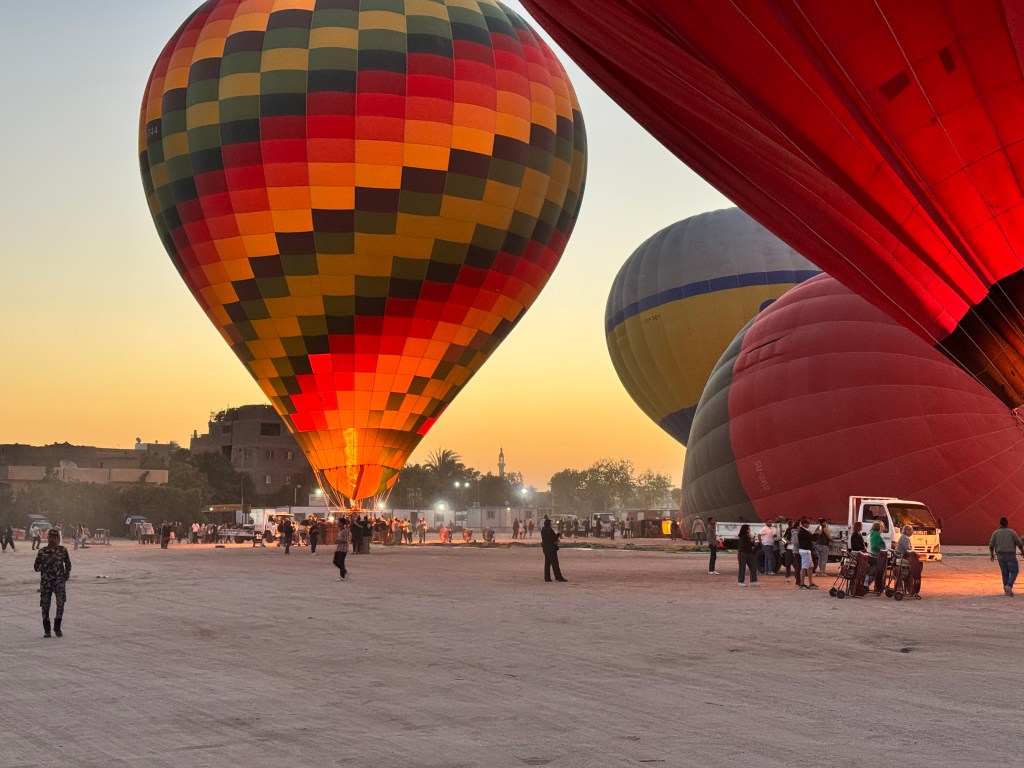
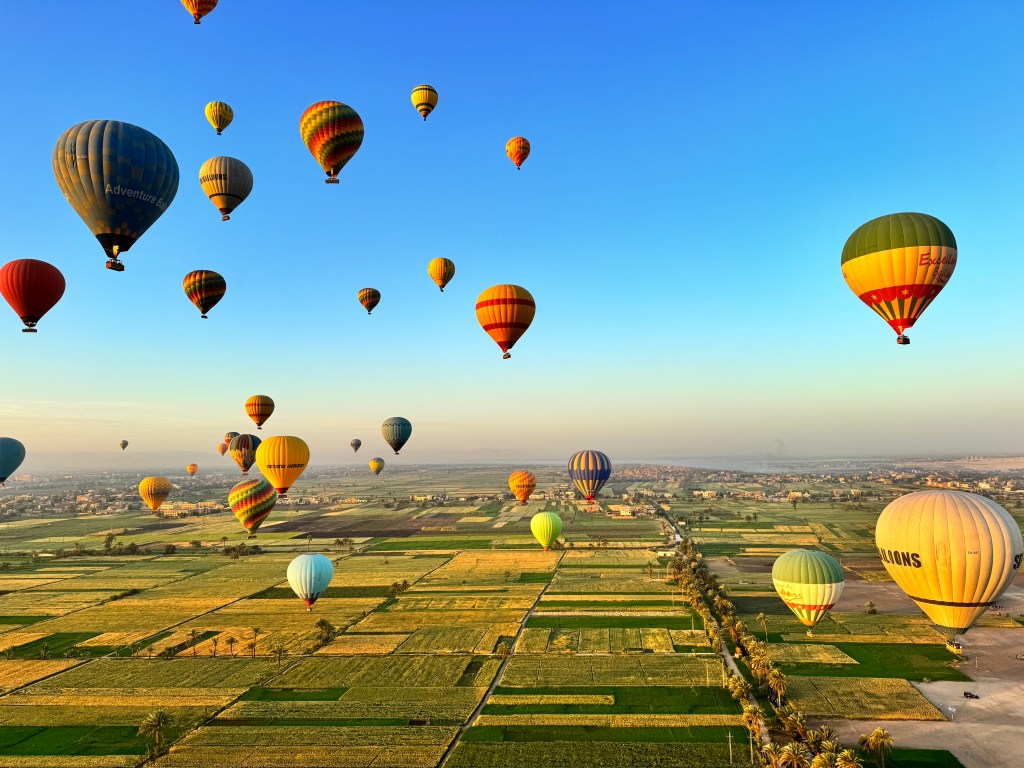
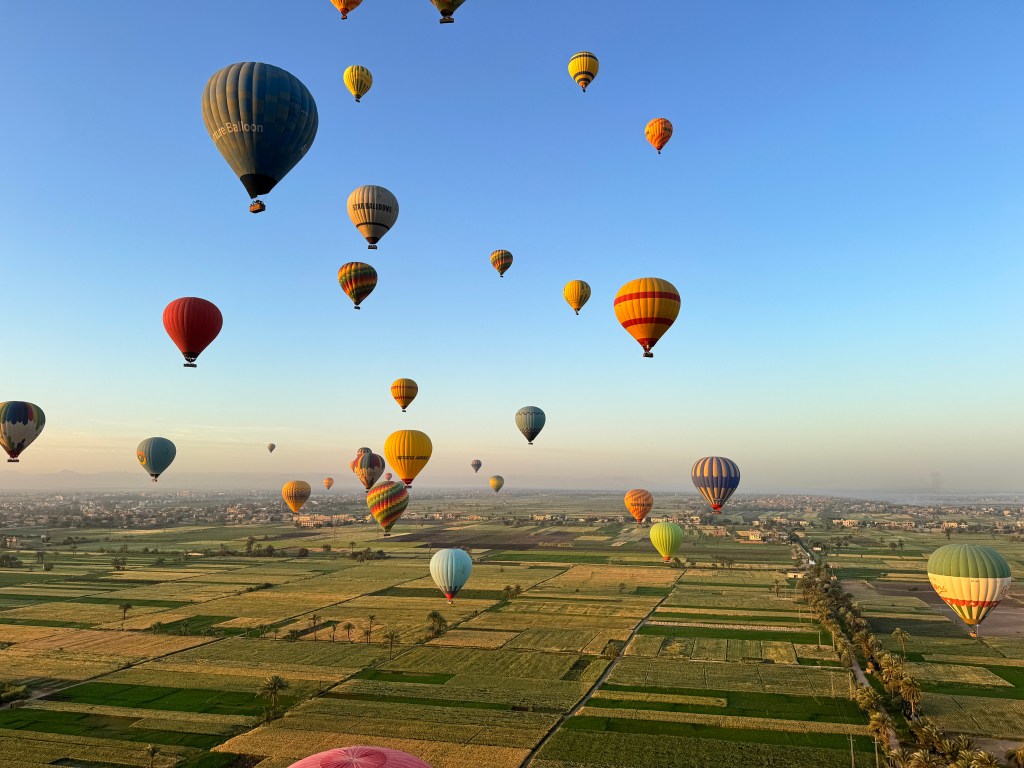
Preparing the balloons was just as exciting. At first, it seemed calm, but then there was a mad scramble to bring each balloon to life before the sunrise. Apparently, there were around 70 balloons in the area, all working frantically to inflate and get them airborne. We were ushered toward our balloon, where our pilot, dressed in his flight liveries, greeted us. After a quick safety talk, we were weighed, and our party of 12 to 15 was strategically placed inside the basket.

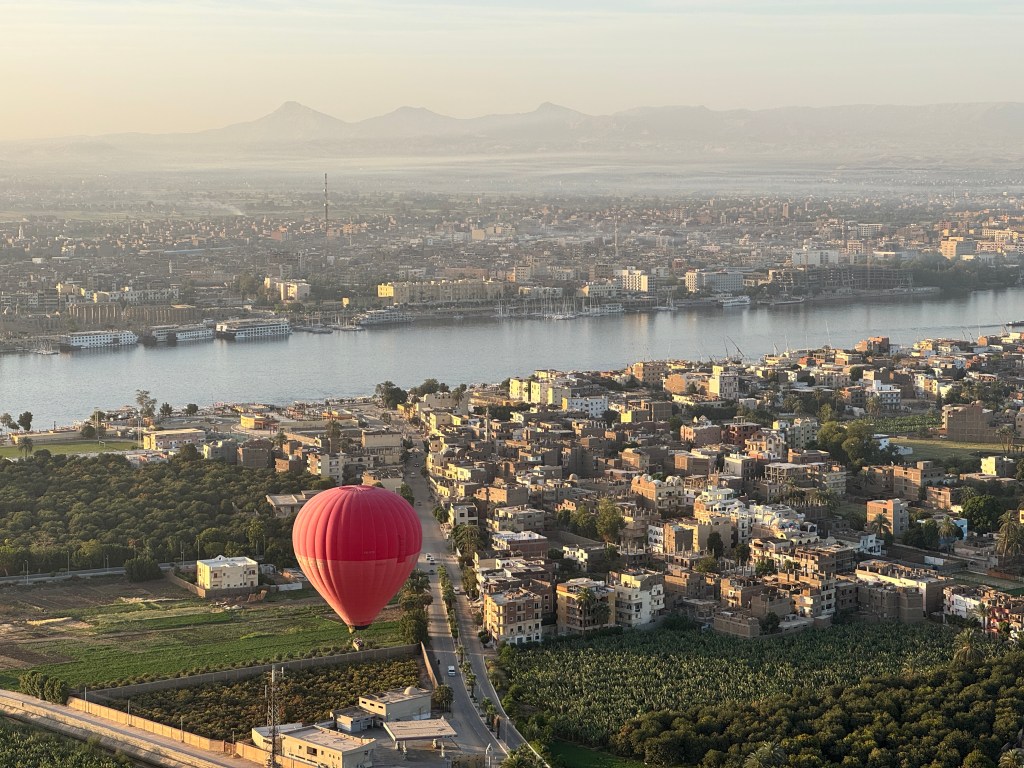
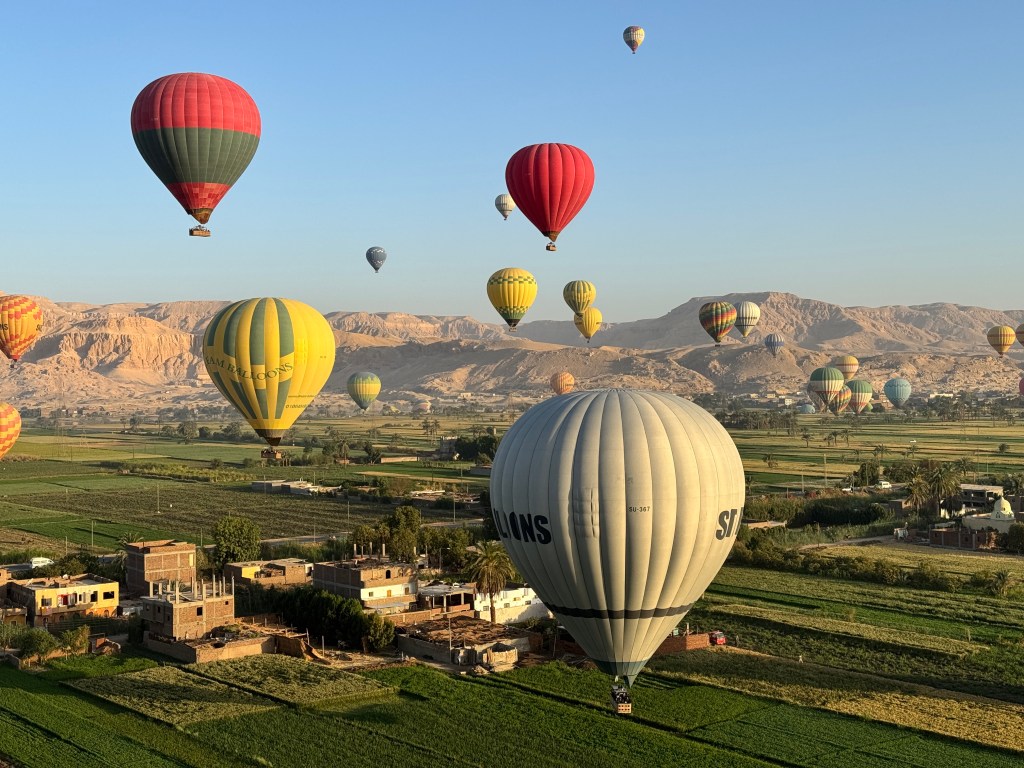
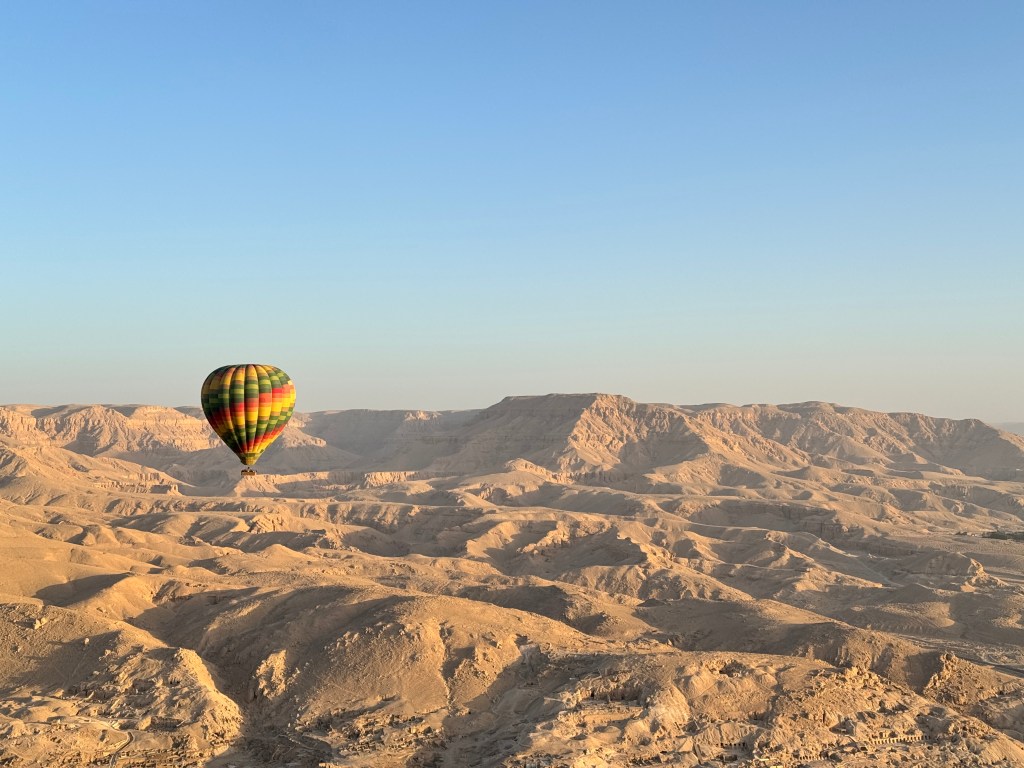
The basket gently lifted off the ground as the ground crew held the guide ropes before releasing us into the sky. Apart from the gas burners keeping the balloon steady, everything was incredibly still, and the beauty of what lay around us took center stage. To the left, we could see the mountain range, where the open tombs of the Valley of the Nobles and the pillared façade of the Temple of Hatshepsut stood stunningly against the morning sky. In the middle ground, there were neatly laid-out fields of corn and barley, interlaced with deliberately half-finished houses (always ready for an additional floor). Beyond that, the stillness of the Nile unfolded with little scenes playing out as far as the eye could see.

We were airborne for about an hour, soaking in the surreal views, before our skillful pilot made a graceful descent into the waiting ground crew. They expertly maneuvered us through walkways between fields to a small track. What a fantastic way to start a day!

A ballon ride over the West Bank – Luxor

Luxor – The worlds greatest open air museum

Mum and I had been wanting to visit Egypt for quite some time after reading a fictional Nile based series, by Wilbur Smith, that we both really enjoyed. Since then, we’ve been trying to make the trip work. We had also planned to spend a few days in Cairo to visit the new museum, but unfortunately, it won’t be fully open until later this year, so we’ll wait. After a smooth drive from Cambridge to Gatwick, we checked in and boarded our flight, which, after 5 hours and 30 minutes, landed us in Luxor.

We’d been to Egypt before, but this was our first glimpse of the Nile. As we flew over the vast arid desert landscape, one of the driest places on earth, it was incredible to see the sudden transformation as we approached the Nile, with lush green fields and thriving crops on either side of the world’s longest river, stretching from central Africa to the Mediterranean. It was truly magical.

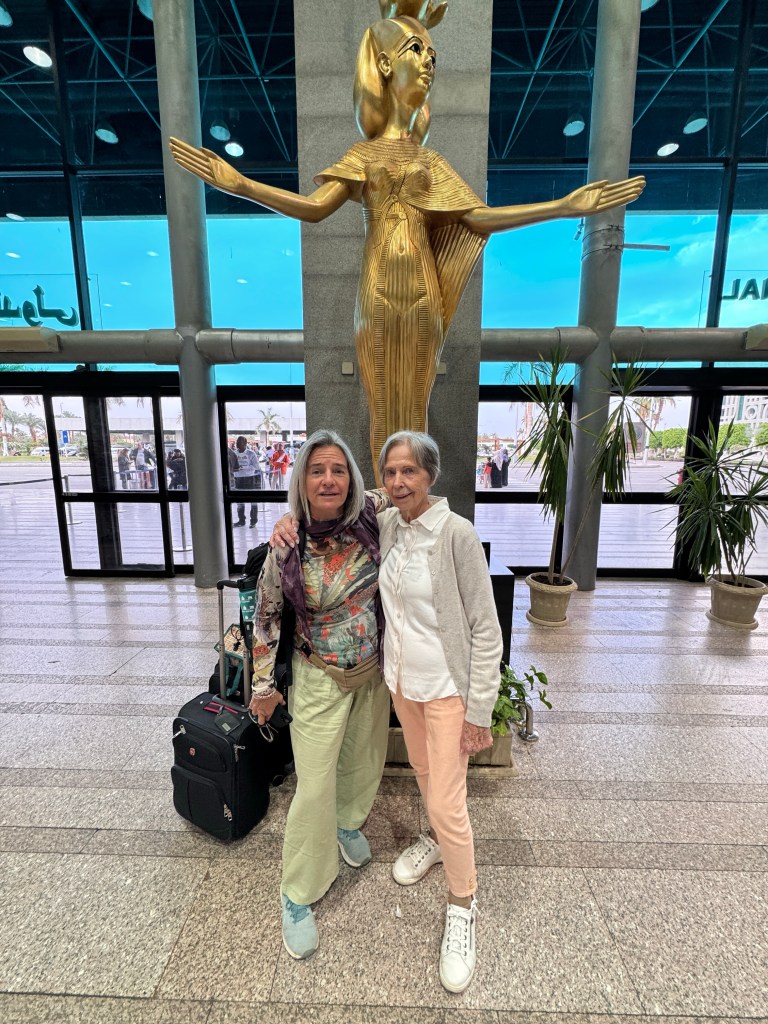
I had messaged our driver to let him know we’d landed, and he was there waiting for us as we exited the airport. Egypt is one of those places where it’s not just about what you know, but who you know first—and then what you know. About 10 minutes after meeting Mohammed, who seemed to know everyone, I knew that he and his taxi (number 430) were our team for the duration. By the time he dropped us off at our hotel, we had already sketched out a plan for what we would see while we were there.

Mohammed arrived at our hotel at 8:00 am, and off we went from the East Bank to the West Bank, where most of the ancient attractions are located. It was about a 20-minute drive to the Valley of the Kings, our first stop. The Valley is the burial site of nearly all the kings (pharaohs) of the 18th, 19th, and 20th dynasties (1539–1075 BCE), including Thutmose I to Ramses X. Since we were early, there weren’t too many people there, and we spent a couple of hours wandering around the necropolis. The deep steps that led to long walkways and burial chambers, with hieroglyphics and intricately carved figures in vibrant colours, were remarkably well-preserved after thousands of years. So far They have uncovered 63 tombs, but the area looks as though it still holds more secrets.

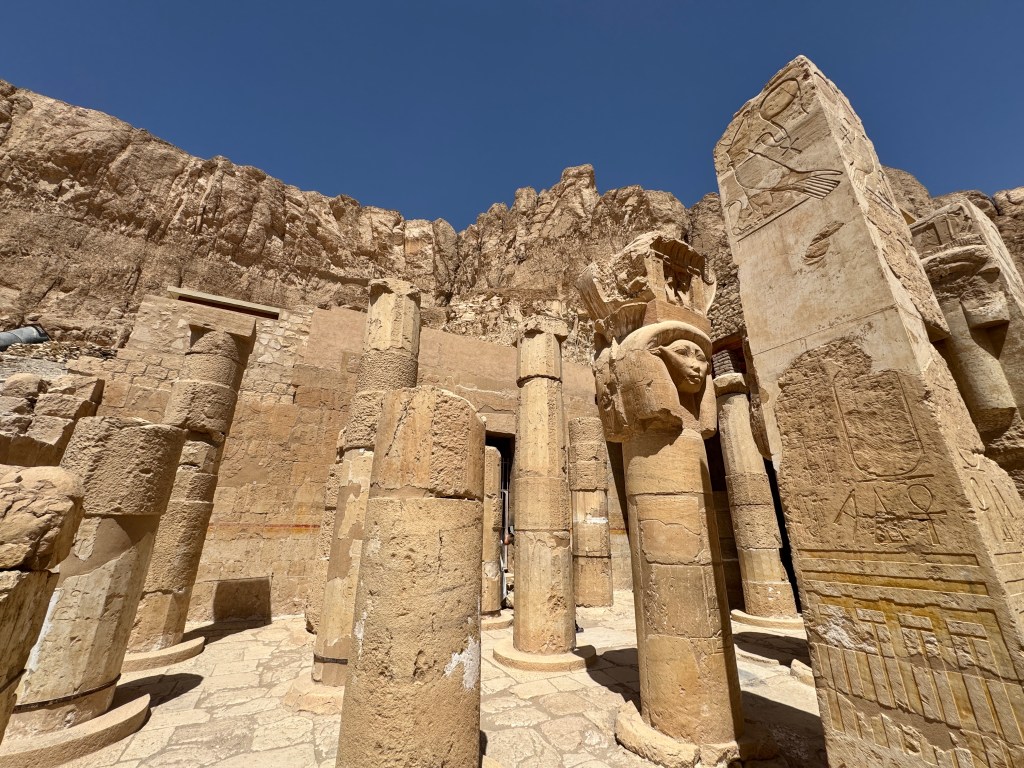
Next, we visited the Hatshepsut Temple, just a short drive away. This temple was built by the first female pharaoh to honor one of the gods so that she would be remembered. I love buildings with a simple but impressive façade. What was also fascinating was that you could see the cuts in the surrounding mountains where the stones had been quarried to build the temple.

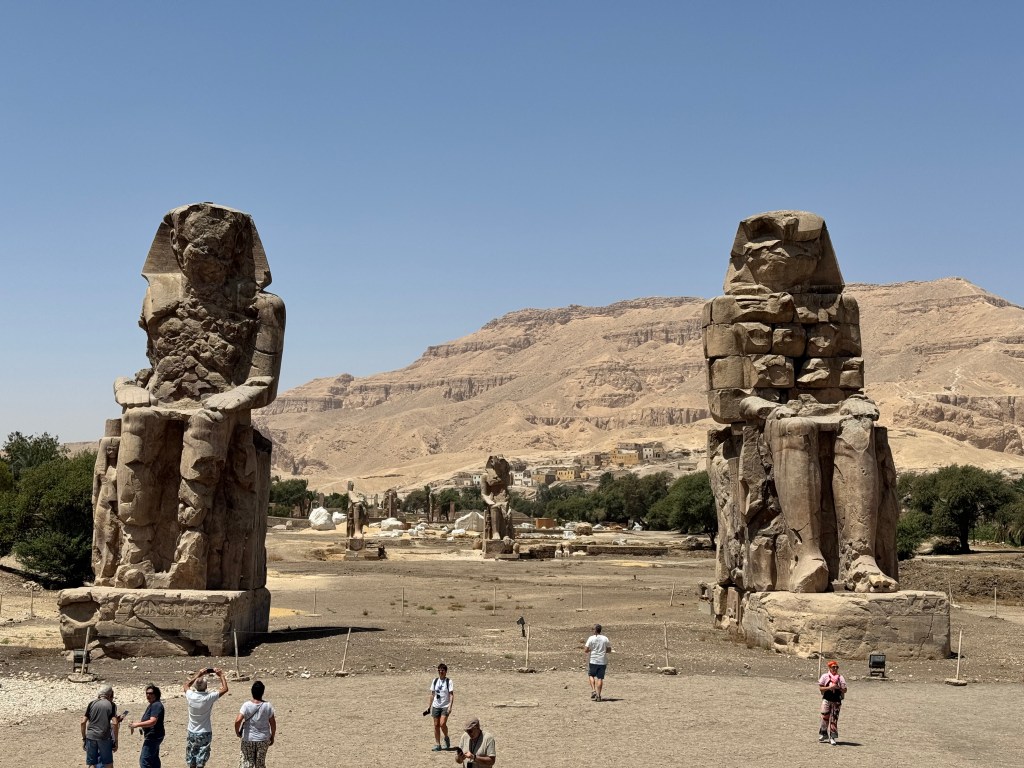
Our final stop before lunch was the Colossi of Memnon, two massive stone statues that stand about 60 feet high. These statues once guarded the entrance to a ruined necropolis. There’s currently a project underway to rebuild the site, but first, they have to find the missing stones.
A trip to the Cotswolds

The flight leaving Cape Town was an overnight one back to London, so we started the day as we had throughout our stay—by taking a long walk along Britannia Beach one last time. Afterward, we enjoyed a leisurely lunch back at the cottage before gathering our things and loading up the car for the final time. We then headed about 170 km south to the airport. After a reflective and incident-free journey of just under two hours, we handed the car back and made our way to the lounge before boarding the flight. Rachel managed to sleep most of the way… me, not so much.

Upon arrival in London, we were reunited with our one case (we’ve successfully transitioned to one medium-sized case and two cabin bags). We picked up the car, then made a visit to see Chris for a good catch-up while he worked his magic on us with haircuts. After that, we dropped in to see an old friend before heading to Cobham, where Rachel kindly allowed us to disrupt her life for a few days. I spent the day in Guildford while Rachel had a day at her office in Crowthorne.

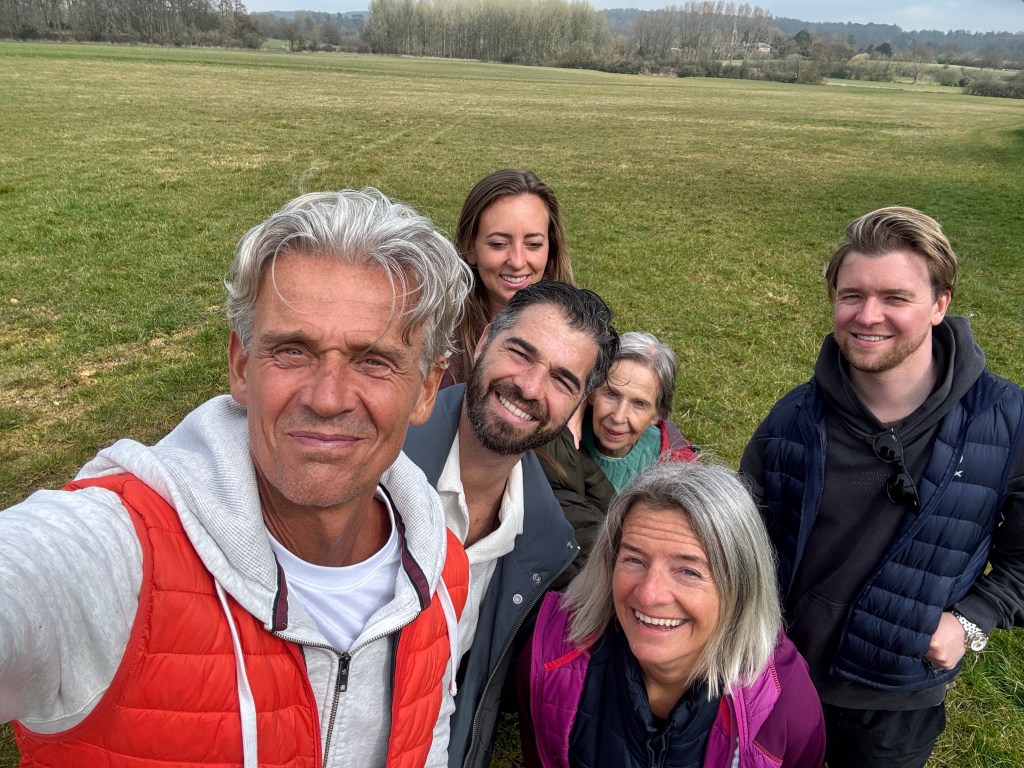
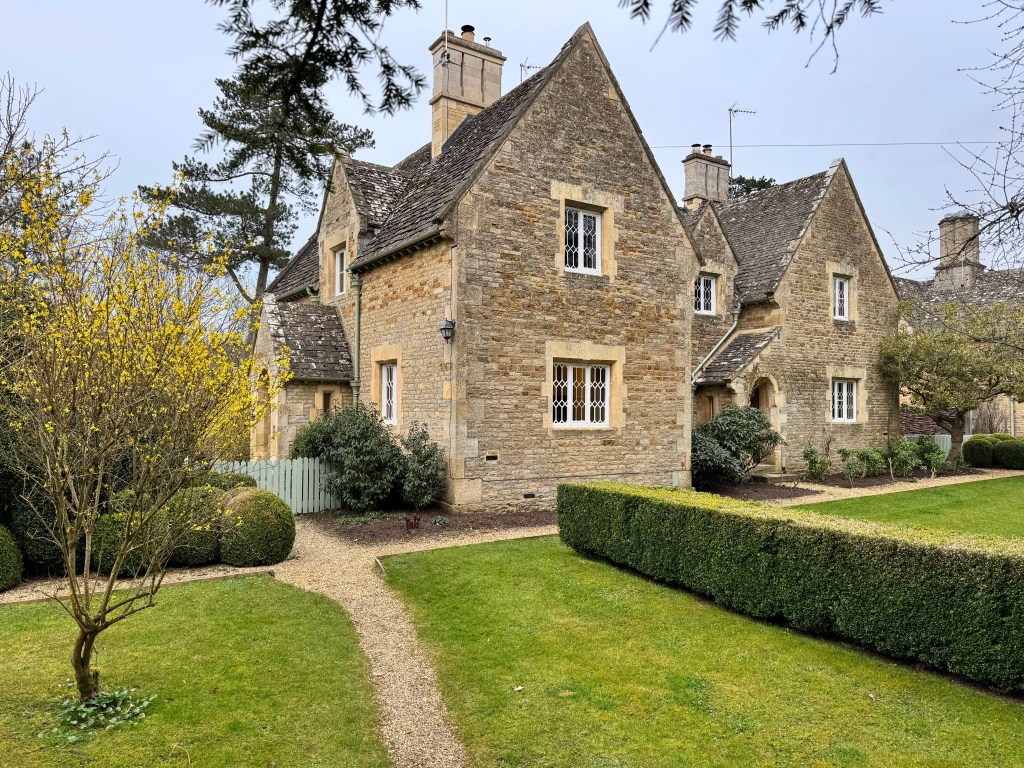
Seb and Ally had rented a cottage for the weekend and invited Rachel, Mum, and me to spend the weekend with them in the Cotswolds, extra special for mum as she lived there before moving to Cambridge. We made our way across the country from Cambridge and arrived at Medlar Cottage in Daylesford Village. The village is privately owned and forms part of a collection of properties located within a two-mile radius of the Daylesford Organic Farm, which has won several awards and aims to become the world’s first fully self-sufficient farm.

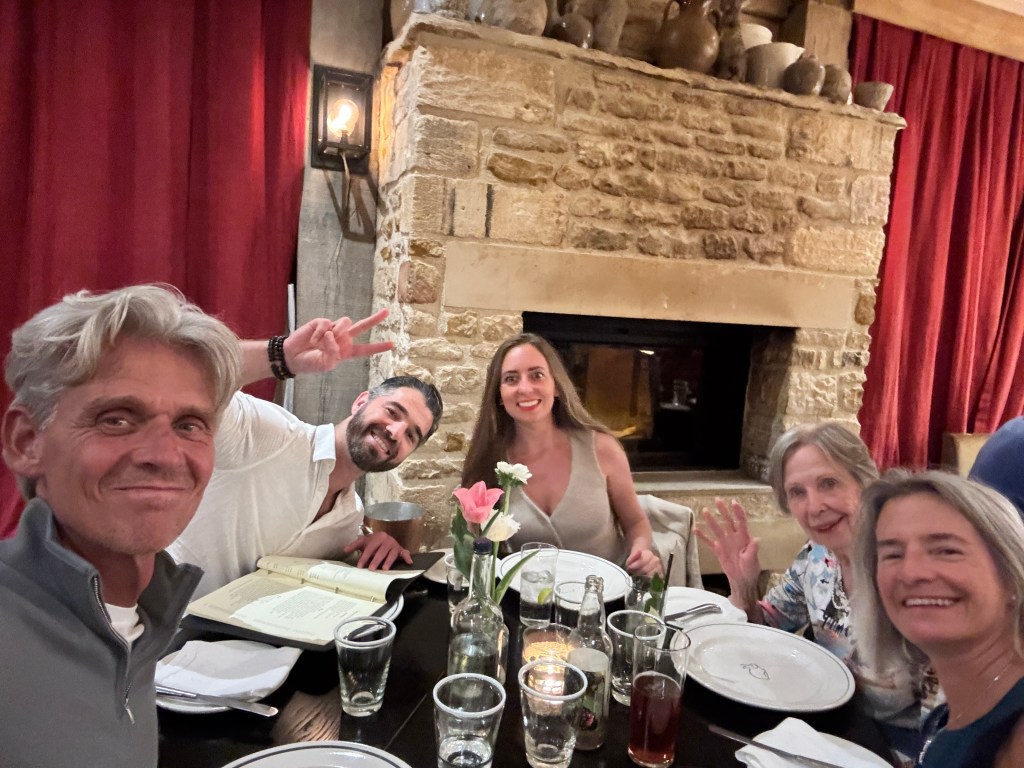
After settling into the lovely little cottage, we got ready for dinner. We picked Seb up from a nearby train station, as he’d spent the day in London, and then headed to the Wild Rabbit in Kingham, where we were treated to a fantastic food experience. The service was a bit slow, but we all had plenty to talk about. Feeling pretty tired, we headed to bed early, knowing that little Arlo would be expecting a good walk and our undivided attention the next day.

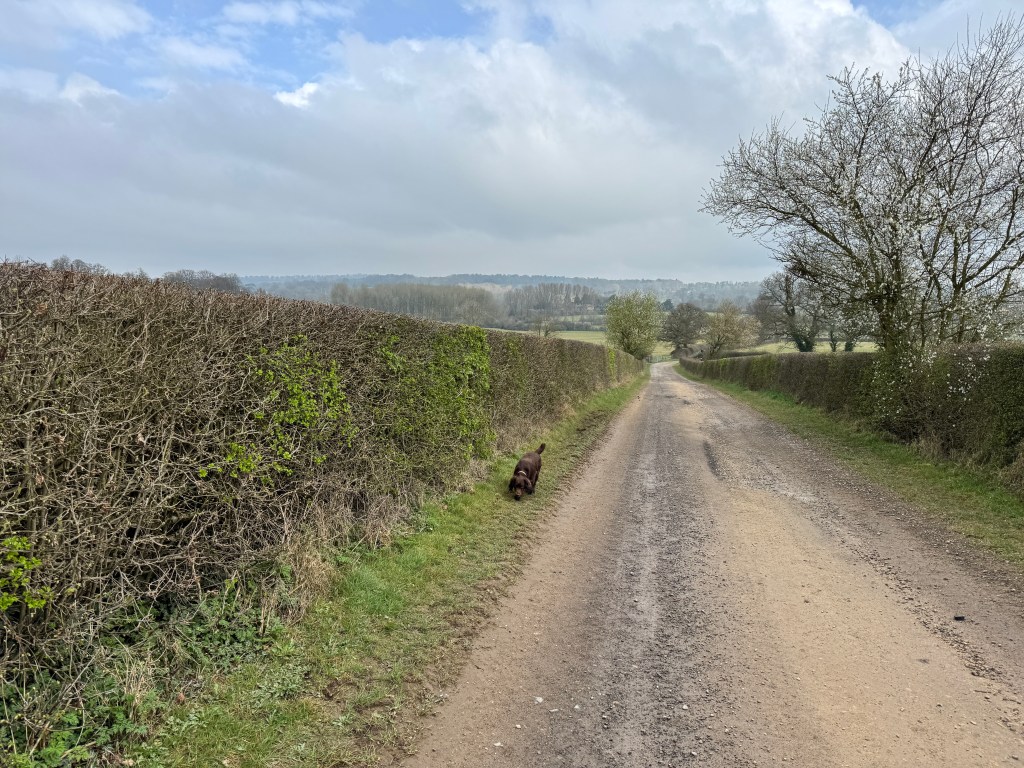
After a hearty breakfast, we set off for a very eventful walk, where Ally, who had taken on the role of scout leader, guided us through what could only be described as a swamp. With none of the Cambridge crew wearing wellies, poor Seb had to play the part of packhorse, helping us through the deepest bits. Feeling that we’d certainly earned our lunch, we stopped at the famed Daylesford Farm Shop during our walk and enjoyed some delicious risotto.

There are some great restaurants in the Cotswolds, and particularly in this area. So, we decided on dinner at The Fox, which didn’t quite eclipse the previous night’s meal, but was still very good nonetheless. We were all checked out by 11:00 AM, and to top off the weekend, Christien drove down to meet us after arriving from Tokyo. As we walked Arlo, he had us all in stitches with his stories and escapades. After a lovely family lunch at the Farm Restaurant, which, again, was delicious, we all headed our separate ways, marking the end of another memorable family gathering.

A family gathering

St Helena Bay

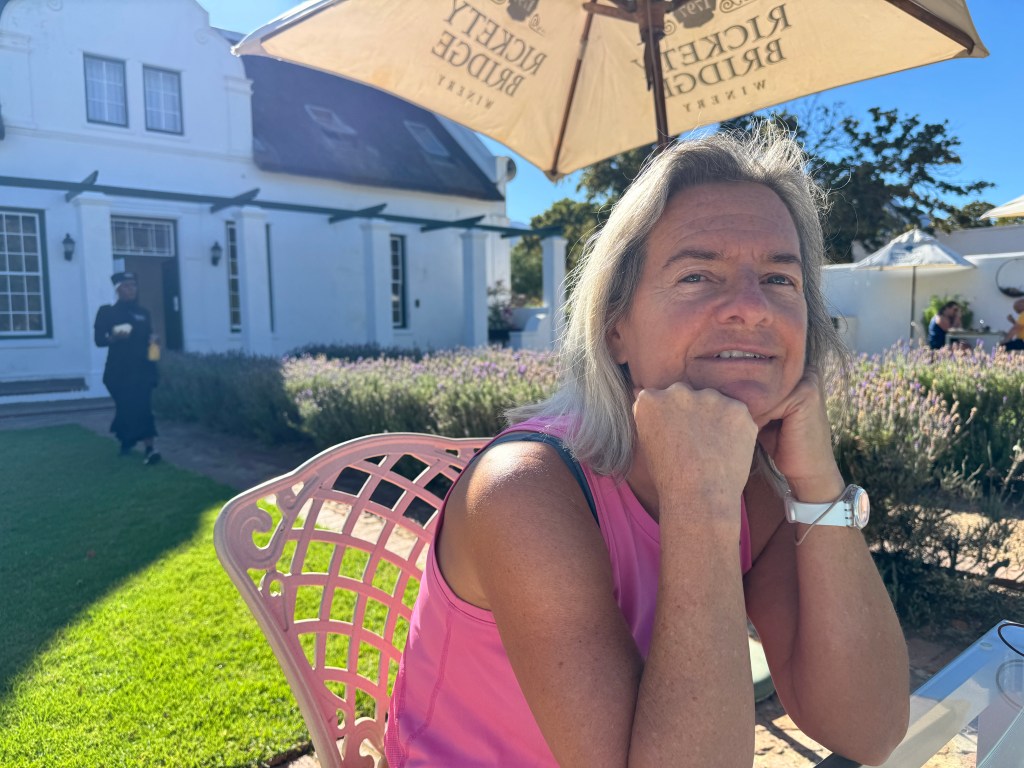
After a good breakfast and a final stroll through the vineyard, we were ready to embark on the next leg of our journey. We had booked our next destination the night before, quite by chance. Rachel had painted me a picture of what she envisioned for our final stop, and since these adventures are all about living our best lives, we try not to compromise. With that said, we were close to having to compromise when, mysteriously, the perfect place appeared on Airbnb. After a tense booking process, standing on furniture and pleading with our sketchy WiFi to work, we finally secured the reservation.

Our next stop didn’t have the great fresh fruit, veg, and yoghurts that we had become so accustomed to, so we headed to Paarl, a place we had stopped at yesterday for some excellent coffee under the shade of a generous yellowwood tree. It was to be our final “Farmers Market” shop before making our way northwest to St Helena Bay. After about 160 km and just under 2 hours, we pulled up to our last 5-night stay.

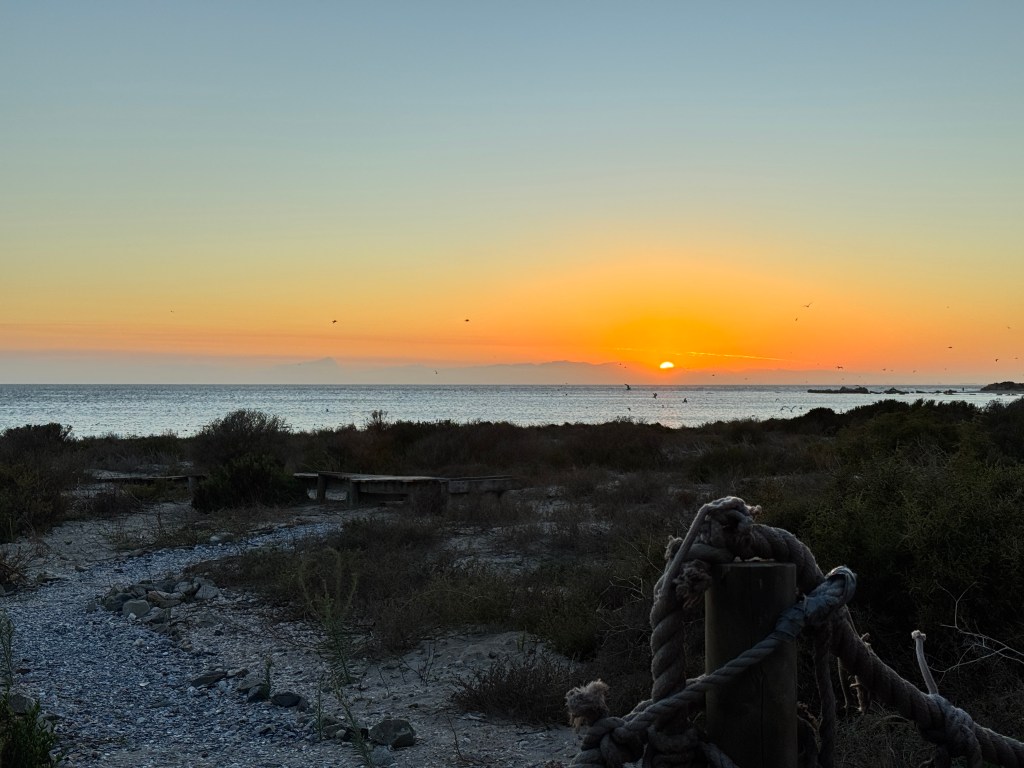
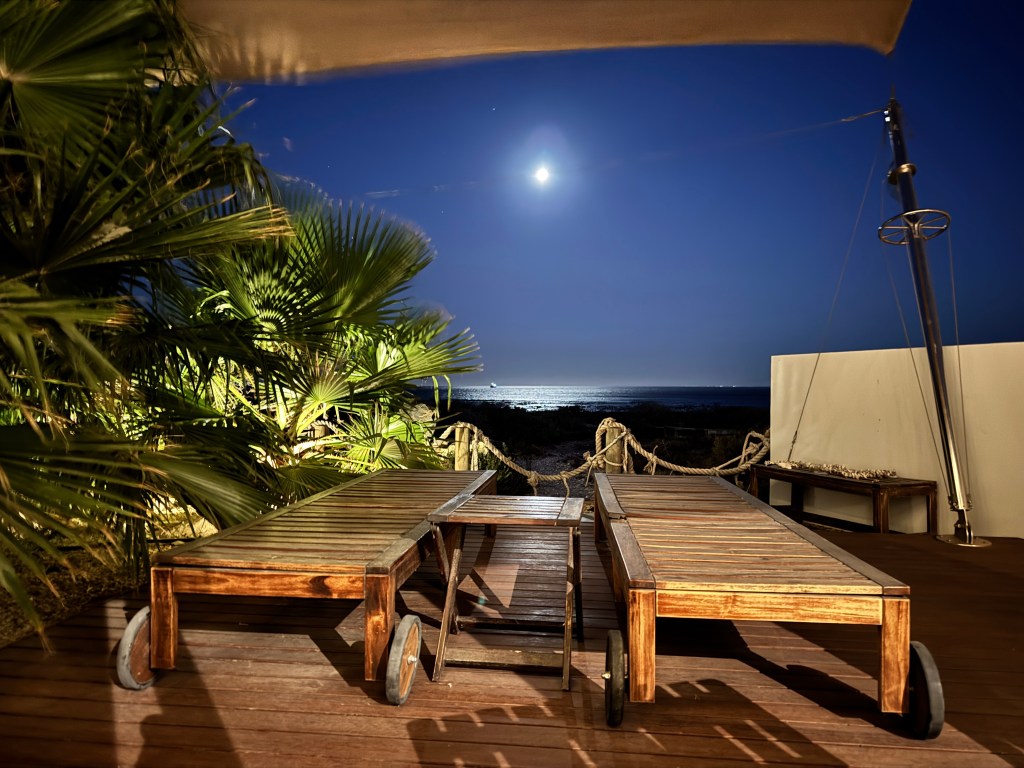
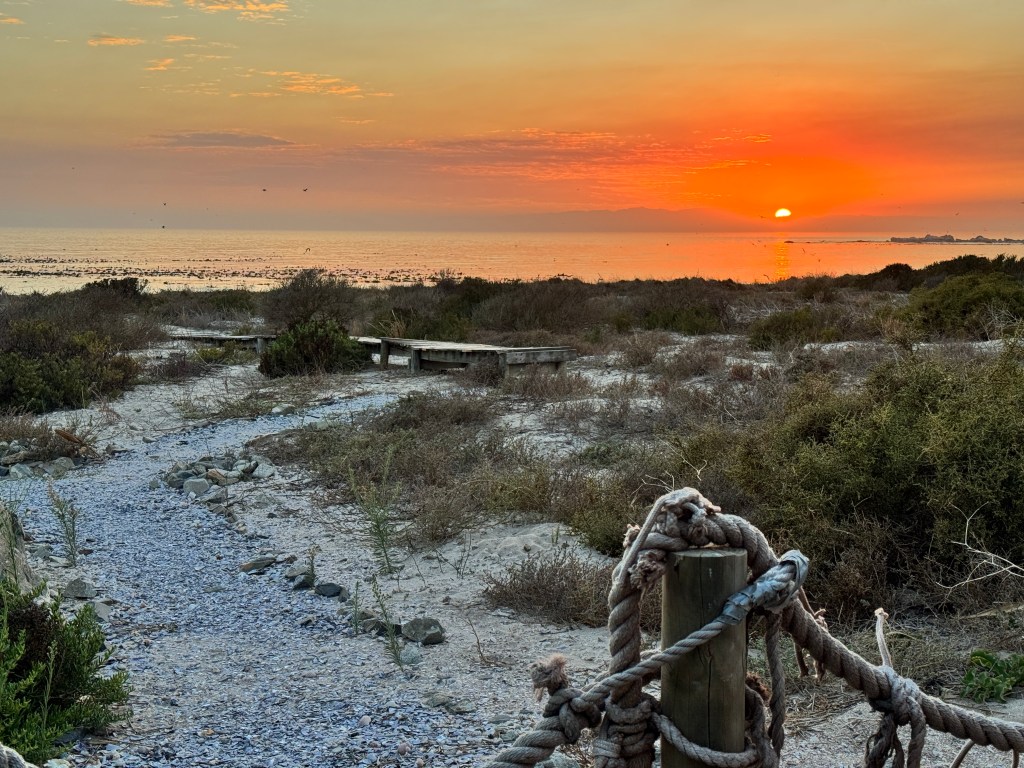
Armed with detailed instructions, we arrived at our high-tech beach cottage, and I’m happy to say it was better than we had both imagined. The uninterrupted view across the Atlantic coastline was simply stunning—each time we looked out, there was something new to see. We planned to use our time here to unwind, as Rachel had been juggling a busy work schedule. Being early risers, getting up to meet the sunrise wasn’t an issue, and we were delighted to learn that this is the only place on the west coast of Africa where both the sun and the moon rise over the sea. We also seemed to be on the cormorant food run, where we were treated to thousands of these incredible birds flying just a couple of feet above the ocean early in the morning, returning at dusk each day. It’s a mesmerizing sight, watching them glide effortlessly over the water, hunting for their next meal.

Our host also has another property in a gated community on the beautiful Britannia Beach, with its flat, white sands. We chose it for our early morning walk, an 8 km round trip. What made it even more special was that it seemed to be a favorite spot for dolphins too. When the tide was out in the shallow bay, it felt like the dolphins were swimming alongside us.

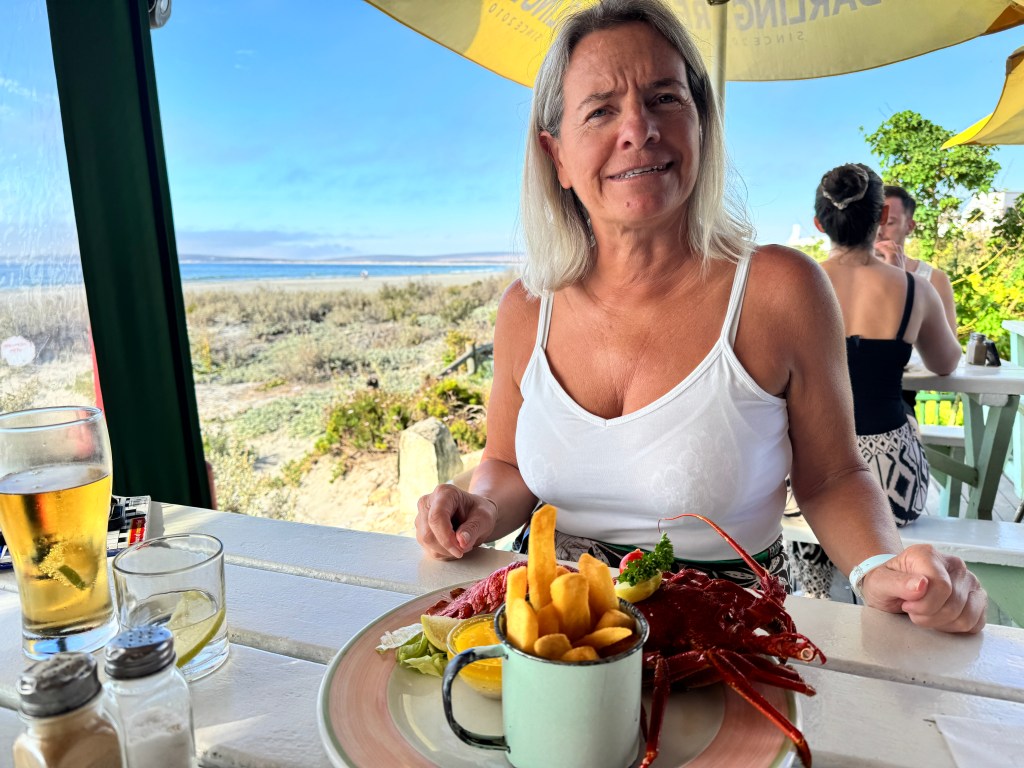
We also took a trip into nearby Paternoster for lunch, where Rachel sampled the locally famed crawfish. Paternoster is one of the oldest fishing villages on the west coast of South Africa, known for its collection of whitewashed fishermen’s cottages and a lovely beach, though there isn’t much else. Despite its simplicity, it remains a big draw for visitors.

We haven’t done too much else, but it’s been a fantastic way to end our South African adventure.

Beach Cottage – Saint Helena Bay

A road trip – Oudtshoorn, Montagu & Franschhoek

We couldn’t resist one more beach walk before starting our drive back west. We traveled from east to west along the N2, the main route through the Garden Route. But, instead of taking the same route back to Cape Town, we decided to take the much longer, yet more scenic, R62. This road winds and weaves through the stunning Overberg, offering some breathtaking views. We planned to break up the journey along the way.

Our first stop was Oudtshoorn, just over 300 km from Jeffreys Bay. The drive was hard to concentrate on because there was so much to take in. It was cloudy for most of the journey, which created dramatic skies, but it was the fog rolling down the mountains that really caught our attention—it was pretty epic. As we got closer to Oudtshoorn, all we could see for miles were ostrich farms, and not much else. But we were impressed with La Plume when we arrived. The room was nice, and the bathroom was particularly impressive to Rachel. The restaurant was also great, with views over expansive open vistas.

After our usual morning routine, we enjoyed a hearty breakfast and set off for our next destination—Montagu. We booked the accommodation over breakfast that morning. It’s funny how, when visiting a country, we normally do extensive research and book everything in advance for peace of mind. Yet here, we’d landed with a last-minute five-day stay in Cape Town, and since then, we’ve been completely comfortable leaving everything to the last minute without feeling stressed at all.

The drive continued to impress us, and we made light work of the 300 km, arriving in Montagu in about three hours. We were greeted by our host at the Vineyard Country House, a peaceful and charming spot in a lovely little town. The highlight of the property was a terrace overlooking the breathtaking mountains, which looked even more impressive in the soft dawn light. After another delicious breakfast and booking our accommodation for the evening, we were back on the road by 11 AM for a shorter leg of 200 km and a couple of hours to Franschhoek— a place we had skirted on our way down.

We arrived at the impressive facade of Basse Provence Country House, one of the many vineyards in the area. Like most vineyards, they have fantastic restaurants where you can enjoy delicious food while taking in the magnificent landscape. We spent some time wandering around the estate, which we both really enjoyed. That evening, we managed to book the final part of our trip, allowing us to savor another great breakfast and take a final stroll around the estate before heading off to our final stop.

The incredible Addo Elephant Park

We had tentatively planned to visit Addo Elephant Park, but after speaking to several amazing people we’d met along the way, our plans were solidified. By sheer fluke, I managed to secure a last-minute cancellation within the park, and as a surprise for Rachel, I booked it for the night before her birthday. The idea was to be up and ready before sunrise, long before the park opened to day visitors, to catch a glimpse of the animals at one of the many watering holes.

After a 120 km journey, with a stop in Gqeberha (formerly Port Elizabeth) for lunch—since there weren’t any good restaurants within a 50 km radius of the park—we finally arrived. After going through all of the rigorous security checks, we unlocked the door to our straw-roofed hut for the night. We had about 30 minutes of daylight left after the park had closed, so we decided to take a quick look around nearby.

We had to be careful, as there was almost no cell coverage until we reached the higher elevations. We were also advised not to get out of the car, as the park is home to four of the Big 5 most dangerous animals (rhinos aren’t indigenous to SA) and the trails were rough, so the thought of getting a puncture and spending the night in the car would have been less than ideal!

On our return to base, as we rounded the last bend, a young bull elephant stepped out of the bush just in front of us. It was my first elephant sighting in this kind of setting, and wow, what a humbling experience it was.

We woke early the following morning after a night filled with unfamiliar sounds. After preparing a breakfast of berries, nuts, and yogurt to go, we set off for our first watering hole. The park spans about 1,640 km², so spotting animals was going to be a matter of luck. The cats tend to be nocturnal, our best chance was at first light.

At the first watering hole, we were met by a couple of bush pig families and some black-backed jackals. In the half-light, it was difficult to make out other animals. The second watering hole was dry. We had been driving for a couple of hours when we decided to stop near a herd of zebra and a kudu and eat breakfast. They were too busy breakfasting to notice us, and it felt like such a privilege to quietly watch them.

The park’s speed limit was 40 km/h, but there was no chance of hitting that speed, as the gravel tracks were more like tank tracks. We weren’t sneaking up on anyone, but we didn’t mind, as we scanned the bush looking for animals.

After about four hours of driving, we came across a smaller watering hole with a small hide. As we were the only ones there, we made our way inside. When we arrived, we were both thrilled to be just 20 feet away from a family of elephants drinking. We may have missed bath time, but it didn’t matter. We weren’t lucky enough to see big cats, but this close encounter with such majestic creatures was more than enough.

Early morning at the waterhole

Jeffries Bay & Tsitsikamma National Park

We ended up staying an extra day on Leisure Isle—it was such a nice spot, and we were at risk of growing roots! But after packing up and visiting the “Food Lovers Market” to stock up on provisions, we got back on the N2 and drove just under 200 km, crossing from the Western to the Eastern Cape. About two hours later, we arrived at the gates of “Villa Verde” and found ourselves at the foot of what looked like a very large tree house. This would be our base for the next five days. We love having a bit of space, and this place checked all the boxes, offering a great vibe with stunning views over the Indian Ocean and the golden shoreline, which we later discovered was home to some beautiful beaches.

The following morning, we set off late, heading towards Tsitsikamma National Park on a cooler day that threatened rain. Our first stop was to see the infamous “Big Tree,” an 800+ year-old Yellowwood tree stretching over 36 meters high, with a circumference of 9 meters. We reached it via lovely walkways that snaked through a rainforest, which, even without the Big Tree, would have been worth the visit. From there, we continued further into the park to Storms River, a dramatic coastal area known for its stunning scenery. The mouth of the Storms River meets the Indian Ocean, and there’s a notable suspension bridge that offers incredible views of the cliffs that the river winds down into the ocean.

To get there, we had to climb up to the headlands, which was about a 2 km climb of mostly steps, with a few flat stretches, and only some scant tree cover. We were grateful for the cooler weather, as it made the climb much more fun. Once we reached the top, it was well worth the effort with amazing views as a reward.

On the way back, we stopped at Cape St. Francis, where we visited a very busy fish restaurant. The fish came straight from the small trawlers anchored in the quaint port, offering the freshest seafood we’ve had in a while. A perfect way to end a great day.

Jeffries Bay

Knysna and Plettenberg Bay

We left Mossel Bay after lunch and made our way back onto the N2, heading further east. The weather had been more unsettled the further east we traveled, and this continued as we drove the 100 km to Knysna. Along the way, we stopped at the “Food Lovers Market,” which always has a great selection of local fruits and vegetables.

Afterwards, we headed onto the narrow causeway to “Leisure Isle,” a small island about 4 km in circumference, located in the middle of a lagoon (which is actually an estuary). This would be our home for the next week. We’re staying in a cute loft apartment surrounded by colorful fauna and flora, and a gang of jovial birds.

After a restful night’s sleep, Rachel and I decided to take a closer look at the lagoon that I had glimpsed briefly the night before. As we walked down the ivy-lined path, we were met with a huge expanse of sand, where the night before there had been water—it was as though someone had pulled the plug. We walked for about an hour through the middle of the sand but could have easily continued longer. This place is simply beautiful. At the mouth of the estuary stand two headlands that, when the time is right, usher in and push out the cold waters of the Indian Ocean.

There was a devastating fire here in 2017 that completely razed the far mountain range, but today you wouldn’t know it. The fauna and flora have returned in full splendor, and the area is dotted with beautiful properties. We decided to take the “Feather Bed” nature tour, so named because in the early seafaring days, after months at sea, ships would anchor in the lagoon. The sailors would wake up the next morning to find themselves surrounded by the gentle waters, remarking that it felt as if they had slept on a bed of feathers.

After a short ferry ride, we got a closer look at the island, which offered some incredible views both out to sea and across the bay. The entrance to the estuary was once a busy shipping channel, but it was closed in 1951 as it had become too dangerous, with too many ships lost there. Today, however, it was an incredibly tranquil place to walk around and wonder about the sights that had been witnessed here.

After our walk, we made our way down to a small restaurant, chatting with an interesting guide along the way about his take on South Africa. We had a light lunch before heading back to the mainland.

Originally, we had planned to stay in Plettenberg Bay before deciding on Knysna, but since Plett has some fantastic walks and views, we made the 40-minute drive to spend a day there. One thing we’ve experienced quite a bit here is the sea fog, which occurs when warm air meets the cooler sea temperatures. The day we chose to visit was one of those days, but we managed to walk the beach, which is about an 8-10 km round trip. Plettenberg Bay is known to be very pretty, but after our walk with not much visibility, we opted to try a highly recommended Portuguese restaurant for an early dinner. The place was hosted by a South African version of “Gordon Ramsay,” which we found amusing, though I’m sure the terrified staff did not.