We’ve really enjoyed wandering through the historical part of town. I really like the traditional Andalusian architecture, with narrow cobbled streets and whitewashed buildings, winding their way through the old city before spilling into the busier main thoroughfares. About a ten-minute walk from us is the rather excellent “Virgen” coffee shop, which has become our first stop on morning walks around the city. After that, we head off exploring, always discovering something new that piques our interest.
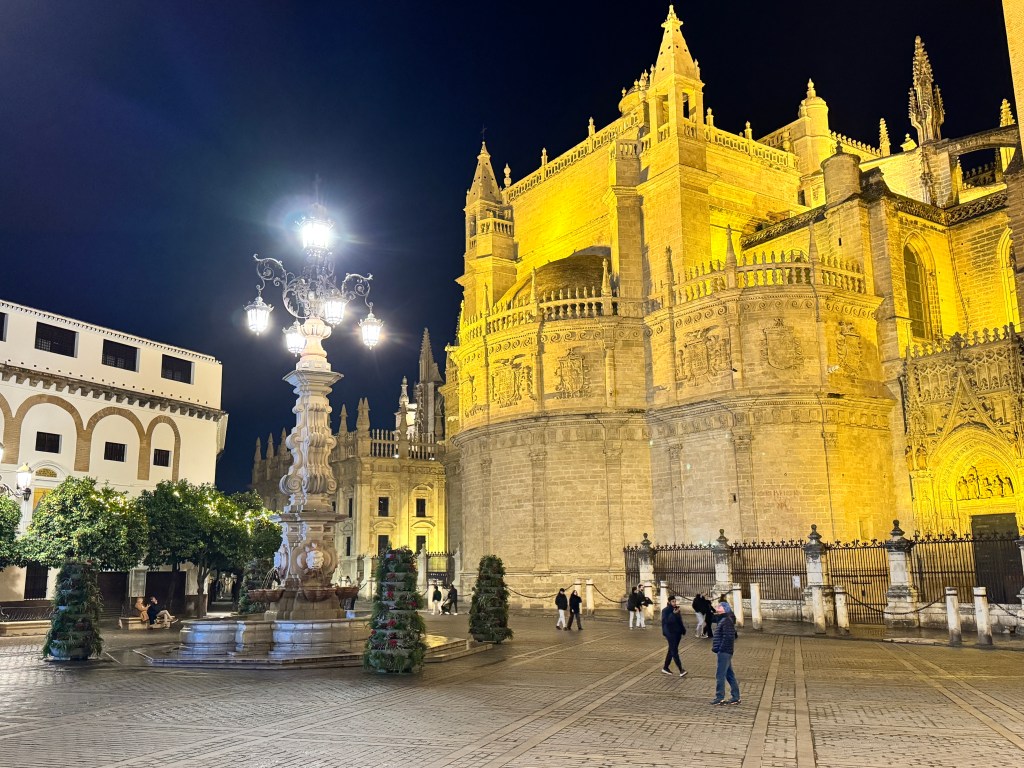
Apparently, Spain doesn’t really celebrate Christmas the way much of Europe does. The main celebration falls on January 6th, “Three Kings Day,” when children receive their presents. But Seville feels different from the Balearics and Canaries, where we’ve spent other Christmases. The lights here are fantastic, and the streets are teeming with people who, like us, seem happy to simply be out, soaking up the atmosphere. The cathedral at night is particularly impressive, glowing golden against the dark sky and blending with the amber of the streetlights strung across the main avenues. It really is quite something and marked a perfect beginning to our final weekend in Spain.
I’d booked the fast train to Córdoba, which is about forty minutes from Seville, specifically to see the Mezquita. After a fifteen-minute walk to the station and a quick pass through security, we boarded and were soon on our way. Like many older cities, Córdoba greets you first with its commercial district, modern buildings, and infrastructure, before you make your way through to the historical centre. After a thirty-minute walk, we found ourselves winding through the old Jewish quarter until we reached the imposing outer walls of the Mezquita. It is, as its name suggests, a mosque-cathedral. Originally built in 786 AD as a mosque, it was later reclaimed by the Christians in the early 13th century, who then built additions around it.
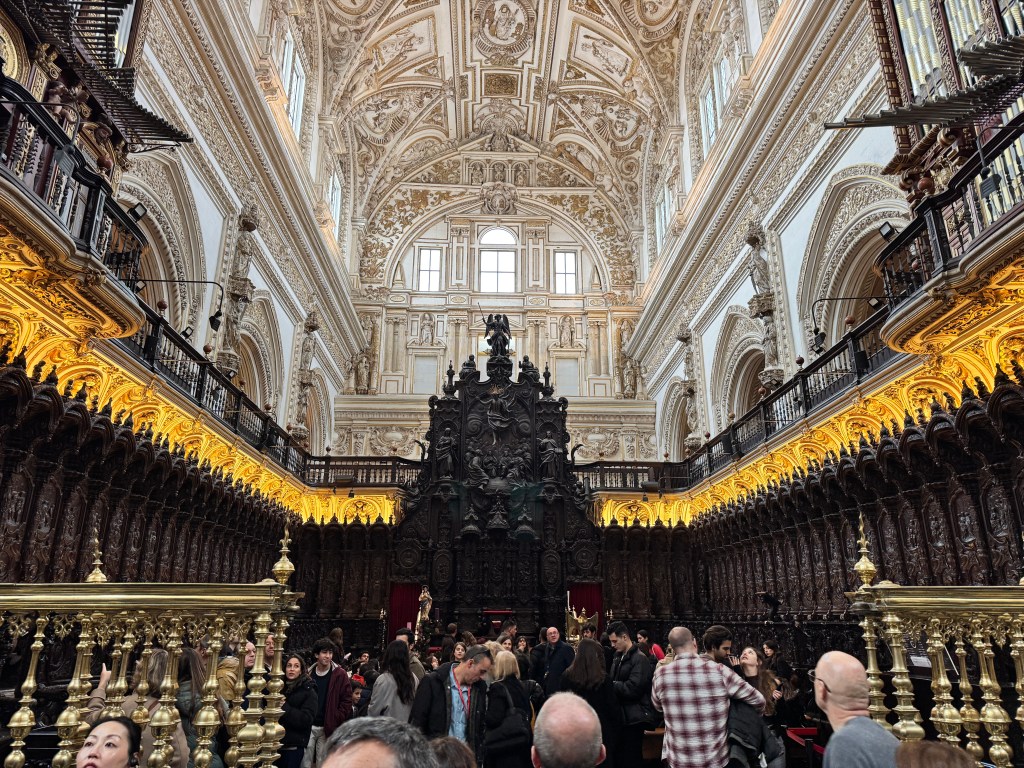
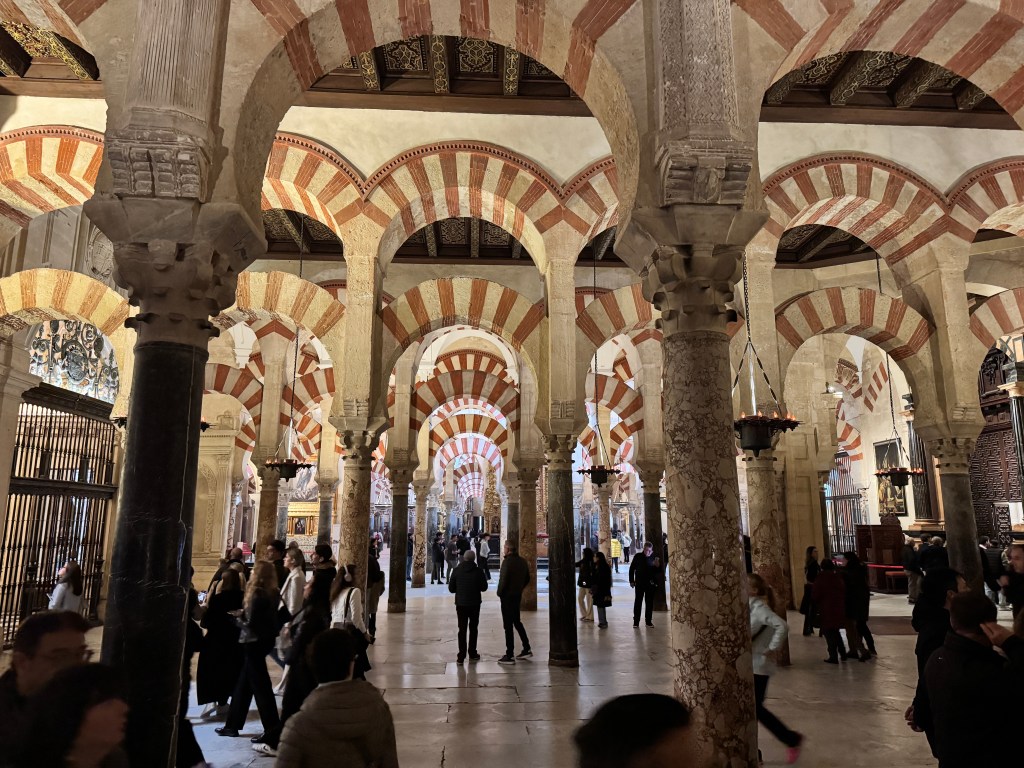
Stepping inside feels like entering a forest of columns. Double arches stretch high above, letting in light and supporting the vaulted roof. There are said to be 850 of these columns. Thankfully, when the Christians took it over, they built around the existing structure rather than on top of it. The ornate Christian additions only seem to enhance its beauty, turning the space into something quite unique and, I think, more powerful as a place of worship. It really is extraordinary.
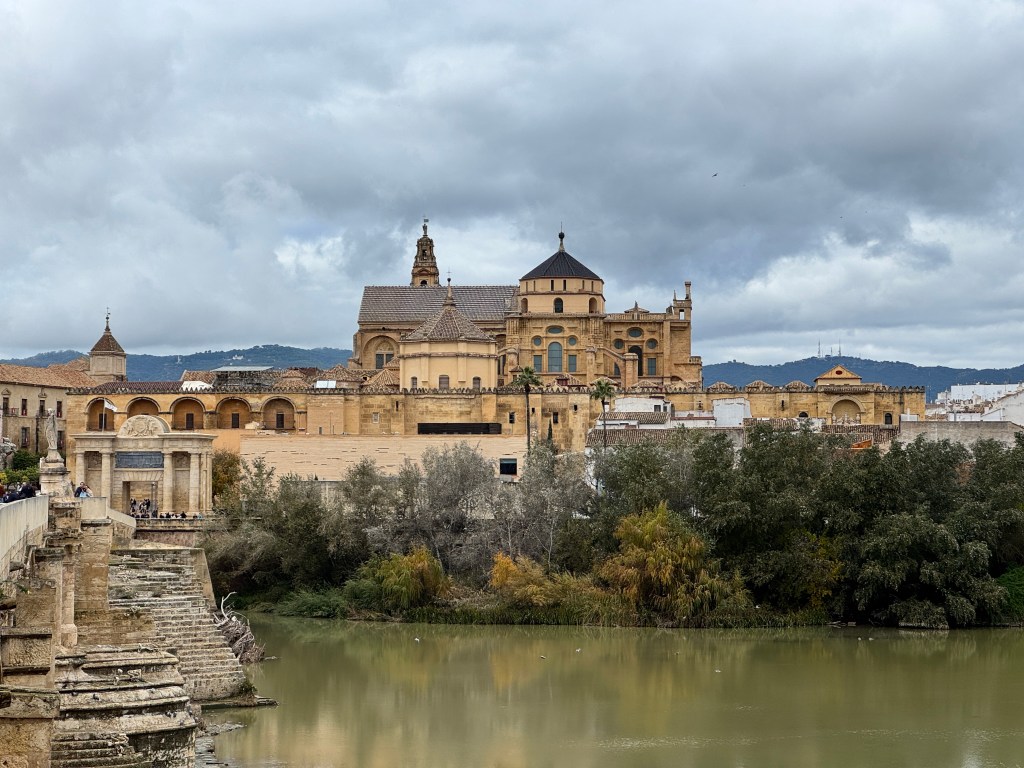
Afterwards, we crossed the Roman bridge over the Guadalquivir River to take in views back across the old town before settling into a long, leisurely lunch.
Back in Seville, we had one final surprise. As part of the Constitution Day celebrations, there was a performance of “The Barber of Seville” at the long sold-out theatre. Ever the optimist, I’d convinced Rachel and Mum that sometimes people don’t turn up, so we went anyway. As luck would have it, three seats became available when a few local dignitaries failed to appear. It wasn’t a full version of Rossini’s opera, but it didn’t matter. Even performed in Spanish, the comedy wasn’t lost on us. Although Figaro’s aria was missing, the singers and the energetic cast were all fantastic. The 20-piece orchestra was brilliant too.
It was a wonderful way to end what has been a thoroughly enjoyable Spanish adventure.





excellent still following you 🙂 happy festive season to you all Steve
LikeLike