I’ll be honest, I was selectively sociable before starting this chapter of my life. Unlike Rachel, who’s always enjoyed chatting with anyone and everyone, I’d often avoid eye contact if I didn’t feel like interacting, just to sidestep a conversation.
Now though, I make a point, both at home and away, to acknowledge people as I go about my day, and it’s incredibly rewarding. After a month of greeting most of the villagers daily, they’ve become eager to offer us tips, tricks, and little bits of local knowledge. We’ve gradually gotten to know each other, and it’s a connection I never would have made in the past.
We’re still “temple running.” There’s something about these ancient places, a kind of energy, that’s become a bit addictive… or maybe that’s just us. It helps that each site seems to be tucked into truly stunning, often tranquil surroundings. But getting there is half the fun: winding through sleepy villages (many of which appear abandoned, though it’s usually just the quiet afternoon lull), cruising along new, mostly empty freeways, or navigating narrow roads that cling to the coastline. Before we know it, we’ve driven two to three hours without even realizing.
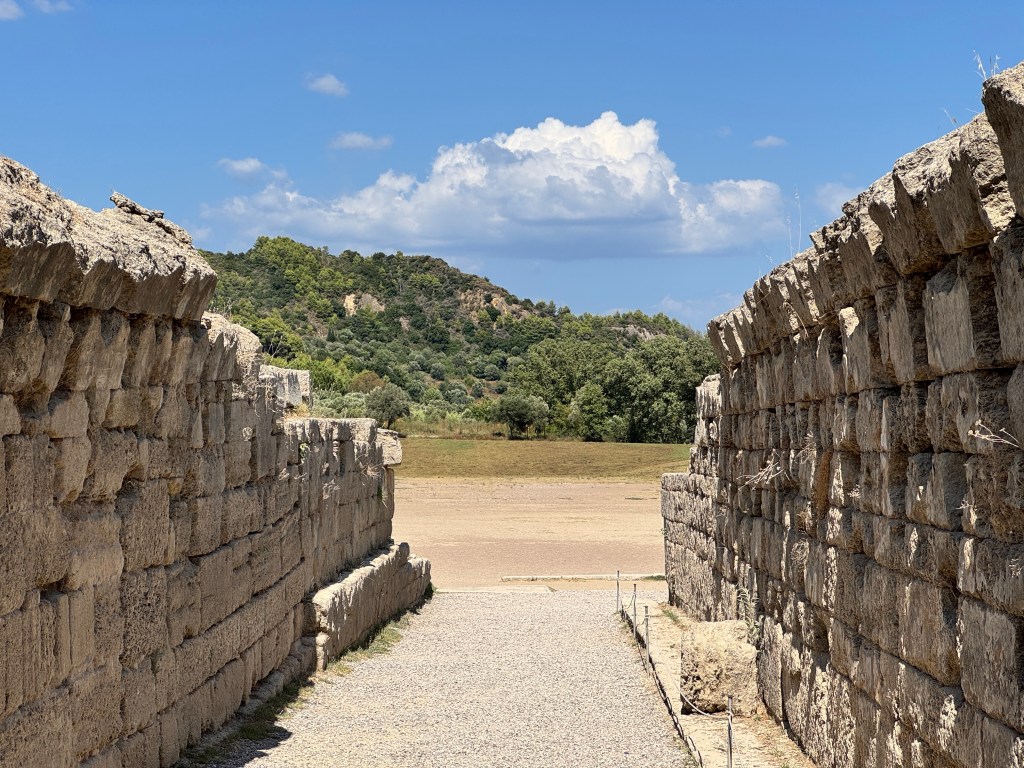
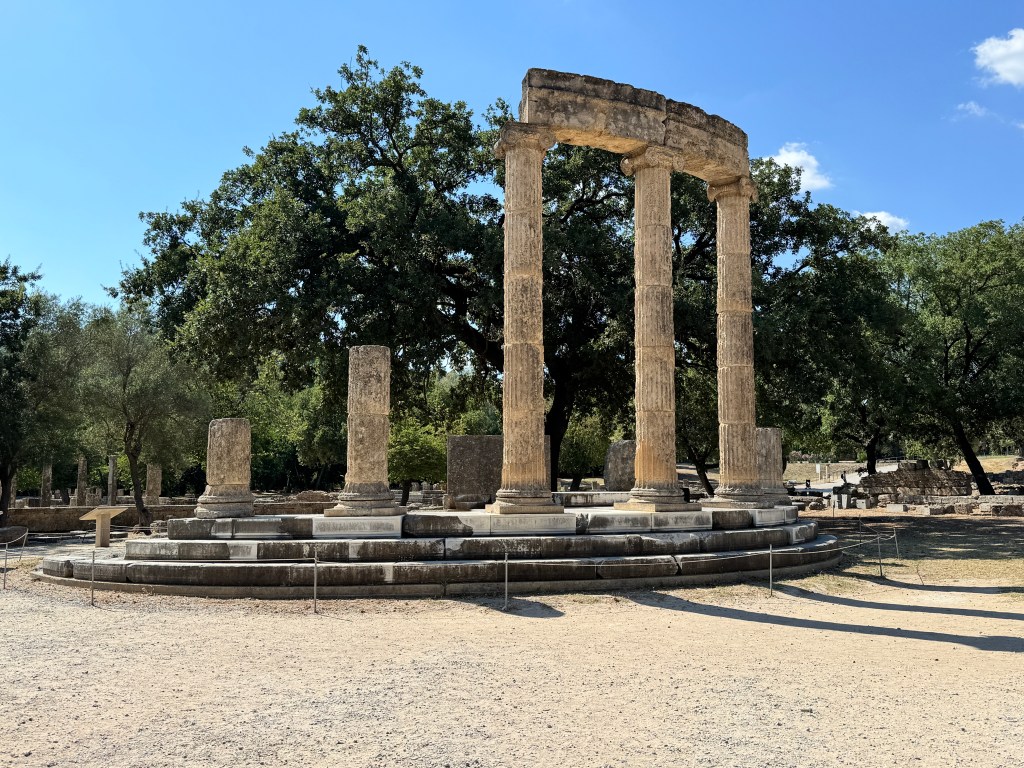
Olympia lies on the opposite side of the Peloponnese from us, so we set off in the late morning, making our way through Astros and onto the A7 for the first 120km, then switching to more scenic village roads for the final 60km. We arrived about two and a half hours later and found a spot under the trees for our little car before heading into Zeus’s sanctuary, created between the 10th and 8th centuries BC.
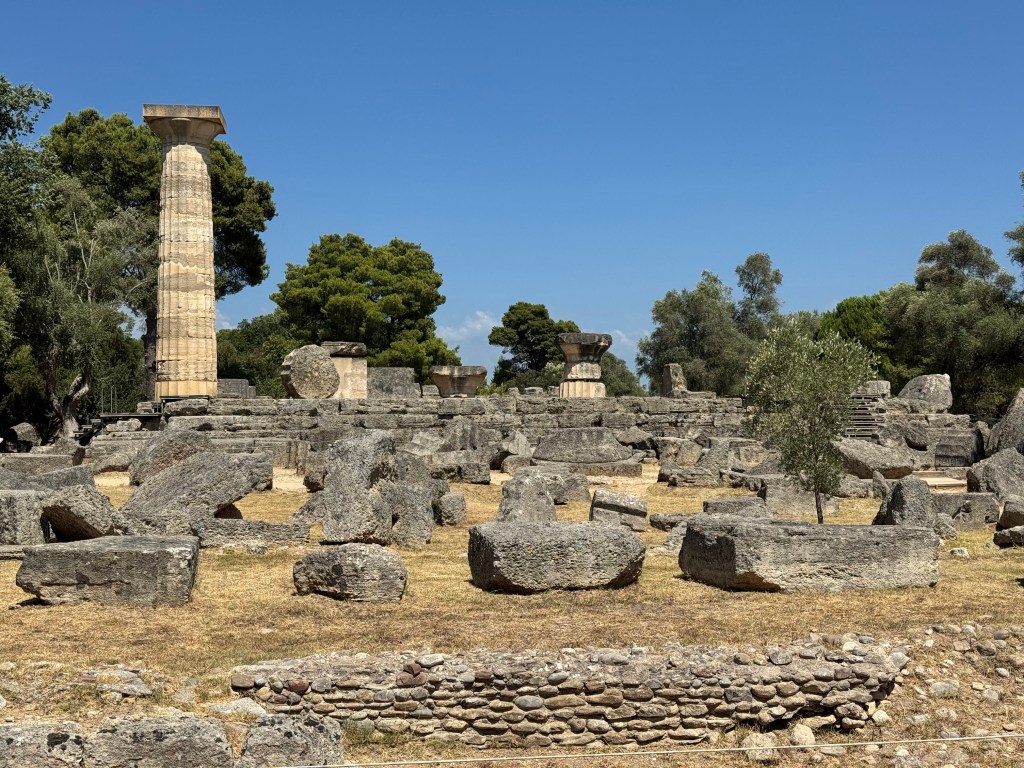
Olympia is undoubtedly one of the world’s most significant ancient sites. Every four years, the Olympic flame is still ceremonially lit here, next to the altar in front of the Temple of Hera, using a parabolic mirror. Though much of the site was destroyed by earthquakes, there’s no denying the powerful energy that still lingers, especially as you approach the remains of the Temple of Zeus.
We spent hours wandering the grounds before heading into the museum, which is beautifully curated and full of treasures unearthed from the site, from the remarkable statue of Hermes carrying Dionysus to the reconstructed eastern and western pediments, each telling its own mythological story. A great day.
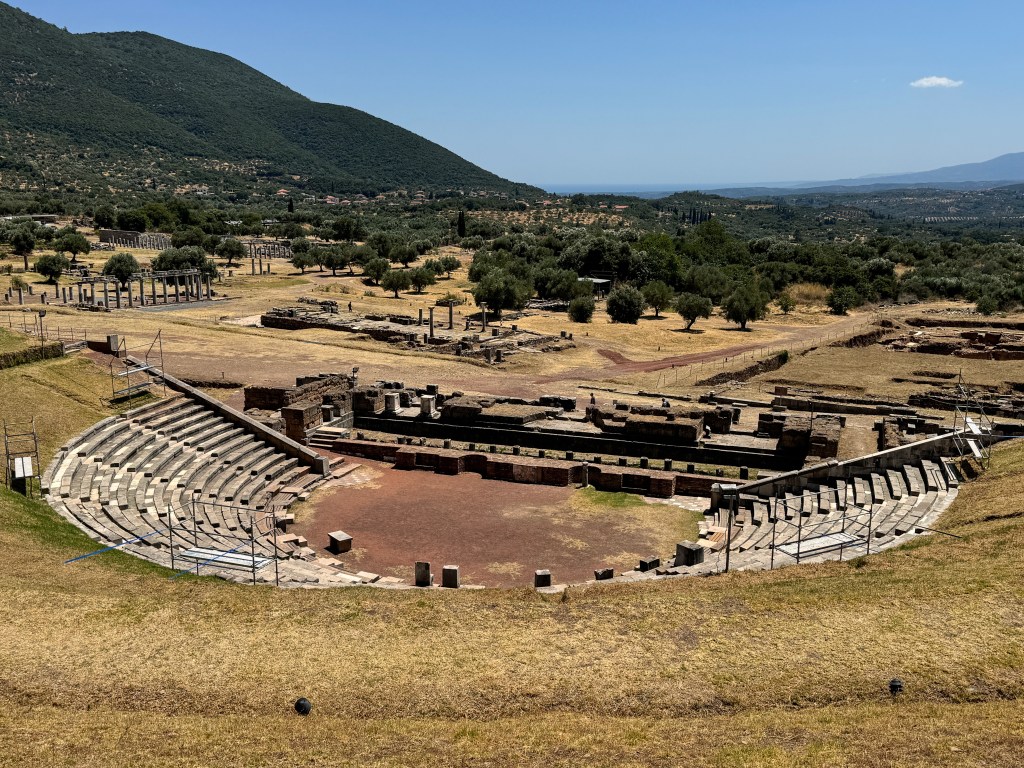
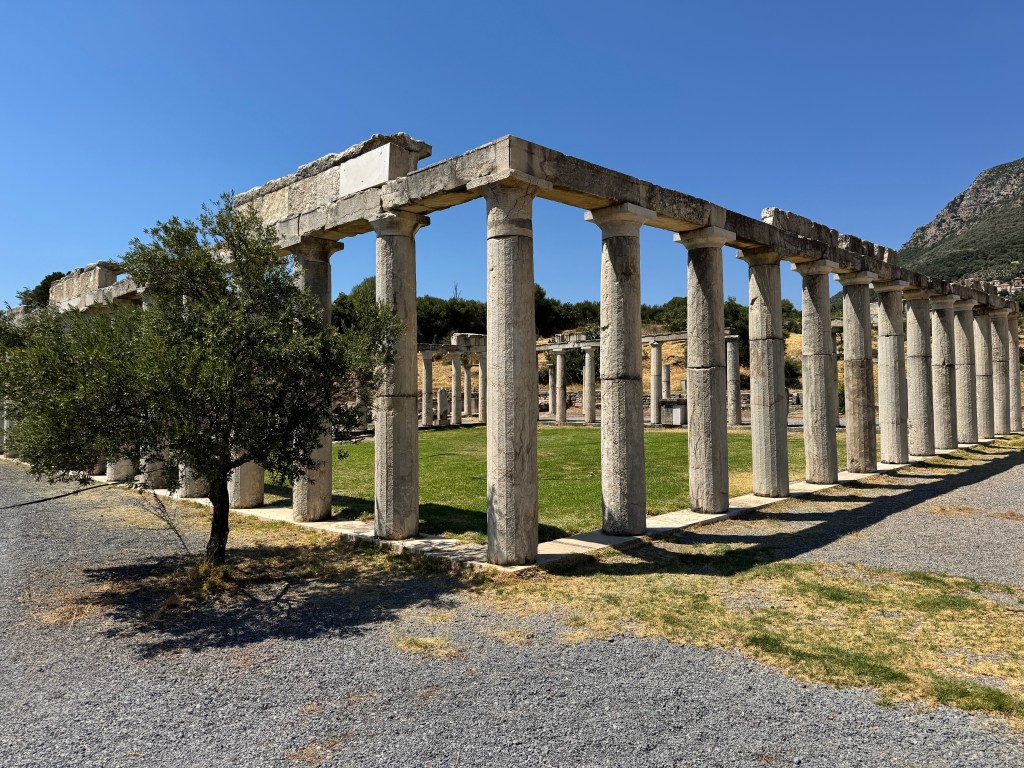
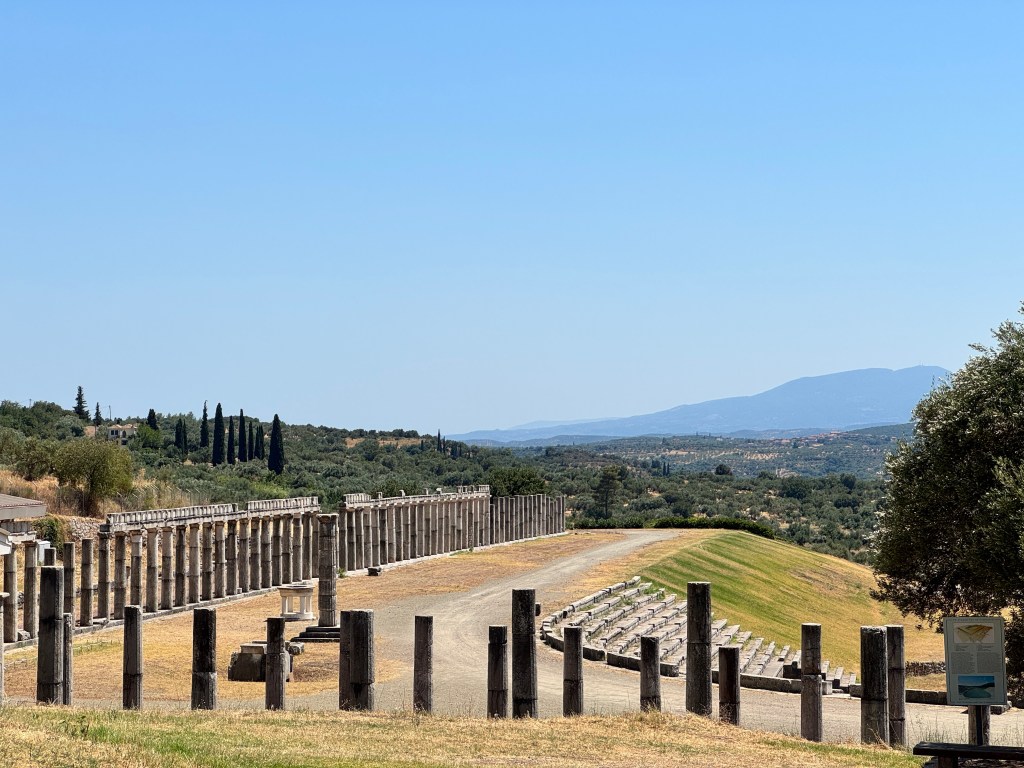
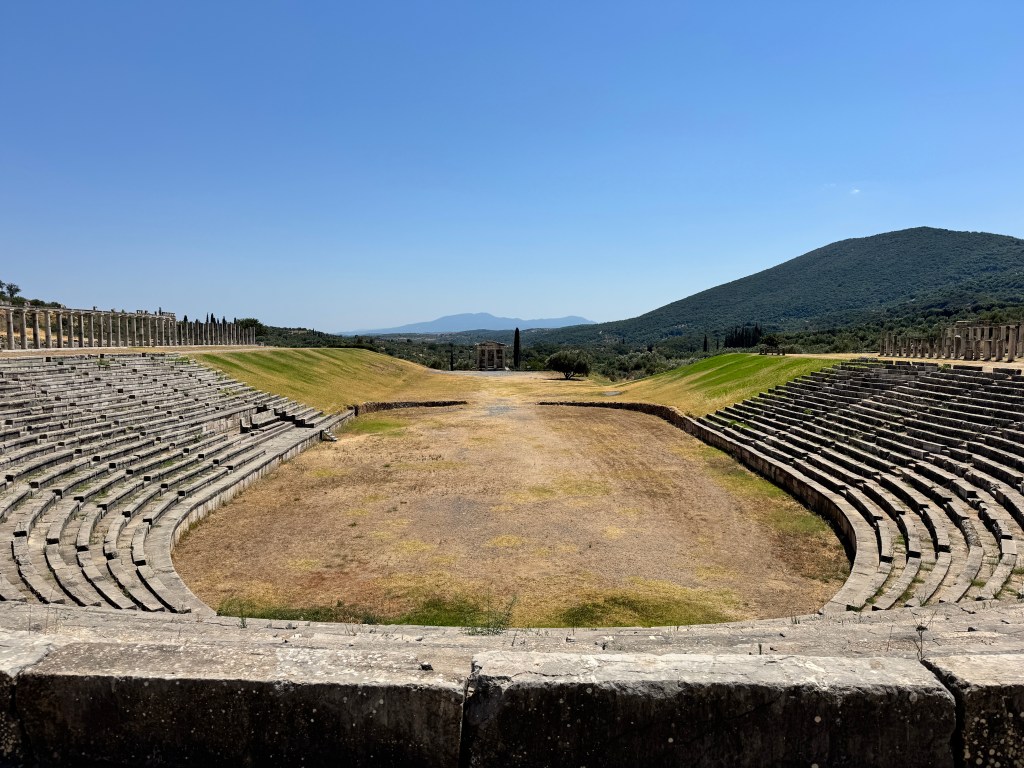
Another two-hour drive brought us to a different valley in the western Peloponnese: Ancient Messene, which may well be Greece’s best-preserved ancient city. Founded during the Bronze Age, it fell under Spartan control, was later freed by the Thebans, and eventually became part of the Roman Empire.
This site, too, has a strong aura. Unlike Olympia, there weren’t many olive trees offering shade, and although similar in scale, it was tougher to walk around in the heat, but well worth the effort. It was fascinating to see how the city had been repurposed over time: first a religious center, then political, military, and finally an artistic hub under Roman rule.
You can’t help but wonder how people from different eras would have interacted if they had coexisted. What a meeting of minds that would have been.
On our way back to Xiropigado, we made a slight detour for dinner in the old town of Kalamata, deep in the region famed for its olives. It was a little rushed, but a nice way to round off the day.


 Dream Chasers