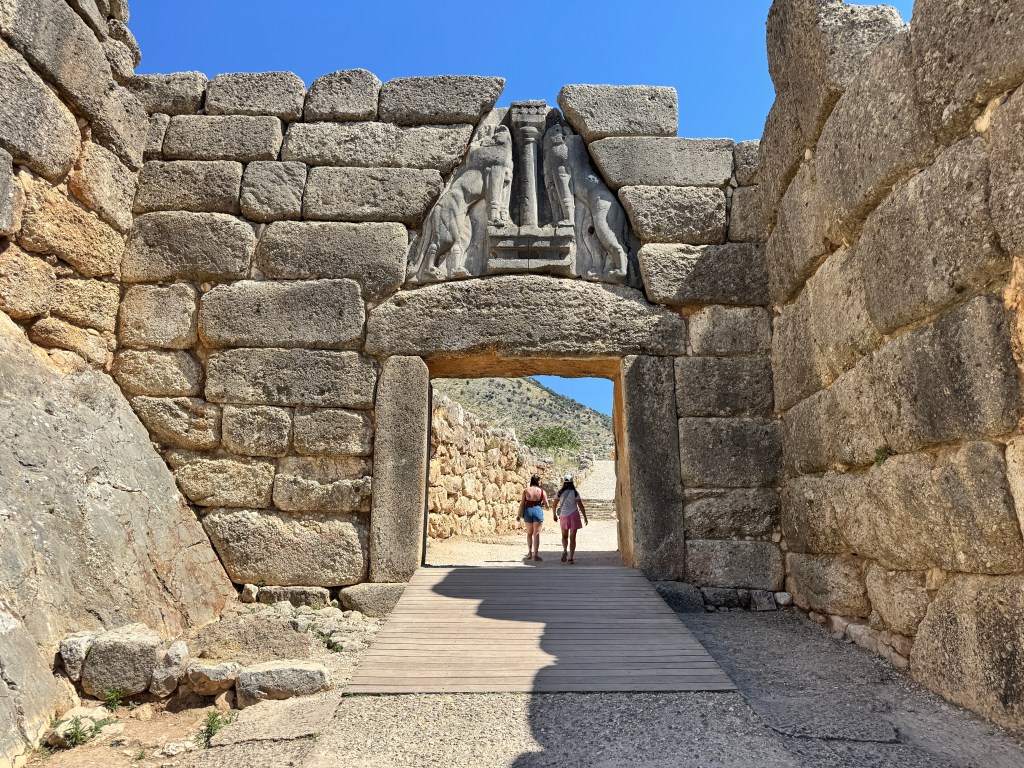
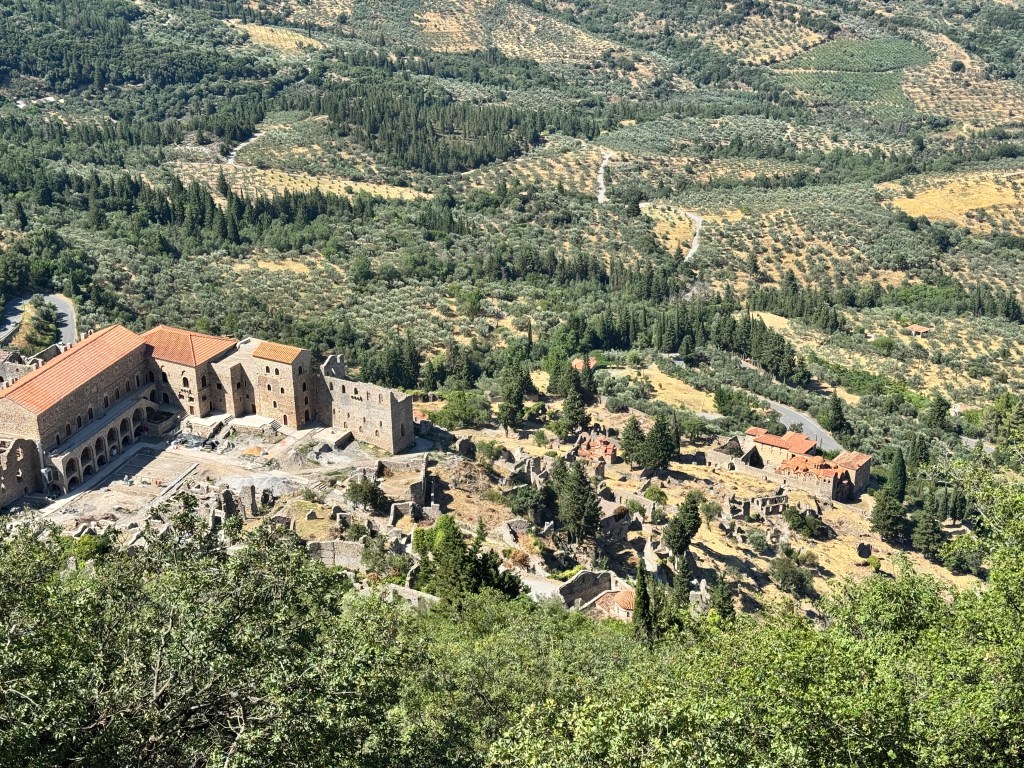
We had originally planned to move up and across into Albania, but the pull of the Peloponnese has proven too strong—so here we are.
We’ve settled into a beach routine: yoga and some stretching first thing in the morning, followed by a slow amble down the hill to our very welcoming swim spot. I’m a creature of habit, so I follow the same 1.5km swim route every morning. After a good swim, we spend about an hour or so on the stony beach catching a few rays before heading back up to the apartment around 11-ish. The middle of the day has gotten a bit too hot for us, unless we’re out exploring, which we’ve been doing most weekends.
The Mycenaeans, who predated the Athenians, were a formidable force that dominated much of southern Greece around the second millennium BC. In the northeastern corner, the famous Lion Gate forms the entrance to Agamemnon’s fortress and a royal palace that once overlooked the now-ruined city. On our travels, we’ve seen some incredibly elaborate architecture, but places like Mycenae stand out as the early foundations upon which future civilizations were built and improved.
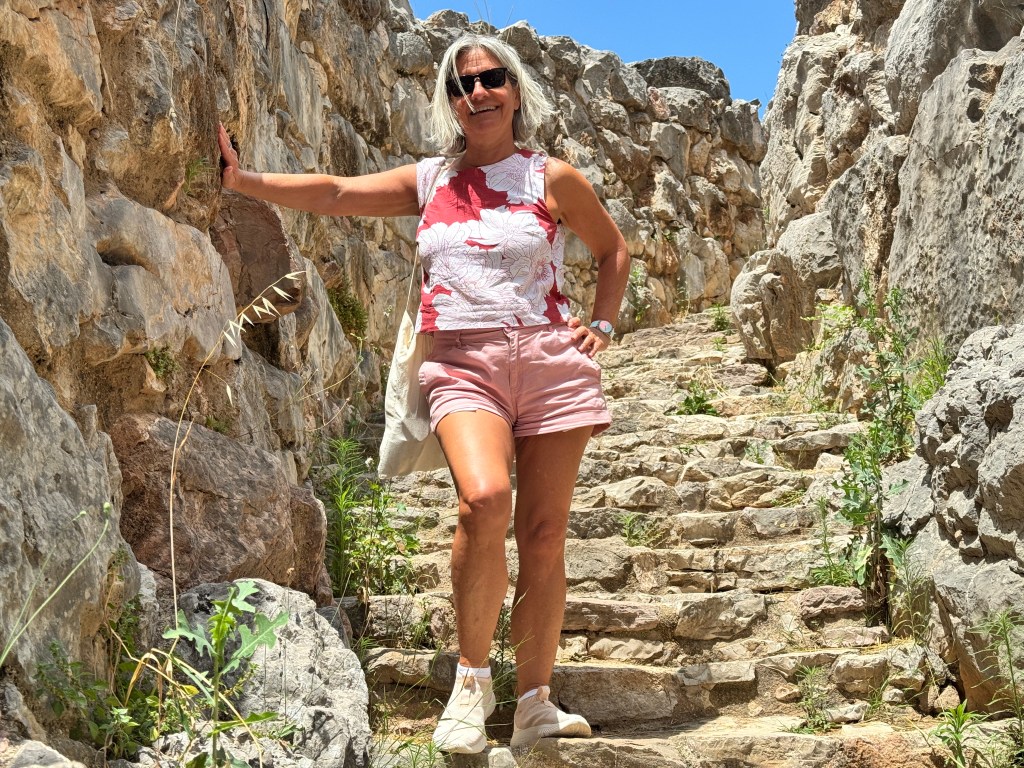
Barring the occasional olive tree (for which the region is famous), there wasn’t much shade at the site. And as always, we seemed to be strolling through the ruins in blazing sunshine. Thankfully, Rachel now travels with an umbrella, and I’ve finally adopted a hat—a first for me!
What’s fun, too, are the people we meet, full of enthusiasm and wonder, as they share their own adventures with us. We love that energy.
Heading toward Sparta took us eastward, into the foothills of Mount Taygetos. Sadly, the ancient city, once powerful and dominant, went into steady decline after a series of battles and was ultimately leveled by a powerful earthquake in the 4th century BC. In the 19th century, a new city was built over the ancient ruins.
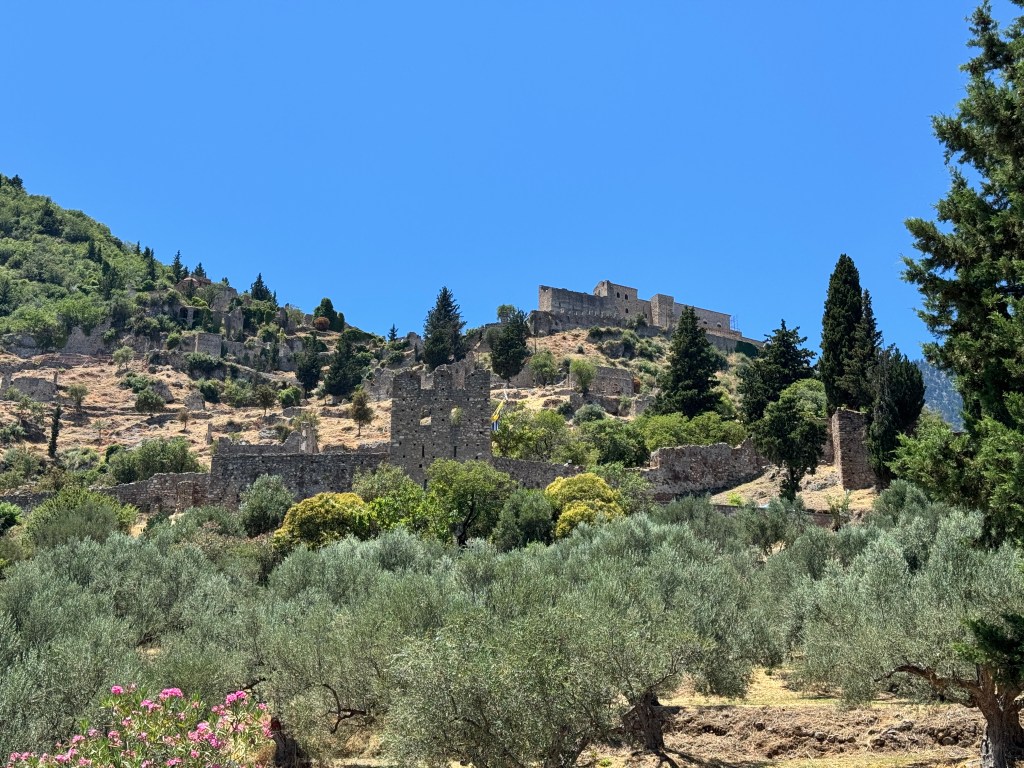
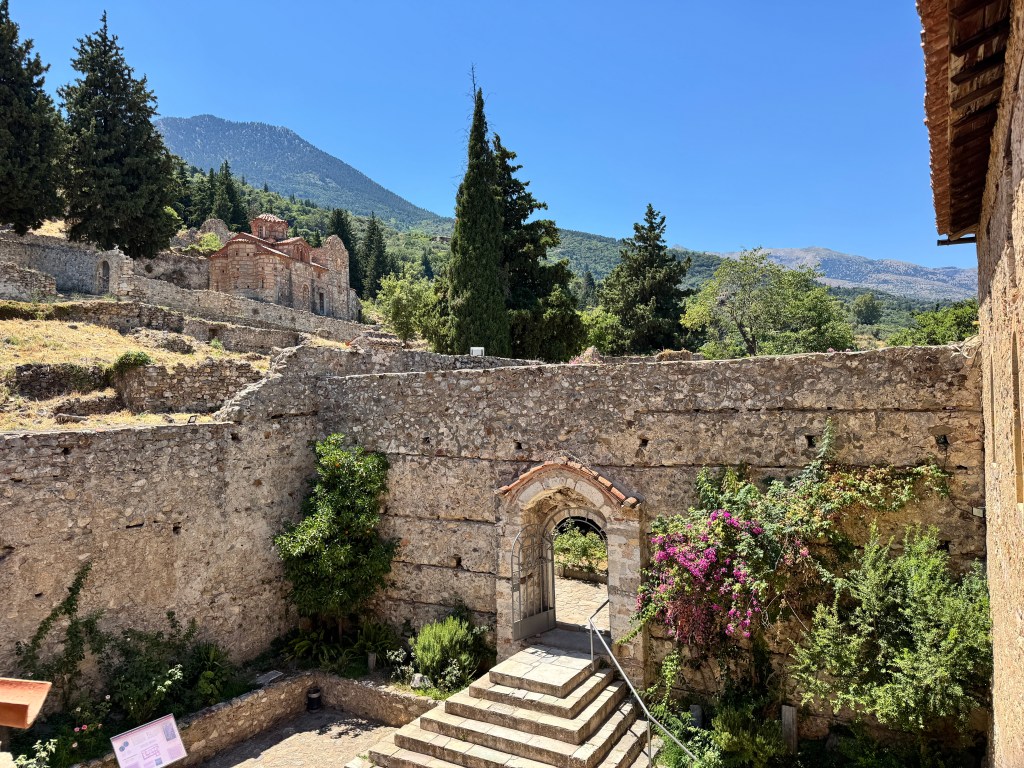
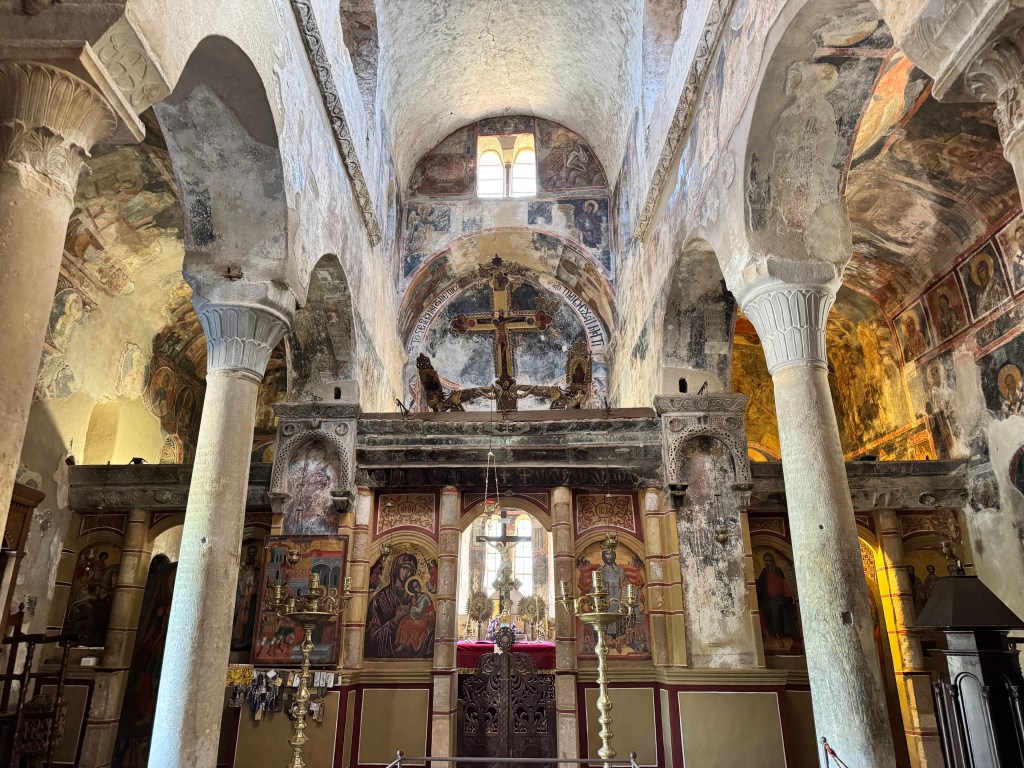
About 5 kilometers from there, high in the mountains, is Mystras, a medieval Byzantine settlement. Many of the buildings remain intact, with beautiful and surprisingly well-preserved artwork inside the numerous ecclesiastical structures. The site is laid out across three levels, with a fortress occupying the highest point. The lower level includes the remains of the palace and several impressive churches, both inside and out. The mid-level is largely taken up by a sprawling monastery, where some of the dignitaries would have once lived.
It was a good challenge wandering around this medieval center, and we happily spent most of the day exploring and trying to get a sense of what life would have been like.
Not that I’m usually a fan of guides, as I prefer to experience things with my own eyes, but what the Greeks do so well is offer warm, genuine interaction at these ancient sites. If you’re curious, someone is always willing to share more context and insight. We haven’t experienced that everywhere we’ve traveled, and it’s much appreciated.