We’d decided that we’d missed our window to explore the islands off the mainland—something better suited for spring or autumn. So, after quite a bit of deliberation, we chose to stay closer to the mainland and head west along the coast into the Peloponnese. Inspired in part by Race Around the World (which we’d watched back in the UK), and with help from our new host, we made our way across town to the bus station to catch what turned out to be a very comfortable two-and-a-half-hour ride. The journey followed mostly empty freeways that hugged the coastline, and thanks to the help of another passenger, we even managed to get the driver to drop us off at the top of the road where we were staying.
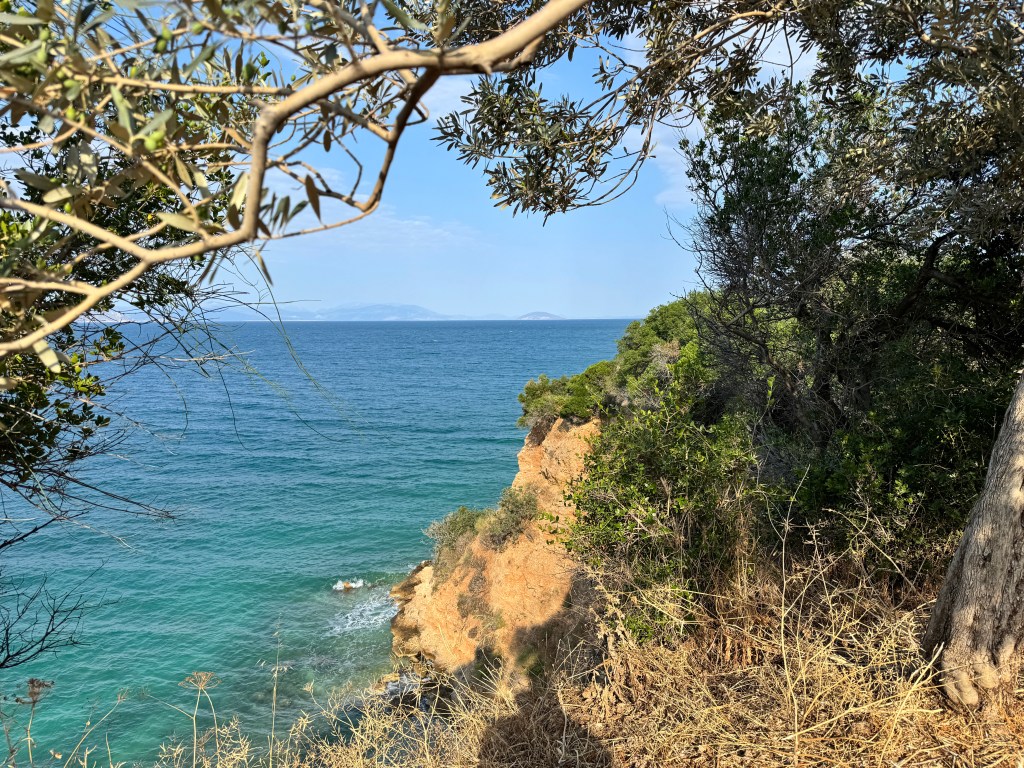
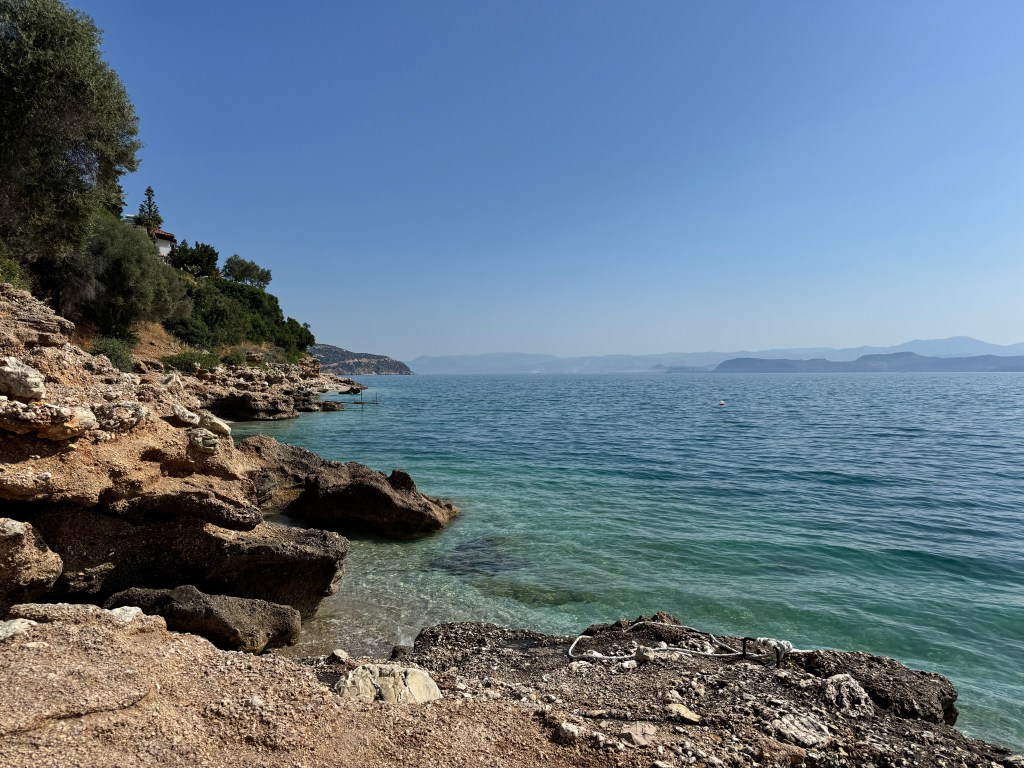
Xiropigado is a small coastal village of about 360 people, perched on the western edge of the Peloponnese, roughly 150 kilometers from Athens. Like the rest of the village, our apartment is built into the eastern slope of Mount Zavista, and we’re only about a 50-meter walk from the sea!
There are a couple of small markets in town, each selling local fruit and vegetables, yogurt, cheeses, and just about everything else we needed. Along the little port area, there are a few restaurants—and that’s about it. It’s quiet, local, and exactly what we were looking for.
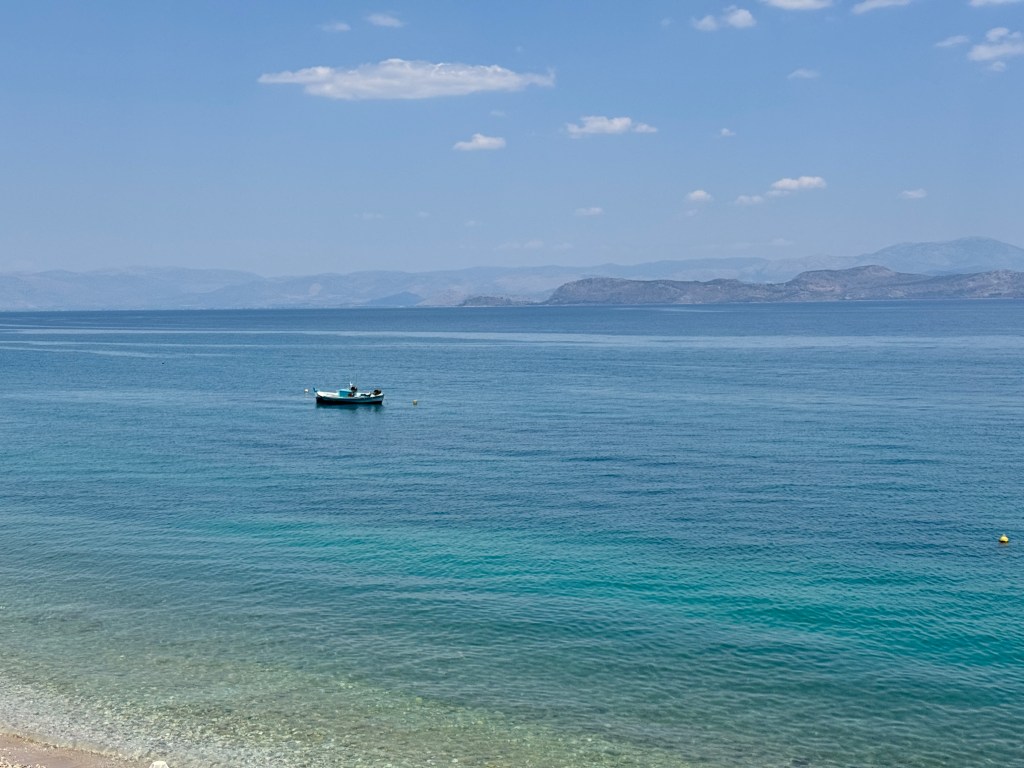
We found a lovely little swimming spot, and over time, we were welcomed by the older locals who come down early each day for a dip. They’ve been eager to practice their English and exchange Greek phrases and local insights with us in return. It’s been a really warm and genuine experience.
There’s so much to see in the Peloponnese, but we’d already been in Xiropigado for nearly two weeks before we managed to secure a rental car from the neighboring town of Astros. That allowed us to begin exploring on weekends.
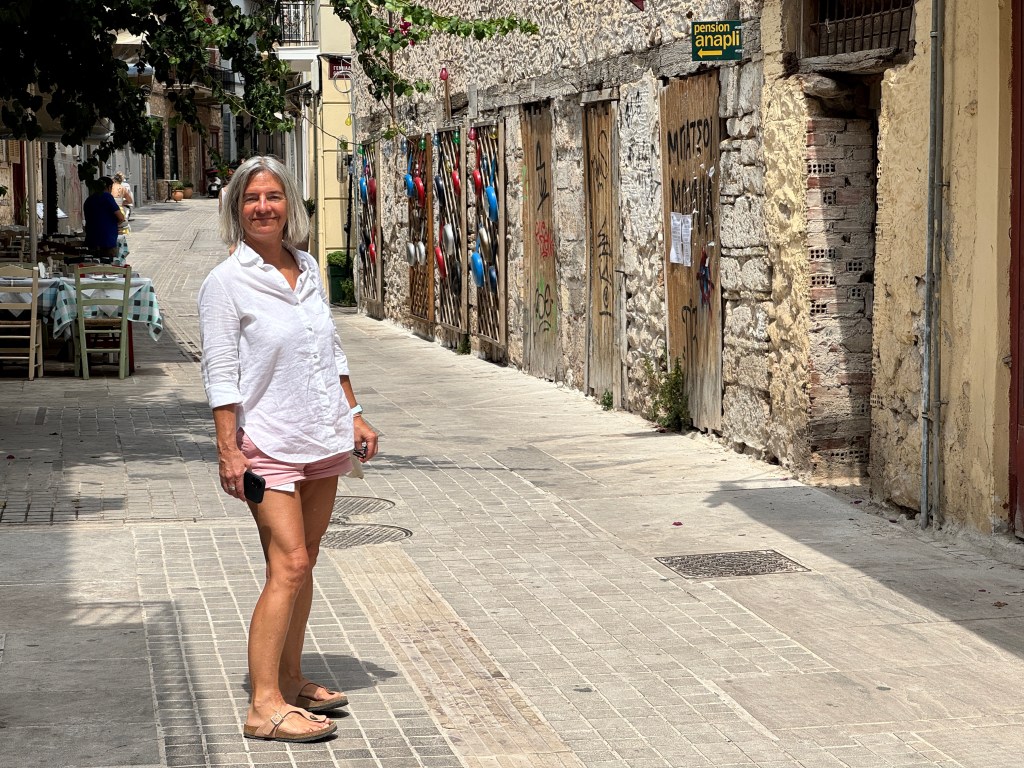
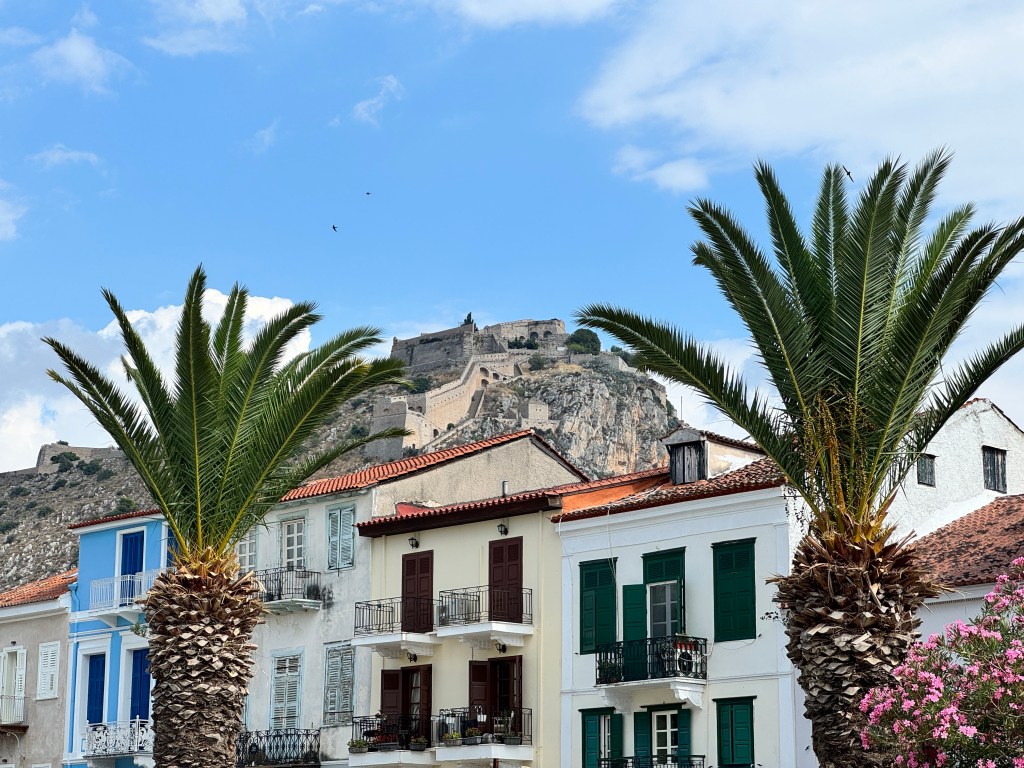
Our first stop was Nafplio, located on the eastern side of the peninsula. When Greece became an independent state in the early 1820s, Nafplio was its first capital. But for me, it’s the old Venetian architecture that holds the most charm—its piazzas and historic buildings watched over by not one but two impressive fortresses clinging to the hills above. There’s even a small Venetian fortress, Bourtzi, sitting in the middle of the harbor, which only adds to the fairytale feel of the town.
We explored the cobbled streets and stopped in at a restaurant we’d had our eye on earlier—it didn’t disappoint.
Next, we visited Epidaurus, located in the northeastern Peloponnese and surrounded by towering spruce-covered hills. The ancient theater there is still used today for performances and is renowned for its acoustics. Epidaurus was one of the earliest examples of a healing center, operating for over a thousand years and even employing early forms of anesthesia. Unsurprisingly, it’s closely linked to Asclepius, the Greek god of health.


 Dream Chasers