There was a bus to São Paulo, but we didn’t fancy it. So after a final coffee in town, and one last visit to the live music beach for me, we had a quick shower, grabbed something to eat, and set off in our transfer.
For the first couple of hours we stayed close to the coastline, under the familiar canopy of the Atlantic forest, making our way towards the fabulously named Ubatuba and its beautiful beaches. It was somewhere we had wanted to visit, but ran out of time.
Not long after, we climbed up into the clouds, crossed a mountain, and turned inland, where the forest began to fall away. Today it covers over 1.2 million square kilometres, which is less than ten percent of its original size, having lost much of its ground to deforestation. It is very sad to see.
In its place are vast open savannahs which might feel empty, were it not for the thousands of termite mounds, many over six feet high, some said to be thousands of years old.
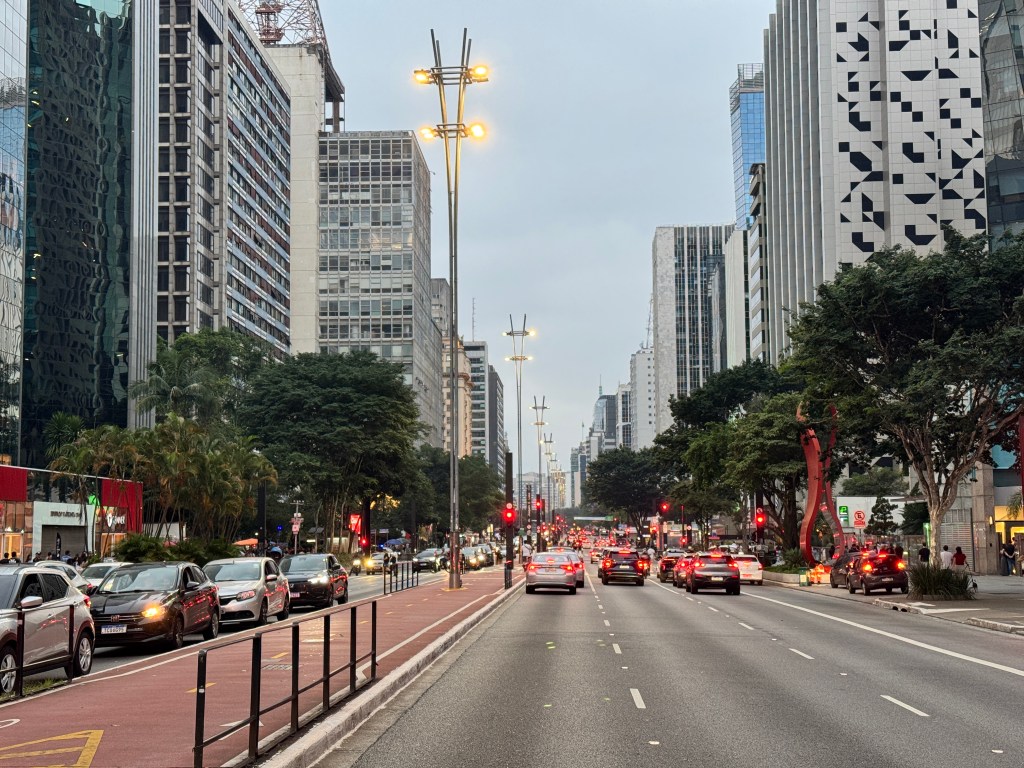
As we moved closer to São Paulo, the volume of traffic increased. The city is known for having some of the worst traffic in the world. We were fortunate, as our side was still moving, unlike the opposite carriageway, which had been at a standstill for what looked like hours. Apparently hundred kilometre traffic jams are not uncommon here.
At around 6:30pm, about five hours after setting off, our driver dropped us close to our hotel just off Avenida Paulista in the Jardins district. It is considered safe area and has that busy city feel.
The following day, after a good night’s sleep, Rachel headed for an early swim and sauna. I love the sea, but pools are not really my thing. After breakfast and some good coffee at a small espresso bar around the corner, we checked into a new hotel and went out to explore.
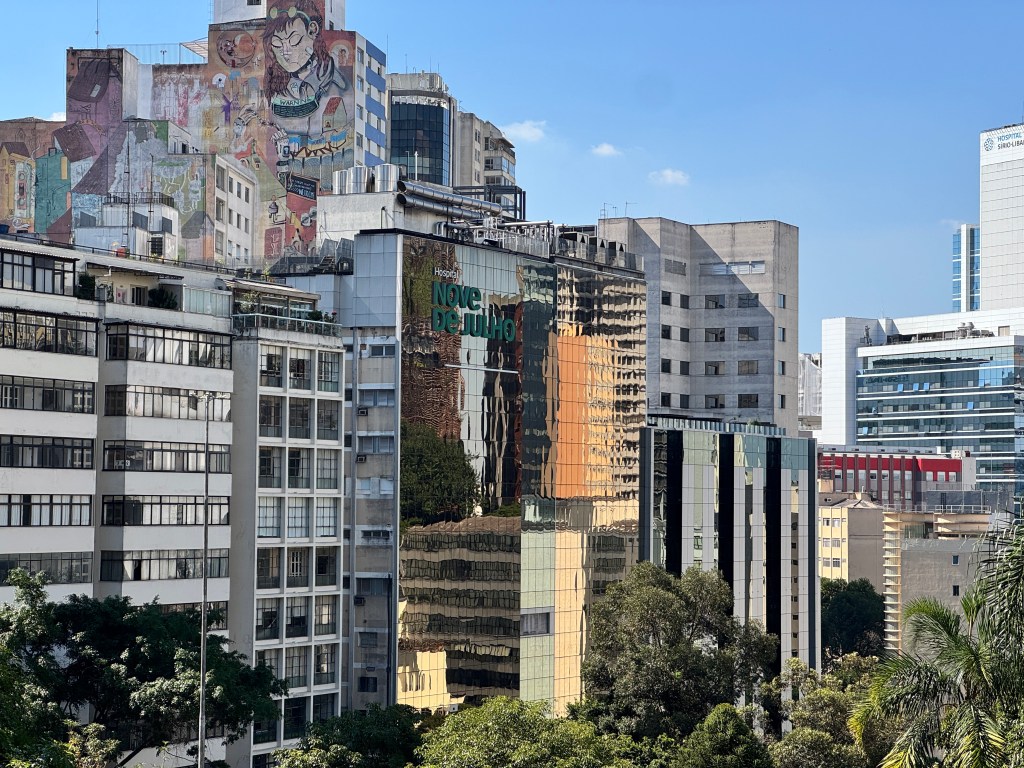
São Paulo has a very different feel to Rio. Rio is all about beaches and nature, whereas here it feels like a true city, full of high rises and people moving with purpose.
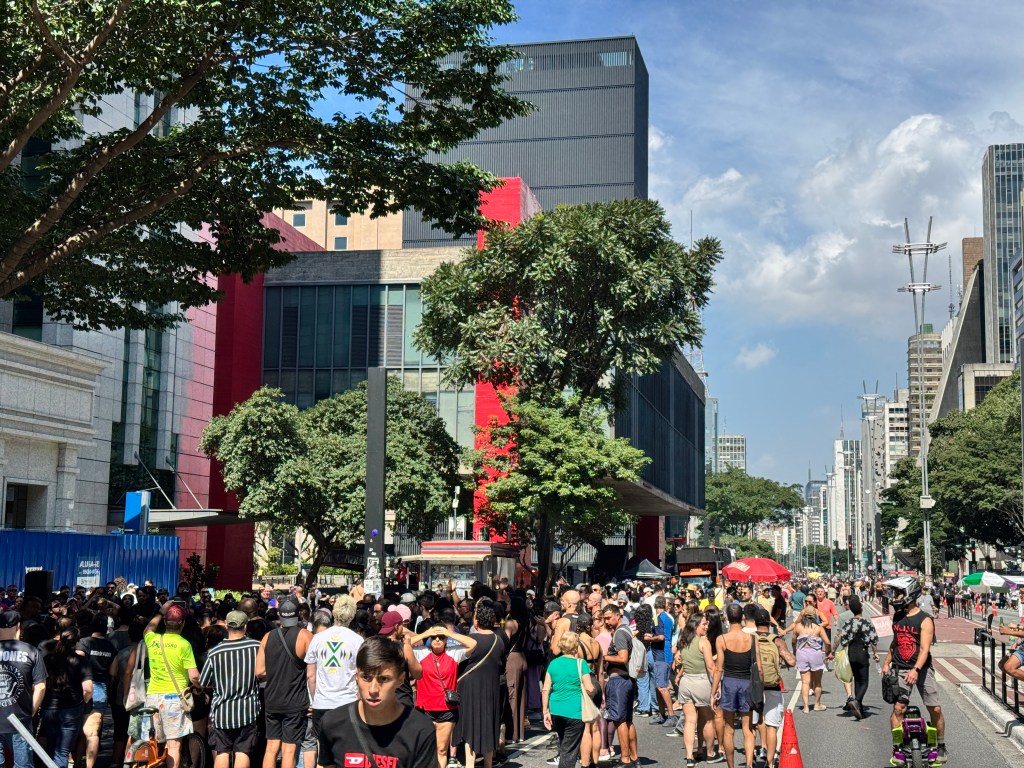
We visited the Museum of Art of São Paulo (MASP). The building itself is striking, a large concrete structure suspended at either end by bright red supports, standing out along the avenue. Inside, it houses a diverse collection of artwork from across South America mainly, which was interesting.
Avenida Paulista runs through the financial and commercial heart of the city. For six days a week it is packed with traffic across six lanes, but on Sundays it is completely pedestrianised. The side streets fill with market stalls and street food vendors, and the whole area takes on a festival atmosphere.
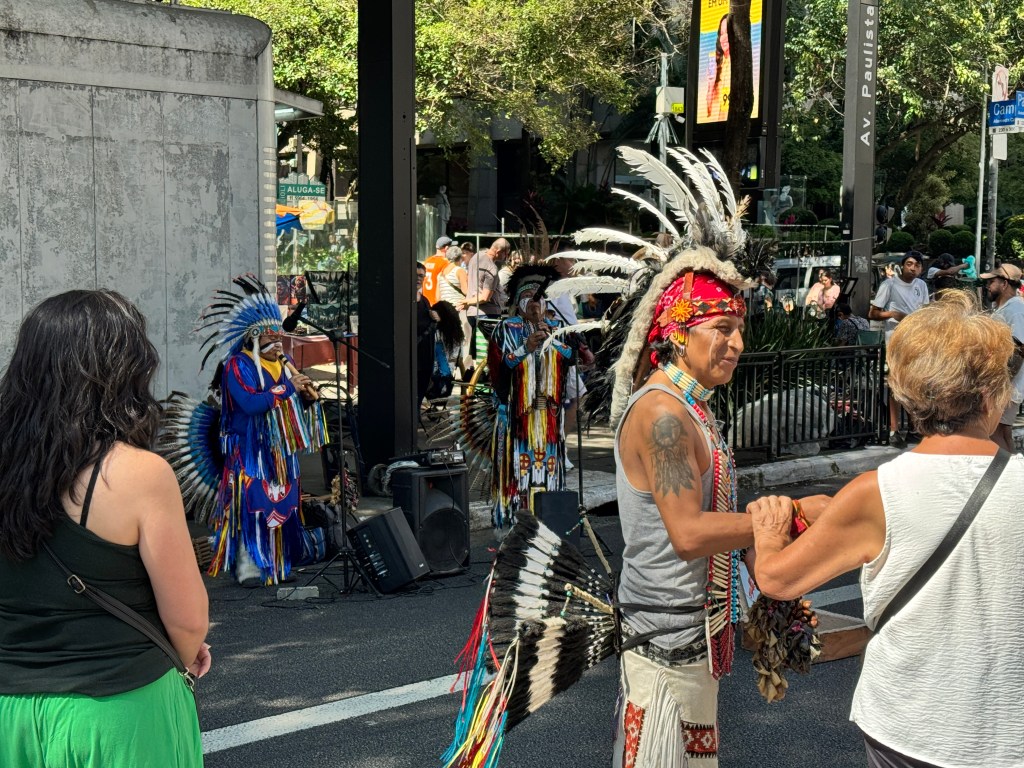
Thousands of people wander up and down the avenue, browsing, eating, and listening to music. Street performers are everywhere. We must have walked for about five hours before finally stopping for something to eat. The food here has been very good.
Back at the hotel, we learned that our flight back to London had been delayed by twelve hours. Instead of leaving at 3pm the next day, we were now departing at 3am the following morning.
Oh well, first world problems.
 Dream Chasers