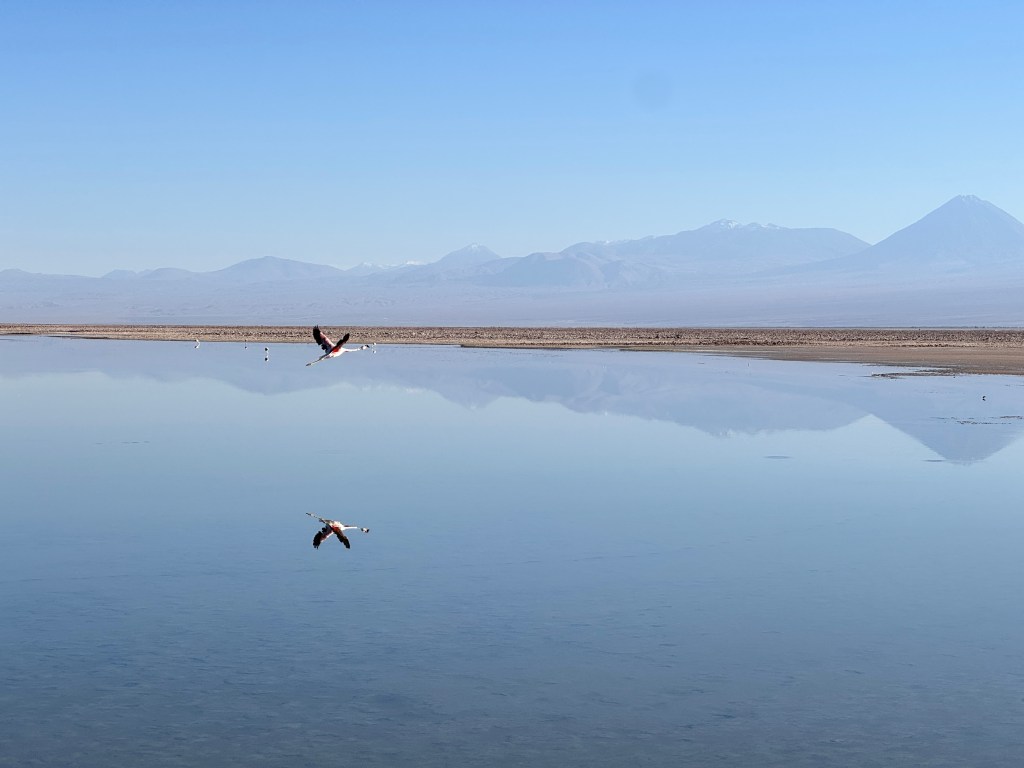
It was an early start for us, with our guide picking us up at 6:30am. The desert is cold in the morning. Our first stop, about an hour from San Pedro, was a small village where breakfast had been prepared. After a short stop, we headed off to our first national park and the Chaxa Lagoon to look at the flamingos. It felt a little random at first, but the salty conditions provide the perfect habitat for the shrimp that make up the flamingos’ staple diet. The flamingos here are white rather than pink, which apparently comes down to what the shrimp feed on.
The Chileans take their custodial responsibility for the land very seriously. Rachel wasn’t allowed to open her sun umbrella yesterday in one of the parks, as it might disturb the birds, and today there was no talking once we were beside the salt lakes.
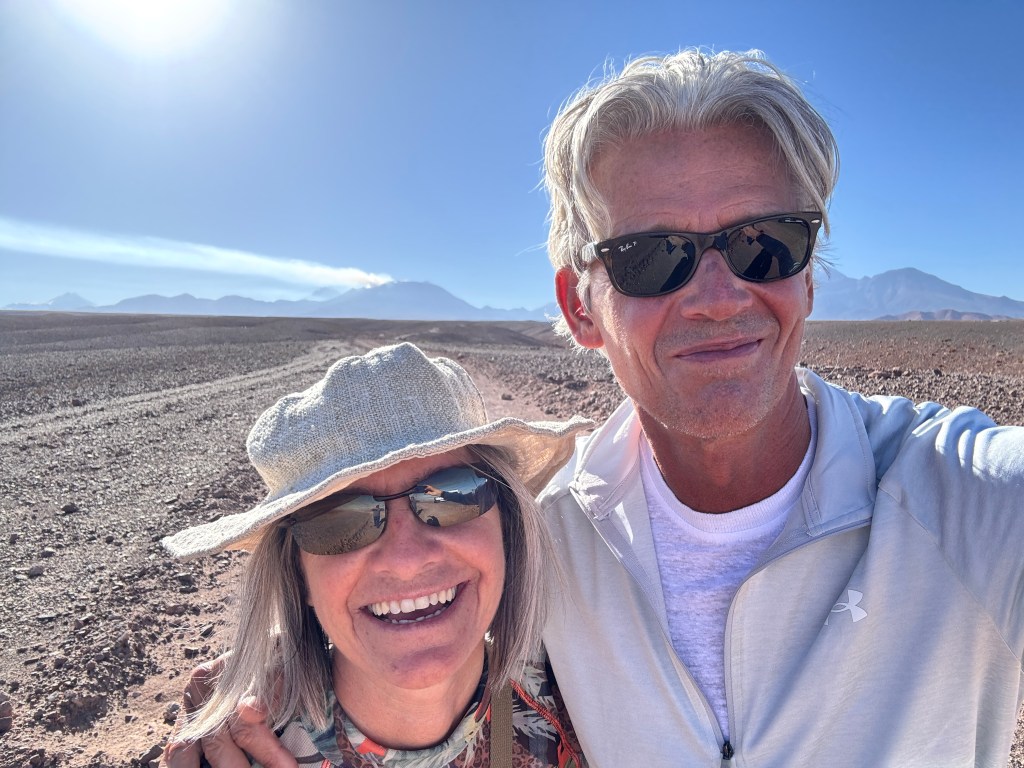
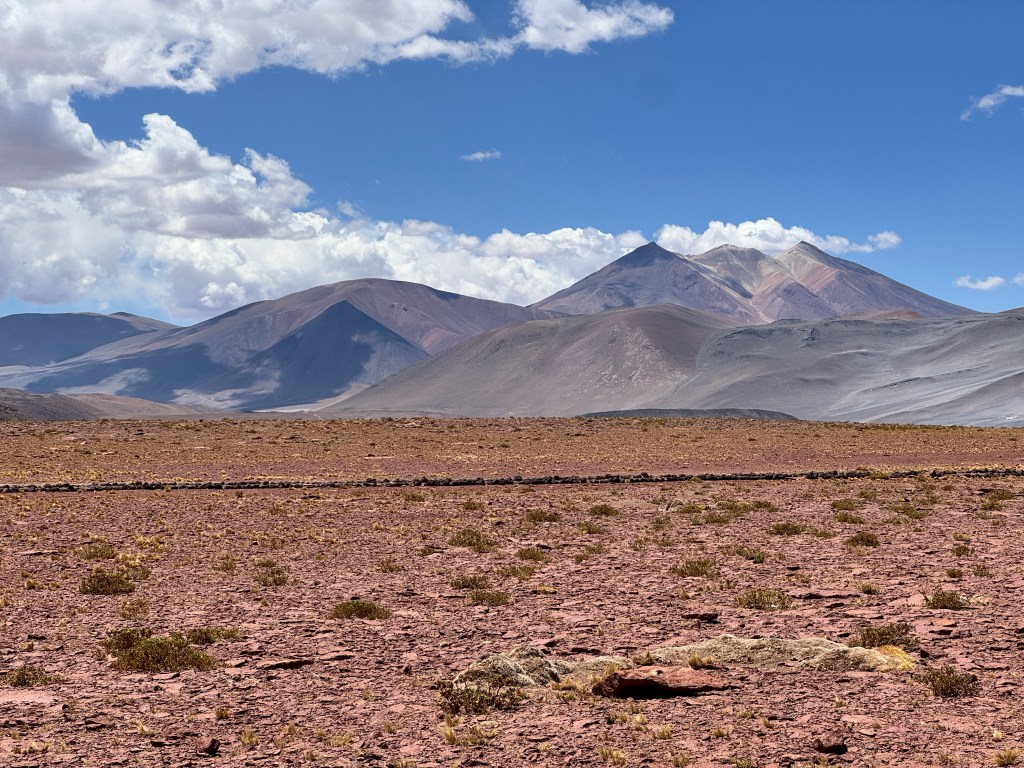
Our guide and driver had become particularly interested in one of the more than ninety volcanoes in the region. This one, known to be the most active in the north and aptly named “Tongue of Fire,” was close enough for a detour, so we all agreed to deviate from the programme to take a closer look. It was an exciting diversion and, perched on higher ground, very humbling. The wind up here always blows in the same direction, so the smoke drifts across the border into Argentina, which the local guys found amusing.
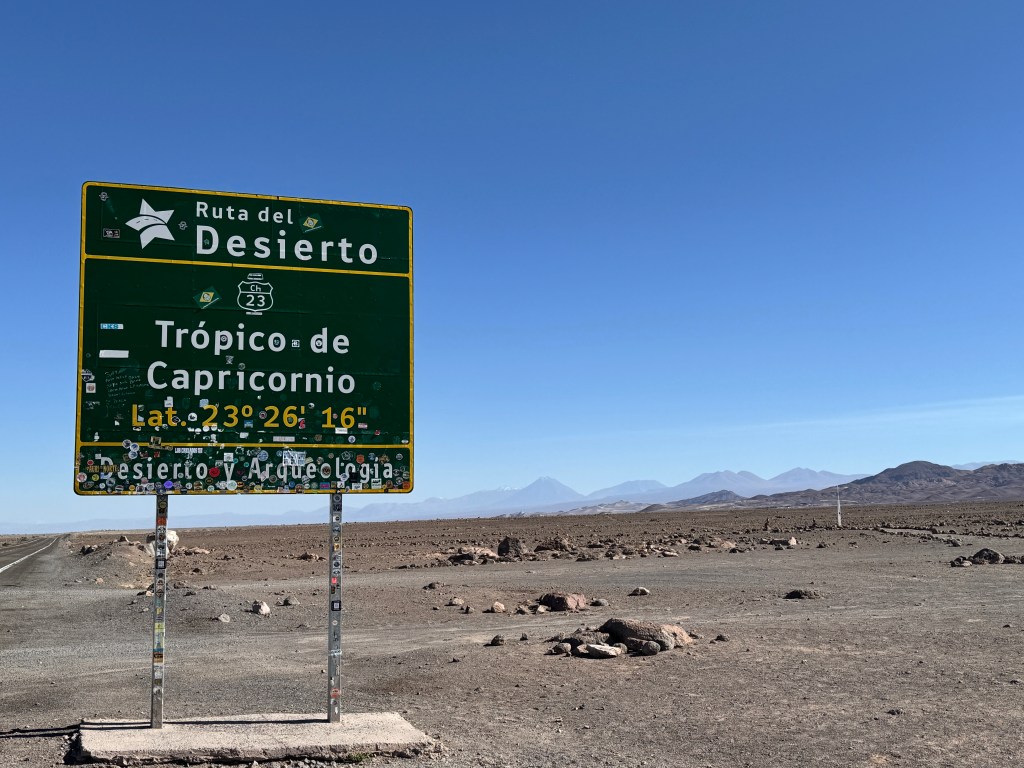
We stopped briefly at the marker for the Tropic of Capricorn, but what Dani, our guide, pointed out was far more interesting. Stone paths created by the Incas, surprisingly intact, run through this harsh terrain and across Chile, with some even stretching all the way to Machu Picchu. It must have been quite a walk.
As we climbed higher into the Andes, the landscape began to change. Small farms appeared in grassy valleys, and we started to see more wildlife. First came wild donkeys, healthy-looking too, then alpacas and llamas, both domesticated by man, which I never knew. Only the vicuñas, which resemble smaller alpacas, are truly wild. We also spotted the occasional emu-like bird and vultures circling overhead.
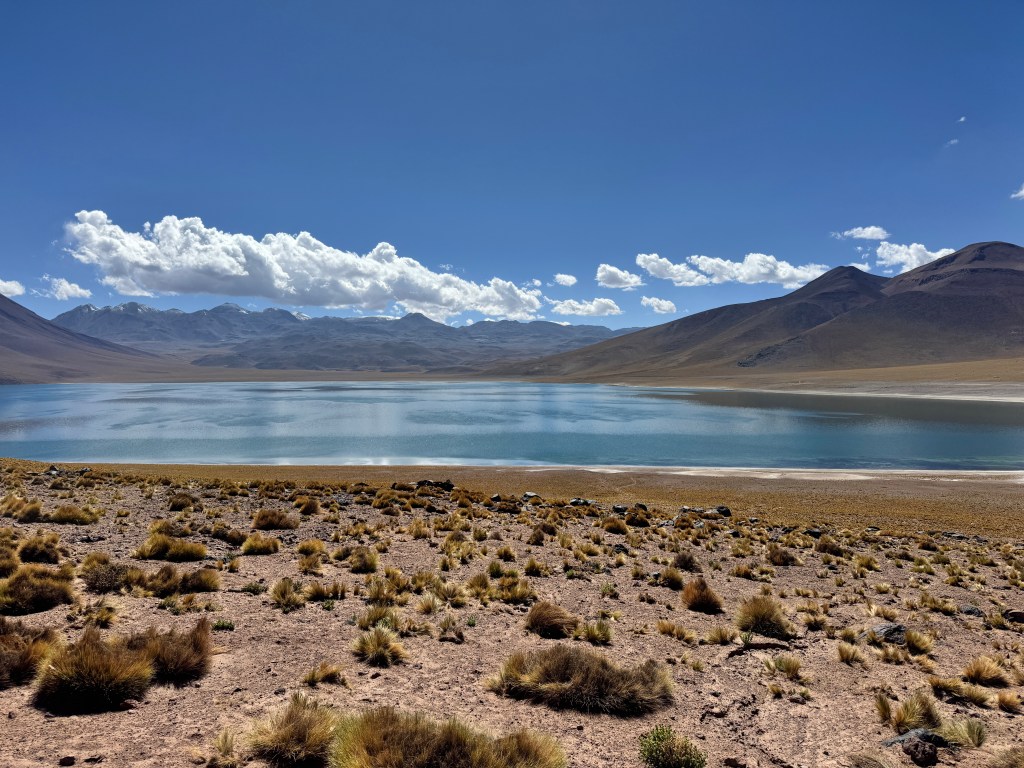
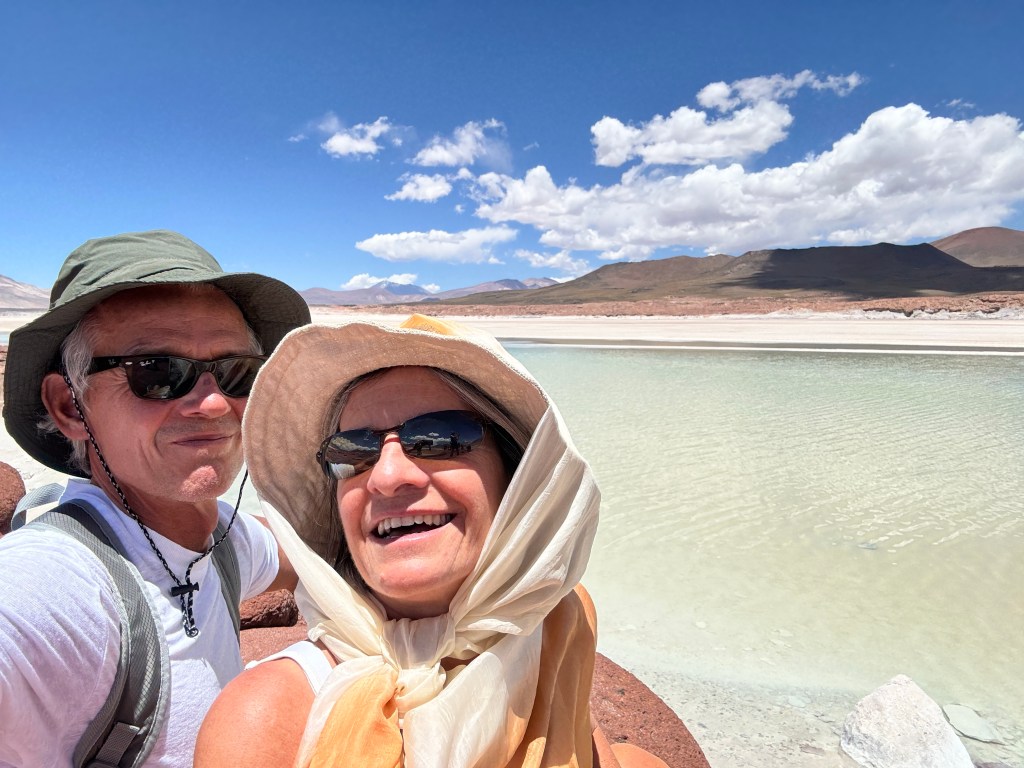
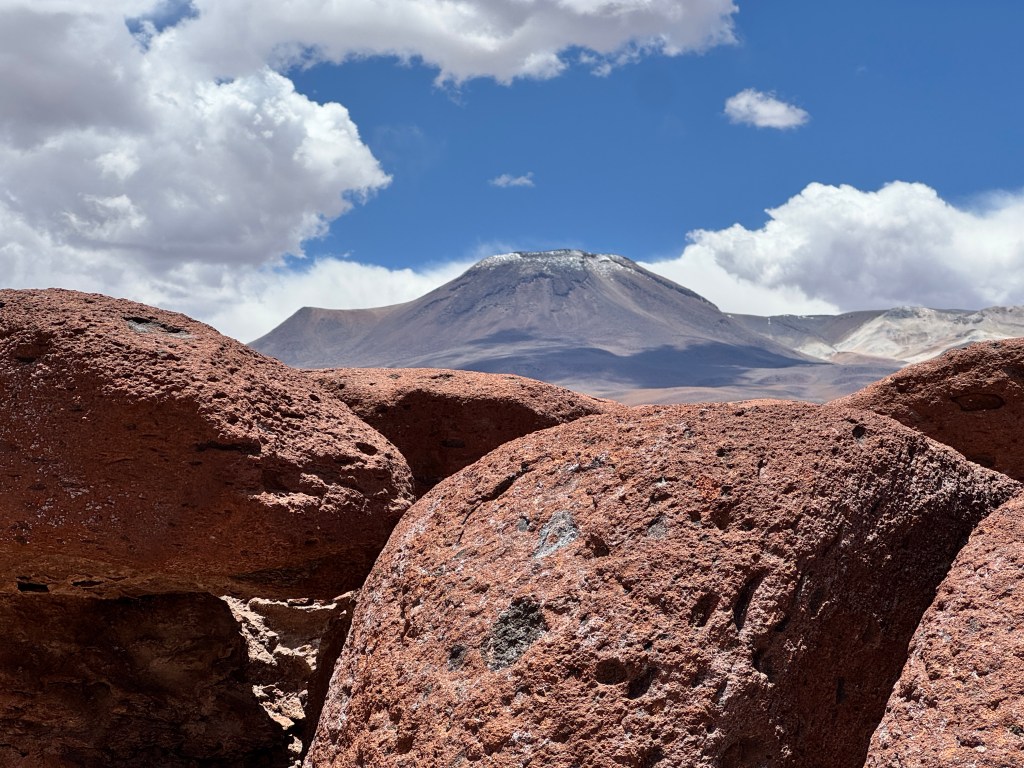
Our final stop was the Salar de Talar, one of the most northerly parks and only a stone’s throw from Bolivia, at around 4,300 metres. We had come to see the surreal Piedras Rojas, the Red Stones, created by volcanic activity and subsequent iron oxidation. There are beautiful bodies of water in the area, rich in minerals, one of which is lithium. The milky deposits, set against the sky, turn the water a soft pastel green.
We spent a good hour wandering among the rocks along the designated red paths, taking time to marvel at the beauty of the place. It was a long day, but we were glad to have spent time in the Andes, mountains that have been ever-present since arriving here in Chile.
 Dream Chasers