Our first move in Santiago wasn’t one of our easiest. We just couldn’t seem to decide where to go next. We’d only booked our initial week’s stay in the city, which has become our usual approach and has mostly worked well, but in Chile it proved more challenging. All the places we wanted to visit made it difficult to find acceptable accommodation with good internet for Rachel.
Chile is the longest country in the world, roughly the width of the US, and it works in reverse to the northern hemisphere. The south, essentially Patagonia, is cold, and the north is roastio. Unfortunately, Patagonia will have to wait for another trip.
After much deliberation, we chose the Atacama Desert. We’d already selected our excursions, and my brilliant contact had organised the rest. I tried to get clever by booking the flights through Booking.com, which offered a discount as I’d also reserved the hotel through them. But when I arranged our airport transfer, I discovered my flights didn’t line up. It turns out I’d mistakenly booked 5–9 March instead of 5–9 February. It could have been worse, but I had to cancel and rebook the flights.
Once we’d checked our luggage and sailed through immigration (domestic flights really are easier), we boarded the plane. About two hours later, we landed in Calama, a purpose-built town, as most are in the Atacama Desert. Shortly after, we were on the transfer bus carving our way through the barren landscape, and about an hour later we arrived in San Pedro de Atacama. It looked like a town made of half-finished buildings, assembled from every material imaginable.
We stayed at La Estación Lodge, on the edge of town—close enough to everything, but far from the noise. The entrance was just a door on a dusty street. Everything here is dusty, but as I kept reminding myself, it’s the desert. We were met by our fantastic host, Xiaolin, who had helped me arrange all our trips.
Our small suite was surprisingly comfortable. We even had air conditioning, which is rare in a place that runs entirely on renewable energy. It felt like we’d been travelling for most of the day, but I’d booked a night walk in the desert. Our guide picked us up along with a young friend of his who was practising her English, and their very well-behaved dog, Caramello. We walked through sand and dried-up riverbeds, learning about the area as we went. Eventually we stopped under the stars and sat around a small fire before heading back and collapsing into bed.
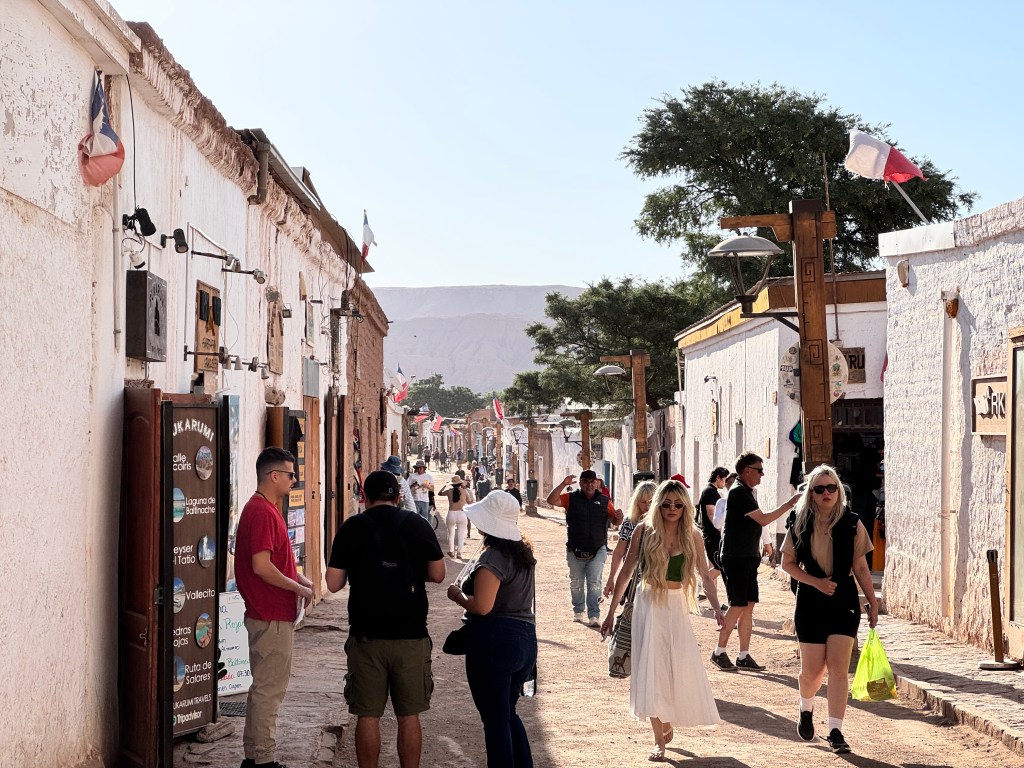
The next morning we had time to ourselves, so we wandered around the small town. At its centre is a church that has stood for more than 500 years, with the surrounding streets created afterwards. The place had a really nice vibe, with surprisingly good restaurants and shops selling locally made goods. We found a great coffee shop too.
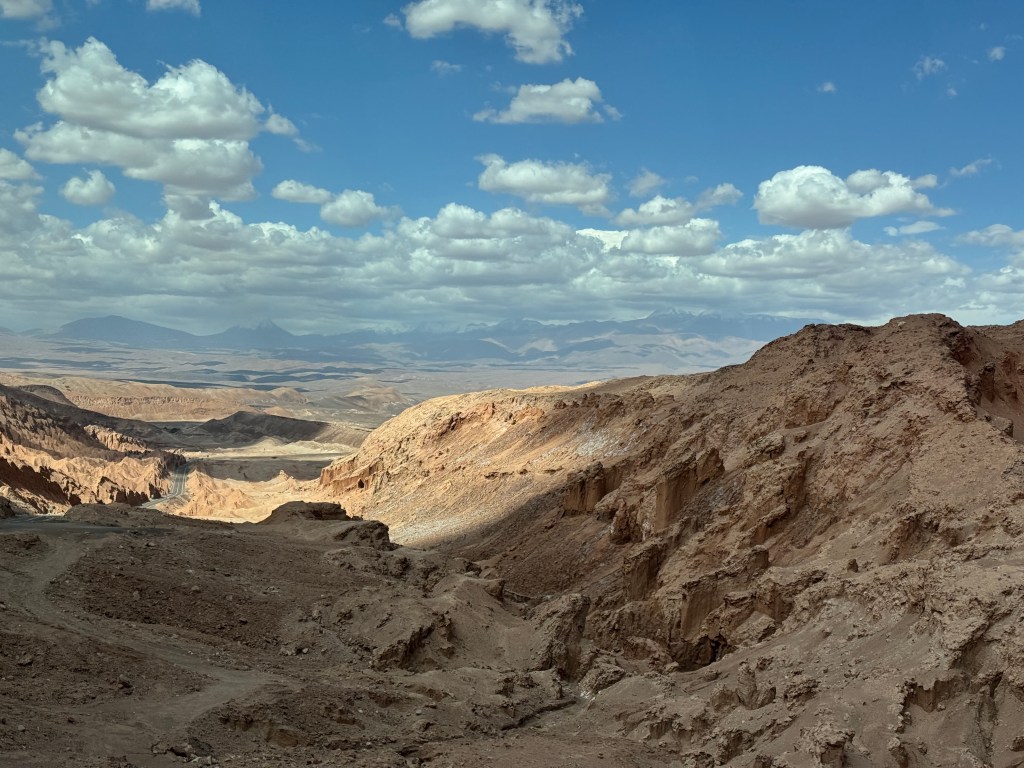
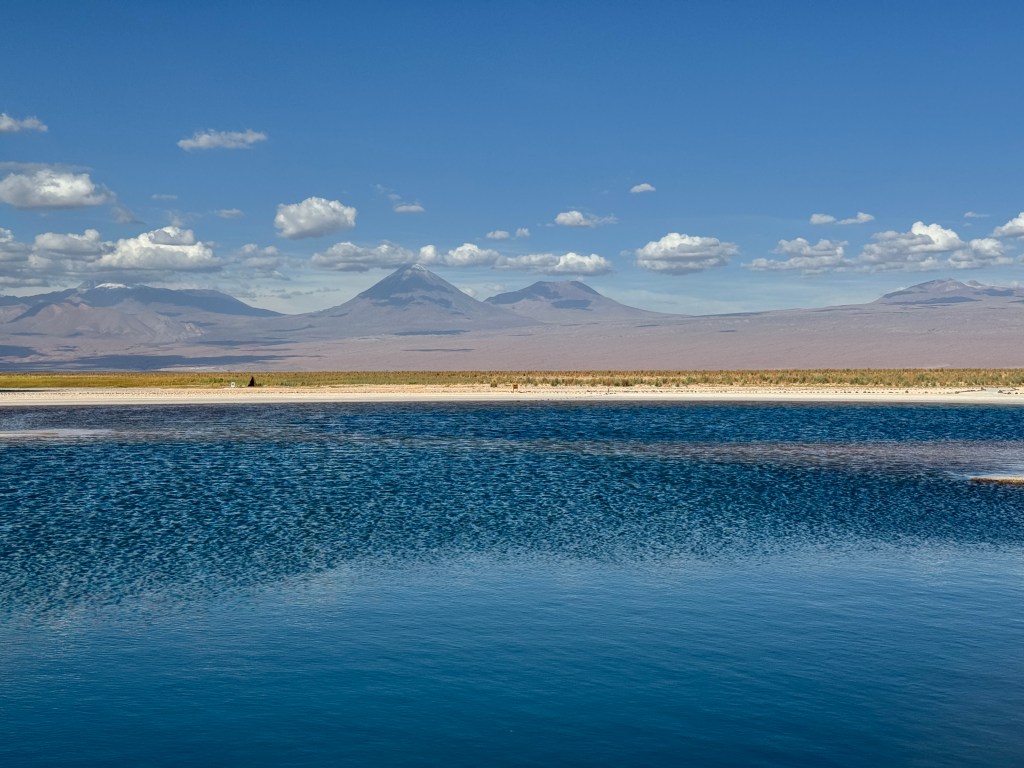
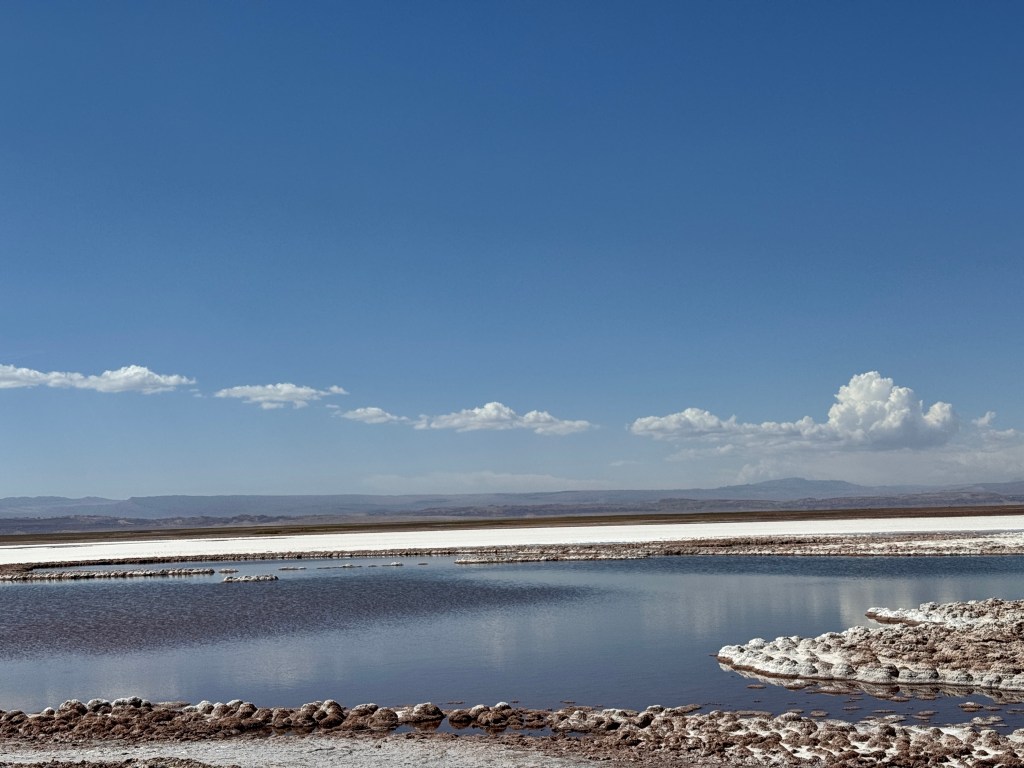
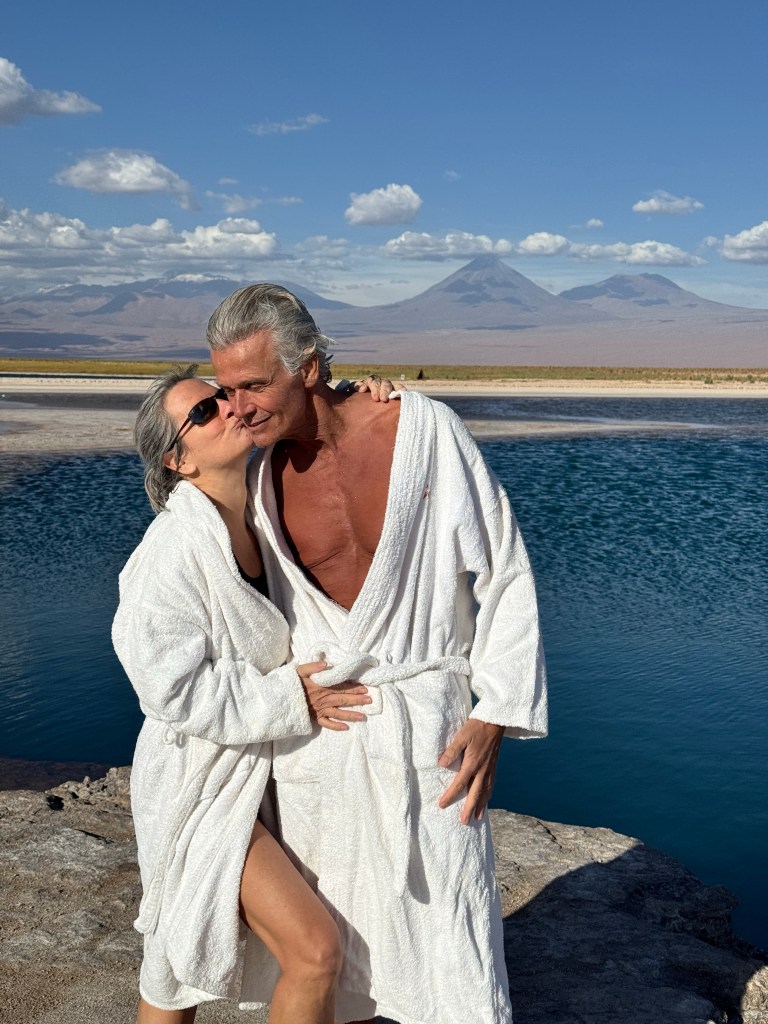
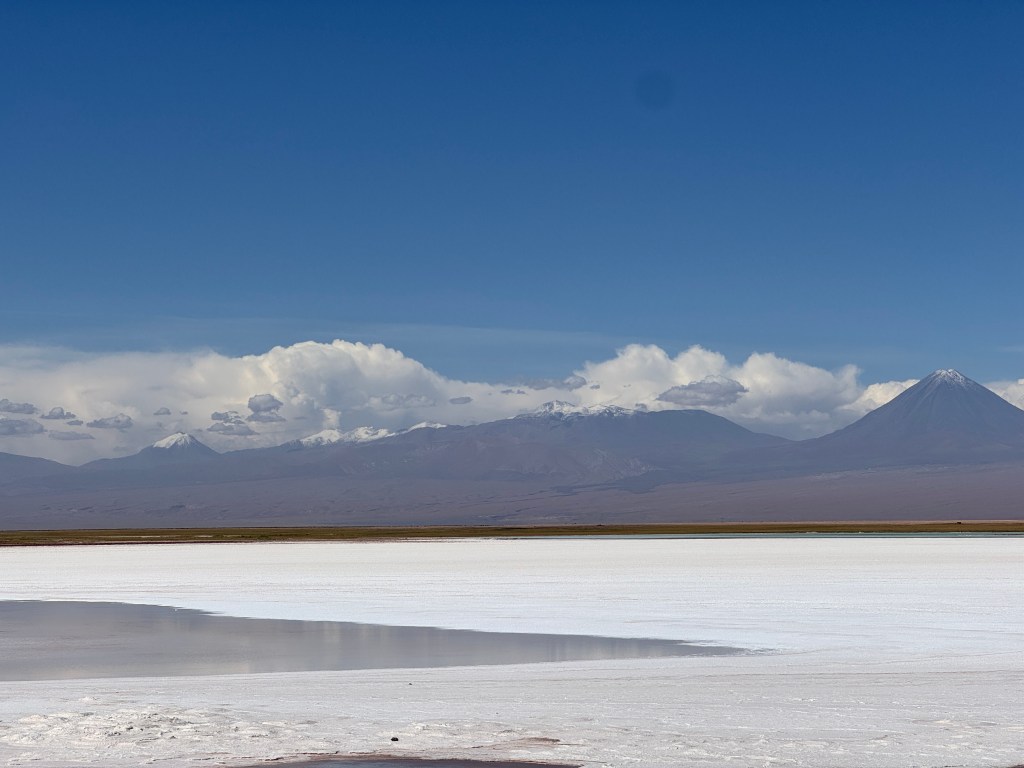
Our guide arrived just before 3pm to take us to the Salt Lagoon. First, though, we hiked through one of the canyons, where we were met with spectacular views of the surrounding area and the Andes. The day ended with a float in one of the salt lagoons. I hadn’t expected to enjoy it so much. Rachel’s the spa girl, I can take it or leave it, but this was a fantastic experience. You can’t really swim in it. You just lie back and float in water that’s around 18 degrees, which after a day under the desert sun was a welcome relief. Looking out over the Andes with only the sound of the water in your ears was, for me, the highlight of the day.
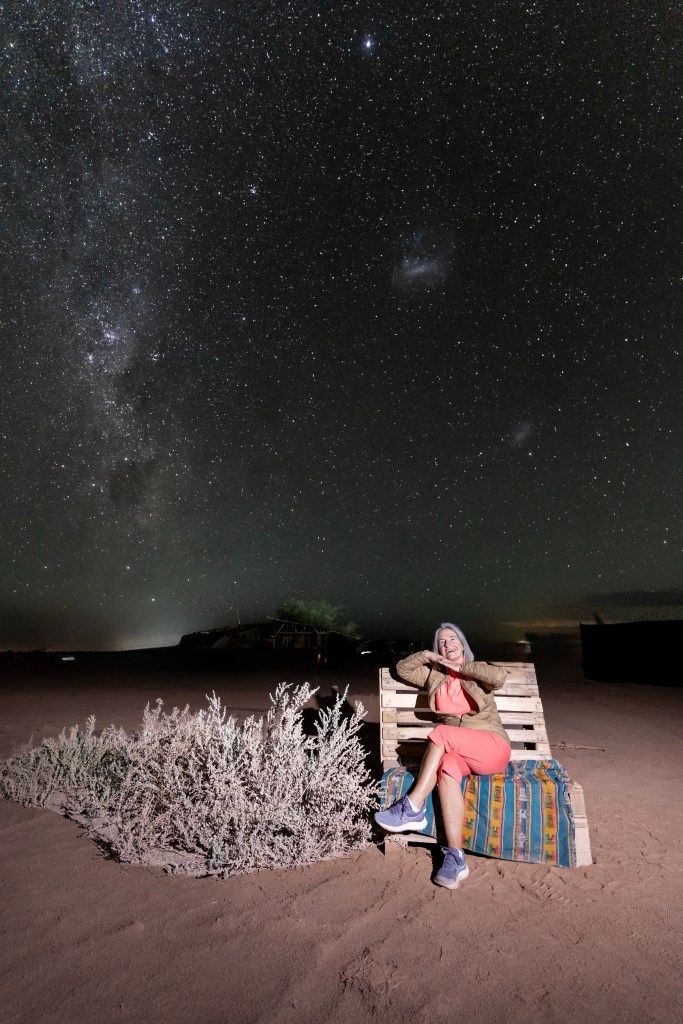
Apparently we were lucky. First, the moon wouldn’t rise until after 11pm, and second, it was a cloudless night. Around 8:30pm, with the light fading, we set off for our Tour Astronómico. Rachel and I love the stars, so this was one of the main reasons for coming to the desert, which is said to be one of the best places in the world for stargazing.
Our astronomer for the night was Simon, a passionate Chilean who was in his element sharing his knowledge. We’ve been on several astronomy tours, but we’ve never seen anything quite like this. Apparently, the stars in winter are even more impressive, but these were still incredible, including some only visible in the southern skies, namely the southern cross. It’s always fascinating to watch how quickly they move over the course of a night. Simon talked for hours to a captivated audience, and we ended with views of stars and planets through the telescope.
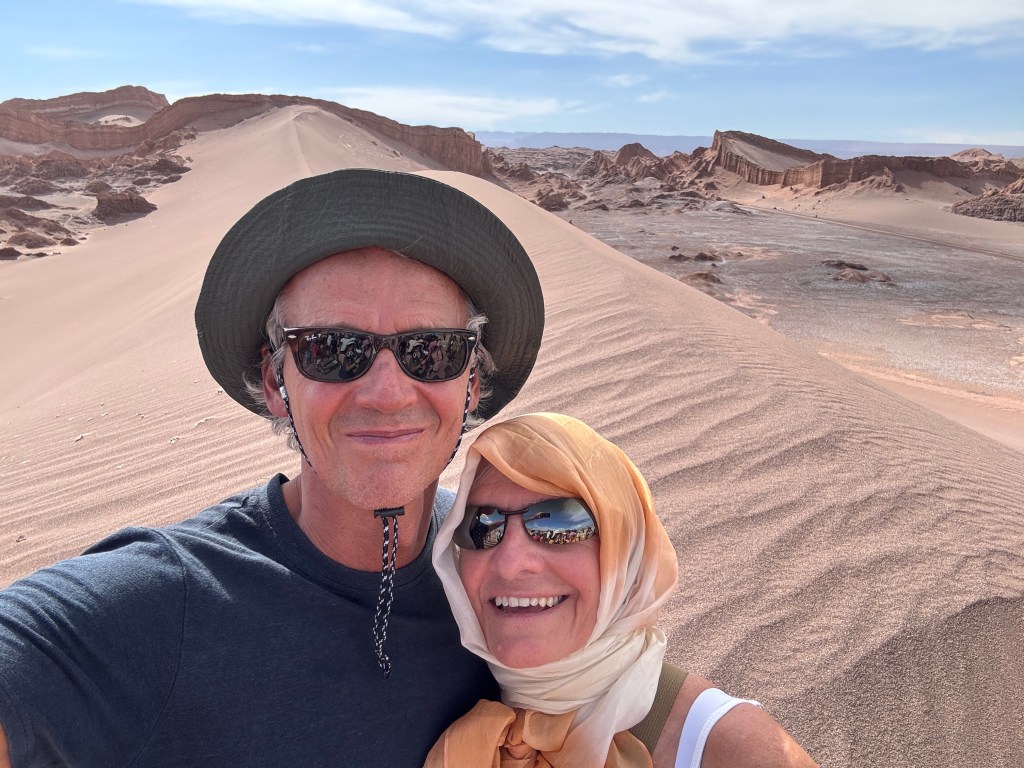
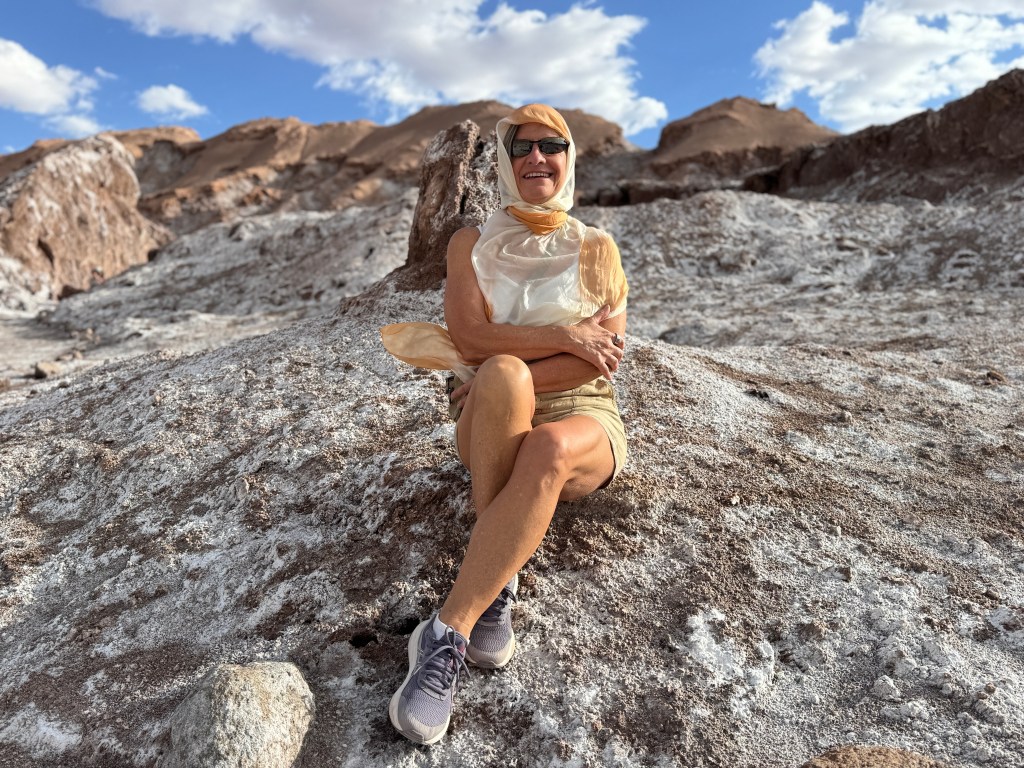
The following afternoon was spent in Moon Valley, supposedly named by a Belgian priest who, despite never having been to the moon, thought the landscape looked like it. The name stuck. We walked the trails through the dunes and out into rocky terrain where salt was once mined by small groups. Some of their dwellings can still be seen today. It must have been gruelling work.
https://www.booking.com/Share-pF1jNO
 Dream Chasers