We set off in the direction of Granada at about 8.30 a.m., as we had an 11 a.m. slot to view the palace. Visitor numbers are strictly controlled, and if you are even a minute late, you are turned away. We had booked the slot a couple of weeks earlier, and even then there were only a few places left. It is incredibly popular all year round, but this time of year the light is much better in the morning.
Waze told me it would take around two hours. After negotiating the morning traffic leaving Almería, the final ninety minutes were not too challenging, although the car repeatedly told me I needed to take a nap. With road improvements underway, both directions of traffic were pushed onto the same side of the motorway with temporary lanes, which clearly confused the car.
We parked in the designated area and walked to the nearest entrance to the palace, which turned out to be the furthest point from the car park. We had been told that the queues at the main entrance could be long, so using the “backdoor” was the better option. After showing our tickets and passports, which although a nuisance to carry I think is a sensible requirement, we made it through with only minutes to spare. After another passport check, we entered the Nasrid Palace.
We have seen many Arabic palaces, all impressive in their own way, and this one was no exception. The Nasrid dynasty was the last Muslim dynasty to rule the Iberian Peninsula, governing the Emirate of Granada for more than 250 years. During that time, they created this remarkable palace complex. There is none of the superficial finery you see in more modern palaces. Here, the beauty lies in the structures themselves: the honeycomb ceilings, the intricate plasterwork, and the geometric mosaics. What I always find intriguing about Islamic architecture is how the detail, although elaborate, remains grounded in simplicity. The walls speak through poems and verses from the Koran, as a guide once told me.
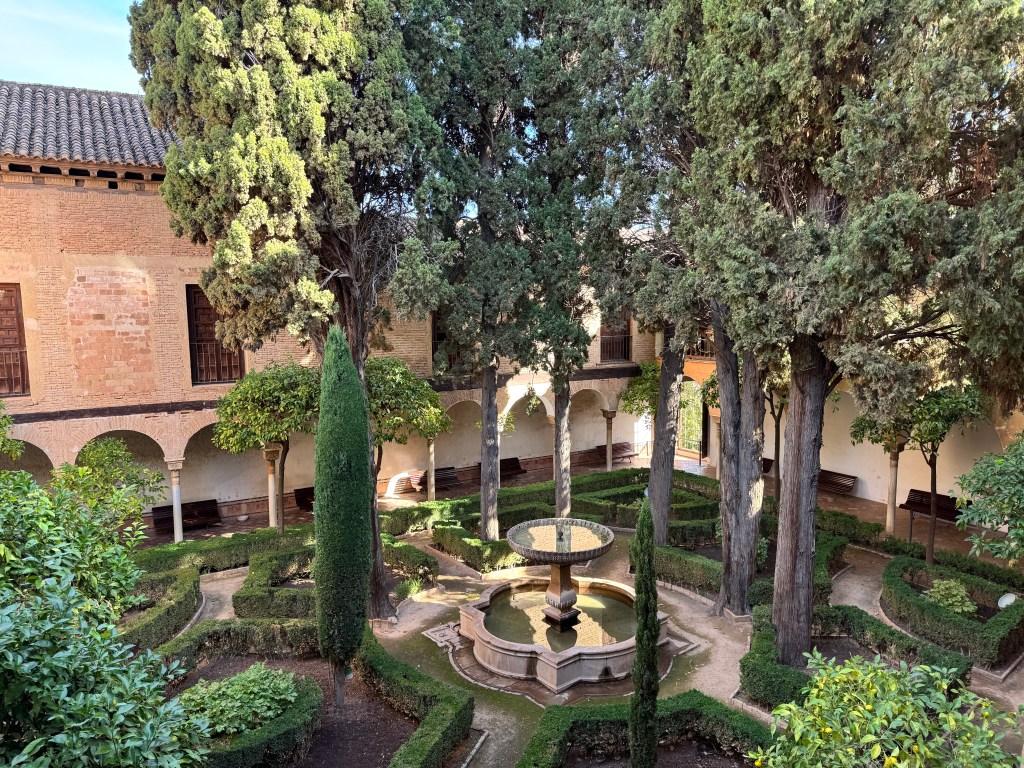
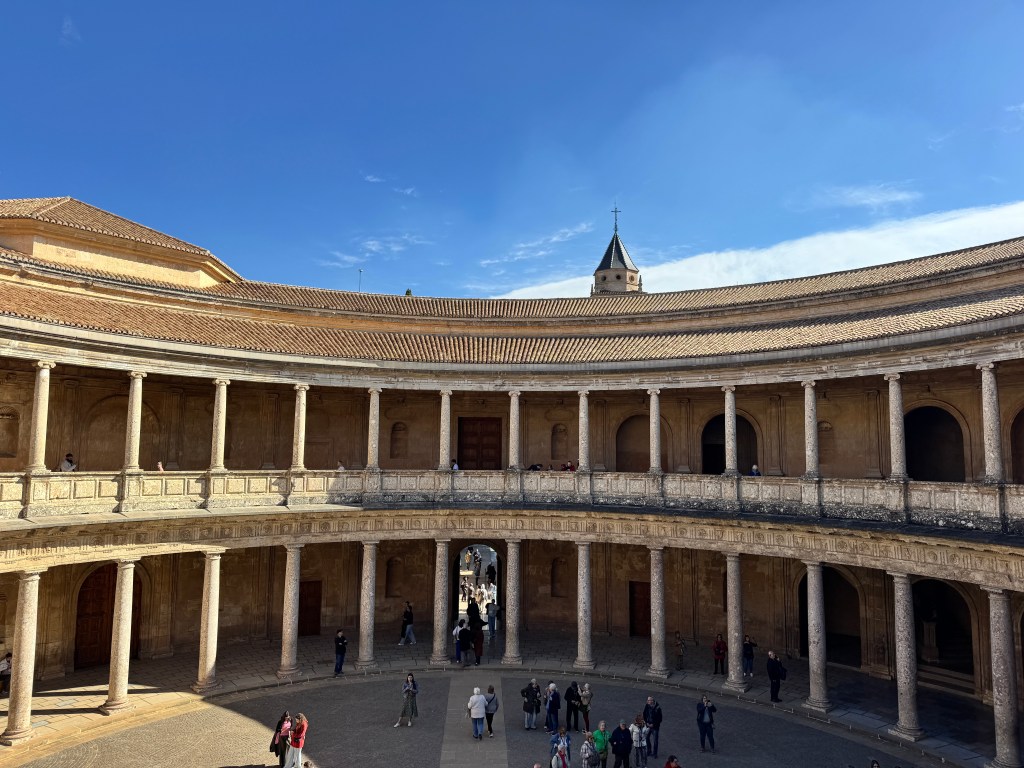
I also love the central courtyards, where water is used everywhere to create a sense of calm. Several smaller palaces surround the main one, accommodating courtiers and the everyday workings of the kingdom. Together, they make up the palatial section of the Moorish complex. The less ornate Renaissance palace of Charles V sits outside this area, but its circular courtyard is very impressive.
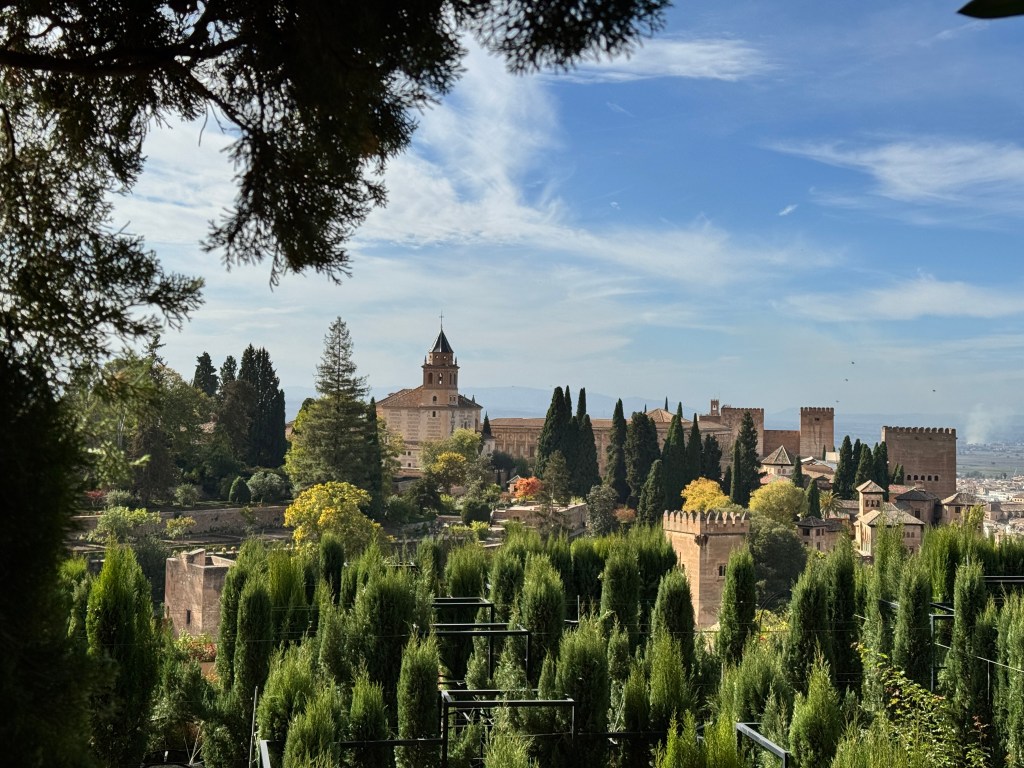
No palace complex of this scale would be complete without a fortress. The Alcazaba is the oldest part of the site, dating back to the 9th century, and its ramparts provide commanding views across Granada.
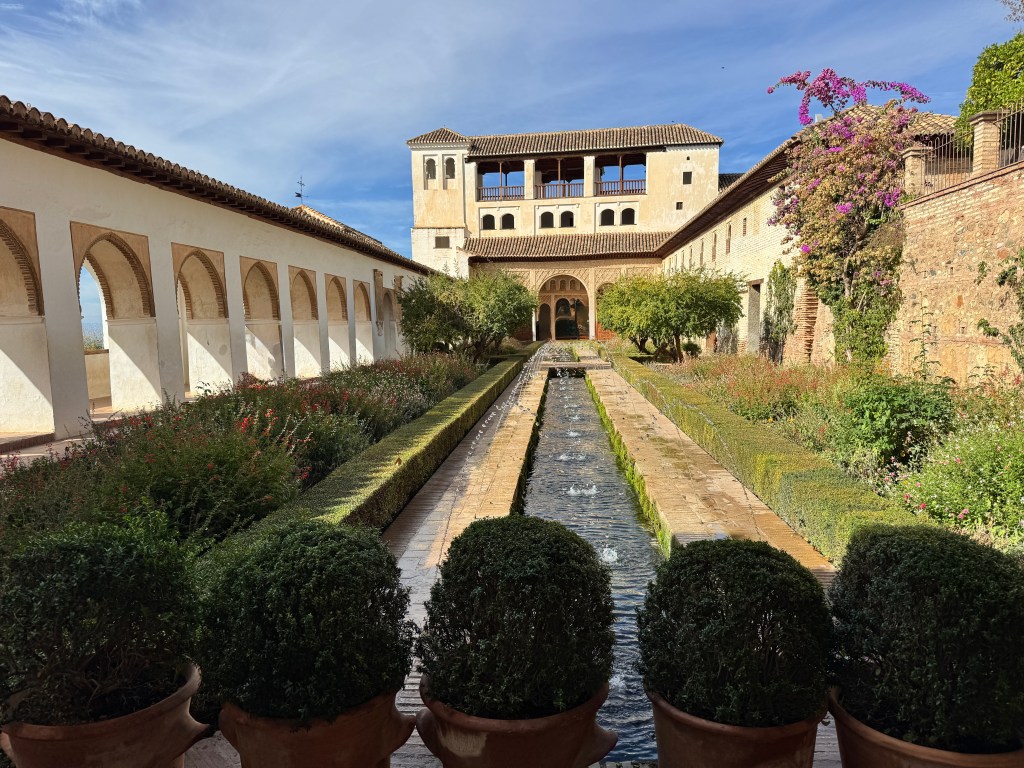
Alongside all these structures is the equally beautiful Generalife, a series of tiered gardens created for the Nasrid rulers as a place for reflection and contemplation. You feel completely at peace wandering through a mixture of manicured and wilder gardens, where the ever-present sound of water feeds the atmosphere of calm. The views back across to the main complex are perfect.
If I had to choose between the buildings and the gardens, I think I would choose the gardens.



 Dream Chasers