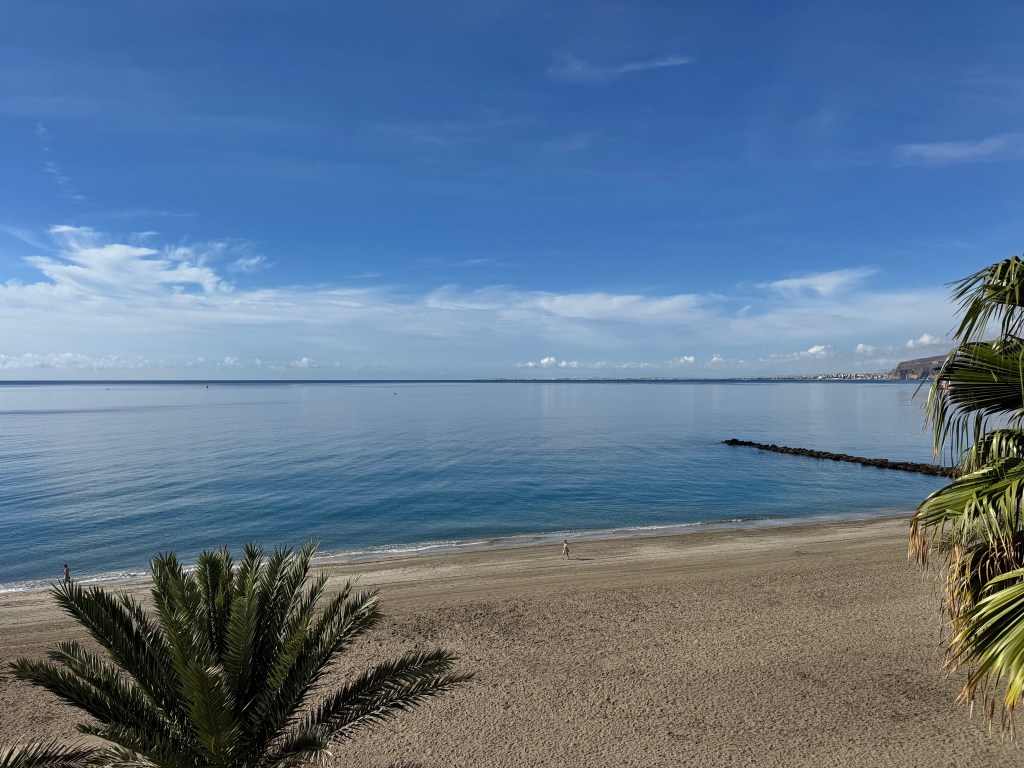
We’ve slipped effortlessly into a routine that suits us just fine. It starts with some exercise while surveying the horizon and watching the boats drift across it. Then it’s a short walk about twenty metres across the promenade and the beach and into the sea for a good swim. So far, the sea has been pretty flat, which helps. What’s also interesting is that it feels like swimming through an aquarium. From one end of the bay to the other, it’s teeming with small fish, which only adds to the enjoyment.
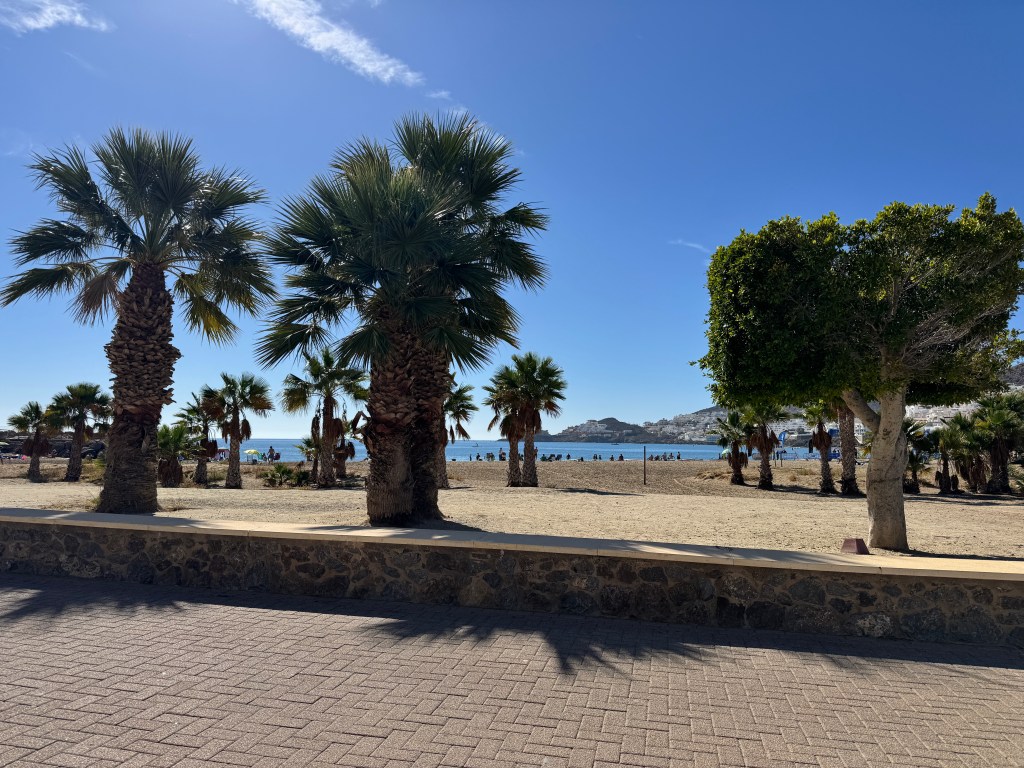
There are plenty of coffee shops along the promenade, and we’re lucky that the one we like best is directly beneath our apartment. Perfect, really. We’re staying in the more established part of town, which some might say is a little less polished, but it’s full of character. It’s also a great spot for people-watching. Early in the day, you see people out running or walking. There’s a cycle lane that runs the length of the promenade, and as with most of Spain, cycling is very much part of the culture. In the evenings, the area becomes more family-oriented, with children playing and groups strolling along the front.
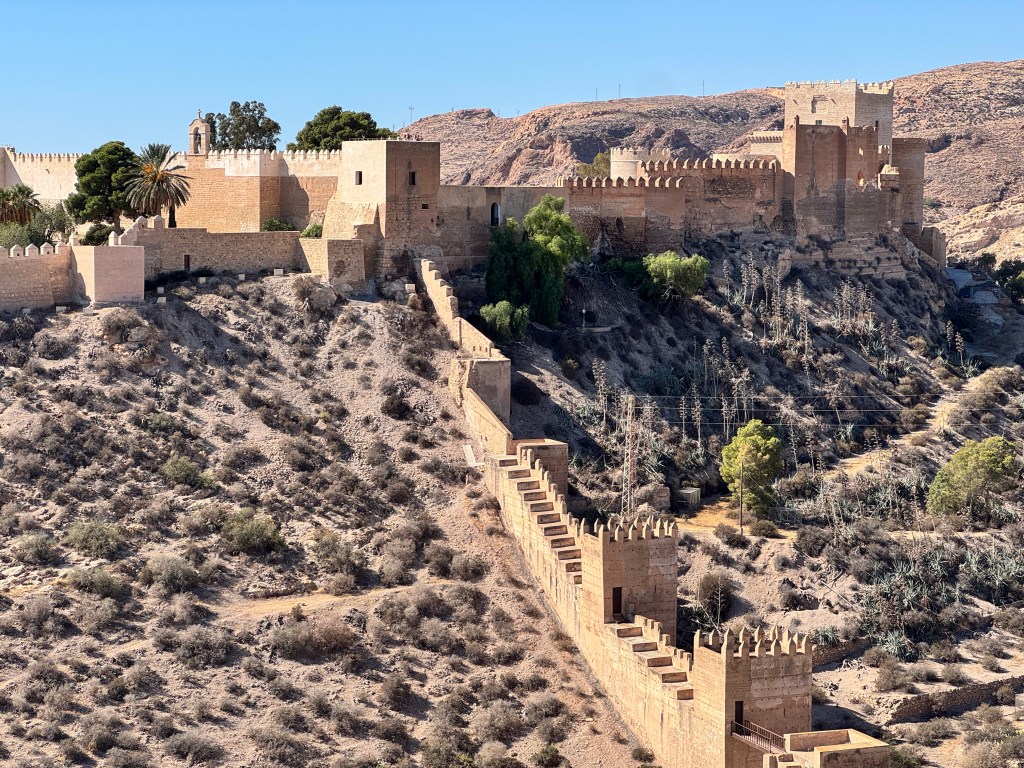
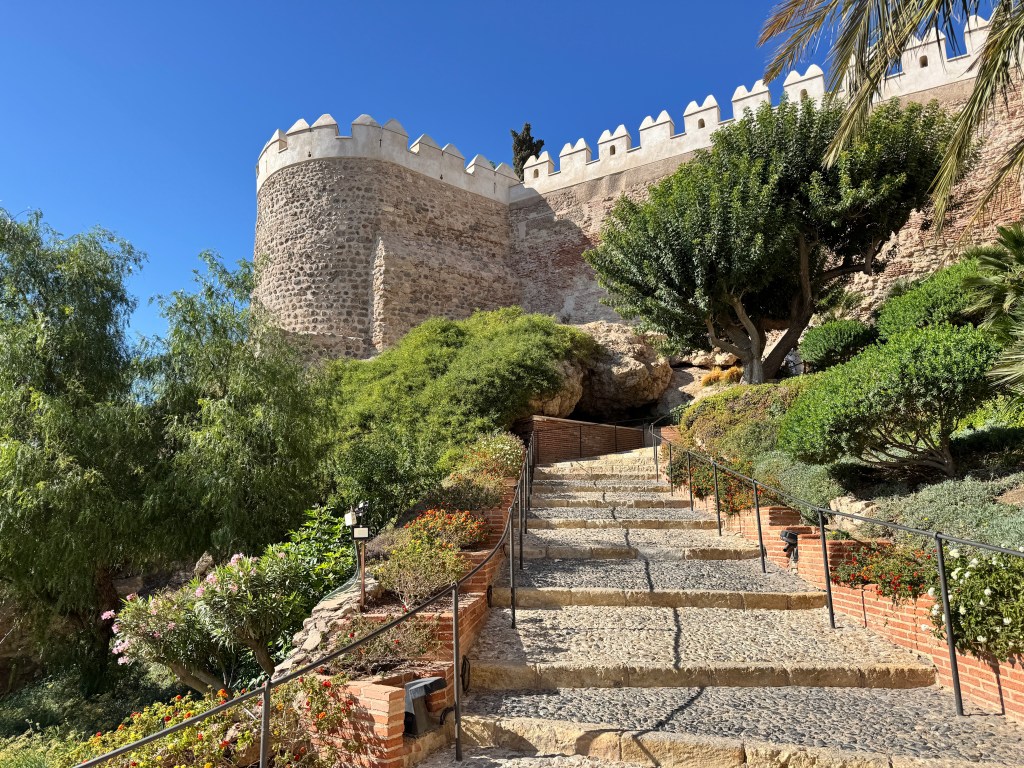
It’s about a twenty five minute walk into the town centre. We haven’t spent much time there yet, but we did get a chance to explore the Alcazaba, a large Moorish fortress built in the mid-10th century. It’s the largest Arab-style citadel in Spain and offers incredible views across Almería and out to the coast.
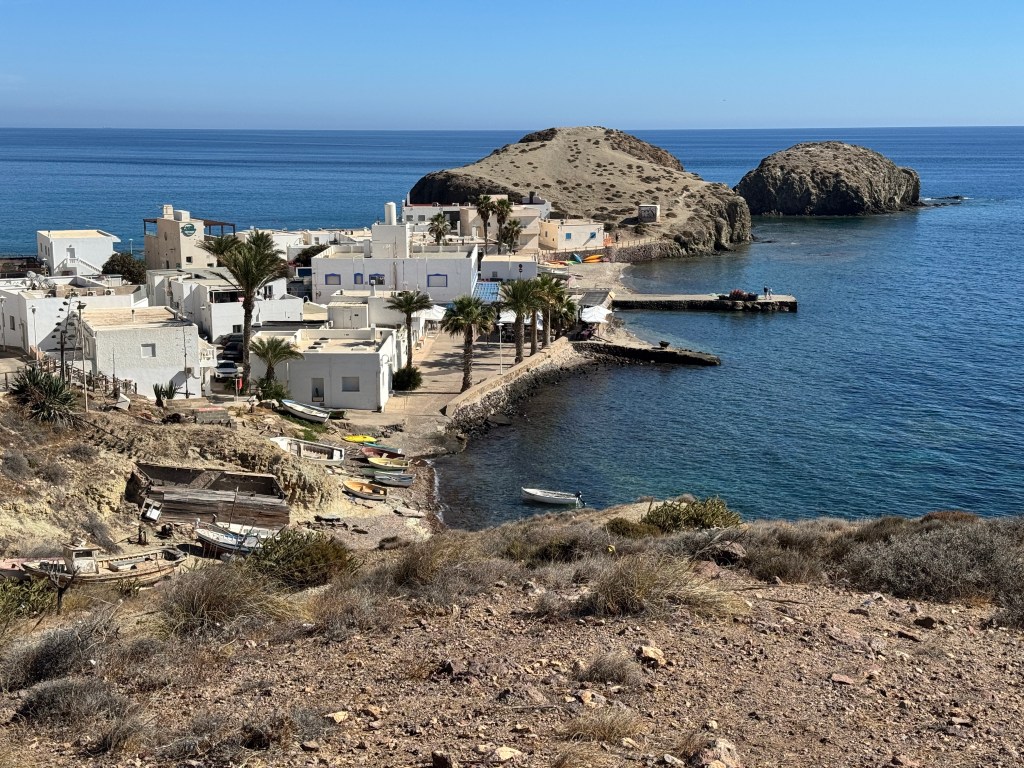
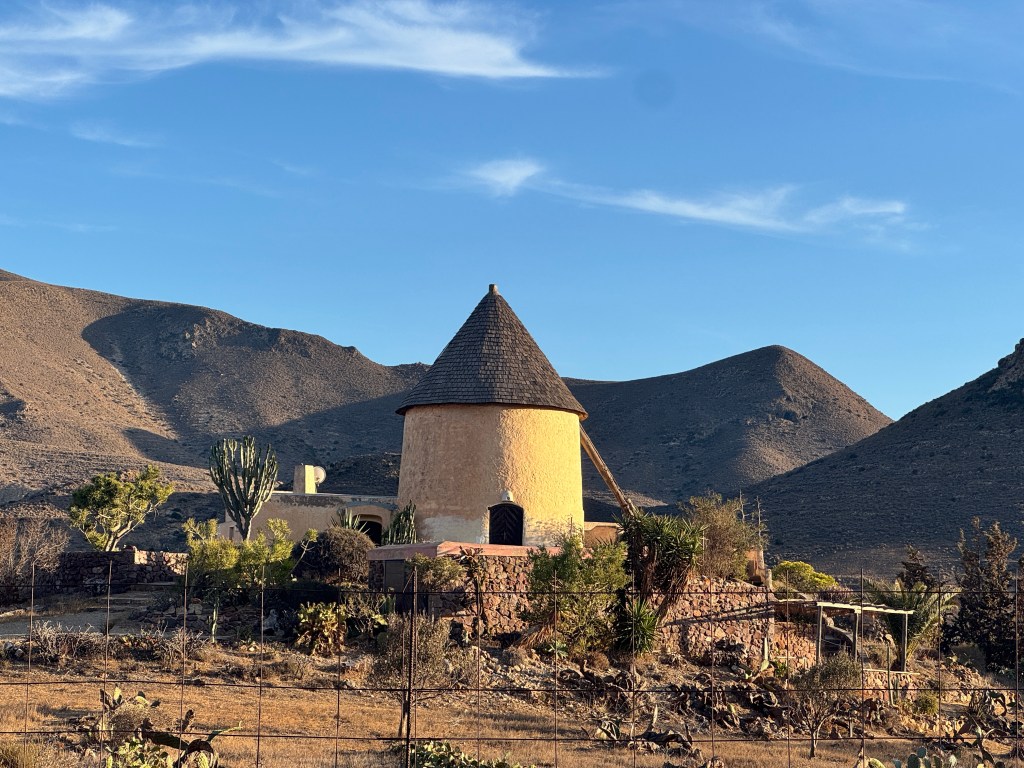
Keen to go off exploring, we picked up a rental car and headed out of Almería. Our first stop was San José, a place Rachel wanted to check out as a possible next stop. From there, we continued along the eastern coastline and into the Cabo de Gata national park, a striking and somewhat strange landscape shaped by ancient volcanic activity. Our destination was La Isleta del Moro, a quiet coastal village with a small beach, a few fishing boats, and a very good restaurant. We waited a good few hours to get in, but it was worth it. There’s not much else there, but that was part of the charm.
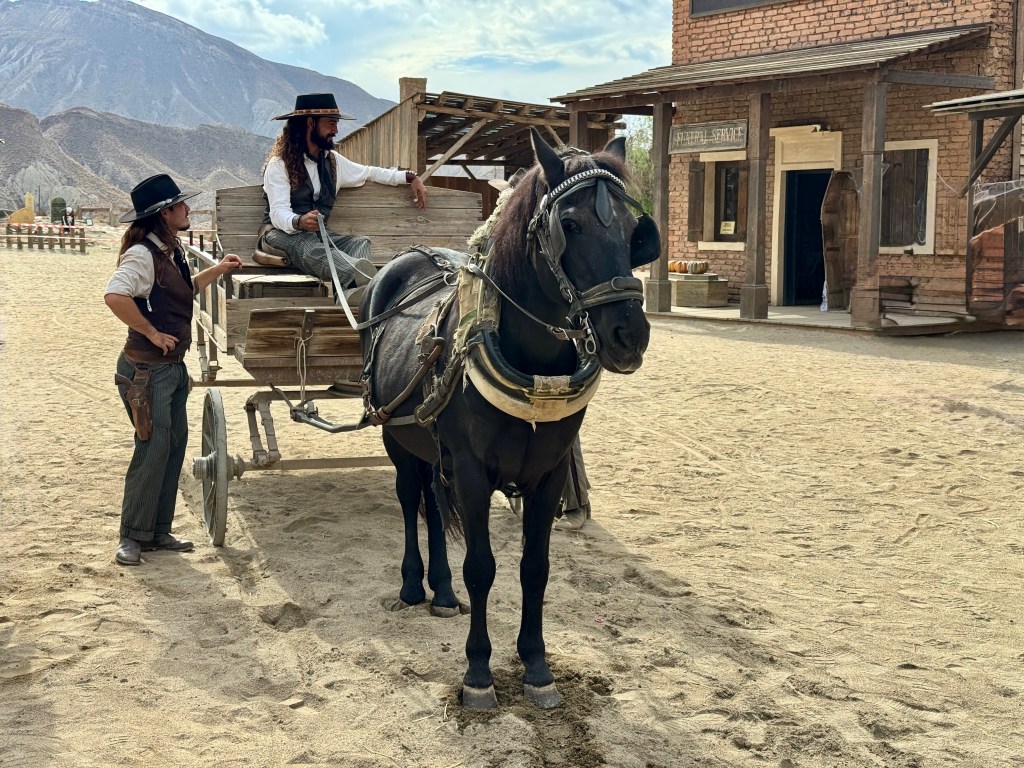
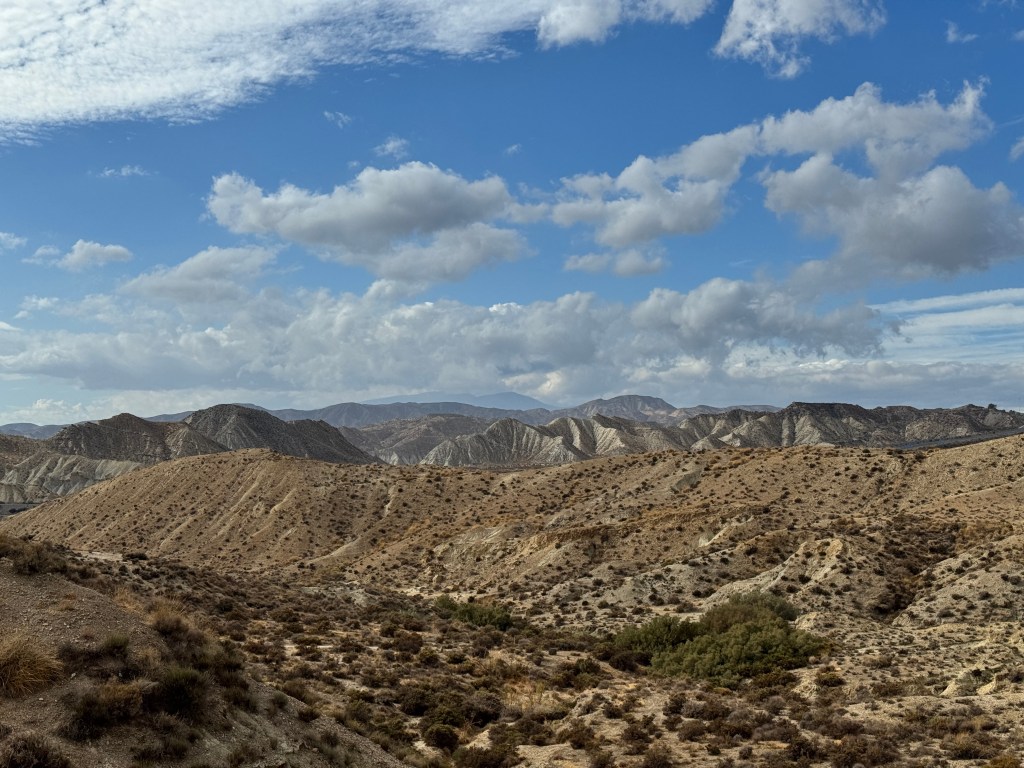
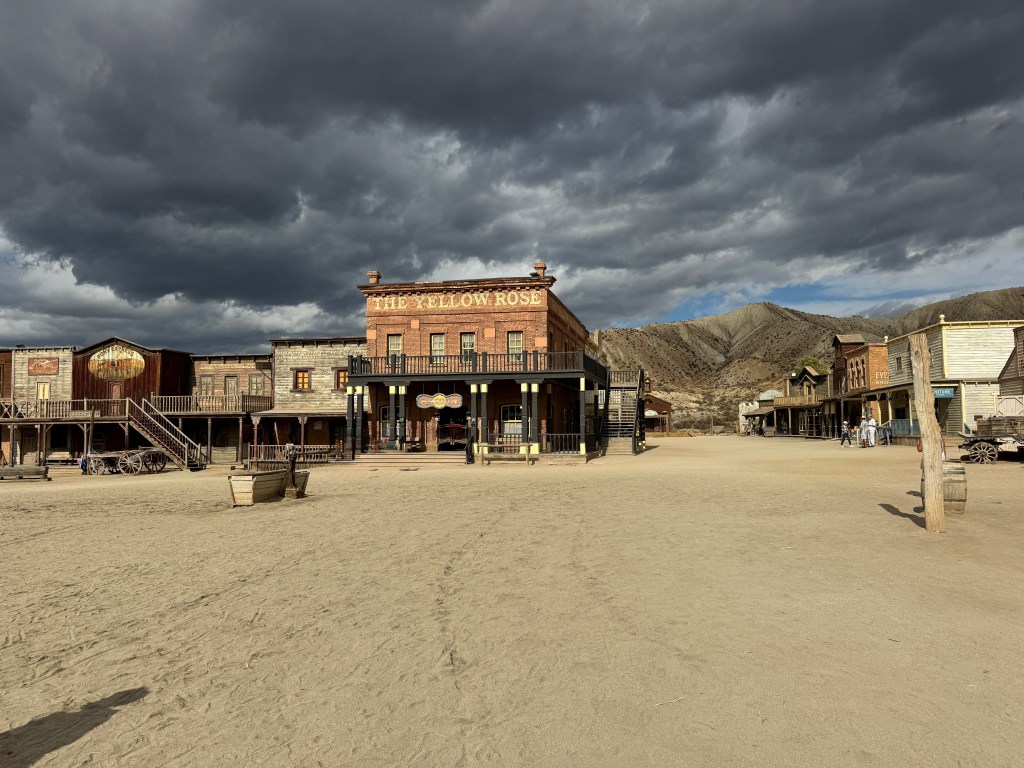
We had both wanted to visit the Alhambra, but didn’t realise that it requires booking around two weeks in advance to get full access. A bit of a disappointment, but Rachel, always keen to salvage a situation, had been really taken with the Cabo de Gata and had found something else. Not far from where we were staying is Europe’s only true desert, the Tabernas. It’s not a huge area, but if, like me, you grew up watching Spaghetti Westerns like The Good, the Bad and the Ugly, A Fistful of Dollars, and the rest, then it holds a certain pull. All those films were shot in the Tabernas, at a location that today has been turned into a kind of theme park called “Mini Hollywood.”
As the story goes, when the film companies pulled out, a couple of security guards were hired to watch over the sets. They soon realised the site’s appeal, and eventually managed to get the investment to turn it into the attraction it is today. Now, I’m not a fan of theme parks at all, but the connection to those films, and Rachel’s promise that I’d be able to see the cemetery used in that final scene from The Good, the Bad and the Ugly, was enough to get me there. That scene gave my brother nightmares for years.
The park includes other attractions, but we were only really interested in the film sets and memorabilia. To be fair, it’s been well looked after. There’s definitely still a presence there, a kind of lingering energy from all those stories played out in front of the cameras. I wasn’t sure about the live reenactment, but the Can-can show in “The Yellow Rose” saloon was entertaining we both left feeling nostalgic and glad we’d gone.
As for the cemetery, Rachel had that part wrong. The actual set is up in the north of the country, but it didn’t matter. Not really.
 Dream Chasers