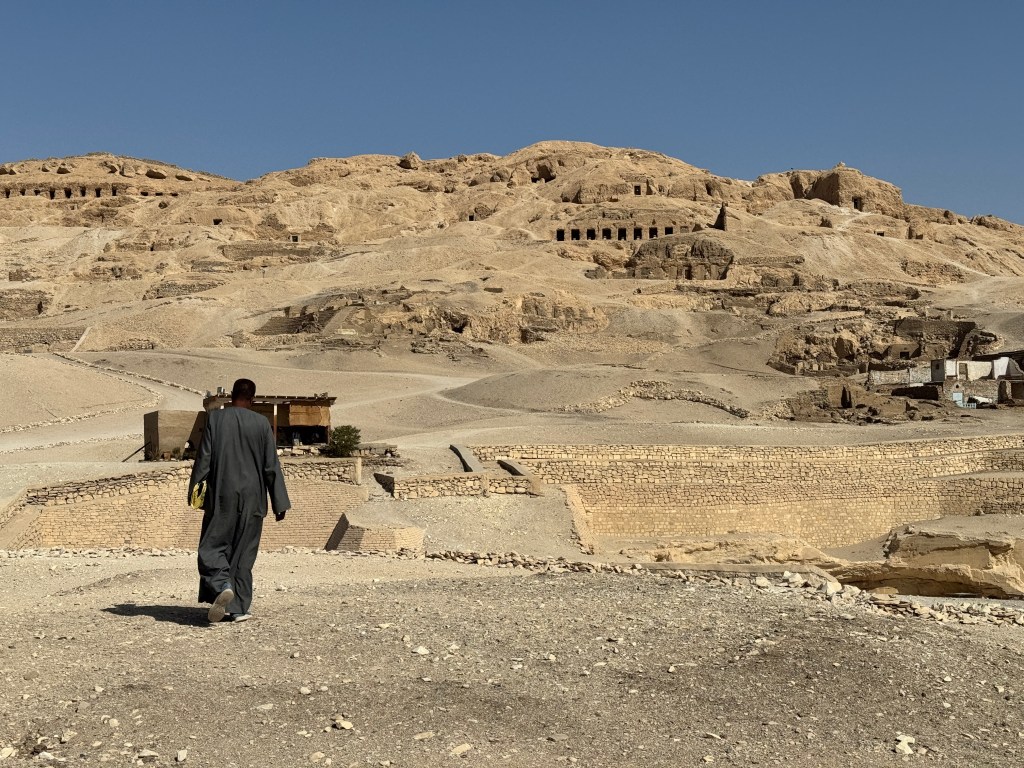
The Valley of the Nobles might not be quite as impressive as the Valley of the Kings, where the detail and finish on each of the mausoleums are truly remarkable, but it offers a unique and fascinating experience of its own. Situated on the other side of the same limestone mountains as the Valley of the Kings, it almost feels like there could be some hidden tunnel connecting the two sites. This particular necropolis is dedicated to the nobles, those key figures who created, ran, and oversaw the administration of ancient Thebes. These individuals were highly respected by the Pharaohs and revered by the masses, making this their final resting place.
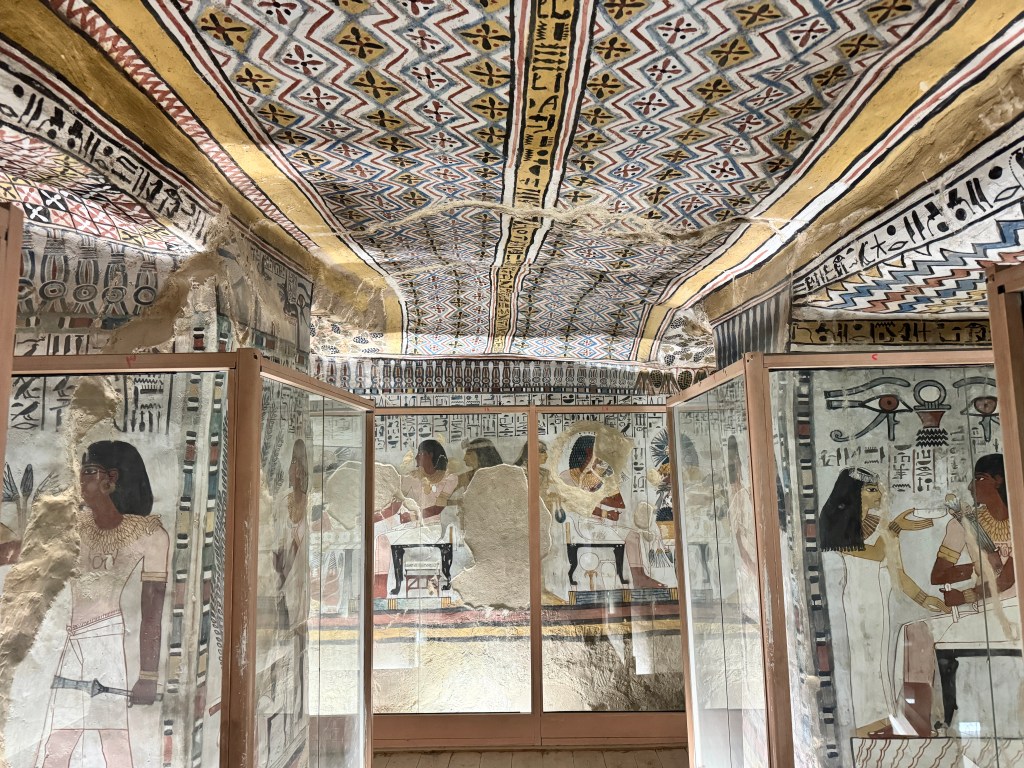
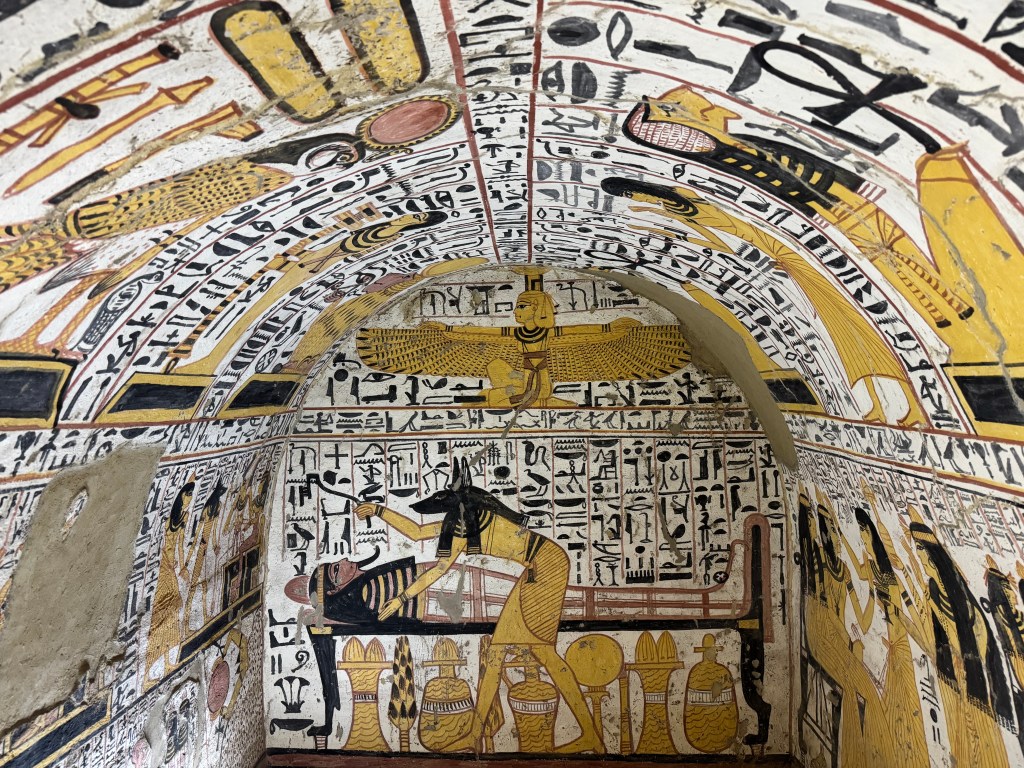
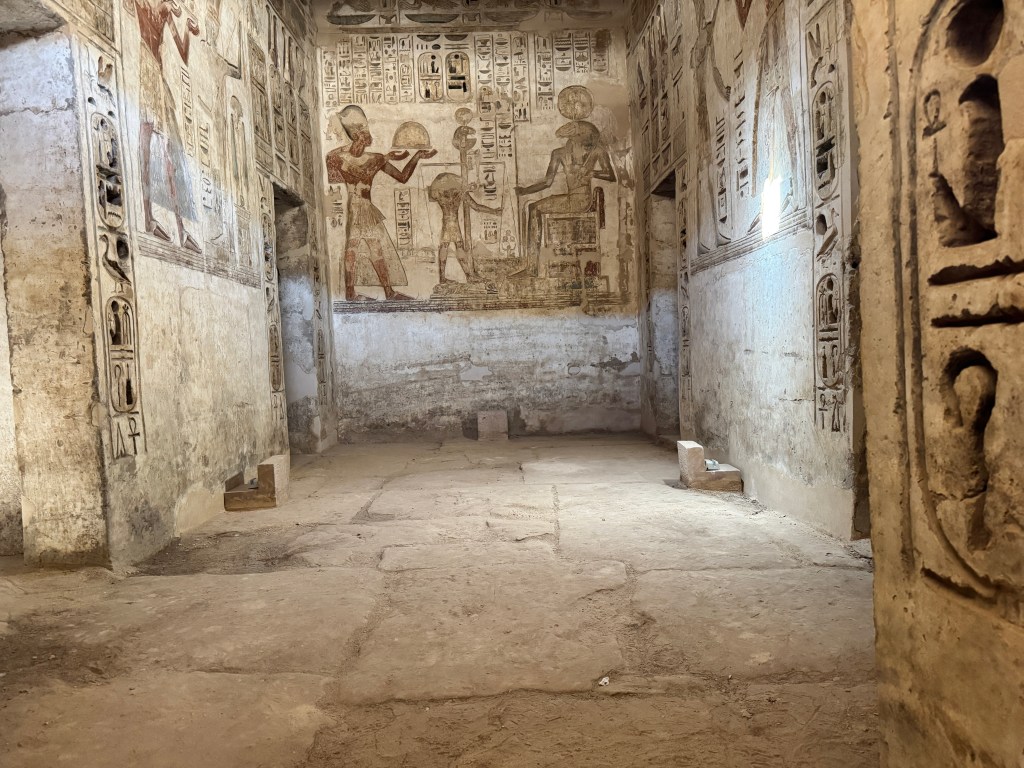
Unlike the more tourist-heavy sites, the Valley of the Nobles isn’t on the main tourist route, so we were able to explore it at our own pace. After some haggling with our guide to visit the specific tombs we were interested in, we set off. The tombs here were smaller and lacked the smooth finishes seen in the Pharaohs’ tombs. The entrances and the stairs descending to the tombs were cramped and heavily chiseled, leading to small, humble rooms. Yet, the rooms were beautifully decorated, as if hand-painted, and the artwork was incredibly well-preserved. In my opinion, the tombs of the Nobles were even more intriguing than those of the Kings.
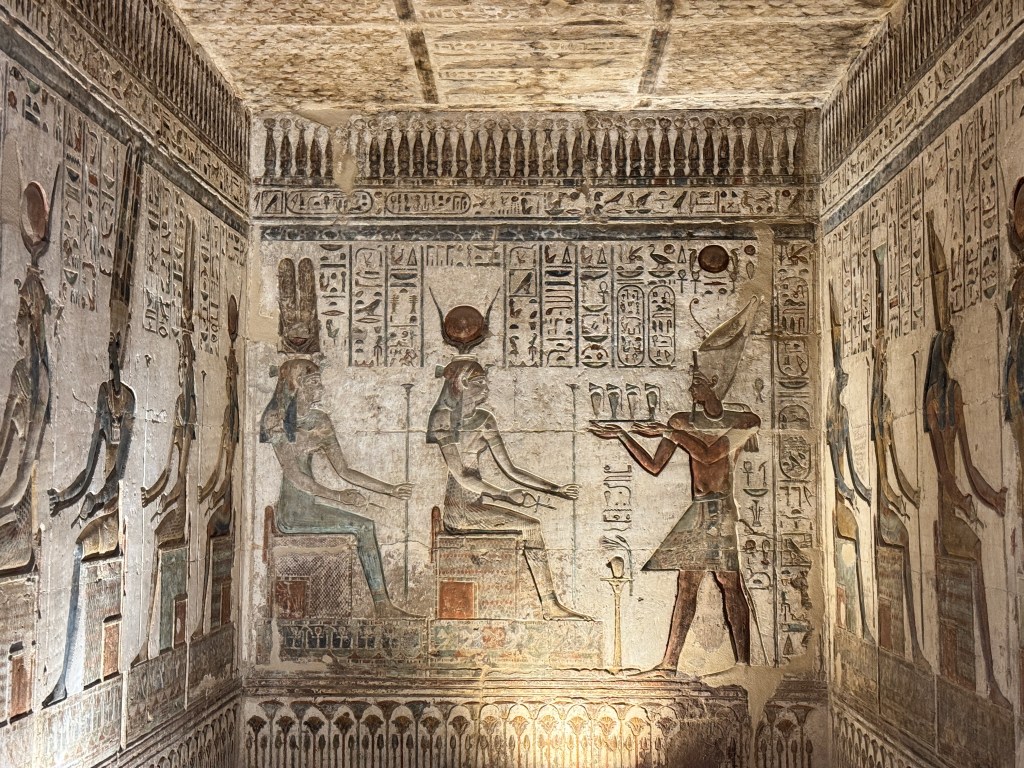
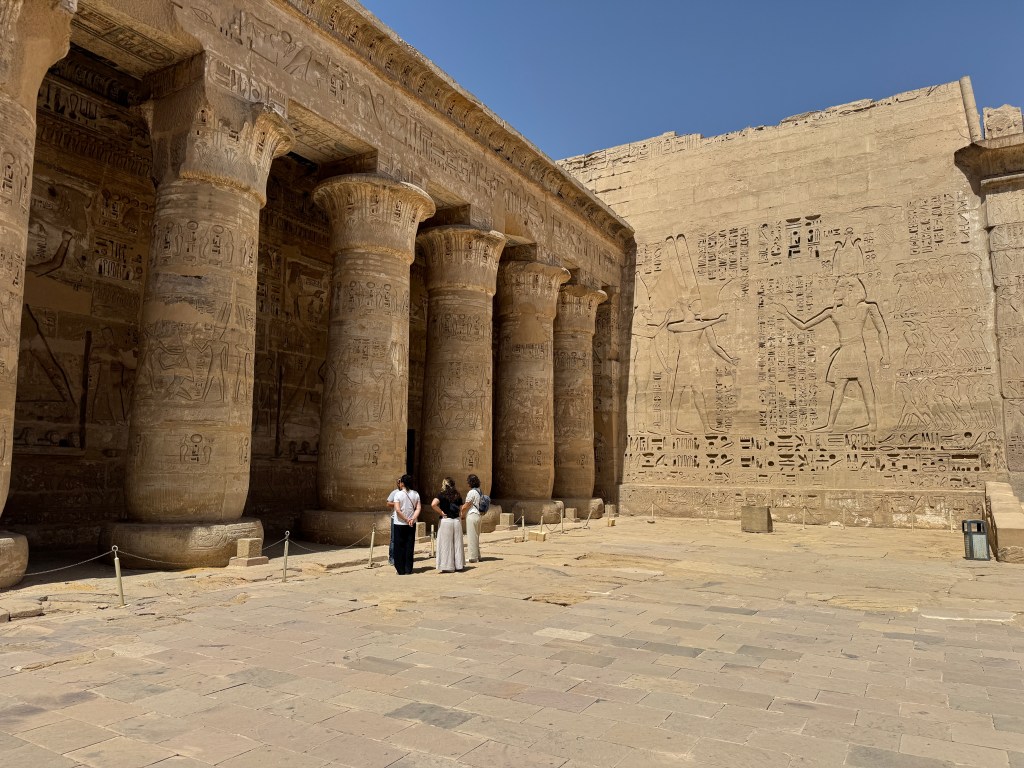
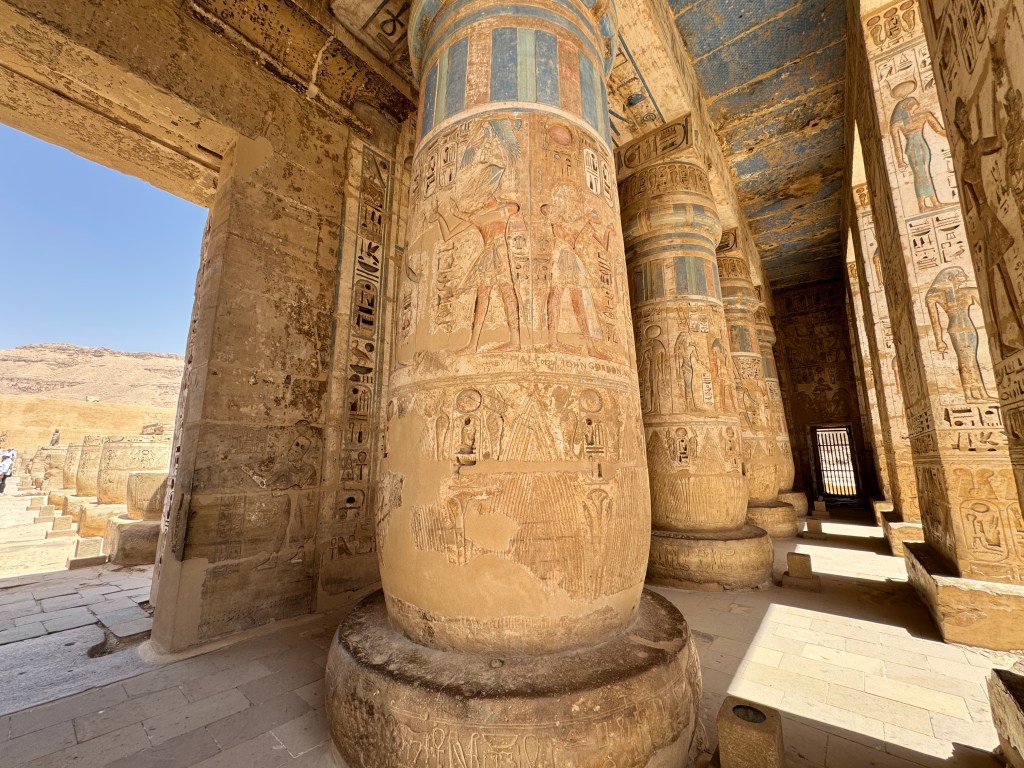
Next, we made our way to the Medinet Habu Temple, another underappreciated ancient site. Built during the New Kingdom period over 3,200 years ago, this temple is exceptionally well-preserved, particularly the vibrant colours that still adorn some of the pillars and ceilings. As I walked through these incredible temples, admiring the architecture, I was once again struck by the complexity of it all. How did they design something so grand and perfectly symmetrical? It’s hard to believe that the incredible precision could have been achieved by ordinary humans, back then, or even today.
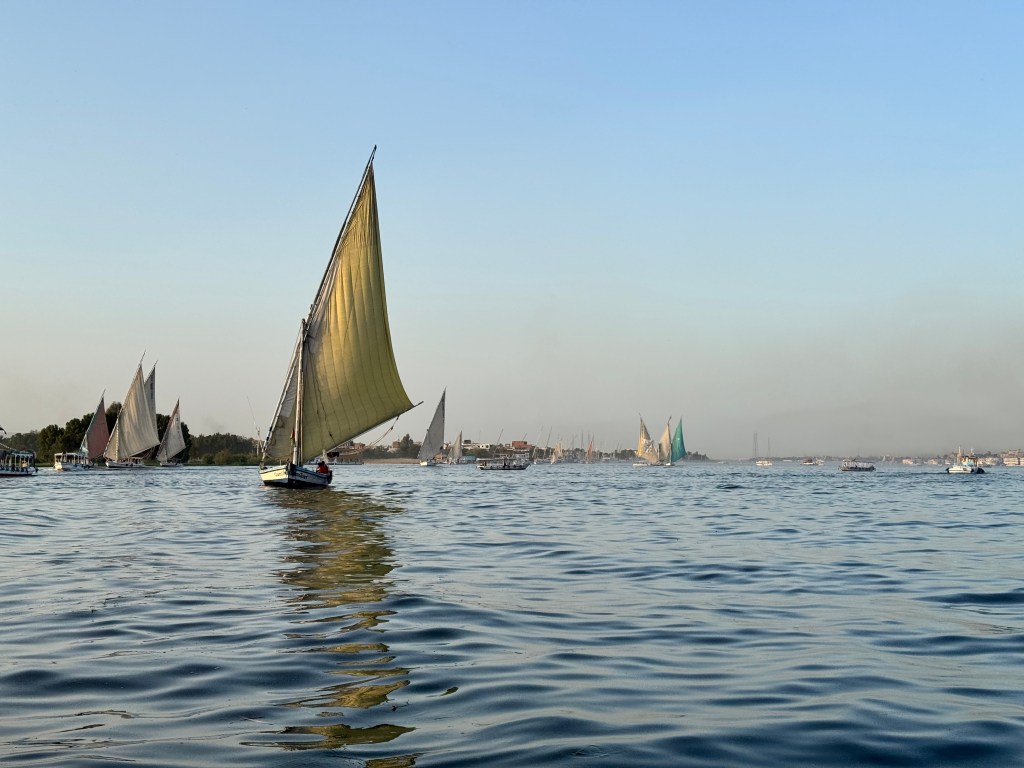
Our final adventure was a sunset cruise along the Nile. Well, without much wind, it was more of a tow across to Banana Island, where Mohammed took us through some of the older backstreets. There, we glimpsed the charming simplicity of life, with small businesses tucked into doorways and donkeys munching contentedly on bales of hay. Luxor is one of the oldest continuously inhabited cities in the world, and the cruise offered a perfect view of this bustling, ancient place.
Back in the felucca, the wind had picked up slightly, which made the journey back more interesting. The small wooden boats with their tall, drooping sails moved gently along the Nile as the sun slowly sank toward the horizon, casting a golden hue over the water. It was the perfect end to our time in this magical city.


 Dream Chasers