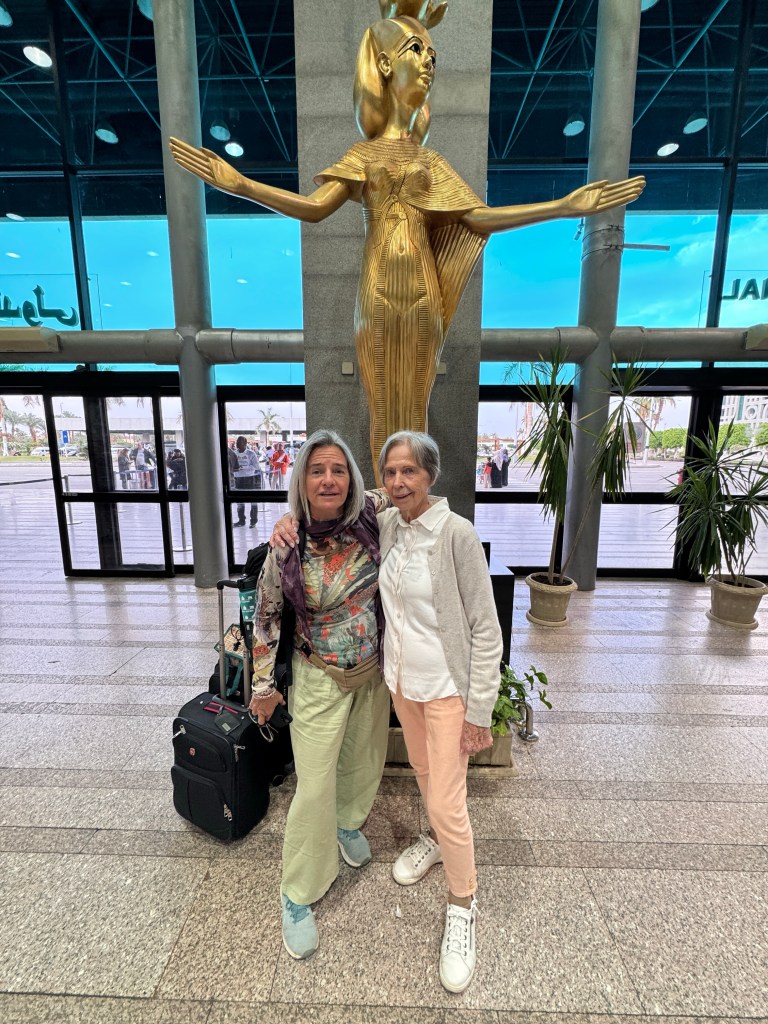
Mum and I had been wanting to visit Egypt for quite some time after reading a fictional Nile based series, by Wilbur Smith, that we both really enjoyed. Since then, we’ve been trying to make the trip work. We had also planned to spend a few days in Cairo to visit the new museum, but unfortunately, it won’t be fully open until later this year, so we’ll wait. After a smooth drive from Cambridge to Gatwick, we checked in and boarded our flight, which, after 5 hours and 30 minutes, landed us in Luxor.
We’d been to Egypt before, but this was our first glimpse of the Nile. As we flew over the vast arid desert landscape, one of the driest places on earth, it was incredible to see the sudden transformation as we approached the Nile, with lush green fields and thriving crops on either side of the world’s longest river, stretching from central Africa to the Mediterranean. It was truly magical.
I had messaged our driver to let him know we’d landed, and he was there waiting for us as we exited the airport. Egypt is one of those places where it’s not just about what you know, but who you know first—and then what you know. About 10 minutes after meeting Mohammed, who seemed to know everyone, I knew that he and his taxi (number 430) were our team for the duration. By the time he dropped us off at our hotel, we had already sketched out a plan for what we would see while we were there.
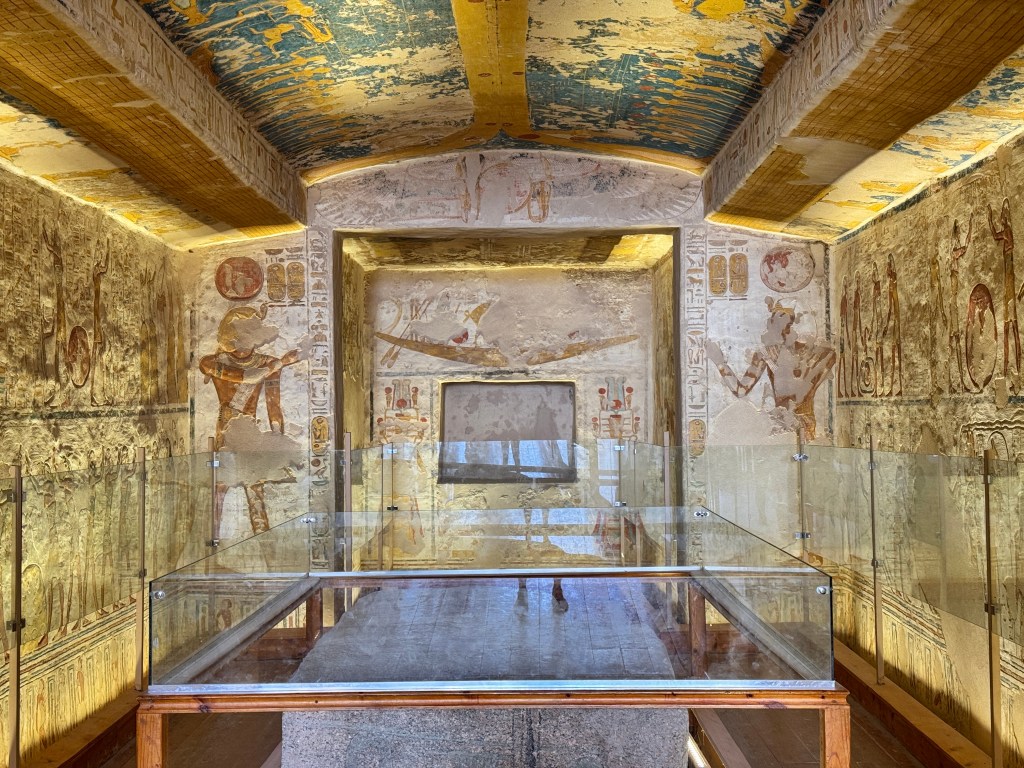
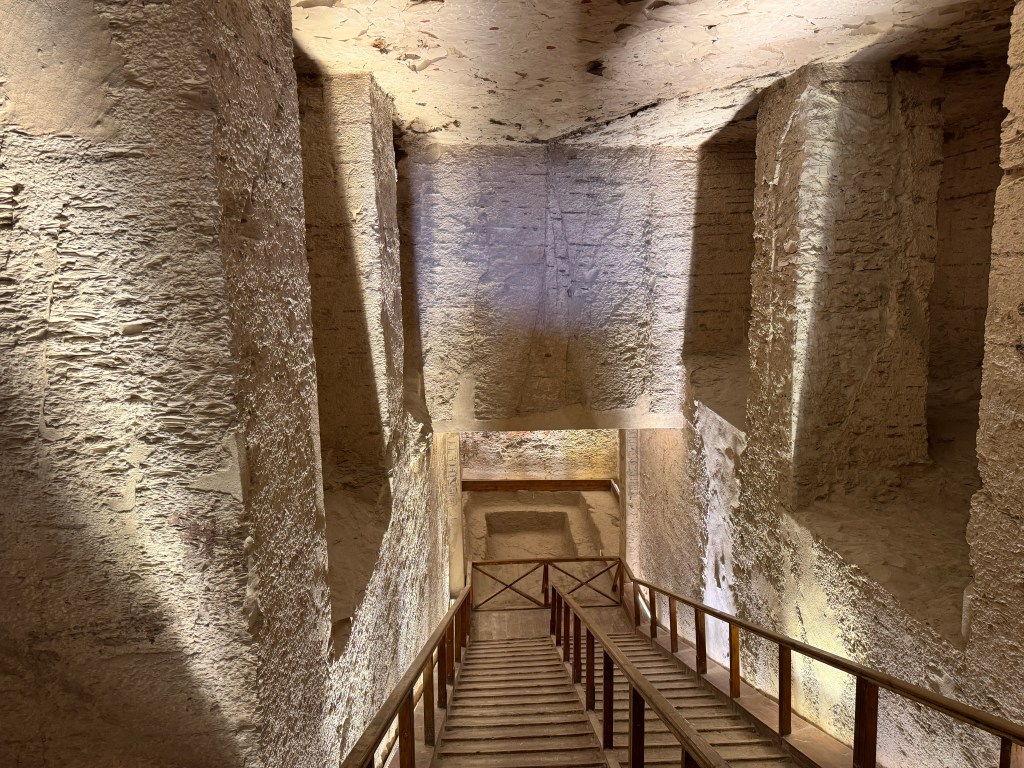
Mohammed arrived at our hotel at 8:00 am, and off we went from the East Bank to the West Bank, where most of the ancient attractions are located. It was about a 20-minute drive to the Valley of the Kings, our first stop. The Valley is the burial site of nearly all the kings (pharaohs) of the 18th, 19th, and 20th dynasties (1539–1075 BCE), including Thutmose I to Ramses X. Since we were early, there weren’t too many people there, and we spent a couple of hours wandering around the necropolis. The deep steps that led to long walkways and burial chambers, with hieroglyphics and intricately carved figures in vibrant colours, were remarkably well-preserved after thousands of years. So far They have uncovered 63 tombs, but the area looks as though it still holds more secrets.
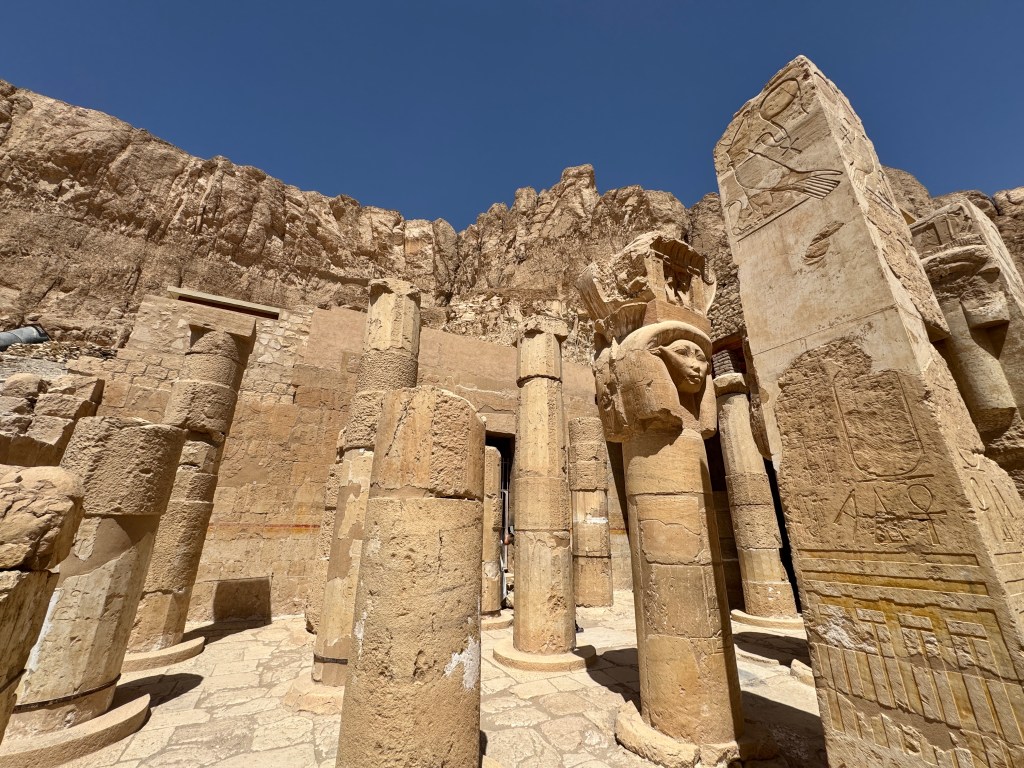
Next, we visited the Hatshepsut Temple, just a short drive away. This temple was built by the first female pharaoh to honor one of the gods so that she would be remembered. I love buildings with a simple but impressive façade. What was also fascinating was that you could see the cuts in the surrounding mountains where the stones had been quarried to build the temple.
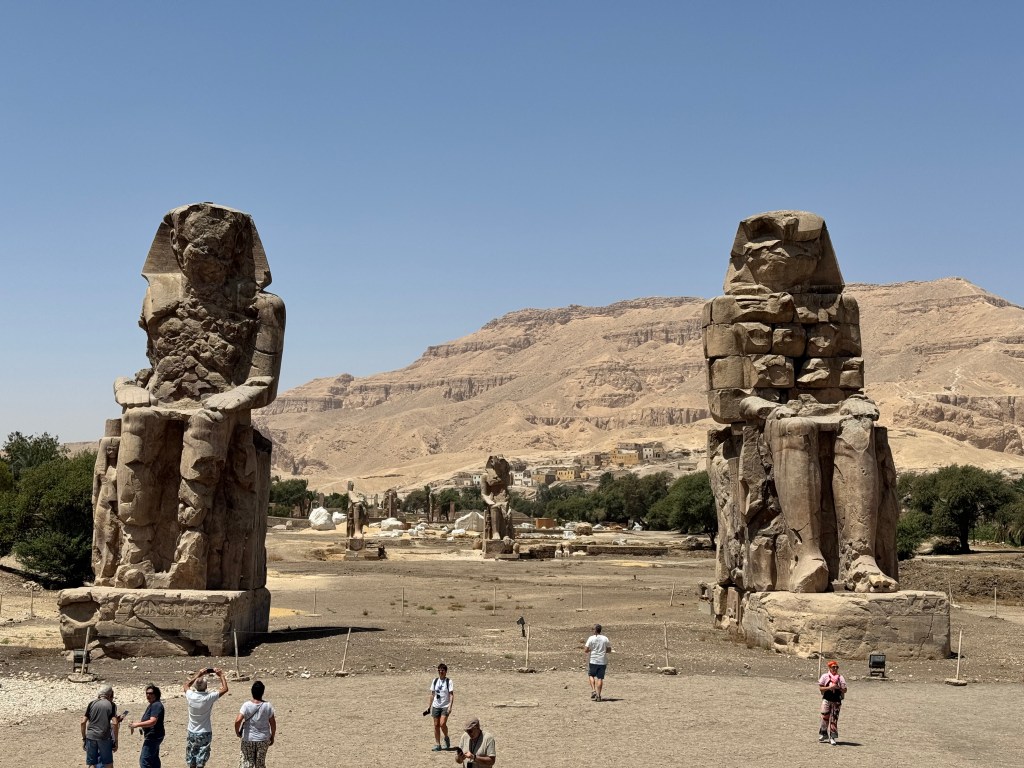
Our final stop before lunch was the Colossi of Memnon, two massive stone statues that stand about 60 feet high. These statues once guarded the entrance to a ruined necropolis. There’s currently a project underway to rebuild the site, but first, they have to find the missing stones.


 Dream Chasers