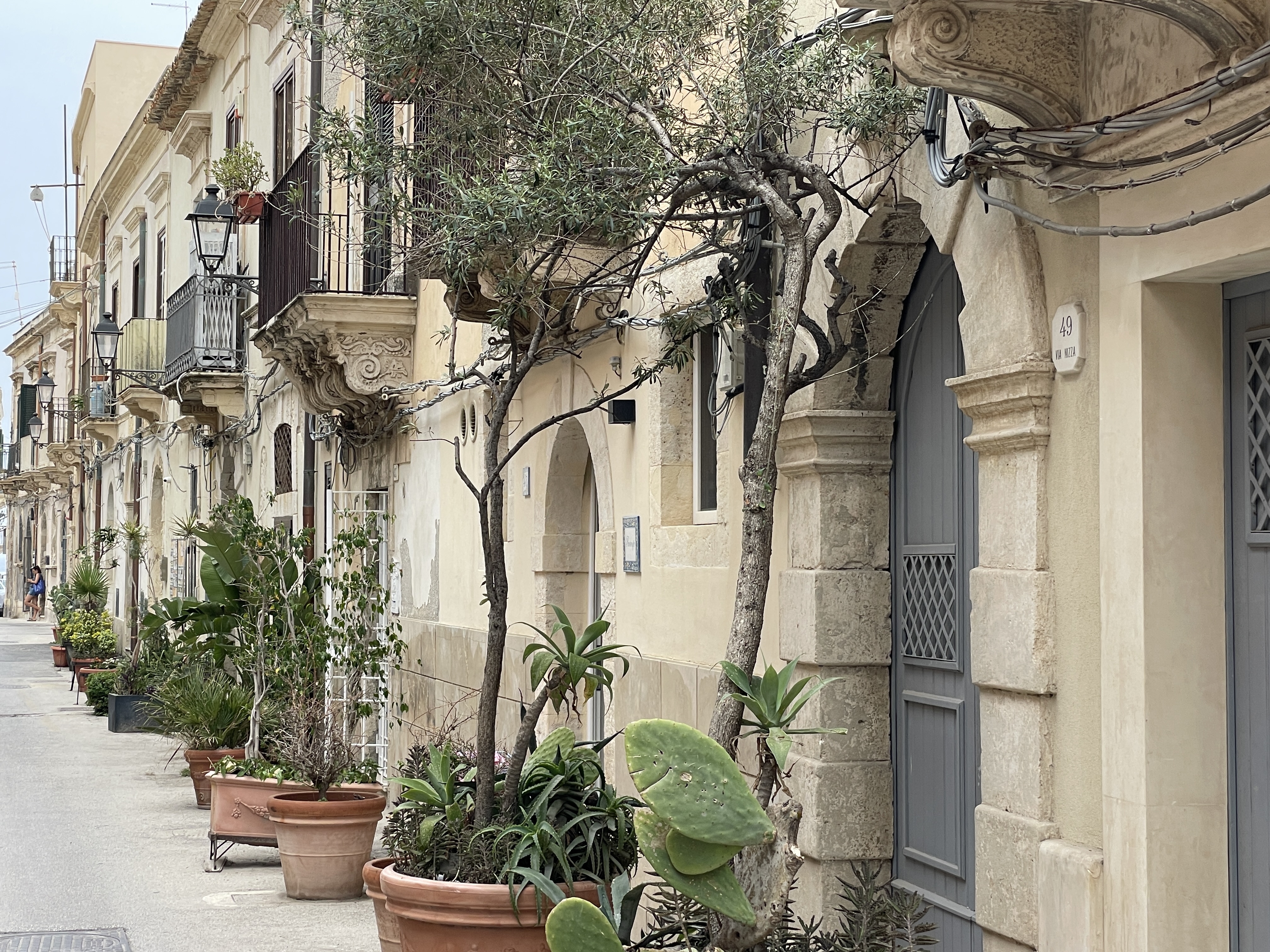
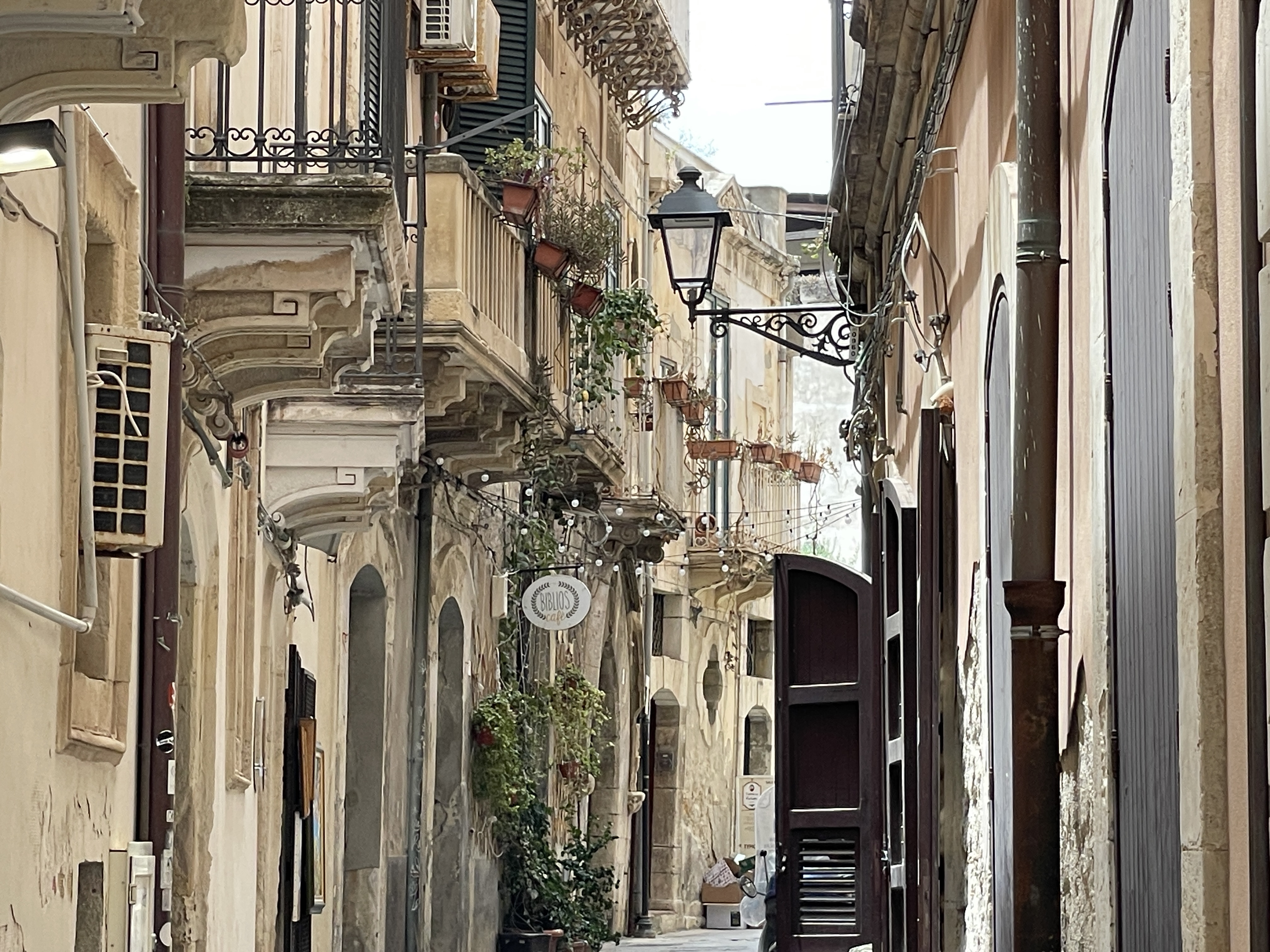
The swimming remains great, and as Rach only has a few short weeks, we’ve been on a quest to explore as much of the bottom half of Sicily as we can. One of our stops was Syracuse, which incidentally is the birthplace of Archimedes and dates back to at least the 7th century BC. We began our exploration by deciding to visit Ortigia first. It is connected to Syracuse by a couple of bridges, and the best way to experience it is by foot, which takes a couple of hours or even longer if, like us, you stop for a leisurely lunch at the harbor to look out over the collection of small boats and the crystal clear Ionian Sea.
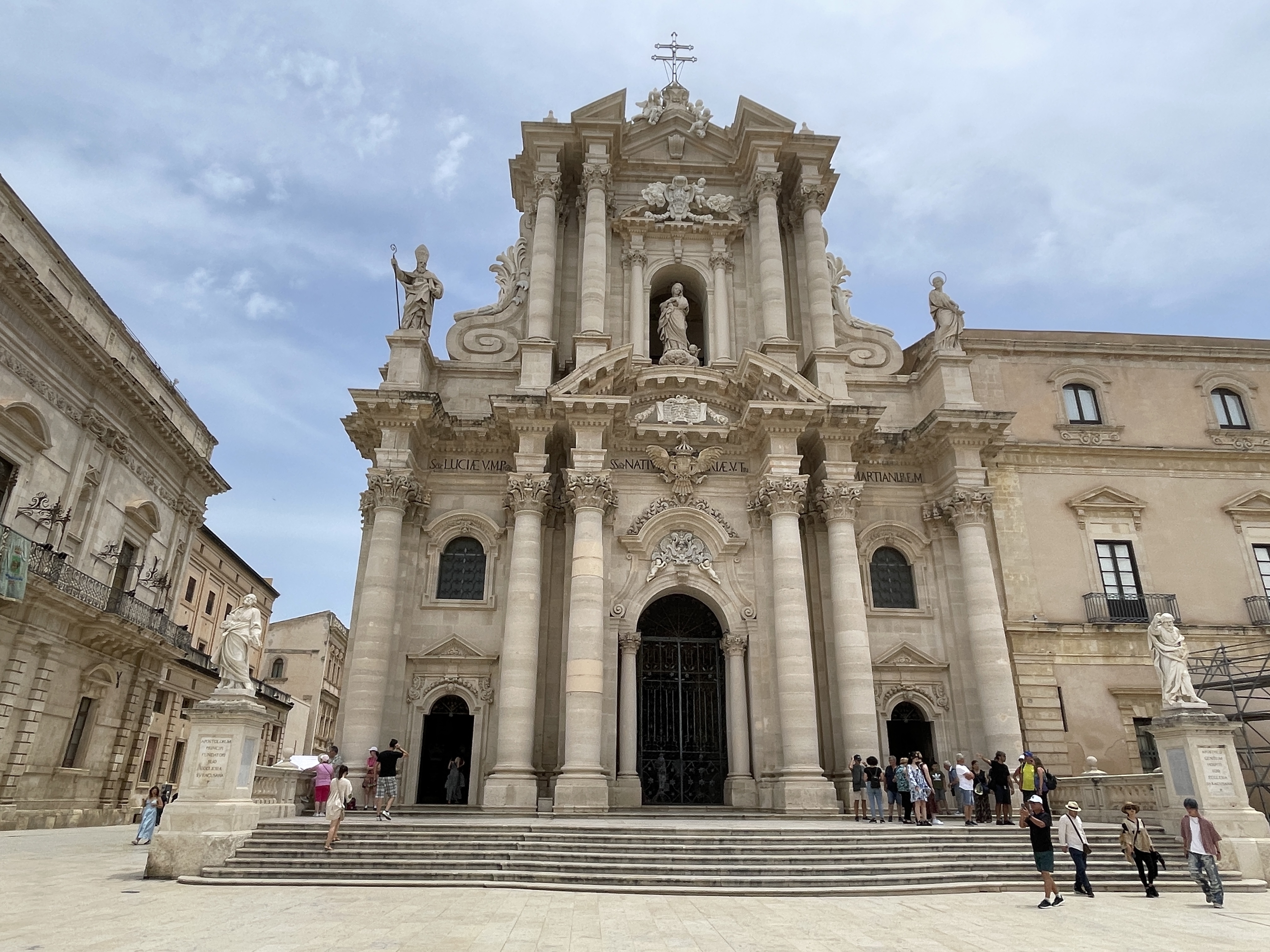
As we entered Ortigia, the first thing that caught our attention was a statue of Archimedes. In terms of architecture, Ortigia offers a variety of styles, including Greek, Roman, Medieval Norman, and some fabulous Baroque buildings. Not to mention the wonderful fountains that all seem to appear randomly as you wander through the streets and alleyways. However, the highlight of our visit was the Piazza del Duomo. This charming pedestrian square is home to the magnificent Cathedral, which was built on the site of an ancient Temple of Athena. The original Doric columns incorporated into the building’s main structure clearly showcase its journey through the ages.
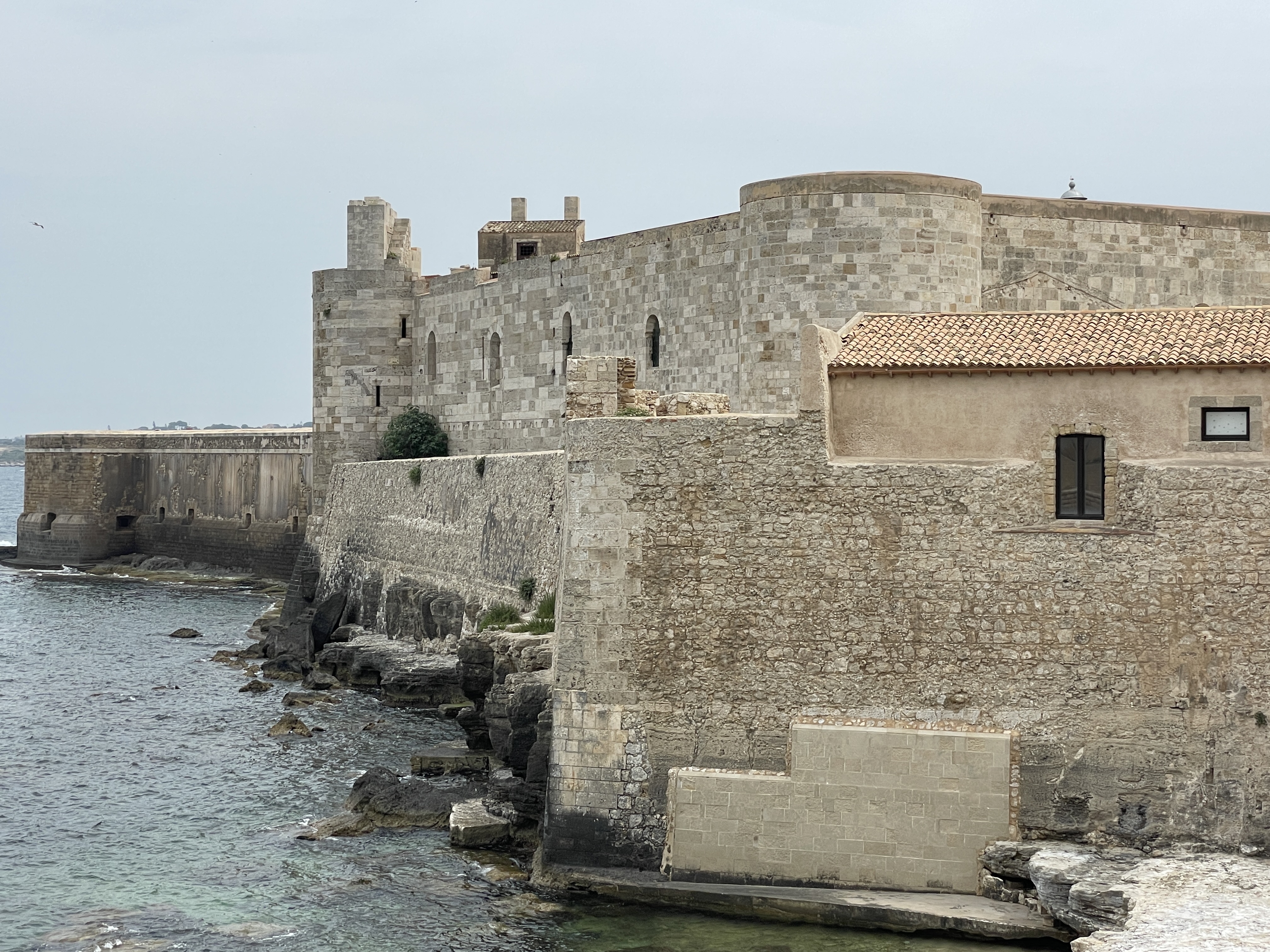
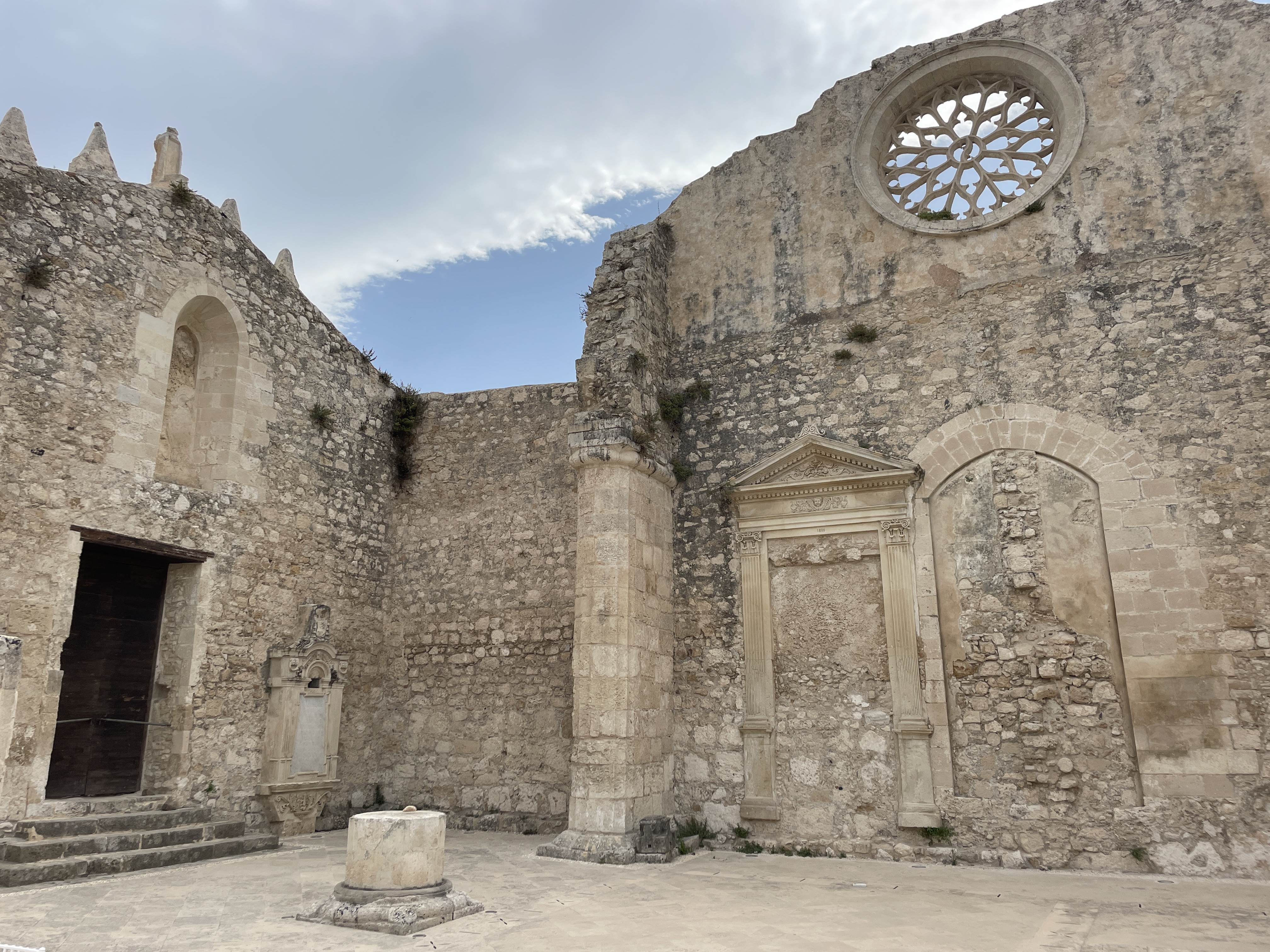
On the southern tip of the island, we found Castello Maniace, a bastion built in 1239. After a slow saunter back to towards the mainland, we ended up leaving Ortigia a little later than planned, with the heat having drained our batteries (getting old). We decided to visit the catacombs, which are second only in size, to those in Rome and are currently the only ones open to the public. Access is through what remains of the San Giovanni church, where there are around 20,000 underground tombs nestled into tunnels that intricately weave through the earth, connecting former Greek cisterns that were later transformed into chapels by early Christians. Alongside rows of graves that once housed extended families, we also encountered a few faded frescoes and early Christian symbols etched into stone slabs. While I wasn’t as interested as Rach in seeing this, I have to admit it was a thought-provoking experience.

 Dream Chasers