The winter in North Africa was exceptionally dry, impacting not only the local population but also the European food chain, which heavily relies on North African produce during the winter months. The water shortage is a stark reality here, with the supply being turned off every evening at 8 pm and not restored until just after 6 am. While it was initially uncomfortable, it’s remarkable how quickly one adjusts and gains a deeper appreciation for the preciousness of water. Therefore, the rain we’ve experienced over the past 10 days or so, has been greatly welcomed.
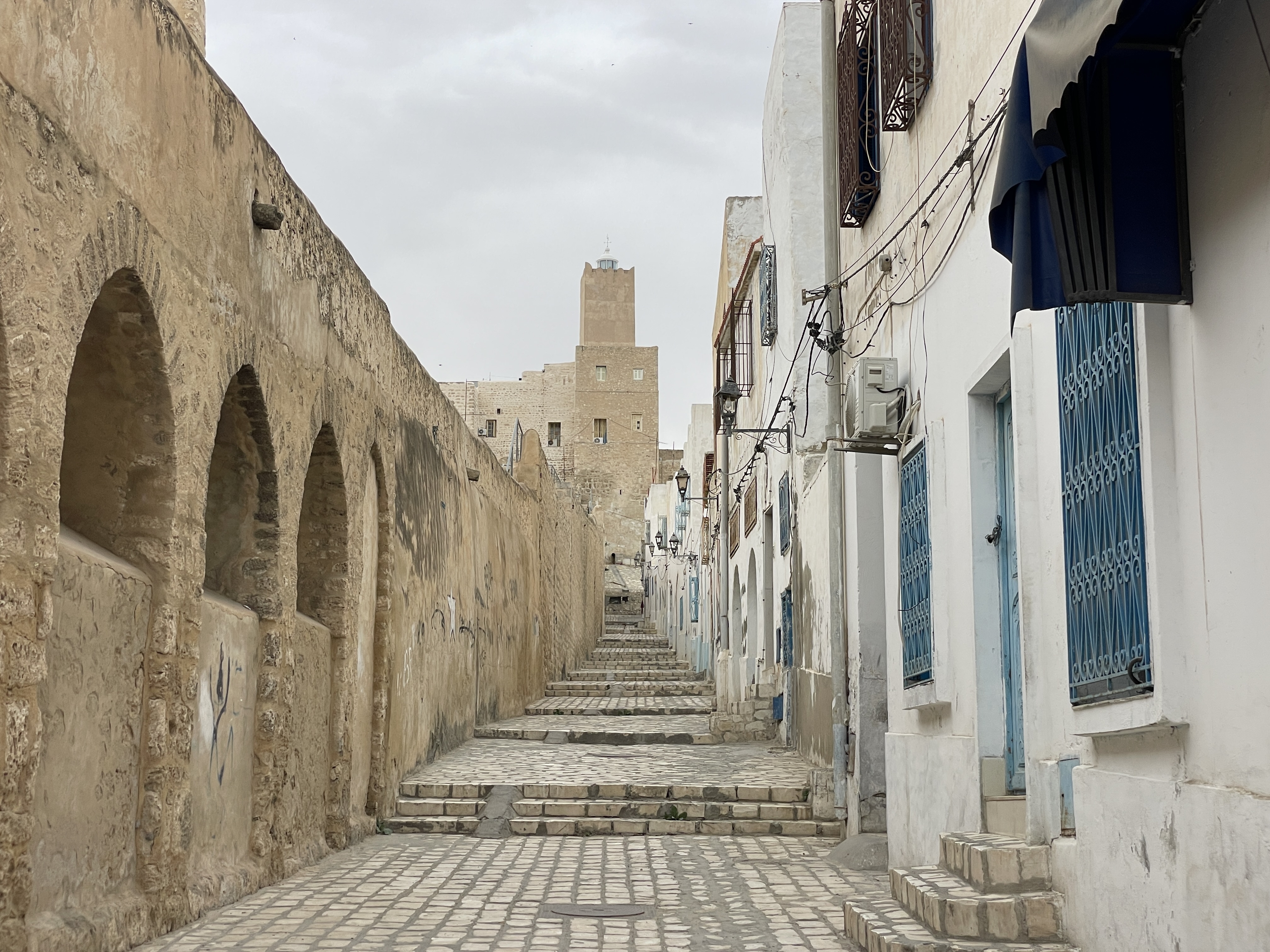
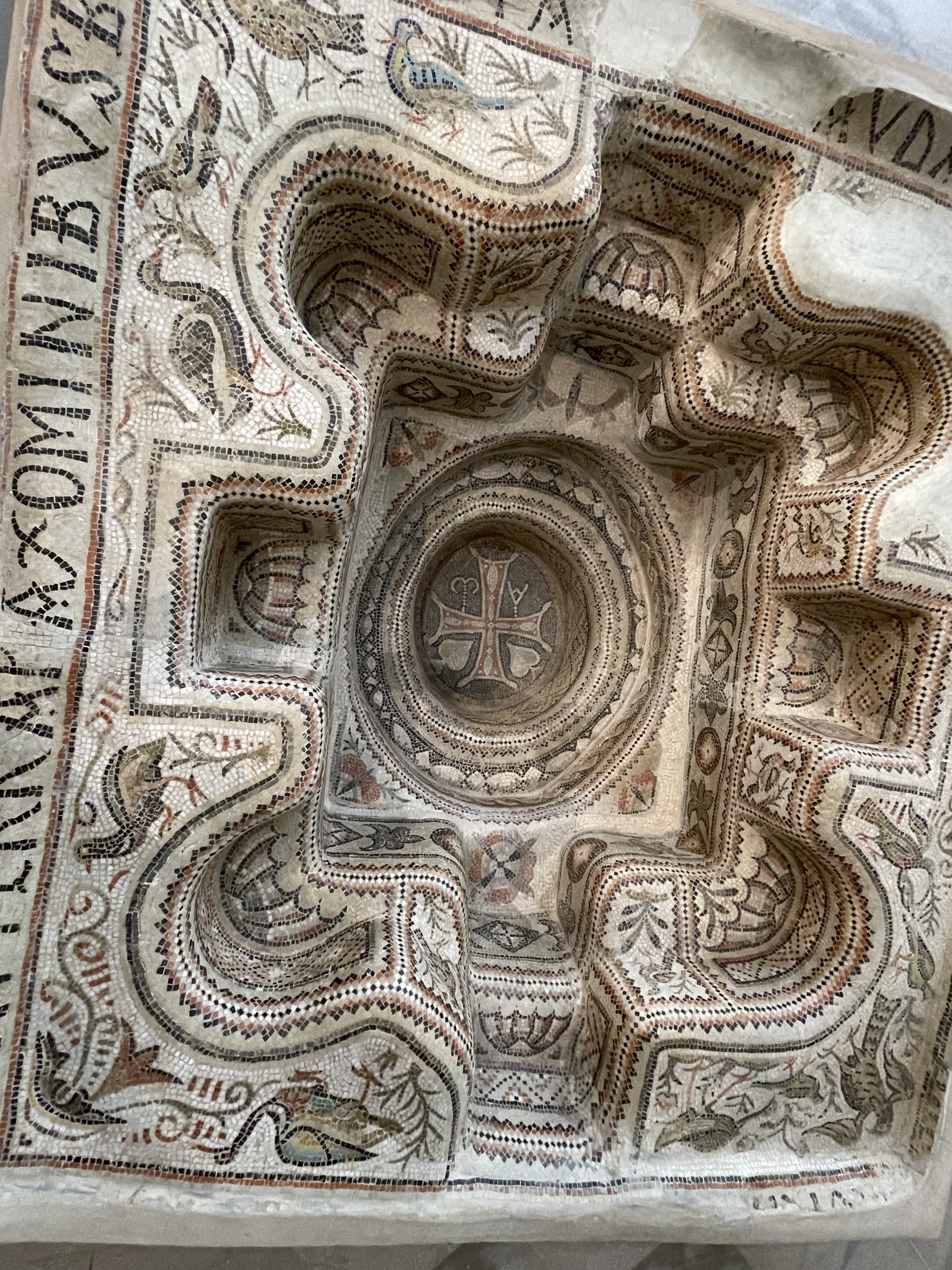
During one of the dry weather windows, we decided to visit Sousse, located about 60 km from Mahdia, which took us roughly an hour and 45 minutes on the small tram. We arrived under threatening skies and made our way up through the 11th-century Kasbah to the Sousse Archeological Museum, a small yet wonderfully curated museum primarily showcasing Roman mosaics depicting gods and mythical creatures from the 2nd and 3rd centuries. We were particularly impressed by the Bekalta baptismal font of Byzantine origin. Afterward, we wandered down through the medina to the port and tried out a recommended restaurant, which unfortunately turned out to be a disappointment. However, such experiences are all part of the journey.
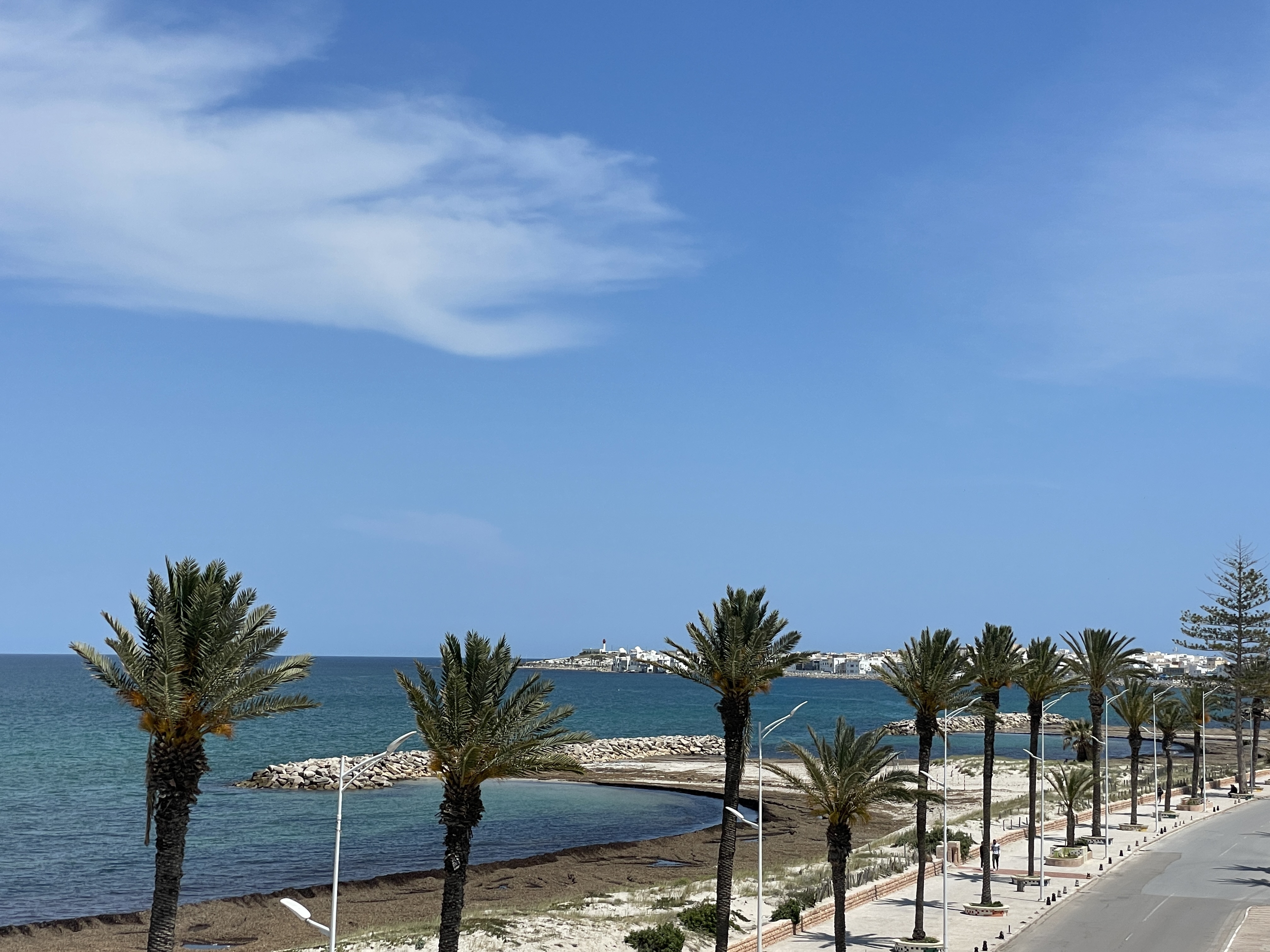
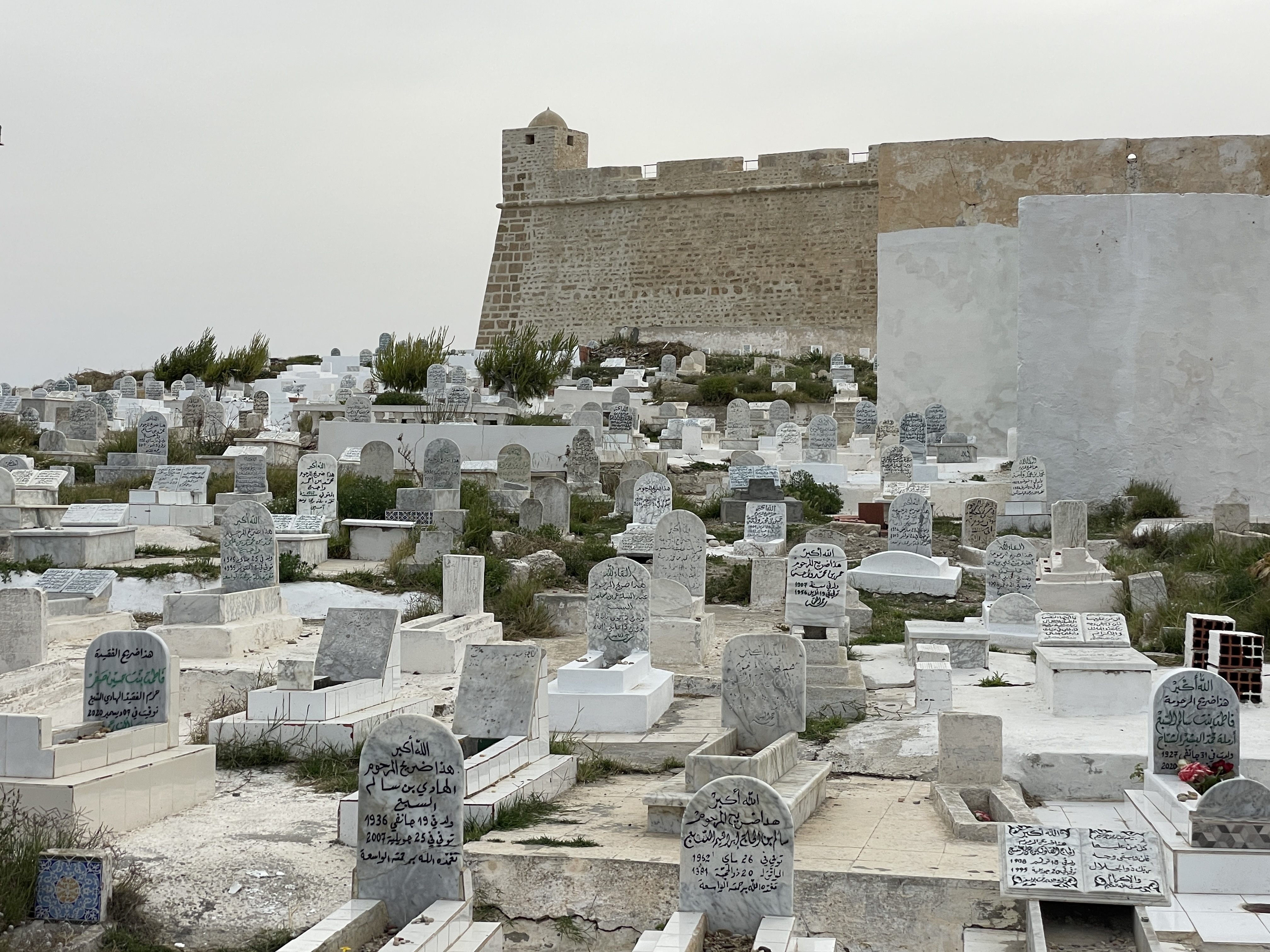
We made our way to the easternmost point of Africa, known as Cap D’Afrique. Here, we explored the remnants of a Roman port that later became the center and birthplace of the Fatimid dynasty. Overlooking the port on the hillside, we discovered an ancient cemetery where all the graves were uniformly white, with the same level of detail, symbolising the absence of distinction between rich and poor, there’s also a small basin on each, designed to collect rainwater for birds and small animals, which I thought was wonderful.


 Dream Chasers