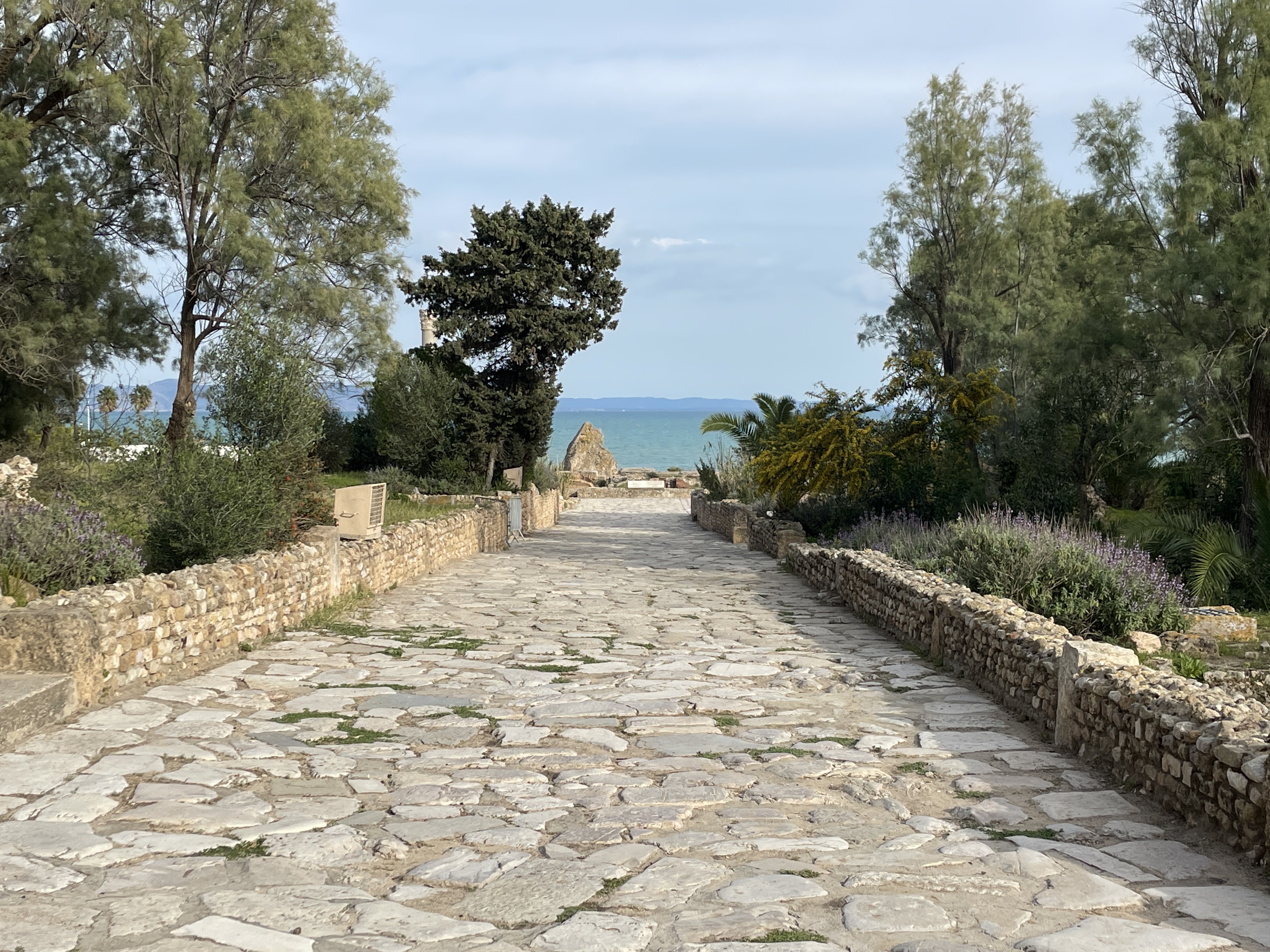
We completed a tour of our final ancient ruin here in Carthage and wandered the medina and quieter streets of old Tunis, this week.
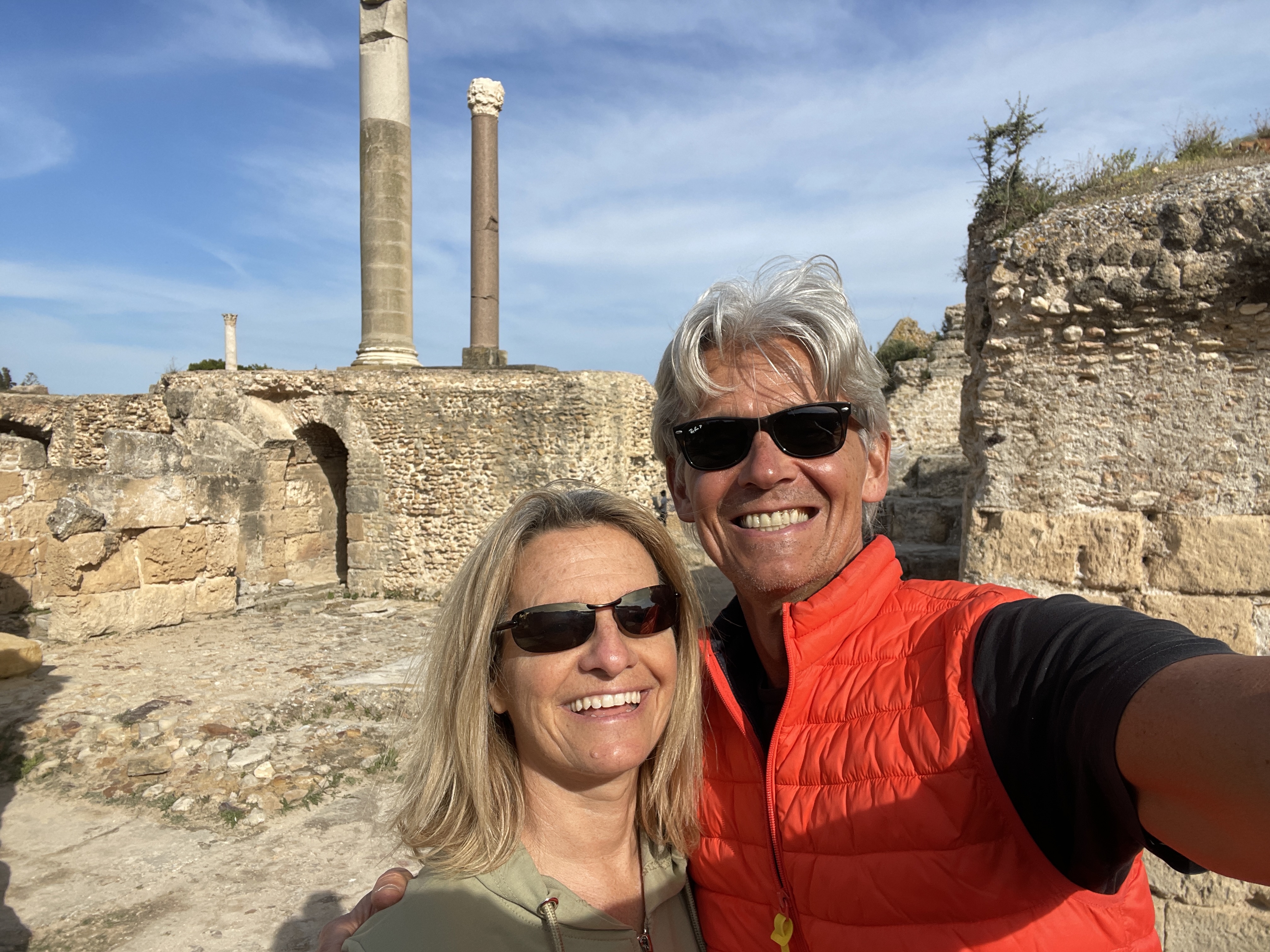
Our first stop was the Antonine baths, an interesting display of Roman architecture that was built between 145 and 162 A.D. It’s always thought provoking to see how advanced the technology was back then and the basement gave us an insight into the installation that would have run the baths. We continue to be amazed by the ingenuity of these folks.
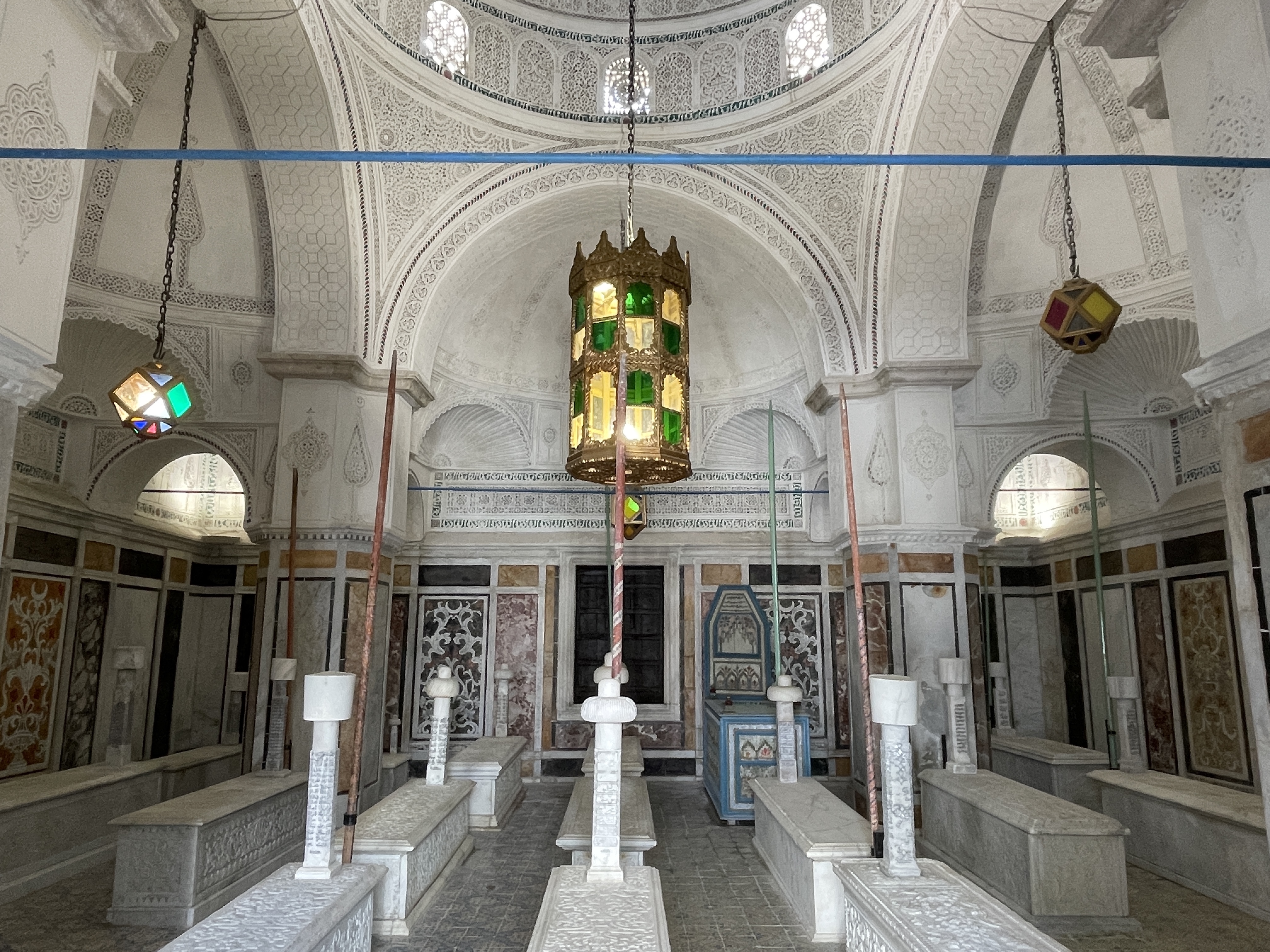
After the visit to the Antonine baths, we decided to explore the old town of Tunis. We took a taxi directly to Parliament Square and were struck by the tranquil atmosphere, which was enhanced by the fact that the area was pedestrianised. We made our way through the backstreets to Tourbet el Bey, a Tunisian royal mausoleum that was opened in 1777. It was the last resting place of most of the Husainid dynasty rulers of Tunisia, and we were fascinated by the fact that the tombs pre-1921 were marked with a turban, as a headstone and post-1921 with a fez. The mausoleum was bigger than we had expected and had several chambers, which added to the intrigue.
From there, we ventured into the medina, a bustling market filled with artisans creating and selling their wears. It was a friendly place split between the traditional craftsmen and the modern-day stalls selling cheap products that the younger people seemed to be more interested in.
The ornate doors were a standout feature, with imaginative good luck designs, and it was interesting to learn that most of the doors had two or three door knockers, which denoted how many wives the master of the house had.




 Dream Chasers